The White-Coated Engineers and the World’s Most Famous Crossing — Abbey Road Studios
Prologue: The People Who Stop at the Crossing
In St John's Wood, northwest London, a pedestrian crossing in the middle of a quiet residential neighborhood draws a crowd all day long.
People wait for a break in traffic, then walk across in a line of four. A friend photographs them from the opposite pavement. Even when drivers honk, everyone is smiling.
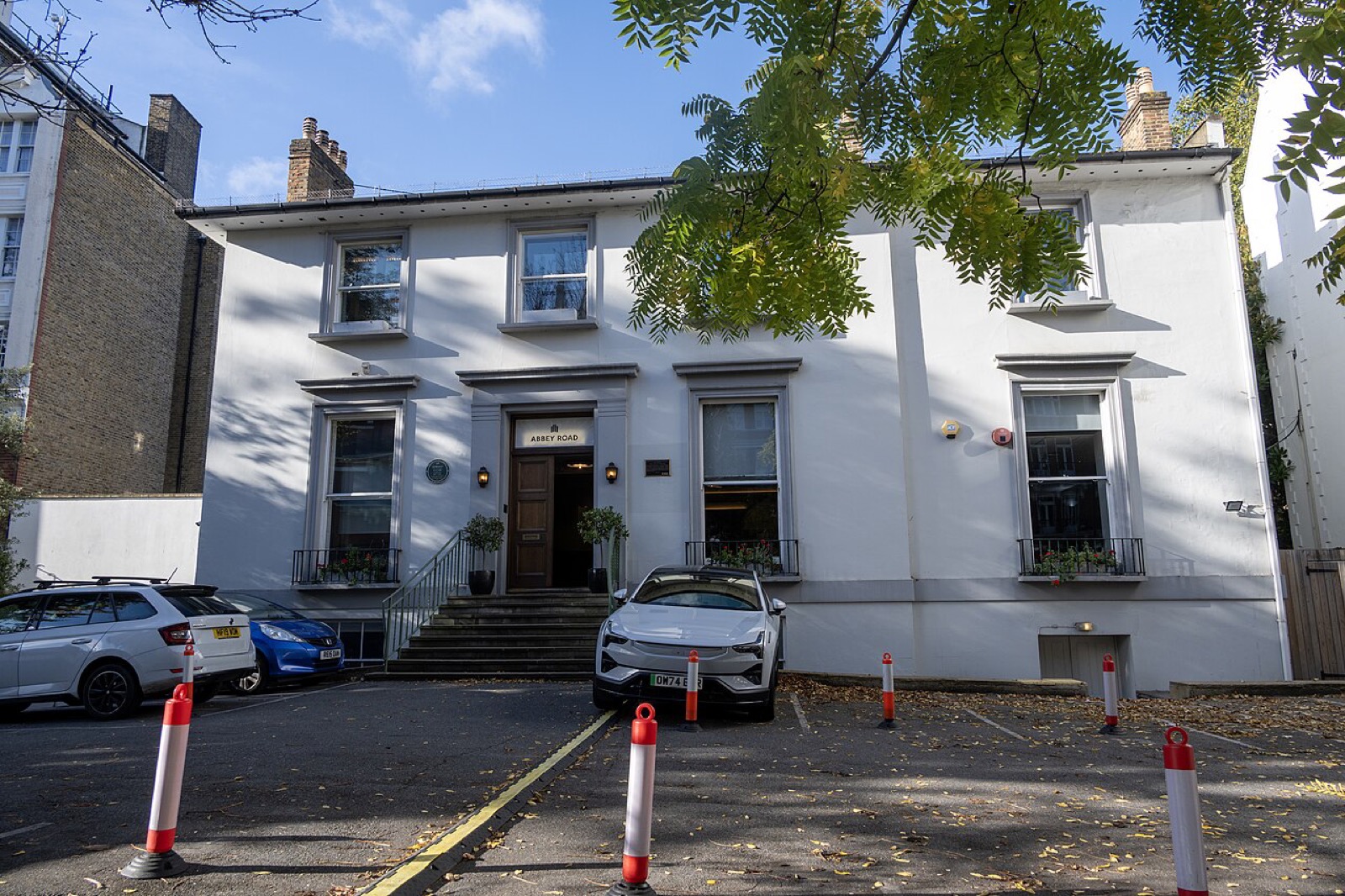
Beside the crossing stands a slightly old-fashioned building with white walls. Its white gate is covered in messages left by visitors from around the world.
The building is Abbey Road Studios. It opened in 1931, and more than 90 years later it is still in use as a recording studio.
📝 About this story
This story is based on books, interviews, and manufacturers’ materials I have read over the years. I have tried to stick to documented facts, but I was not there, so some nicknames and widely repeated accounts may be uncertain. Stories with competing versions are marked as “Legend & Lore,” and sources are listed at the end.
Chapter 1: How a White House in a Residential Neighborhood Became a Studio
An Ordinary Mansion
The building at 3 Abbey Road was a Georgian-style residence, built in the first half of the nineteenth century. It passed through several owners and, until the early twentieth century, served as an ordinary mansion.
In 1929, the record company The Gramophone Company bought the house. Over the next two years, it built a large recording hall in the garden behind it, turning the property into one of the largest recording studios in the world.
Elgar Conducts the Opening, 1931
On November 12, 1931, Edward Elgar, one of Britain's leading composers, stood on the podium for the studio's opening ceremony.
The London Symphony Orchestra performed Elgar's own Pomp and Circumstance. The event was also filmed by a newsreel camera.
That same year, The Gramophone Company merged with another record company, giving birth to EMI. For many years, the studio was known as “EMI Studios.” “Abbey Road” was still just its address.
Three Rooms
The studio had three rooms of different sizes:
- Studio One: the largest room, big enough for a full orchestra
- Studio Two: a medium-sized room that would later become the most famous room in the world
- Studio Three: a smaller room for chamber music and solo recordings
For the first 30 years or so, classical music took center stage. World-renowned conductors and pianists made countless records here.
The Man Who Invented Stereo
EMI had a brilliant engineer in those years: Alan Blumlein.
In 1931, Blumlein filed a patent for a way to reproduce the position and spread of sound using two speakers. The story goes that the idea came from his frustration at hearing actors' voices in a cinema that did not seem to come from the actors' positions on screen.
This was the blueprint for modern stereo. The sound that spreads from side to side in the headphones we use every day began with an idea from an EMI engineer.
Blumlein did not live to see stereo become widespread. During the Second World War, he was recruited to work on radar development. In 1942, he died when a bomber crashed during a test flight. He was just 38.
Now let's look at the day four young men arrived at Studio Two.