A South Pacific Studio Paradise, Hurricanes and a Volcano — AIR Montserrat
☕ A coffee-length story — about a 10-minute read.
On a small Caribbean island, a dream studio drew the world’s biggest stars. This is the story of a paradise that vanished after only ten years.
Prologue — A Building Swallowed by Grass
A small island in the Caribbean.
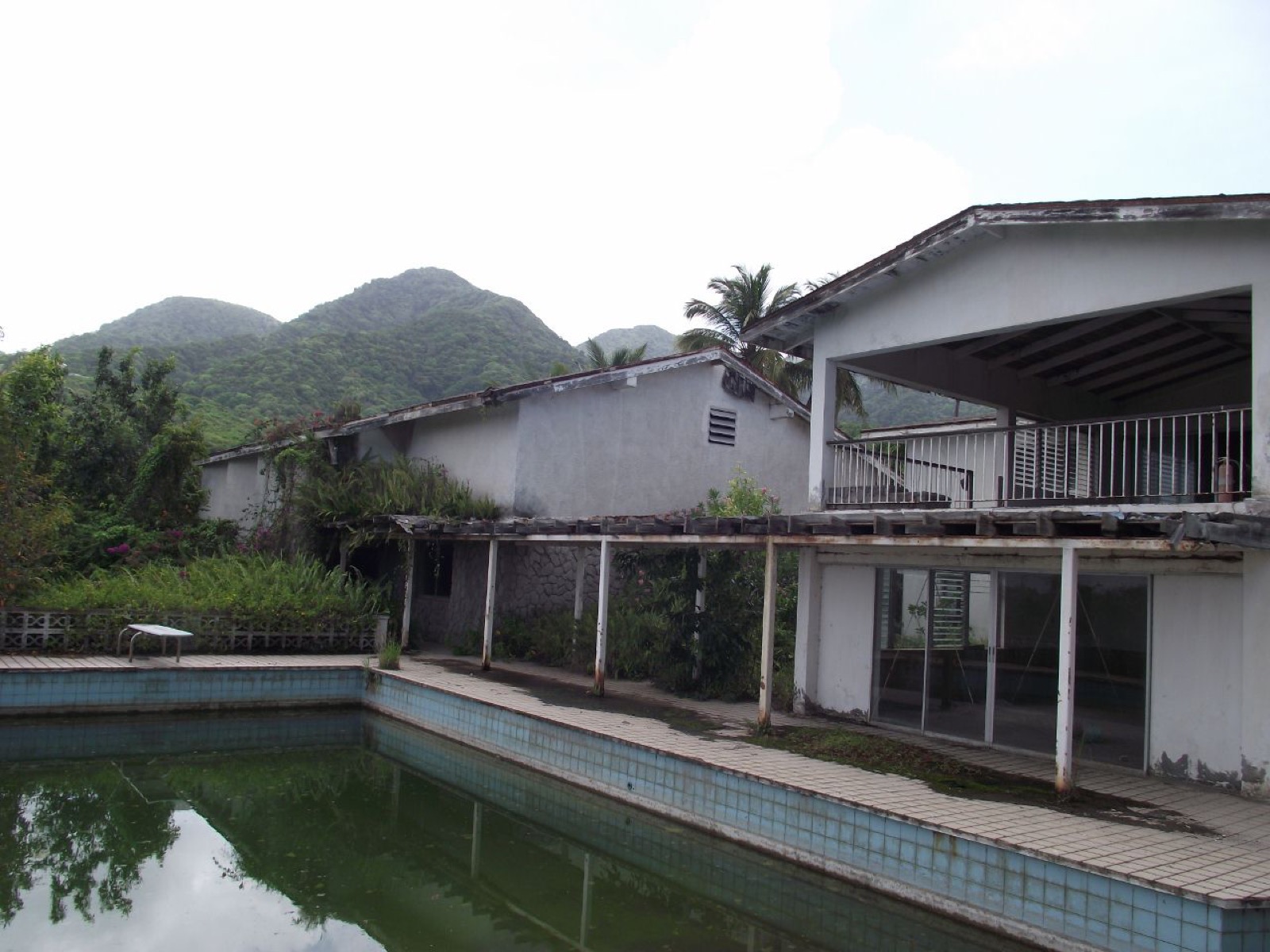
Halfway up a green hillside, a building remains, its roof collapsed and its walls nearly swallowed by grass.
Broken windows. Peeling walls.
It is hard to believe this was once one of the most luxurious studios in the world, where The Police, Dire Straits, Paul McCartney, Elton John, and The Rolling Stones came to record.
The studio was AIR Montserrat.
It was built by George Martin, best known as the Beatles’ producer. The story of the studio, its short life, and the forces that erased it is also a story about how music can outlast a place.
📝 About this story
I’ve shaped this account from years of reading books, interviews, and manufacturers’ material. I’ve tried to stick to the facts, but I wasn’t there, so some nicknames and received wisdom may have made their way in. Where accounts differ, I’ve marked them as “Legend & Lore,” and listed sources at the end.
Chapter 1 — The Beatles’ Producer on a Company Salary
A celebrated producer, paid like an employee
In the 1960s, George Martin was a staff producer at EMI, the record company.
He was a major force behind the Beatles’ run of worldwide hits.
Yet he received only an ordinary company salary.
No matter how many records sold, his share as a producer reportedly stayed the same.
1965 — Going independent
“This wasn’t a fair deal.”
In 1965, Martin left EMI and went independent with a group of fellow producers.
Together they formed AIR, or Associated Independent Recording. The name described a company owned by independent producers, rather than the record company that had employed Martin.
AIR gave producers a way to earn compensation that matched the work they did.
It was one of the early examples of the freelance producer model we take for granted today.
In 1970, AIR opened its own studio in central London. AIR London soon drew a steady stream of artists.
An idea takes shape on an island
In the late 1970s, Martin visited Montserrat, a small British territory in the Caribbean.
Blue water, green mountains, and a relaxed pace of life.
He began to wonder if he could build a residential recording studio there.
In a city studio, musicians can get pulled away from recording by work calls, interviews, and the temptations of the nightlife.
On this island, they could spend weeks focused on nothing but music.
So let’s head to this Caribbean studio paradise and see what classic records came to life there.