[Motorcycle History] From Aircraft Engines to the Boxer's Heartbeat — BMW Motorrad and the R32
☕ A coffee-length story from GC Lab's "Motorcycle History" series, where we follow machines through the people and events behind them. This time: BMW Motorrad, a company that built engines for flight, had the sky taken away, and then spent a century on motorcycles that run on the ground.
💡 What you'll learn
- Why BMW, once an aircraft-engine company, started building motorcycles
- How its first motorcycle, the R32, set the "template" of a boxer engine and shaft drive
- Why the same engine layout survived speed records, war, ruins and desert rallies
Prologue
17 June 1919, the sky over Munich in southern Germany. An aircraft climbed slowly but without pause, higher and higher. At the controls was Franz Zeno Diemer. Under the cowling was an engine made by a young Munich company: BMW.
After about an hour and a half, he reached roughly 9,760 meters, far more than twice the height of Mount Fuji. Engines normally lose power as the air thins, but BMW's engine had been built not to run out of breath high in the sky. The record was the first event to make the name BMW known around the world.
The joy did not last long. Just eleven days later, on 28 June, the Treaty of Versailles was signed to end the First World War. Defeated Germany was forbidden to build aircraft and aircraft engines. A company that had made its name with engines for flight had the sky itself taken away.
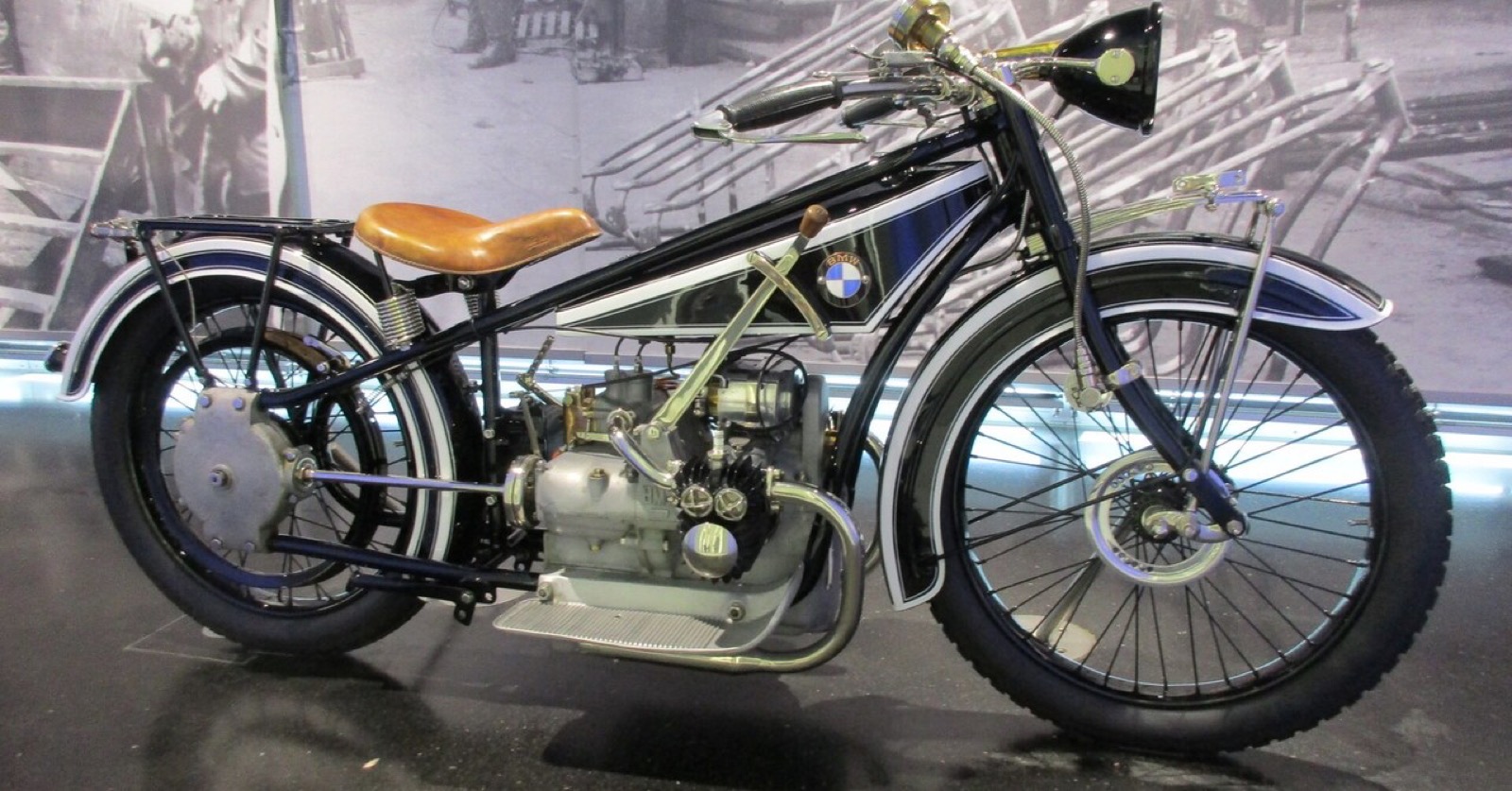
Its engineers, with nowhere to go, came down to earth. And in 1923 the first motorcycle to carry the BMW name, the "R32," was born. Two cylinders jutting out to the left and right, and a shaft turning the rear wheel. A century later, that "template" still beats inside BMW motorcycles.
Chapter 1 — A company that built engines for the sky
BMW stands for "Bayerische Motoren Werke," the Bavarian Engine Works. As the name says, it was an engine company from the start.
Its roots go back to the Rapp engine works, which built aircraft engines in Munich. In the middle of the First World War, demand for military aircraft engines shot up, and in 1917 the company called BMW was formed from that works.
What made wartime BMW famous was an aircraft engine that did not lose power high in the sky. Up there the air is thin, and an ordinary engine weakens for lack of oxygen. BMW's engines were designed to come into their own at altitude. Flying higher meant an advantage in air combat. One trick was to build an engine that was deliberately "too strong." The compression was set so high that running it flat out in the dense air near the ground would damage it, so pilots held back the throttle at low altitude. Only after climbing into thinner air did they open it fully. Power held in reserve on the ground was spent high in the sky. Diemer's record in the prologue was the high point of that technology.
But when the war ended, the Treaty of Versailles barred Germany from building aircraft and their engines. BMW had to find a way to survive with the factory and engineers it had left.
Leading the company at the time was its manager, Franz Josef Popp. Even if it could not build aircraft engines, it still had the skill to build engines and the engineers who knew how. Then it would build engines for use on the ground. Popp's judgment was unglamorous but practical. Engineers hardened by aircraft work, including the chief designer Max Friz, turned to work on the ground.
The first things the company took on were brakes for railway cars and general-purpose engines for farms and factories. Plain, solid work with nothing to do with the sky. Among those products was one that would decide its fate.
Right after the war, BMW built a small engine called the "M2B15." It was a horizontally opposed twin, with its two cylinders facing each other on opposite sides. Because the pistons move in and out like boxers trading punches, the type later came to be called a "boxer engine." The engine was sold as a component for motorcycles made by other companies. BMW was not yet building motorcycles of its own.