"The Decisive Moment" — Henri Cartier-Bresson
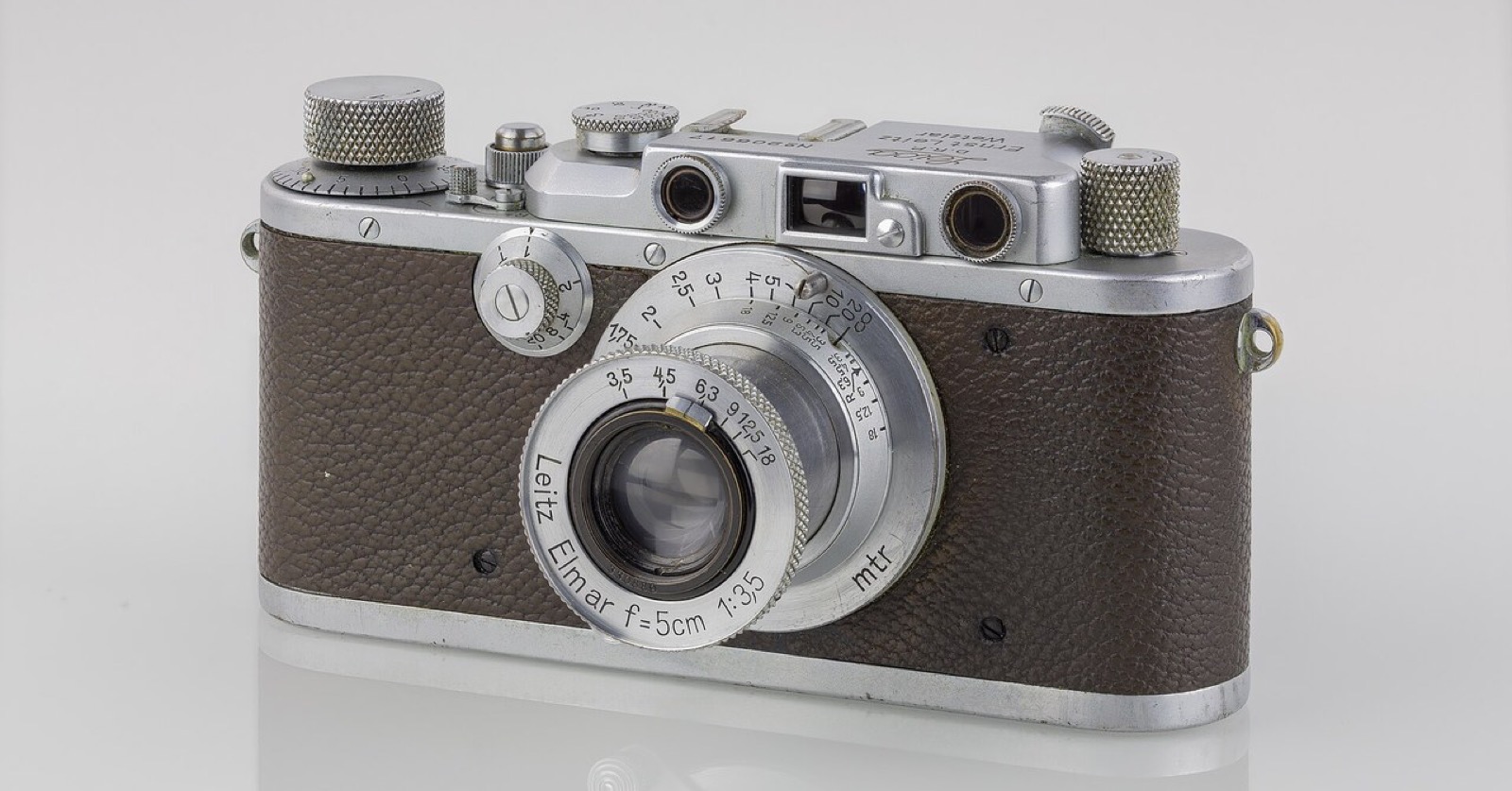
☕ A coffee-length story — about a 20-minute read. A side trip in our camera history series: this time, the story of a person holding the camera. Our lead is Henri Cartier-Bresson, the French photographer who spent his life photographing the streets and people of the twentieth century with nothing more than a small Leica and a 50mm lens. We trace where the phrase "the decisive moment" came from.
What you will find here:
- Why a young man who wanted to be a painter picked up a Leica
- The surprising origin of the phrase "the decisive moment"
- No cropping, no flash — the rules of Cartier-Bresson's way of shooting
- From prisoner of war to a "memorial" exhibition for a man still alive, and on to Magnum
Prologue — Behind a Paris station, 1932
Paris, 1932. Behind the Gare Saint-Lazare, the great station where trains run to and from the north-west, lay a vacant lot under construction.
It had rained, and a wide puddle covered the ground. The lot was surrounded by a wooden fence.
A young man pushed the lens of a small camera through a gap in the fence. The gap was so narrow, it is said, that he could not look through the viewfinder properly.
At that moment, on the other side of the fence, a man took a long stride to leap over the puddle. The young man released the shutter.
An instant before the heel touched the water. The figure suspended in mid-air, and his upside-down reflection on the surface. On a poster on the wall behind, a leaping dancer. Everything fell perfectly into a single frame.
This photograph, later known as "Behind the Gare Saint-Lazare", became one of the defining images of twentieth-century photography.
The young man who took it was Henri Cartier-Bresson. He was 23, and had taken up the camera in earnest only about a year before.
This is the story of the photographer whose name is forever linked with the words "the decisive moment".
Chapter 1 — A young man who wanted to paint
Eldest son of a thread family
Henri Cartier-Bresson was born on 22 August 1908 in Chanteloup-en-Brie, a town east of Paris.
The Cartier-Bresson family was wealthy, known for its company making sewing thread. Its name appeared on the spools used in French households.
As the eldest son, Henri was expected to take over the family business one day. But what drew him was not business. It was painting.
He is said to have had his first lessons from his uncle Louis, a painter. That uncle was killed in the First World War. Inside the boy, a longing to paint quietly lived on.
A painting student who learned geometry
Around 1927, Henri began attending the studio of the painter André Lhote.
Lhote, whose painting grew out of Cubism, rigorously taught his students to see a picture as an arrangement of shapes and lines. Where should a line go to tighten the composition? How do shapes answer one another inside a rectangle?
This eye for geometry would later become the backbone of Henri's photographs.
At the same time, an art movement called Surrealism was flourishing in Paris — a way of thinking that turned towards dreams, chance, and the strangeness hidden in everyday scenes. Henri attended its gatherings and was deeply influenced.
He later studied in Cambridge, England, and in 1929 is also said to have been given a camera by an acquaintance. But at this stage, photography was still something like a pastime between paintings.
Fever in Africa
In 1930, after completing his military service, Henri went to the Côte d'Ivoire (Ivory Coast), then a French colony in Africa.
He spent about a year there, hunting and travelling, but fell gravely ill with fever — so ill that his life was in danger.
He managed to make it back to France and went to recover in Marseille, the port city in the south. And it was in this city that he met the tool that would change his life.