A German Name, Japanese Craft: Contax, Yashica and Kyocera
☕ A coffee-length story — about a 15-minute read. This is the tale of how a great German camera name was carried on by a tiny clock-parts workshop in Suwa, Nagano, and a ceramics company from Kyoto.
Prologue — A Name Returns to Cologne
Autumn 1974. In Cologne, West Germany, the photo and imaging fair "photokina" was under way.
On the show floor, a name every camera lover knew appeared again after a long absence.
CONTAX.
It was the name of the luxury cameras that Germany's Zeiss Ikon had launched in the 1930s — a name that stood shoulder to shoulder with Leica and was loved by photojournalists and travelling photographers. But it had vanished from cameras after 1961. Zeiss Ikon itself had withdrawn from camera making in 1971.
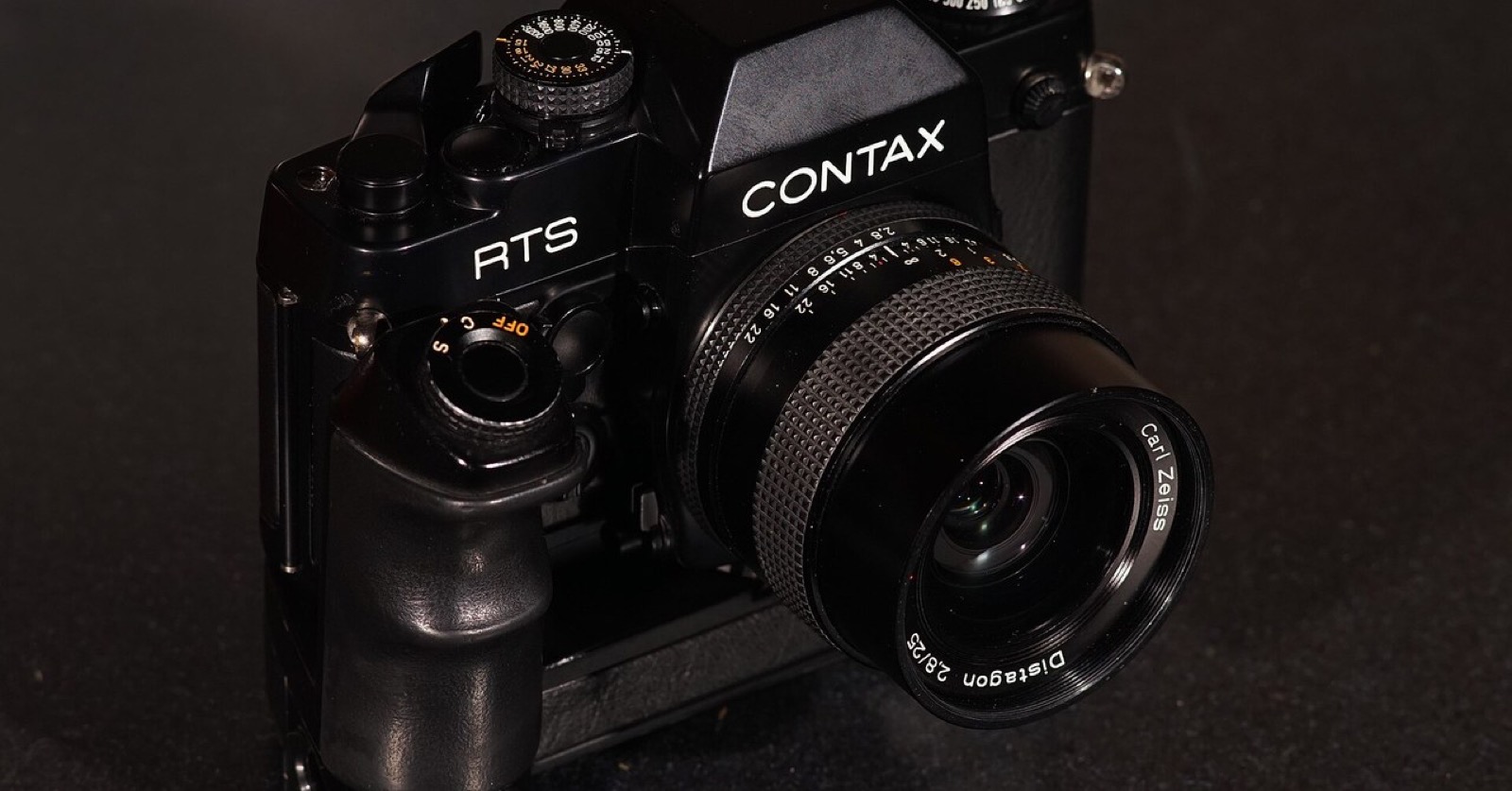
The Contax that came back after thirteen years was a black single-lens reflex. Its name was the Contax RTS. On its lenses were engraved Zeiss names such as "Planar" and "Distagon."
Yet the company that built this camera was not German. It was Yashica, a Japanese company born on the shores of Lake Suwa in Nagano Prefecture.
A German name, and Japanese craft. That unusual pairing would last for the next thirty years, sending cameras that photographers all over the world longed for out of Japanese factories.
This is the story of the two Japanese companies that held that pairing together: Yashica and Kyocera. And it does not begin with a camera. It begins with clock parts.
Chapter 1 — An Eight-Person Clock-Parts Workshop in Suwa
A precise town by the lake
Suwa is a town spread around a lake ringed by mountains. The air is clear and dry — just right for making tiny parts. After the war, factories for watches, cameras and lenses sprang up all over the area, and it was sometimes called "the Switzerland of the East."
In December 1949, a small company was born here. Its name was Yashima Seiki. Its president was Yoshimasa Ushiyama, and it had just eight employees.
What it made was not cameras but parts for electric clocks. The war had ended only four years earlier, and Japan was still short of almost everything.
An order for a twin-lens reflex
The turning point came in 1953. A photographic supplies company in Tokyo asked the workshop to build a camera.
The order was for a twin-lens reflex that shot square 6×6 cm pictures. Two lenses stacked one above the other: you look through the upper lens and take the picture through the lower one, holding the camera at waist height and peering down into it.
The little clock-parts workshop took the order and learned to assemble cameras. That same year it changed its name to Yashima Optical Industry — the word "optical" had entered the name.
Then it began making cameras under its own name: the Yashimaflex, which before long became the Yashicaflex.