The Preacher’s Company Built an Amp That Kept Playing in the Mud — Crown DC300
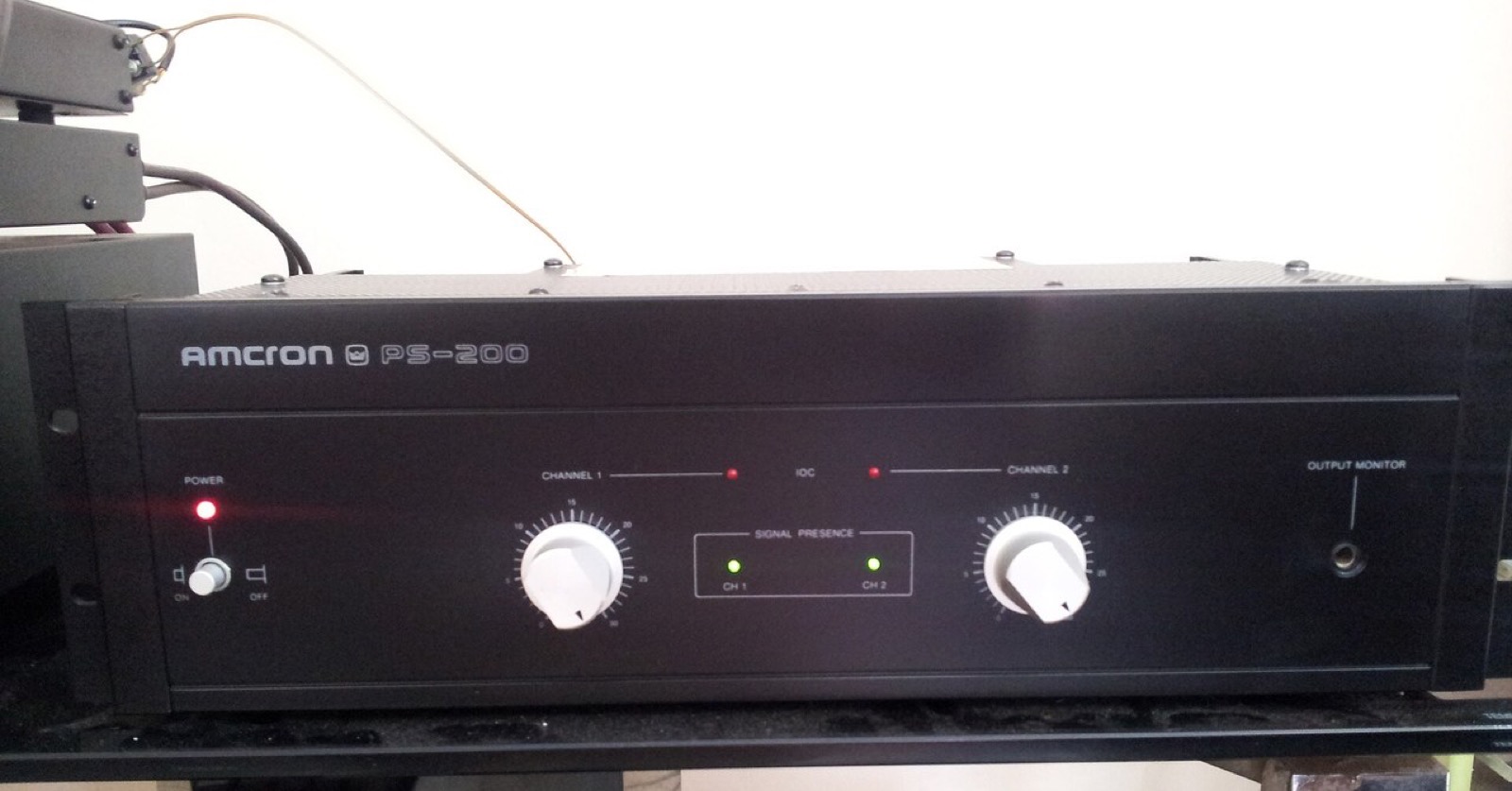
☕ A coffee-length story — about a 10-minute read. Enjoy this as a story, not a research assignment. The history of the power amps behind concert sound began when a pastor in a small town built a tape recorder for people working far from home.
💡 What you’ll learn
- What a power amp does, and why the industry moved from tubes to transistors
- How Crown (IREC) grew from building recorders for missionaries, and why the DC300 became known for reliable high power
- Four basics for choosing and using a power amp: impedance, power headroom, power-up order, and heat
Prologue — An Amp in the Mud
In the early 1970s, an unusual ad appeared in an American audio trade magazine.
The photo showed a muddy field. A piece of rack-mounted equipment lay half submerged in the muck.
A truck carrying concert gear had rolled over. A power amp had been thrown from the bed and landed in the mud.
But when it was pulled out, the story went, it still worked.
The amp was the Crown DC300. Its toughness became something of a legend in concert sound.
The company that built it had been founded by a pastor in a small town.
📝 About this story
This story draws on books, trade magazine articles, company history materials, and oral history interviews with people in the industry. It aims to stick to the facts, though sources sometimes differ on dates and figures; those differences are noted where relevant. Sources are listed at the end.
Chapter 1 — The Power Amp’s Heavy Lifting
The last piece of gear before the speakers
Sound from microphones and instruments is mixed, then sent to speakers. The power amp is the device just before the speakers: it gives the audio signal the muscle it needs.
The signal coming from a mixer carries very little power. Moving speaker cones enough to fill a venue with sound takes dozens or even hundreds of times more.
The challenges of the tube era
Until the early 1960s, most power amps built to deliver serious output used vacuum tubes.
Tube amps could sound great, but they had drawbacks:
- They were heavy and bulky.
- They generated a lot of heat.
- Tubes wore out and had to be replaced.
That was a real problem on the concert circuit, where gear was trucked around, assembled, and pushed at high volume for hours, night after night.
The promise—and uncertainty—of transistors
Engineers hoped transistors could solve those problems. They were lighter and smaller, and unlike tubes, they did not wear out in the same way.
But early transistor amps had a reputation for failing when asked to deliver a lot of power. Making transistors deliver both high output and rugged reliability was one of the engineering challenges of the 1960s.
(The story continues with the recorder company founded by a pastor, the DC300 that changed expectations for transistor power amps, and what happened after the amp “played in the mud.”)
Chapter 2 — A Pastor and a Recorder for Missionaries
Elkhart, Indiana, 1947
In 1947, in Elkhart, a town in the American Midwest, a local pastor named Clarence C. Moore started a company: IREC (International Radio and Electronics Corporation).
Moore set out to build a rugged open-reel tape recorder for missionaries working in distant countries.
In places with unreliable electricity and harsh climates, a broken recorder could be impossible to repair quickly. Above all, it had to be dependable and tough.
A factory in a chicken coop
IREC’s first factory was reportedly a converted chicken coop.
A small factory in a small town would grow into a company whose products helped power concert venues around the world.
A recorder with a built-in amp
In 1949, IREC developed a recorder with a built-in 15-watt amplifier. The company was putting amplification inside its recorders. The know-how to make sound louder was already taking shape.
The Crown name
In the 1960s, the company changed its name to Crown International. The new name was reportedly suggested by Moore’s wife, Ruby.
In 1964, Crown introduced its first solid-state (transistor) product, the SA 20-20. The company, too, was moving from tubes to transistors as the industry changed.
Chapter 3 — The DC300: Reliable High Power Arrives
1967
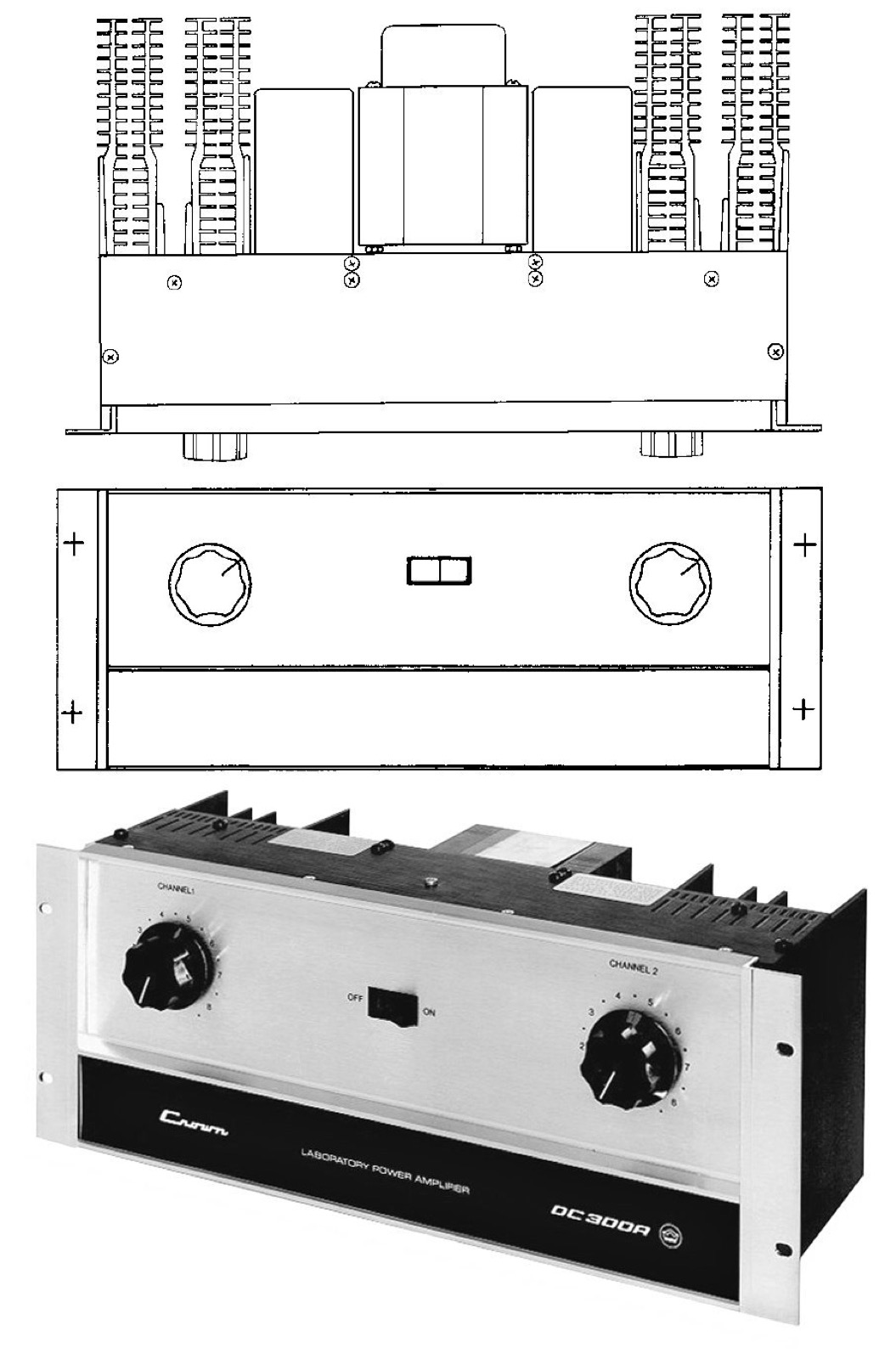
In 1967, Crown introduced a power amp called the DC300.
It was designed by Crown engineer Gerald “Jerry” Stanley.
The DC300 in numbers
For its time, the DC300 delivered remarkable power:
- 150 watts per channel into 8-ohm speakers
- Reportedly as much as 340 watts per channel into 4 ohms
- A launch price said to be $685
The AB+B circuit
The DC300 used a new circuit approach called AB+B.
In a power amp, it’s common to have separate transistors handle the top and bottom halves of the audio waveform. There are several ways to do this, each balancing sound quality, electrical efficiency, and the strain placed on the transistors differently.
Crown’s design aimed to deliver high power without overworking the transistors by carefully combining those approaches.

What “DC” means
The “DC” in the name is said to mean that the amp could amplify direct current. It could amplify very low frequencies without cutting them off along the way. That straightforward design idea was reflected in its name.
The first “reliable, high-powered” amp
The DC300 later came to be called the first reliable, high-powered transistor amplifier.
It could deliver a lot of power without breaking down easily, and it avoided many of the heat and wear issues associated with heavy tube amps.
For people running concert sound, it was exactly the kind of machine they had been waiting for. The DC300 found its way into live sound and PA rigs, and Crown grew into one of the world’s leading power amp makers.
Chapter 4 — Even After Sinking Into the Mud
The 1973 ad
The ad mentioned in the prologue is believed to date from around 1973.
A truck carrying gear rolled over, sending an updated DC300A into the mud. Crown turned the story that it still worked after being pulled out into an ad.

Of course, that doesn’t mean the amp was impossible to break. But stories like this helped build the trust of concert crews who loaded their gear night after night, hauled it from venue to venue, and ran it at high volume.
Hall of Fame
In 2007, the DC300 was inducted into the TECnology Hall of Fame, which recognizes landmark achievements in audio technology. That was exactly 40 years after its introduction. At the ceremony, designer Gerald Stanley accepted the honor.
Crown after the DC300
Crown kept making power amps after the DC300. Models such as the PSA-2 and PS-400 followed in that tradition.
In 2000, Crown’s audio division became part of Harman, a major audio company. Harman has been part of South Korea’s Samsung Electronics since 2017.
Chapter 5 — Choosing a Power Amp Today
For people making music at home, power amps may feel a little removed from everyday studio gear. But you need one with passive (non-powered) monitor speakers, or when putting together a small live rig.
Here are four basics to keep in mind when choosing and using a power amp.
1. Match the speaker’s impedance
Speakers have an impedance rating, such as 4 or 8 ohms. Check which impedance your amp supports and how much power it delivers at that rating.
2. Leave some power headroom
It’s generally a good idea for the amp to have a little headroom over the speaker’s power handling. An underpowered amp pushed too hard can produce distortion that may damage the speaker.
3. Power up in the right order
Turn on the mixer and other devices first, then the power amp last. When shutting down, reverse the order: turn the power amp off first. This helps keep the loud pop that can occur during power-up or shutdown from damaging your speakers.
4. Give heat a way out
Power amps produce a lot of heat. Leave space above and below them in a rack, and make sure air can move through it. This basic practice has helped gear last longer since the days of the DC300.
Epilogue — From a Chicken Coop to Stages Around the World
A small-town pastor wanted to build a rugged recorder for missionaries working far from home. The company he started in a converted chicken coop went on to make power amps that helped fill concert venues around the world with sound.
The DC300 was expected to do what that first recorder had to do: be tough and dependable. The story of an amp that played after sinking into the mud captures that idea better than anything else.
The next time you feel the sound of a big concert in your chest, take a moment to remember: behind it is the history of a company from one small town, built around the idea that its gear should keep working wherever it goes.
Crown Timeline
- 1947: Pastor Clarence C. Moore starts IREC in Elkhart, Indiana, beginning with rugged recorders for missionaries.
- 1949: IREC develops a recorder with a built-in 15-watt amplifier.
- 1960s: The company changes its name to Crown International.
- 1964: Crown introduces its first solid-state product, the SA 20-20.
- 1967: Crown introduces the DC300 power amp, designed by Gerald Stanley.
- Around 1973: Crown runs an ad featuring a DC300A that had sunk into the mud.
- 2000: Crown’s audio division becomes part of Harman.
- 2007: The DC300 is inducted into the TECnology Hall of Fame.
- 2017: Harman becomes part of Samsung Electronics.
References
- Wikipedia (English): “Crown International” and “Clarence C. Moore”
- Mix: “1967 Crown International DC-300 Power Amplifier”
- Sound & Video Contractor: “Crown DC 300 Enters Hall of Fame”
- Audio Masterclass: “Crown DC 300 enters TECnology Hall of Fame”
- NAMM Oral History (interviews with people connected to Crown)
- Related articles from FOH Online
Photo credits
- Header image, “Crown (Amcron) PS-200 Amplifier (8222742349),” Jacques from Cape Town, South Africa (cropped) / Wikimedia Commons / CC BY 2.0
- “Crown DC300 triple view,” Binksternet / Wikimedia Commons / CC BY-SA 3.0
Licenses: CC BY 2.0 and CC BY-SA 3.0.
About the illustrations
- All diagrams in this article were created by Gadget Creator Lab.