[Motorcycle History] From Radio Parts to a Century of Red Motorcycles — Ducati
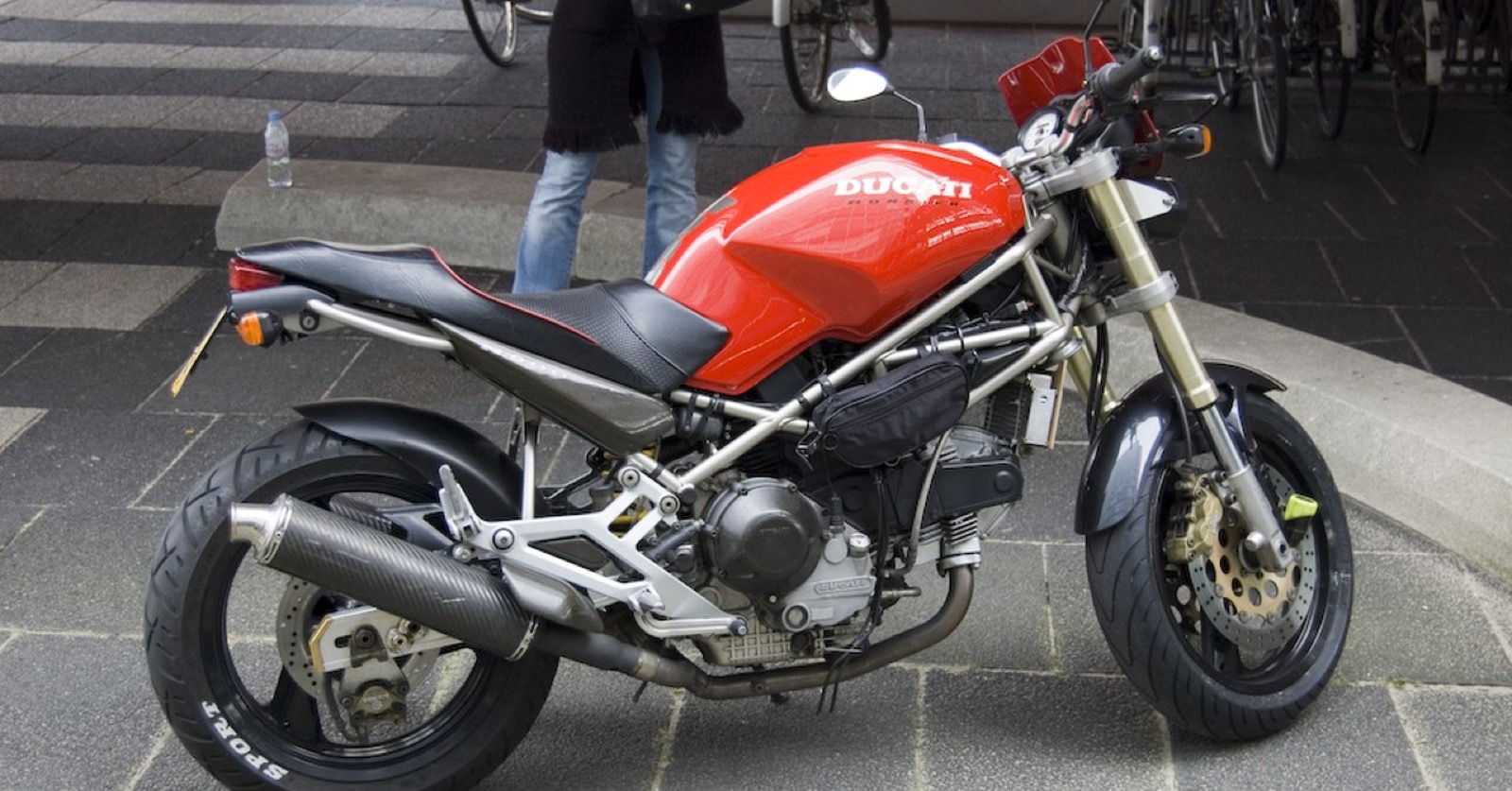
☕ A coffee-length story from GC Lab's "Motorcycle History" series, where we follow machines through the people and events behind them. This time: Ducati, which began as a radio-parts maker in Bologna and reached its 100th anniversary in 2026.
💡 What you'll learn
- Why a three-brother company making tiny radio parts ended up building motorcycles
- Engineer Fabio Taglioni and the unusual valve system called "desmodromic"
- How a company that kept changing owners climbed to the top of world racing
Prologue
April 1972, the town of Imola in northern Italy. A big crowd had gathered at the circuit to watch a long race of 200 miles, about 320 km. On the grid were machines from the powerful manufacturers that dominated big-bike racing at the time. Among them were bikes from Ducati of Bologna, with silver bodywork and a large V-shaped two-cylinder engine.
When the race was over, the top two steps of the podium belonged to those two Ducatis. The winner was the Englishman Paul Smart; second was the Italian Bruno Spaggiari. An Italian maker had taken first and second against the strongest teams in the world, on home soil.
From that day on, Ducati became known around the world as "the fast Italian motorcycle." Yet this company did not start with motorcycles. Forty-six years earlier, in 1926, three brothers had founded a business making a small part for radios, something that fit in the palm of your hand.
A factory burned to the ground in an air raid, a little engine you clipped onto a bicycle, an engineer obsessed with how valves close, and a long run of shaky ownership. This is the 100-year story of the company whose name became shorthand for red motorcycles.
Chapter 1 — A three-brother company born in the age of radio
In 1920s Italy, radio was just beginning to spread as a new technology. Voices and music from far away arrived in people's homes on the airwaves. It was an exciting time, a bit like the first days when the internet came into the home.
In Bologna, the Cavalieri Ducati family had a young man who was captivated by this new technology: one of the brothers, Adriano. He built his own shortwave radio equipment and became known for a successful experiment in contacting a distant station across the Atlantic. The family decided to turn the young researcher's enthusiasm into a business.
On 4 July 1926, the three brothers, Adriano, Bruno and Marcello, founded the "Società Scientifica Radio Brevetti Ducati" in Bologna. Roughly, the "Ducati Scientific Radio Patents Company." As the name says, it was a company built to turn radio technology into products.
Its first product was a capacitor called the "Manens." A capacitor stores electricity for a moment and smooths the flow of current in a circuit. Tucked away in an unseen corner of a radio, it helps keep reception stable. It is a small, humble part, but if the quality is not consistent, the radio will not sound right. Make it precisely, and make the same thing in large numbers. Ducati's craft began with exactly this work of building small parts accurately.
The brothers divided their roles clearly. Adriano took technology and research, Bruno handled management and money, and Marcello looked after the people. With someone to turn ideas into products, someone to run the company and someone to lead the workforce, the small family workshop grew quickly. In 1929 production moved from a corner of the family home to a building called "Villa Lydia," and the company began making radio equipment as well as capacitors.
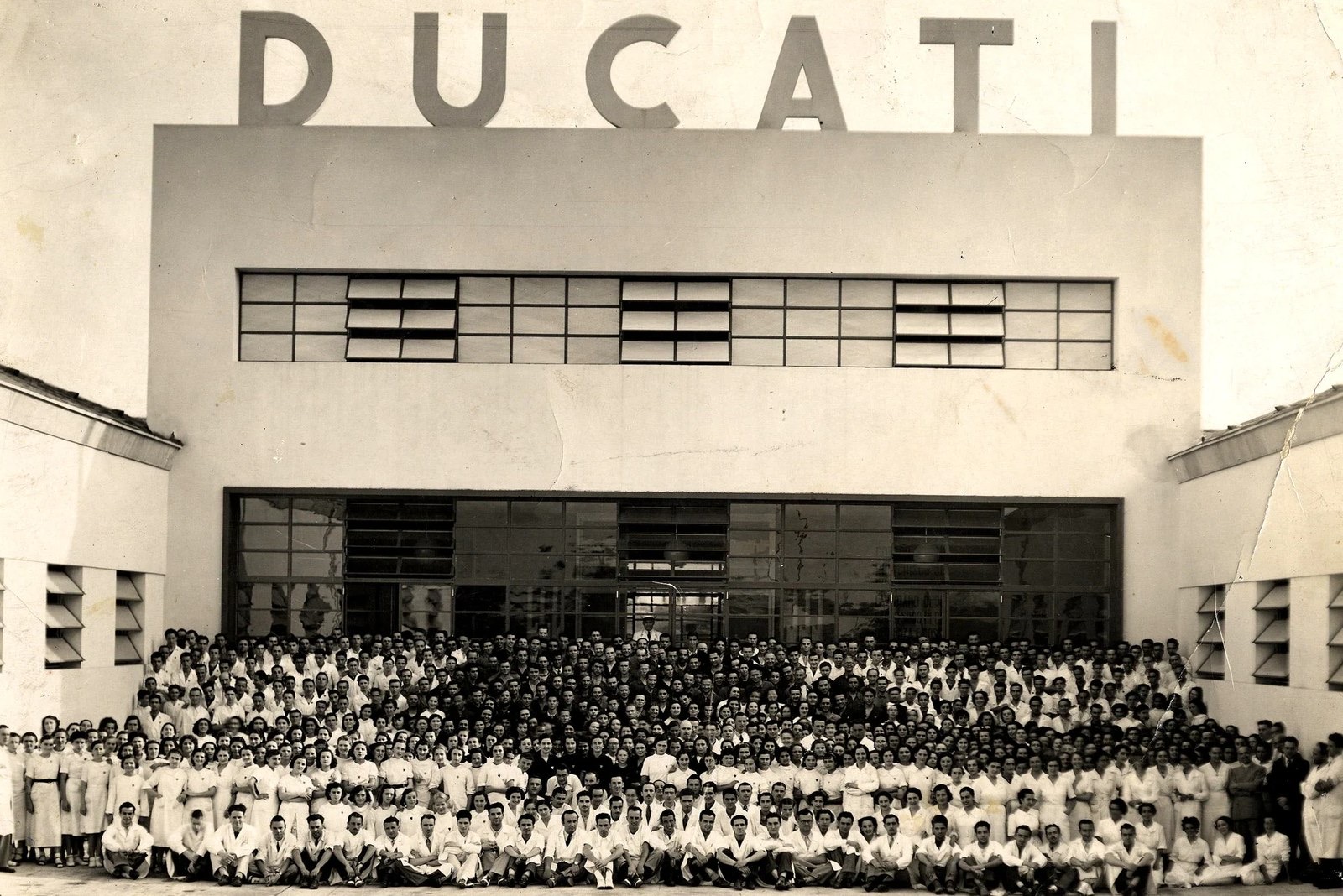
In 1935 the company began building a large factory at Borgo Panigale, on the outskirts of Bologna, and it started operating the following year. That same site is still home to Ducati's headquarters and factory today. In the 1930s, besides capacitors and radios, Ducati expanded into precision equipment one field after another: an office intercom called the "Dufono," calculating machines, cameras and more. It had become one of Italy's leading electronics makers.
But the times were heading toward war. During the Second World War, large factories came to be seen as militarily important. On 12 October 1944, the Borgo Panigale factory was hit in an air raid and badly damaged. The plant the brothers had spent 18 years building was left in ruins.