The Sound of a ‘Fired Professor’ That Filled the ’80s — Yamaha DX7
Prologue — The “Same Sound” on the 1986 Charts
It’s 1986. On the Billboard Hot 100, listen to several of the songs that reached No. 1 that year, and you’ll notice something.
The same sound keeps showing up.
A sparkling, clear electric piano with a glasslike ring. You hear it in ballad intros and tucked behind choruses: quiet, but unmistakable.
One count suggests that this same sound appeared in roughly 40 percent of that year’s U.S. No. 1 hits.
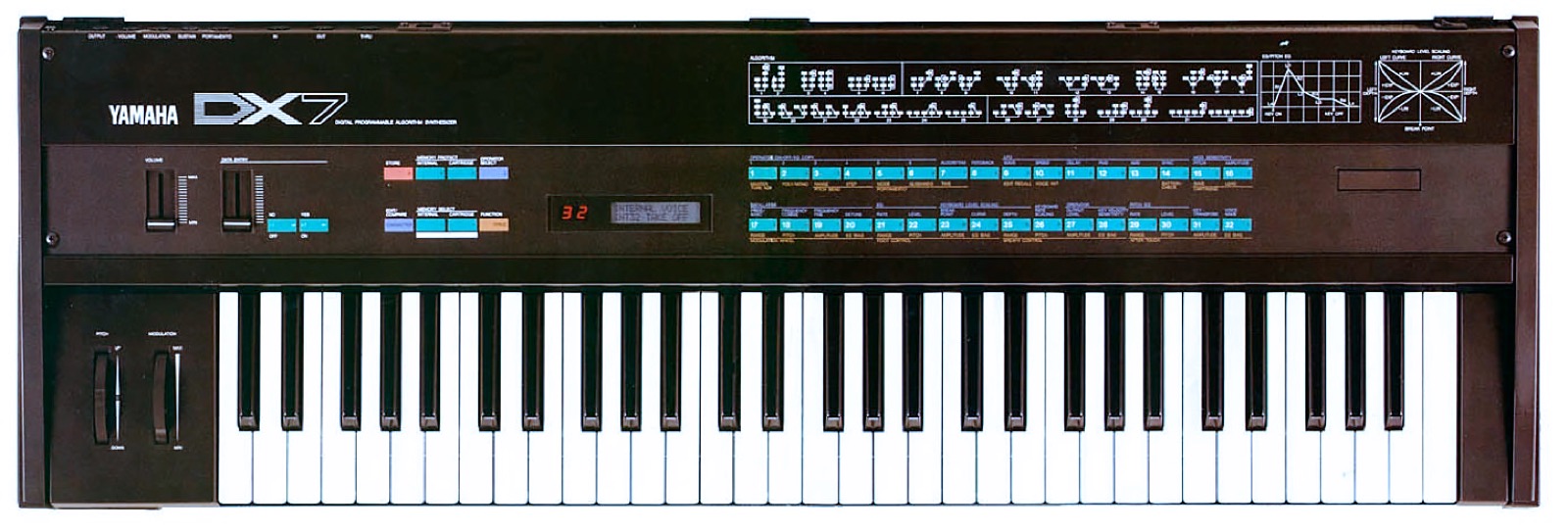
It came from a preset built into a synthesizer made by a Japanese instrument manufacturer. Its name was “E.PIANO 1.” The synthesizer was the Yamaha DX7.
But the person who discovered the technique behind that sound wasn’t a Yamaha engineer. He was a composer who had once been fired from an American university.
Let’s turn the clock back about 20 years. Our story begins at Stanford University on the West Coast, where a man sits at a computer, turning up the vibrato rate.
📝 About this story
This story draws on books, interviews, and manufacturer materials I’ve read over the years. I’ve tried to stick to the facts, but I wasn’t there, so some nicknames and commonly repeated accounts may be mixed in. Disputed stories are set apart in the Legend & Lore sections, and sources are listed at the end.
Chapter 1 — The Man Who Turned Vibrato Up Too Far
A Violin in the Attic
John Chowning was born on August 22, 1934, in Salem, New Jersey.
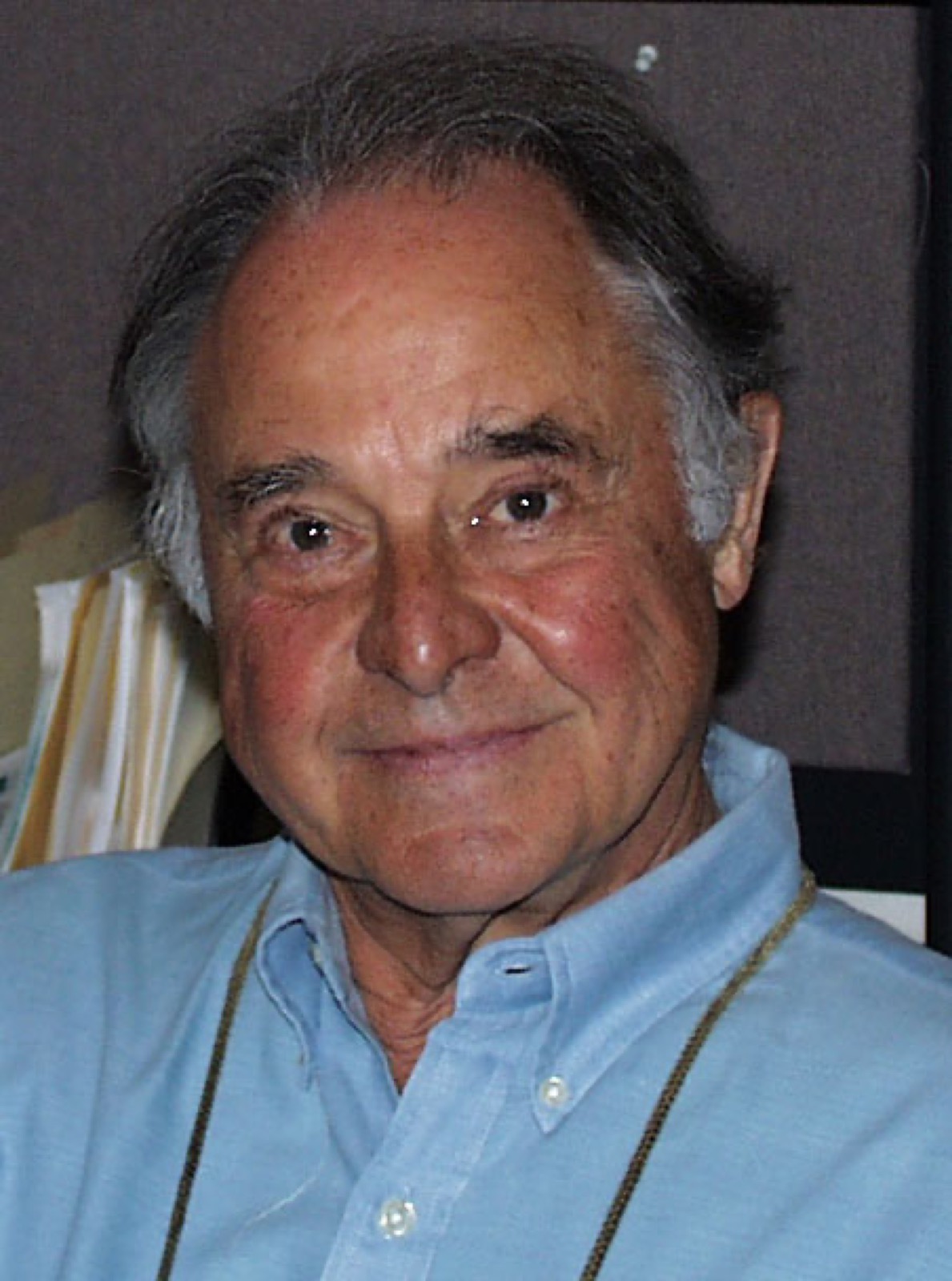
The first instrument he picked up was a violin he found in his family’s attic. In high school, he studied drums.
During the Korean War, instead of enlisting, Chowning auditioned for the Navy School of Music. He went on to perform as part of an 18-piece band aboard an aircraft carrier in the Mediterranean.
Paris, Then Stanford
After studying music in college, Chowning moved to Paris in 1959. His teacher was Nadia Boulanger, one of the 20th century’s most influential music educators. Under a teacher who had mentored many major composers, he studied composition.
Back in the United States, Chowning enrolled at Stanford University in California and earned his doctorate in 1966. There, he became absorbed in a field that was just getting started: making music with computers.
The 1967 Vibrato Experiment
Around 1967, Chowning was experimenting with vibrato on a computer.
Vibrato is a small, rapid wavering in pitch—the quiver in a singer’s voice or the motion of a violinist’s finger.
Chowning kept increasing the speed of that wavering: a few times a second, then dozens, and finally so fast that the ear could no longer hear it as a wavering sound.
Something strange happened.
The sound didn’t just “waver”; its entire color changed.
A New Kind of Tone
Once the wavering passed a certain point, many new components appeared around the original sound. Together, they created a completely different tone.
By changing the speed and depth of the modulation, he could make bell-like tones, brass-like tones, and sounds like struck metal. And the computer needed surprisingly few calculations to do it.
Because the technique used the same principle as FM radio, it came to be known as FM (frequency modulation) synthesis.
Over the next several years, Chowning refined his discovery into a technique that could be used to make music.
Now let’s follow that discovery across the Pacific, all the way to a Japanese instrument maker.
Chapter 2 — The Discovery the University Fired Its Maker For
No One Showed Much Interest
Stanford recognized the value of Chowning’s discovery, patented it, and looked for instrument makers who might put it to use.
The search didn’t go smoothly.
🎙 Legend & Lore 1 — The Yamaha Engineer Who “Got It in 10 Minutes”
There’s a story that gets told often.
Stanford first tried pitching FM technology to American electronic-organ makers and others. Many instrument companies were rooted in analog circuits and struggled to understand the idea of creating sound through digital computation.
Then a young Yamaha engineer came from Japan, heard the explanation, and understood its value right away. Chowning later recalled, the story goes, that it took him “about 10 minutes” to get it.
Accounts vary on which companies turned Stanford down and which Yamaha engineer made the visit. What we do know is that Yamaha was the company that ultimately acquired FM.
1973 — A One-Year Trial
In 1973, Yamaha first licensed the FM technology on a one-year trial. Its engineers began testing whether it could work in a musical instrument.
That same year, Yamaha is said to have built a fully digital synthesizer prototype called “MAD” for its FM experiments.
Fired from the University
Around that time, Chowning himself faced an unexpected setback.
Stanford let him go.
Research into making music with computers was still difficult for many people at universities to understand. As a young faculty member, Chowning couldn’t keep his position.
He went to Europe and spent time as an artist in Berlin. He would also help establish IRCAM, a French institute for music research.
The Professor Who Came Back
In 1974, Stanford formally licensed FM technology to Yamaha. In 1975, Yamaha secured exclusive rights.
As FM’s value became clear, the university realized how important the man it had let go was. Stanford brought Chowning back.
Chowning later joked: “That was the only time the university fired a young faculty member and then hired him back.”
In 1975, with Chowning at its center, Stanford established CCRMA, a research center for computer music. It remains a world-leading hub for computer music research.
Chapter 3 — Yamaha’s Decade of Work
Too Much Computing Power
On a computer, FM was a way to produce rich sounds with relatively few calculations. But computers in the 1970s were room-sized machines. Yamaha had to fit the technology into an instrument that could be carried onto a stage.
That required dedicated semiconductor chips (LSIs) capable of handling FM calculations at high speed. Yamaha would spend years developing them.
1980 — The GS1
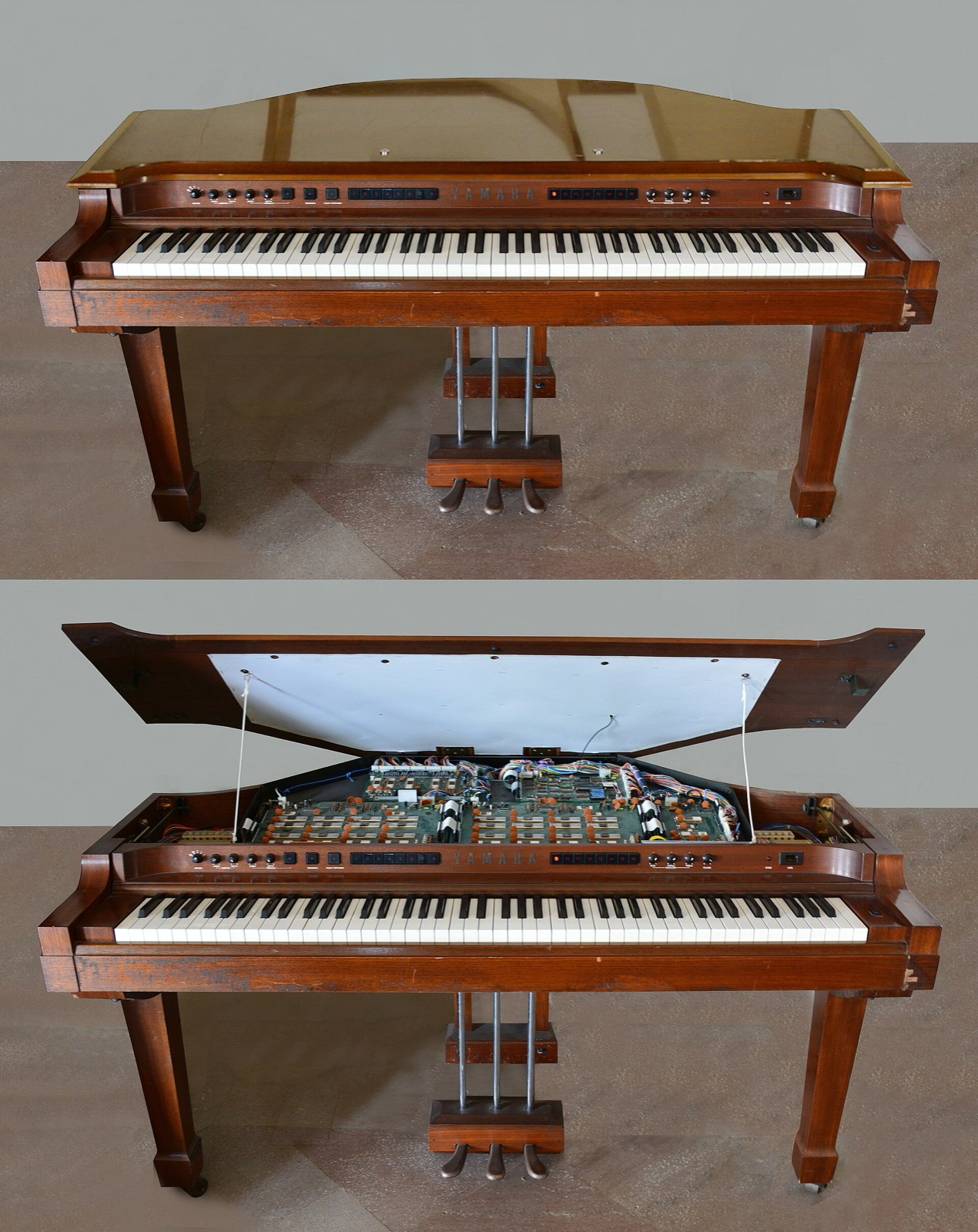
In 1980, Yamaha released the GS1, its first FM synthesizer.
It was an impressive instrument with the look of a grand piano. Inside, though, it packed around 50 semiconductor chips and carried a very high price. It was made for a limited number of professional musicians and studios.
Two Chips
Yamaha’s engineers kept working on the semiconductors. They managed to reduce the roughly 50 chips required by the GS1 to just two.
That made it possible to build an FM synthesizer at a price more people could afford.
1983 — The DX7
In 1983, Yamaha released the DX7. It cost $1,995 in the United States and ¥248,000 in Japan.
- It made sounds by combining six “operators” (sound-generating components).
- It offered 32 algorithms, or ways to combine those operators.
- It could play up to 16 notes at once.
- Playing a key harder (velocity) or pressing it further (aftertouch) could change the sound.
- It had an LCD screen and cartridges for storing sounds.
The DX7 was also among the first synthesizers equipped with MIDI ports, using the standard announced that year. (Ikutaro Kakehashi of Roland, maker of the TR-808, also played a major role in MIDI’s creation.)
It produced clear, sparkling sounds that analog synthesizers hadn’t been able to make: electric piano, bells, brass, and a thick, punchy bass. No one had heard anything quite like the DX7.
Chapter 4 — Sounds Few People Could Program
No Knobs
The DX7 had one big problem.
It was very difficult to program.
Analog synthesizers had lots of knobs, and you could see how the sound changed as you turned them. The DX7 had almost no knobs for shaping tones. Instead, you moved through layers of settings on a small LCD screen with buttons, changing one number at a time.
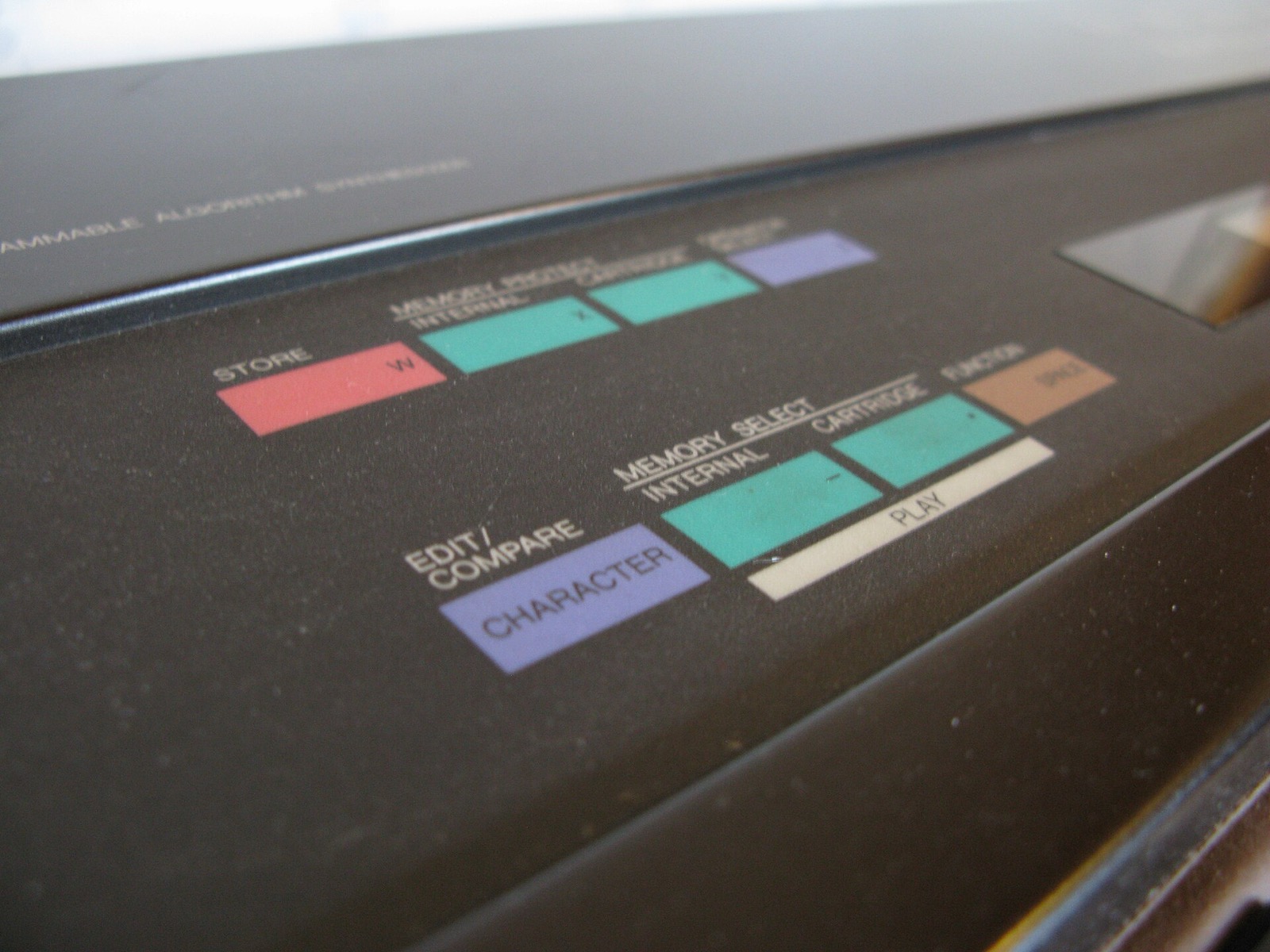
The FM process itself was hard to grasp intuitively, too. Most people couldn’t predict why changing one number would produce a particular sound.
One music publication later described the DX7’s interface as nearly “impenetrable.”
Presets Made in Less Than Four Days
That made the 128 sounds (presets) included with the DX7 especially important.
They were created by Dave Bristow and Gary Leuenberger, sound designers who had also worked on Yamaha’s earlier classic, the CS-80. It’s said that they put all 128 sounds together in less than four days.
Among them were the familiar “E.PIANO 1” and “BASS 1.”
🎙 Legend & Lore 2 — “Everyone Just Used the Presets”
A familiar claim about the DX7 goes like this:
“Most musicians didn’t make their own sounds; they just used the ones that came with it.”
Of course, musicians such as Brian Eno made their own sounds on the DX7. Plenty of sound cartridges created by skilled programmers also circulated.
Still, it seems clear that many hit songs used the DX7’s factory presets almost exactly as they were. That’s why the “same sound” turned up all over the 1986 charts.
The instrument was so difficult to program that sounds made in less than four days became the sound of an era. There’s a little irony in that.
Chapter 5 — Taking Over the Charts
They Expected to Sell 20,000
Yamaha reportedly expected to sell around 20,000 DX7s.
Instead, orders topped 150,000 within a year of its release. In about three years, sales are said to have reached roughly 200,000.
Until then, synthesizers had been expensive gear for a small group of musicians. The DX7 turned the synthesizer into an instrument that bands and composers around the world could own.
The Sound of the ’80s
The DX7 could be heard throughout 1980s hit music.
- “E.PIANO 1”: the electric-piano sound used in countless ballads and pop songs
- “BASS 1”: the punchy bass heard in songs such as a-ha’s “Take On Me” and Kenny Loggins’s “Danger Zone”
- Tubular bells: a clear bell sound praised for sounding like the real thing
Prince, Michael Jackson, and Brian Eno (on the 1983 album Apollo) all used the DX7. Its sounds also appear in the theme music for the TV series Twin Peaks.
In Japan, too, the DX7 became a fixture in studios making 1980s kayōkyoku and pop, helping define the sound of the decade.
Stanford’s “Cash Cow”
The DX7’s success brought Stanford University a windfall.
Reports put the total licensing revenue Stanford received from Chowning’s patent at $22.9 million. For a time, it was one of the university’s most lucrative patents.
The discovery of a young faculty member the university had once let go made it a fortune.
Chapter 6 — Out of Fashion, Then Back Again
Cursed by the Sound of the ’80s
An instrument that sells too well can face a certain fate.
By the 1990s, the DX7’s sparkling sound was seen as “so ’80s” and old-fashioned. Musical tastes shifted toward the fat sound of analog synths, sampling, and more raw-sounding bands.
Yamaha continued to release FM successors, including the DX7II and TX81Z. But the DX7’s boom never came again.
FM Inside a Game Console
FM synthesis survived in an unexpected place.
Sega’s home console, released in 1988 as the Mega Drive (called the Genesis outside Japan), included Yamaha’s YM2612 FM sound chip. The hard-edged, powerful sound of its game music came from the same FM principle as the DX7.
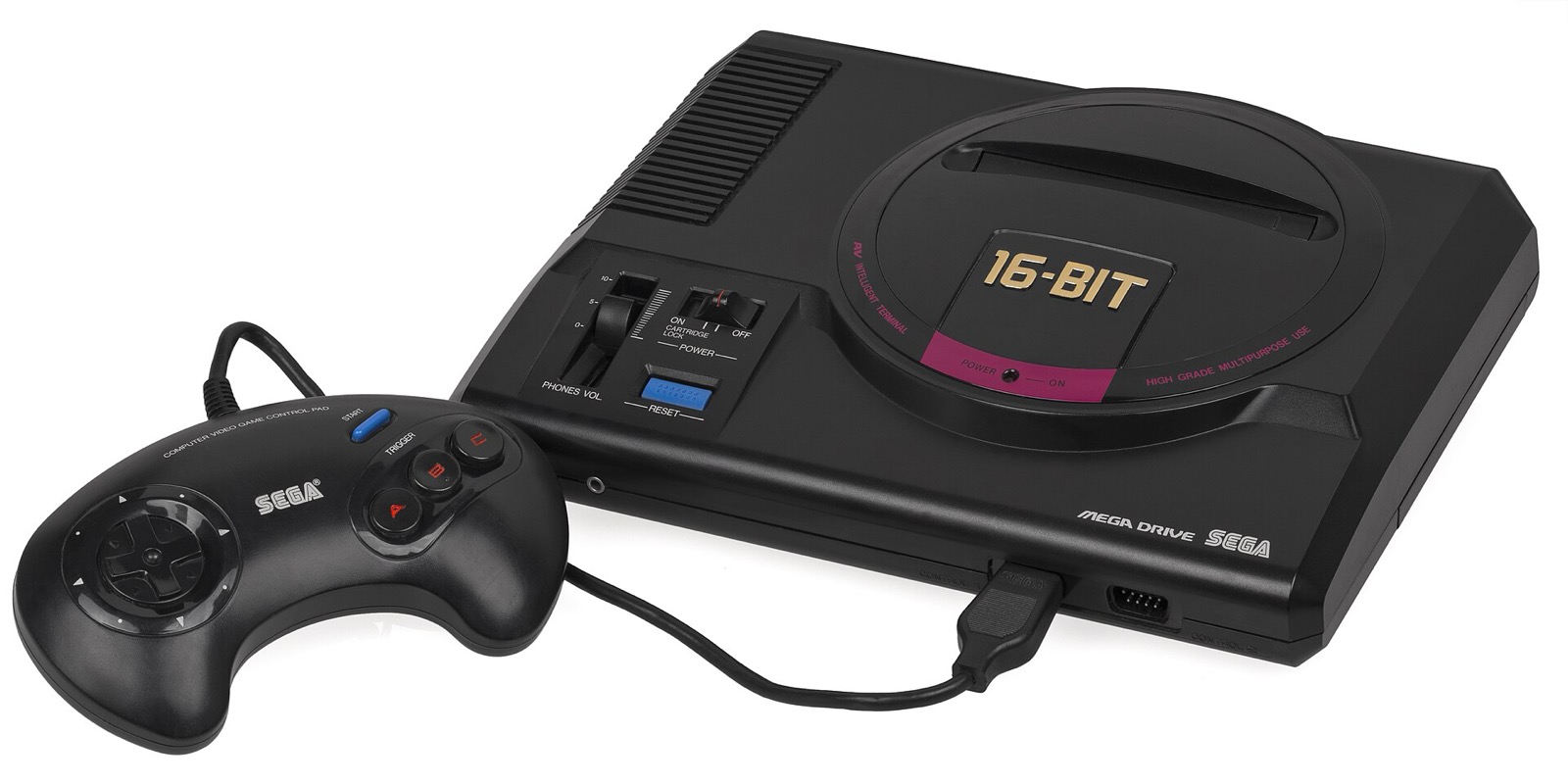
Children who grew up with FM game music would later become musicians themselves.
A Software Revival
As computers grew more powerful in the 2000s, FM synthesizers returned as software.
There was Native Instruments’ FM8, and the free Dexed, which recreates the DX7’s sound. People around the world could load DX7 sound data on their computers and play those ’80s tones again.
In 2015, Yamaha released a compact FM synthesizer of its own: the reface DX. It used modern technology to make the DX7’s challenging approach easier to explore.
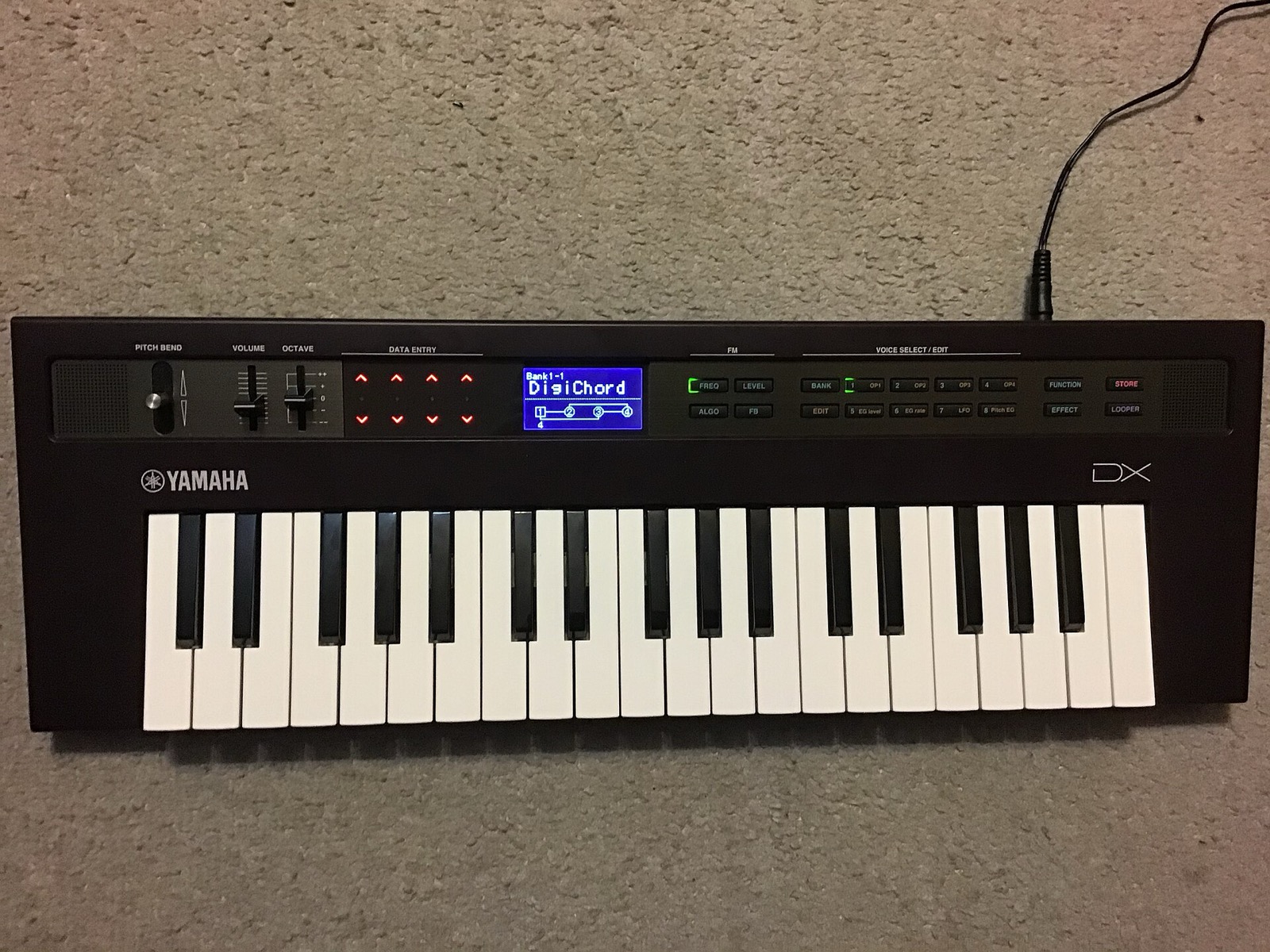
Over time, a sound once dismissed as old-fashioned was rediscovered by younger musicians as “nostalgic and new.”
What Happened to Chowning
John Chowning continued his research and composition in computer music as a Stanford professor.
His 1972 piece Turenas used four speakers to create a space in which sound seemed to circle all the way around the listener. Stria (1977), commissioned by IRCAM in Paris, made vivid use of FM’s distinctive tones.
In 1986, Yamaha honored him as its “Man of the Year.”
Epilogue — The Vibrato Knob
In 1967, a man sat at a Stanford computer and kept turning up the speed of vibrato.
He wasn’t looking for a hit-chart sound. He simply wanted to make music on a computer that no one had heard before.
The university once let his discovery—and him—go. American instrument makers struggled to understand it. A decade of work by Japanese engineers turned it into an instrument. Then one electric-piano sound, created in less than four days, rang out across hit records around the world.
Somewhere today, someone is loading DX7 sound data into a computer.
“E.PIANO 1.”
That glasslike sound that filled the 1986 U.S. charts begins to play again.
DX7 Timeline
- 1934: John Chowning is born in New Jersey.
- 1959–61: He studies with Nadia Boulanger in Paris.
- 1966: He earns his doctorate at Stanford University.
- Around 1967: He discovers the principle of FM synthesis through experiments with vibrato.
- 1973: Yamaha receives a one-year trial license; the fully digital “MAD” prototype is built.
- Early 1970s: Chowning loses his Stanford position, then is later brought back.
- 1974: Stanford formally licenses FM technology to Yamaha.
- 1975: Yamaha secures exclusive rights; CCRMA is established.
- 1980: Yamaha releases its first FM synthesizer, the GS1.
- 1983: The DX7 launches ($1,995 / ¥248,000); the MIDI era begins.
- Around 1984: Orders top 150,000 within a year of launch.
- 1986: “E.PIANO 1” is used on roughly 40 percent of U.S. No. 1 hits that year.
- 1987: The DX7II appears.
- 1988: Sega releases the Mega Drive with the YM2612 FM chip.
- 2015: Yamaha releases the reface DX.
References
- Wikipedia: “Yamaha DX7,” “John Chowning,” “Frequency modulation synthesis,” “Yamaha GS1,” and “Yamaha YM2612” (English editions)
- Mix, “Talk: John Chowning”
- MusicRadar articles about the DX7
- Official Stanford CCRMA website
Photo credits
- Header image, “YAMAHA DX7” — Finnianhughes101 / Wikimedia Commons / Public domain
- “Chowning” — Provided by John Chowning (uploaded by Chaiken) / Wikimedia Commons / CC BY-SA 3.0
- “Yamaha GS1 Synthesizer ... photomontage with open and closed cover” — Original image by Daniel Hartwig / Wikimedia Commons / CC BY 2.0
- “Yamaha DX7 Memory select” — Leo-setä / Wikimedia Commons / CC BY 2.0
- “Sega-Mega-Drive-JP-Mk1-Console-Set” — Evan-Amos / Wikimedia Commons / Public domain
- “Yamaha Reface DX Synth” — AdamV57 / Wikimedia Commons / CC BY-SA 4.0