Cheap, Fat Distortion for the Whole World: Electro-Harmonix and the Big Muff
☕ A coffee-length story — about a 15-minute read. This is the tale of a small company started by a computer salesman — one that went under twice, ended up owning a Russian factory, and never stopped shipping "fat" distortion to every corner of the world.
Prologue — A Music Shop on 48th Street
Manhattan, New York, at the very end of 1969 or the start of 1970. West 48th Street was lined with music shops where professional musicians gathered. One of the best known was Manny's Music.
One day a man walked into the shop carrying a few small boxes that had only just been made. A grey metal case with three knobs. Plug in a guitar, and the sound turned gritty and thick, and went on sustaining and sustaining.
A few days later, so the story goes, the owner's son told the man: "I sold one of those to Jimi Hendrix."
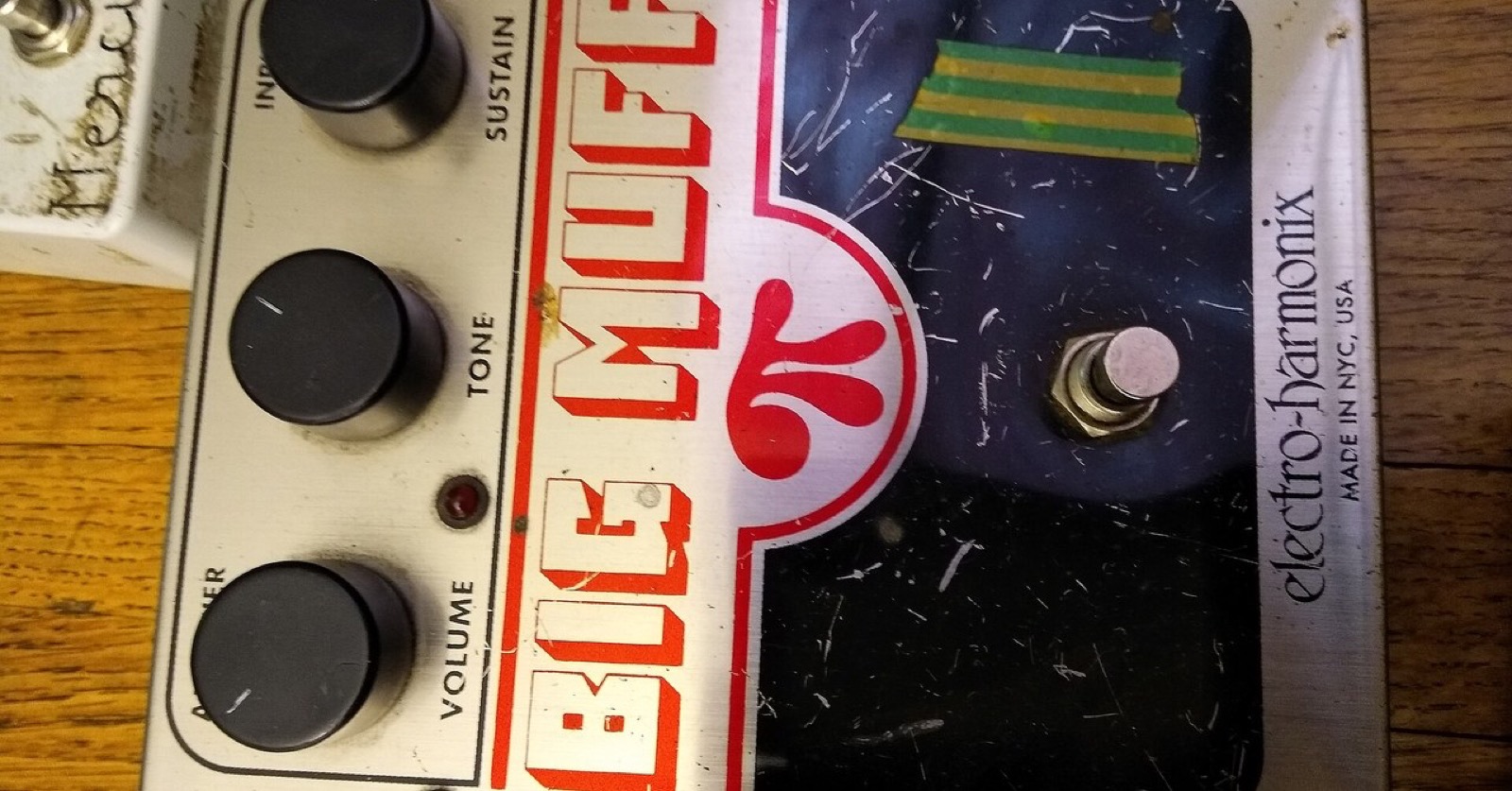
The box was the Big Muff π. The man who brought it in was Mike Matthews. His company, Electro-Harmonix, was barely a year old.
Most of Hendrix's famous tone came from gear built by another engineer. The Big Muff didn't create his sound. But there's no doubt that over the next fifty-odd years, this box spread to the feet of guitarists all over the world.
Cheap, not exactly sturdy, but with a fat sound. This is the story of the New York businessman who kept on making boxes like that.
Chapter 1 — A Bronx Kid and Rock and Roll
Fishing balls out of the sewer
Mike Matthews grew up in the Bronx, New York. He said he was 76 in a 2018 interview, so he was born in the early 1940s.
He loved doing business from childhood. By his own account, from about the age of five he fished balls out of sewers and sold them, and sold lenses, prisms and golf balls too.
At five he also began learning piano from his mother. From six or seven he had proper classical lessons, and was good enough to give recitals at elementary school. But in fourth grade, after he climbed up into the classroom rafters, a teacher cancelled his recital — and he quit the piano altogether.
In high school he sat down at the keyboard again. This time he played boogie-woogie and rock and roll, not classical music.
Cornell, and rock and roll shows
He went to Cornell University and studied electrical engineering — because his father told him he needed a profession, and because he had done well in high school physics.
At Cornell he saw a rock and roll band live for the first time. He promptly bought a Wurlitzer electric piano and a Hammond organ, and picked up a funkier style under the influence of R&B bands.
By the early 1960s he was promoting rock shows himself, booking groups such as the Isley Brothers. Once, after a gig, the musicians urged him to drop out and go on tour with them. But Matthews had already decided on a business career.
IBM, and Jimmy James
After graduating, Matthews joined IBM, selling computers in New York. By day, a salesman in a suit. By night, a rock show promoter.
In that night-time world he became close friends with a guitarist who was still calling himself Jimmy James — the future Jimi Hendrix.
Matthews visited Hendrix in a narrow hotel room with no toilet, and sat in on his recording sessions in New York. Hendrix would have the drummer and bassist jam until he felt the groove, then signal the engineer to start recording. Matthews believes that approach is part of why Hendrix's records have so much soul.