QuickSnap and Fujifilm — How a Film Company Found Its Way to the X100
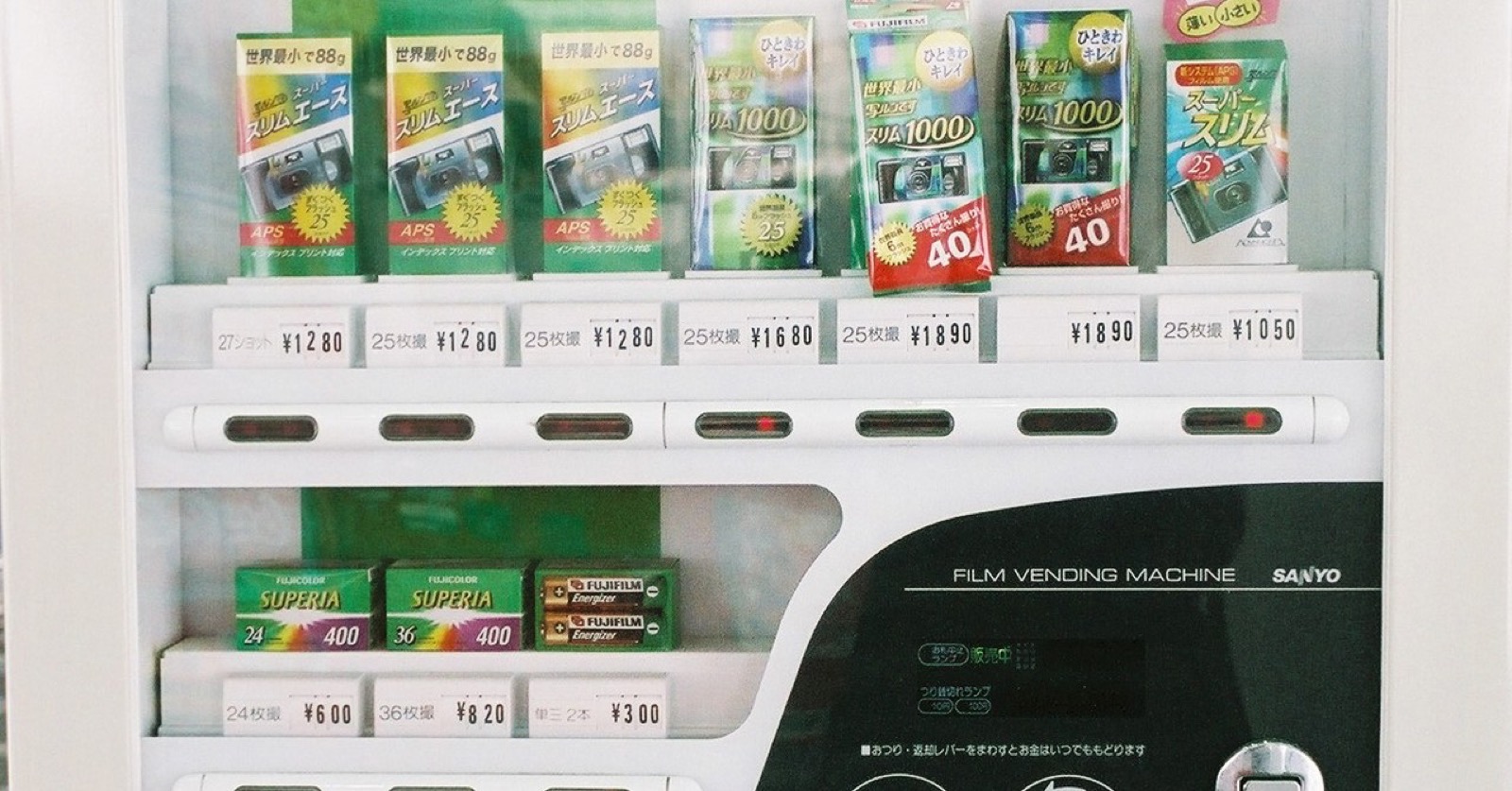
☕ A coffee-length story from our camera history series. We trace a company through the people, decisions, and products that changed its era. This time: Fujifilm, founded to make film in Japan, known worldwide for QuickSnap, and still making cameras in the digital age with the X100.
💡 What you’ll learn
- How Fujifilm went from making film in Japan to competing with Kodak in color photography
- Why the idea of putting a lens on film became QuickSnap
- How Fujifilm weathered the collapse in film demand and carried film’s colors and feel into the X100
A Company’s History Inside Two Cameras
Pick up a QuickSnap and the first thing you notice is how easy it is to take a picture. There’s no power switch, no lens to choose, no settings to figure out. Point it, press the shutter, and light lands on film.
The top plate of the X100, by contrast, is lined with dials for shutter speed and exposure compensation. It gives you the feel of operating a camera, yet inside is a digital sensor. It’s a digital camera dressed like a film camera.
These two tools seem to belong to very different worlds. But both ask a very Fujifilm question: What can we give the person taking the picture? QuickSnap answered, “A camera anyone can use, anywhere.” The X100 answered, “The color and pleasure of operating a camera can live on in digital photography.”
The roots of both answers go back to the company’s start in film in 1934. Fujifilm’s story is one of a film company that made cameras, faced a crisis when film sales collapsed, and carried the memory of film into the digital age.
Chapter 1 — 1934: The Challenge of Making Film in Japan
Making the Material for Photography Ourselves
Fuji Photo Film Co., Ltd. was established on January 20, 1934. Behind its creation was a national plan to manufacture photographic film in Japan. At the time, Japan imported its film from Europe and the United States. The company began with a simple ambition: make an essential material for photography at home instead of relying on overseas suppliers.
The business took over the photographic film division of Dai Nippon Celluloid. At the Ashigara Factory in Kanagawa Prefecture, it made not only film but also photographic paper and dry plates—materials for recording light. The factory began operating in the same year the company was founded.
Film is not made by simply coating a thin strip with light-sensitive material. The emulsion that captures light must be made consistently, coated evenly, dried, protected from scratches, and tuned to produce the intended colors and tonal range after development. That takes control of every step, from raw materials to finished product. Building a domestic film industry meant creating a foundation in chemistry and manufacturing from the ground up, not just copying an import.
The company started with motion-picture and graphic-arts film. In 1936 it introduced X-ray film for medical use. The light-sensitive materials developed for photography could also help reveal disease. The seeds of Fujifilm’s later medical business were already growing beyond the camera.
A Distant Mountain Becomes a Global Brand
The name “Fuji” invokes Japan’s most famous mountain. Four years after its founding, the company began exporting in 1938, and in the 1950s it built sales offices overseas. The goal was not simply to make a domestic product, but to make film that people around the world would choose.
After the war, photography moved beyond specialists and news organizations. People used cameras to record family life and travel, and demand for color pictures grew. Color film was more complex than black-and-white: both emulsion formulation and processing had to be precise. In overseas markets, Kodak already had decades of experience and a huge customer base.
The Race for Color Against Kodak
As Fujifilm developed color film, Kodak was the leading name in the global market. It had helped set the standard for film in everything from family snapshots to movies. For a later entrant like Fujifilm, improving color, manufacturing reliably at scale, and earning trust in markets around the world meant a long contest.
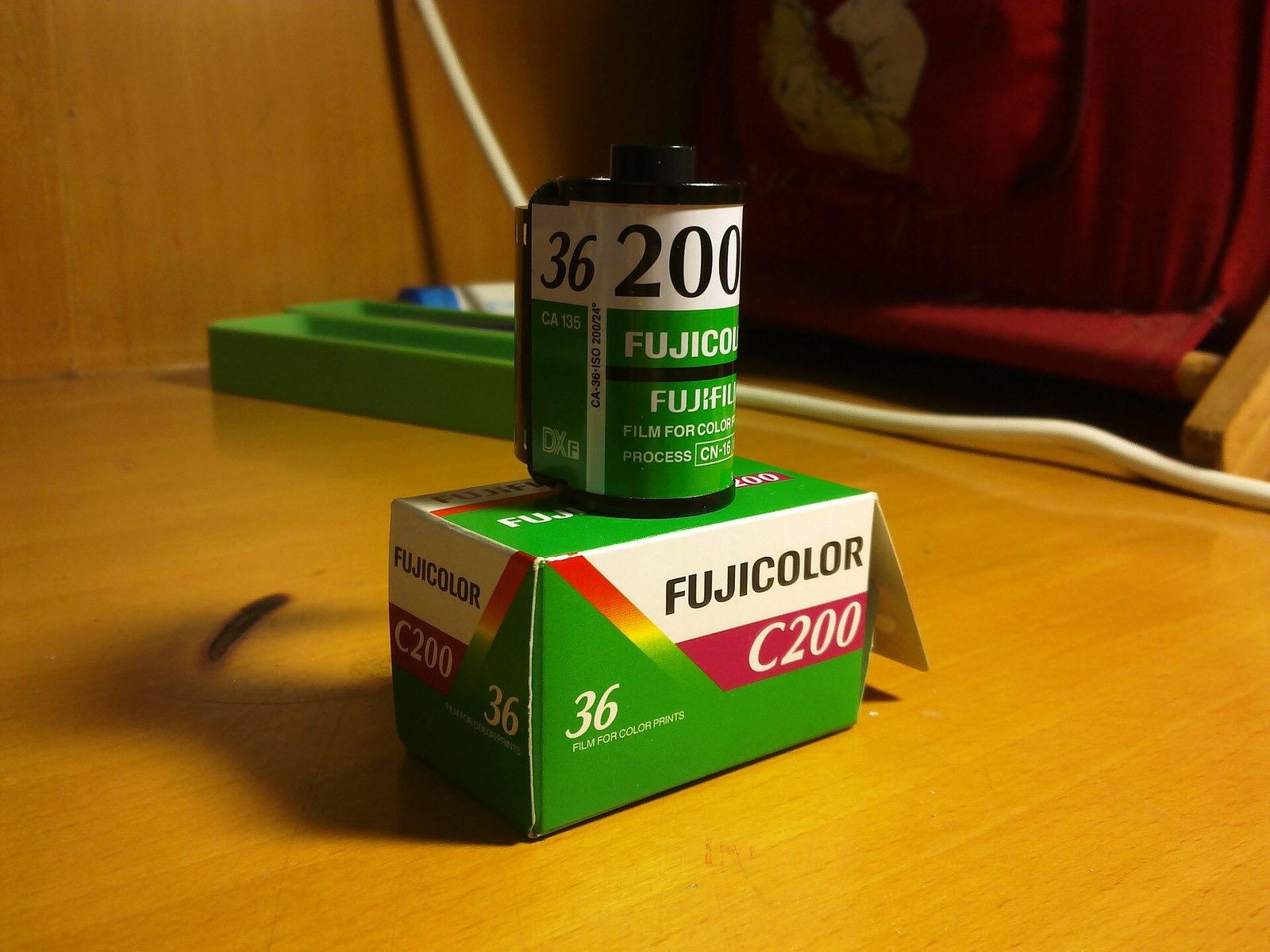
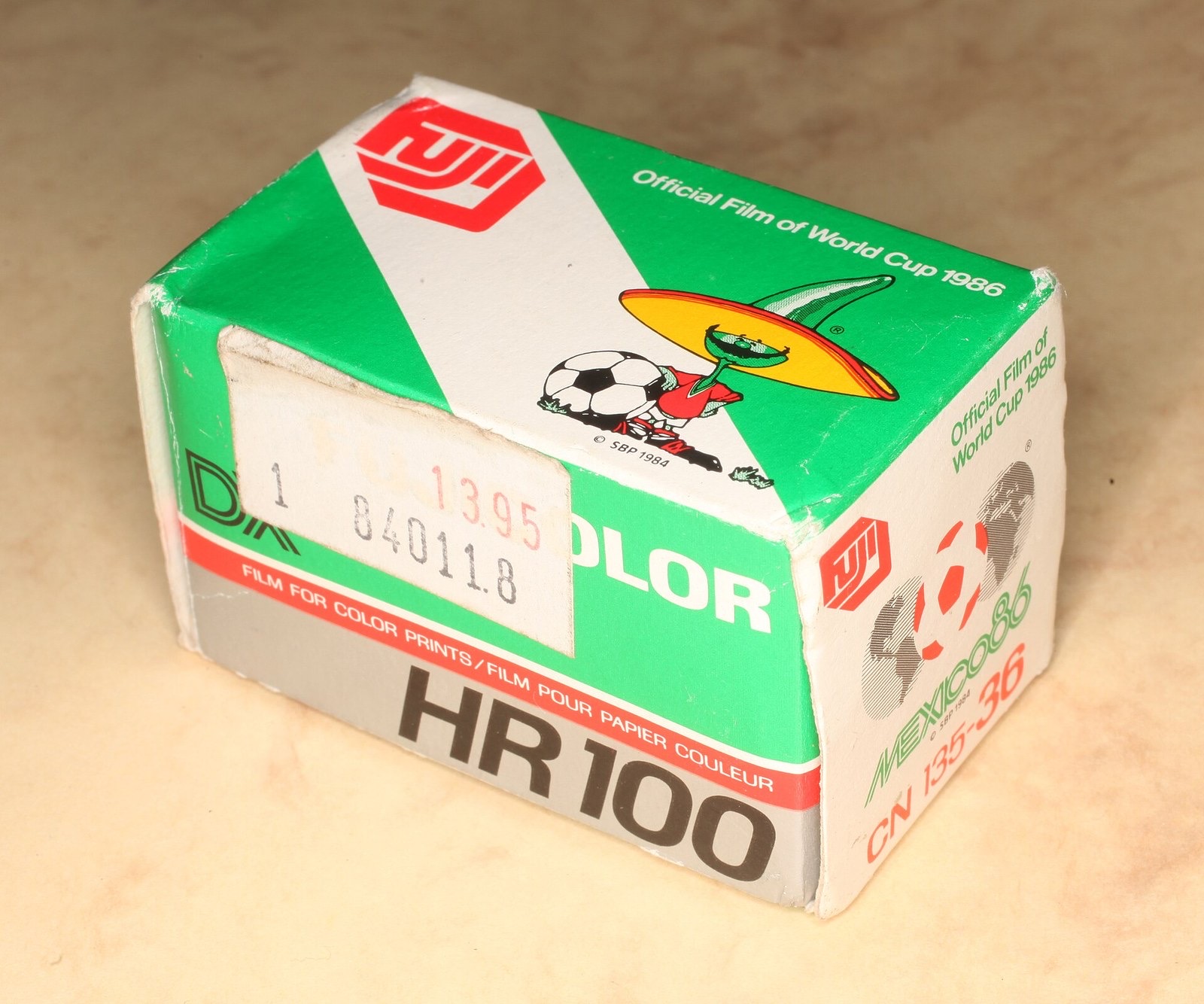
Fujifilm worked on more than vivid color. It steadily improved speed, grain, image stability, and ease of processing—the qualities people expected from film. In the 1970s it developed high-speed color negative film that made it easier to shoot in low light. Its Fujicolor HR line, introduced in 1980, pushed that high-speed film trend forward.
Film color is part of a company’s technology, but it also becomes part of a photographer’s memories. How green foliage looks, how skin tones come through, how deep a sunset’s reds appear: what people remember as “Fuji color” was the result of decades of work on materials and processing.
Chapter 2 — Putting a Lens on Film
Not Simplifying the Camera
You might want a camera, but find choosing a lens and setting exposure intimidating. You might forget to bring it on a trip or to an event. And until you finished a roll and sent it to be developed, you couldn’t see how the pictures turned out. Photography came with a string of small hassles.
Then came an idea that turned the problem around. Instead of putting film into a camera, put a lens and shutter on the film. Make the photographic material itself into a complete picture-taking tool, then send it for processing when you’re done. It wasn’t a way to simplify the camera. It was a way to turn film into a camera.
In July 1986, Fujifilm launched QuickSnap, known in Japan as Utsurun desu. It was the world’s first lens-fitted film camera. The first model used 110 film and packed a lens, shutter, and film into a single lightweight body.
QuickSnap lowered the psychological barrier to carrying a camera. You didn’t need to buy expensive equipment or learn how to reload film after a roll. You could bring one along for a trip or a party in addition to your regular camera. It let anyone who happened to be there press the shutter, not just people who knew a lot about photography.
The Strength of the Name “Utsurun desu”
The Japanese product name expressed the idea behind the camera: “It takes pictures.” It named the result for the user, not the camera’s mechanism. You didn’t need to know the specifications to understand what it did.
The following year, a model using 35 mm film arrived. Flash-equipped and telephoto versions followed, each suited to different kinds of pictures. A single-use camera could slip into the gaps in everyday life precisely because it was so simple. It made photography possible at the beach, on a trip, during a school excursion, or at a wedding—places where you might not want to risk carrying your best camera.
“Single-use” did not mean the camera was simply thrown away after shooting. QuickSnap grew alongside a collection and recycling system: the used camera was returned, its film removed, and the pictures developed. The product’s journey continued after it left the photographer’s hands. That was a natural fit for Fujifilm, a film maker with processing and printing infrastructure as well.
A Hit at the Intersection of Technology and Everyday Life
QuickSnap’s breakthrough was about more than putting a lens on film. Fujifilm found a way to make a step in the whole photographic experience—from taking a picture through processing and printing—easier.
Instead of adding more camera features, it removed the hurdle before you could start shooting. And when you were done, you still had photographs to hold. You couldn’t take endless retakes as you could with a digital camera, so each frame drew a little more attention. That limitation was part of the QuickSnap experience.
The product also foreshadowed the digital transition. Fujifilm was a film company, but it kept changing the form of the tools people used to take pictures. In 1988 it developed the FUJIX DS-1P, a digital camera that recorded images on a memory card. A company that made film was already stepping into cameras that used none.
Chapter 3 — The Day Film Stopped Selling
Around 2000, the Main Act Changes
As digital cameras spread, people could see their pictures right away. There was no need to take film in for processing or buy another roll. Eventually, phones got cameras too. People took more pictures, but used less and less film.
Demand for Fujifilm’s photographic film peaked in 2000 and then fell rapidly. According to the company’s 90-year history, by 2010 it had dropped to less than one-tenth of its peak. A core business that had sustained the company for decades was pushed out of the center of the market in a short time. For a company with film factories and a distribution network, this was not a temporary downturn. The whole system of photography was changing.
Fujifilm did not become a company devoted only to protecting film. It examined the technologies developed in film manufacturing and reshaped them for other markets. In 2004 it set out its VISION75 medium-term management plan, aiming to build new pillars of business by applying technologies developed through research into photographic materials.
Film Technology Had a Life Beyond Photography
Making film takes chemistry, precision coating, particle dispersion, oxidation control, and rigorous quality management, among many other skills. Fujifilm expanded those capabilities into healthcare, cosmetics, liquid-crystal materials, printing, and digital imaging.
ASTALIFT cosmetics drew on the company’s work with collagen, antioxidants, and nanotechnology in film research. Photographic film has to preserve delicate light-sensitive materials over time. Techniques for managing light and oxidation, and for handling ingredients at a tiny scale, found a connection with skincare.
In medicine, imaging technologies that began with X-ray film expanded into digital X-ray diagnostic systems, endoscopes, and medical information systems. In 1983, Fujifilm developed FCR, a digital X-ray imaging system that used computer processing. Rather than saying that a photography company moved into medicine, it may be more accurate to say that it brought the skills of recording images, making them easier to interpret, and delivering them to the right people into healthcare.
The company’s name changed too. In 2006, Fuji Photo Film Co., Ltd. became Fujifilm Holdings Corporation, a holding company, and a new operating company, FUJIFILM Corporation, was established. The shift was from “a photographic film company” to “a company with several businesses built around photographic technologies.” The name change marked a change in the business itself.
Chapter 4 — The Feel of Film, Preserved in the X100
A Vintage Camera with a Viewfinder from the Future
In 2011, Fujifilm launched the FinePix X100. Its metal dials and optical viewfinder called to mind a rangefinder camera, but inside was a digital camera with an APS-C-sized sensor.
The X100’s defining feature was its hybrid viewfinder. With a lever, you could switch between an optical viewfinder that looked through the lens and an electronic viewfinder that overlaid an LCD display. The optical view gave you the feeling of looking directly at your subject even as you took the picture. The electronic view let you preview the effects of exposure and color settings. Past ways of seeing and digital convenience lived together in one viewfinder.
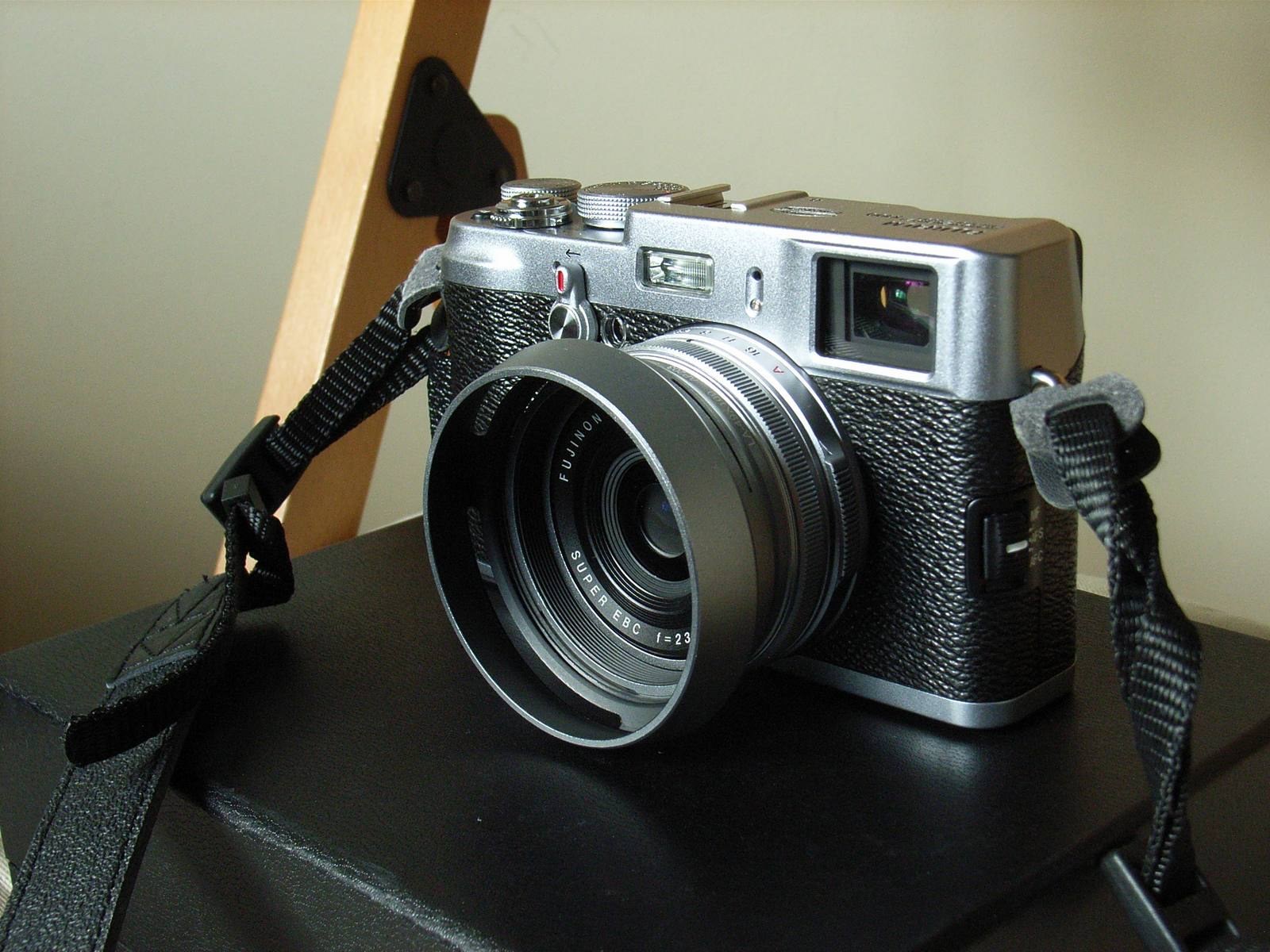
The camera did more than imitate the shape of a film camera. You turned an aperture ring and shutter-speed dial with your fingers, then looked through the viewfinder to frame the shot. It had the immediacy of digital photography while preserving a sense of intention in the steps before taking a picture.
The X100 also revisited the pleasure of photography at a time when digital cameras had made film seem unnecessary. Digital was not a substitute for film. But the controls and color preferences people valued in film cameras could continue in digital form. That idea became part of the X series’ identity.
Film Simulation Carries on the Names of Color
Fujifilm digital cameras offer Film Simulation modes. They adjust the colors and tonal range of a digital image with reference to the look of the company’s photographic films.
PROVIA aims for natural, standard color; Velvia is vivid; and ASTIA seeks softer gradation. Classic Chrome produces a subdued palette with lower saturation. These are more than color filters: they let you choose, while taking a picture, the character associated with a particular film stock.
For a company that makes film, color is not an abstract setting. It is a product’s personality, shaped over many years through emulsion formulas and processing. Carry those names and memories into a digital camera, and you can choose “this is the color I want today” without using film. Instead of adjusting color after development, you choose an expressive direction before you shoot.
If QuickSnap made it easier to take pictures by turning film into a camera, Film Simulation returned the colors of film to photographers as digital settings. One opened the door to photography; the other expanded the choices available. They are different products, but both were designed around the photographer’s experience.
Chapter 5 — QuickSnap Is Handed On Again
Even people who never knew the era when film was the main medium are discovering QuickSnap as a fresh way to take pictures. Instead of checking a screen and retaking a shot again and again, you have a limited number of frames and wait for them to be developed. That delay creates a different sense of time from digital photography.
Now that smartphones let us take an almost unlimited number of pictures, QuickSnap’s frame limit is both an inconvenience and a reason to think about each shot. Because you can’t review a picture right away, you focus on the moment. Because development takes time, you look forward to the day your pictures come back. That experience is one reason people are choosing it again.
Fujifilm continues to sell lens-fitted film cameras and works to collect and reuse used cameras. QuickSnap has survived for more than nostalgia. Its ease of use, limited number of frames, and pictures that only appear after processing are taking on a new meaning in today’s picture-taking culture.
The company founded in 1934 to make film at home instead of relying on imports went on to compete with Kodak in color film, put a lens on film in 1986, and carry its technologies into other industries when digital photography threatened its business. Then, in 2011, the X100 brought an optical viewfinder and electronic display together and carried film color into digital photography.
Demand for film shrank, but photography itself did not disappear. What links QuickSnap and the X100 is not stubborn resistance to change. It is a continuing effort to understand what people enjoy about taking pictures. Fujifilm moved from making film to preserving the memories people associate with it.
Timeline
- 1934: Fuji Photo Film Co., Ltd. is established to develop domestic film production in Japan.
- 1936: Fujifilm launches X-ray film for medical use.
- 1983: Fujifilm develops FCR, a digital X-ray imaging system.
- 1986: Fujifilm launches QuickSnap, a lens-fitted film camera.
- 1988: Fujifilm develops the FUJIX DS-1P, a digital camera that records images on a memory card.
- 2000: Demand for photographic film reaches its peak.
- 2004: Fujifilm sets out its VISION75 medium-term management plan.
- 2006: Fuji Photo Film Co., Ltd. becomes Fujifilm Holdings Corporation.
- 2007: Fujifilm launches ASTALIFT functional cosmetics.
- 2010: Photographic film demand falls to less than one-tenth of its peak.
- 2011: Fujifilm launches the FinePix X100.
Photo credits
- Header image, “Fujifilm's Disposable camera Vending machine.jpg” — Kate Nevens (cropped) / Wikimedia Commons / CC BY 2.0
- “Fujicolor C200 Film Roll And Box.jpg” — Willwongprd / Wikimedia Commons / CC BY-SA 4.0
- “Fujicolor HR 100 Cn 135-36 Daylight Iso 100-21 Official Film of Word Cup 1986 Expired 1987 made in Japan (51878898378).jpg” — Joost J. Bakker IJmuiden / Wikimedia Commons / CC BY 2.0
- “Fujifilm FinePix X100.jpg” — Adam Jahr (Pjahr) / Wikimedia Commons / Public domain
Licenses: CC BY 2.0 · CC BY-SA 4.0