The Neumann Workshop Left on the Other Side of the Border — Gefell UM92S

Prologue — A Small Town in the Woods
In central Germany, near the Thuringian Forest, there is a small town called Gefell.
It is not a famous tourist destination. But among microphone enthusiasts, the name has a special ring to it.
That is because one of the few workshops of its kind in the world is still there.
It is the town where the founder of Berlin’s celebrated Neumann microphone company fled during the war. And when Germany was divided into East and West, the workshop was left on the eastern side.
The workshop still makes microphones today, using hand-built capsules based on the same ideas as the legendary U 47.
Chapter 1 — From Berlin to Gefell
Berlin, 1928
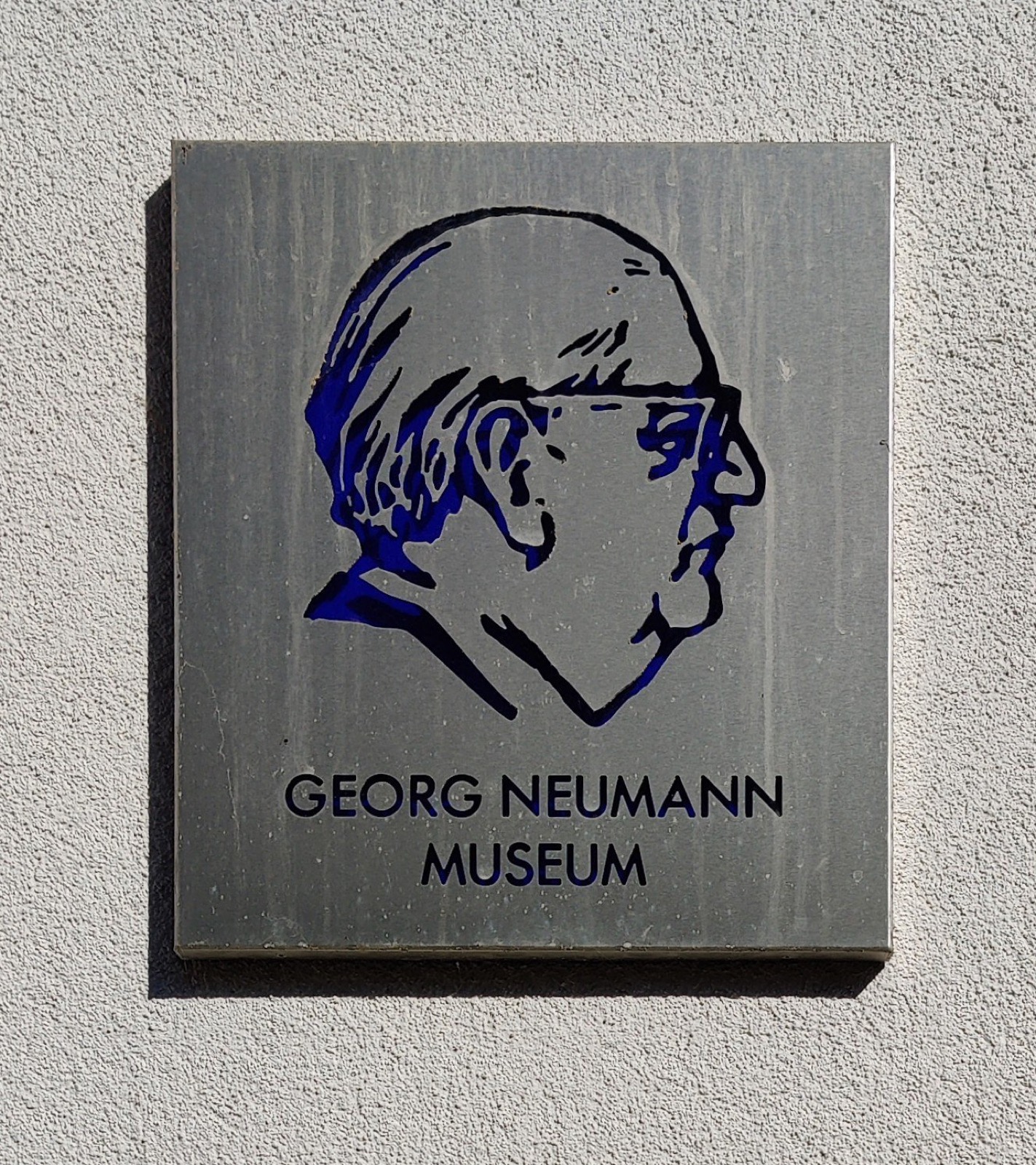
It all began in Berlin in 1928.
Engineer Georg Neumann founded a microphone company. It soon became known for large condenser microphones shaped like bottles, nicknamed “bottles.”
A condenser microphone captures sound through changes in the gap between a thin diaphragm and a perforated metal plate called a backplate. This design is highly sensitive and picks up fine detail.
The Air Raids, 1943
In 1943, during World War II, incendiary bombing badly damaged the Berlin factory.
Neumann left Berlin to keep the business running. He moved to Gefell, where the company continued making microphones.
After the War
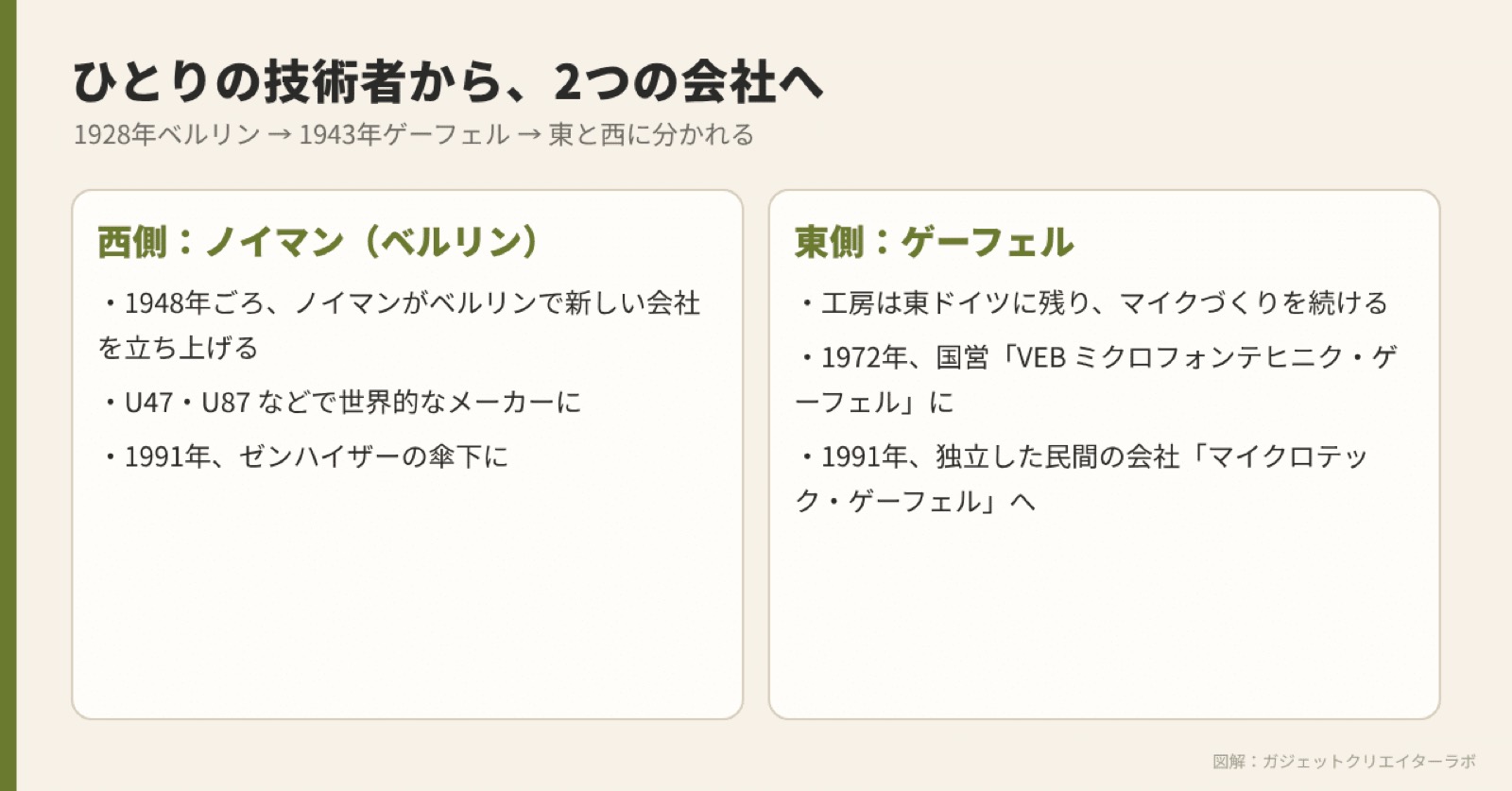
After the war, Germany was divided into East and West. Gefell was in the East.
Around 1948, Neumann returned to Berlin and started a new company. This became the Western Neumann, later a world-famous microphone maker.
The Gefell workshop, meanwhile, remained in the East. Technicians who had worked under Neumann continued making microphones there.
Chapter 2 — The Workshop Left in the East
A State-Owned Company
In East Germany, officially the German Democratic Republic, many companies were placed under state control. The Gefell workshop was no exception.
In 1972, at the state’s direction, it changed its name to VEB Mikrofontechnik Gefell (State-Owned Gefell Microphone Technology Company).
Western Neumann and eastern Gefell. Two companies with the same beginnings now followed separate paths, divided by the Berlin Wall.
After the Wall Came Down
The Berlin Wall fell in 1989, and Germany reunified the following year.
In 1991, Western Neumann became part of microphone maker Sennheiser. Its ties with Gefell ended completely, and Gefell began again as an independent private company.
That company is today’s Microtech Gefell.
Chapter 3 — The M7: A Capsule Perforated by Hand
The Heart of the U 47
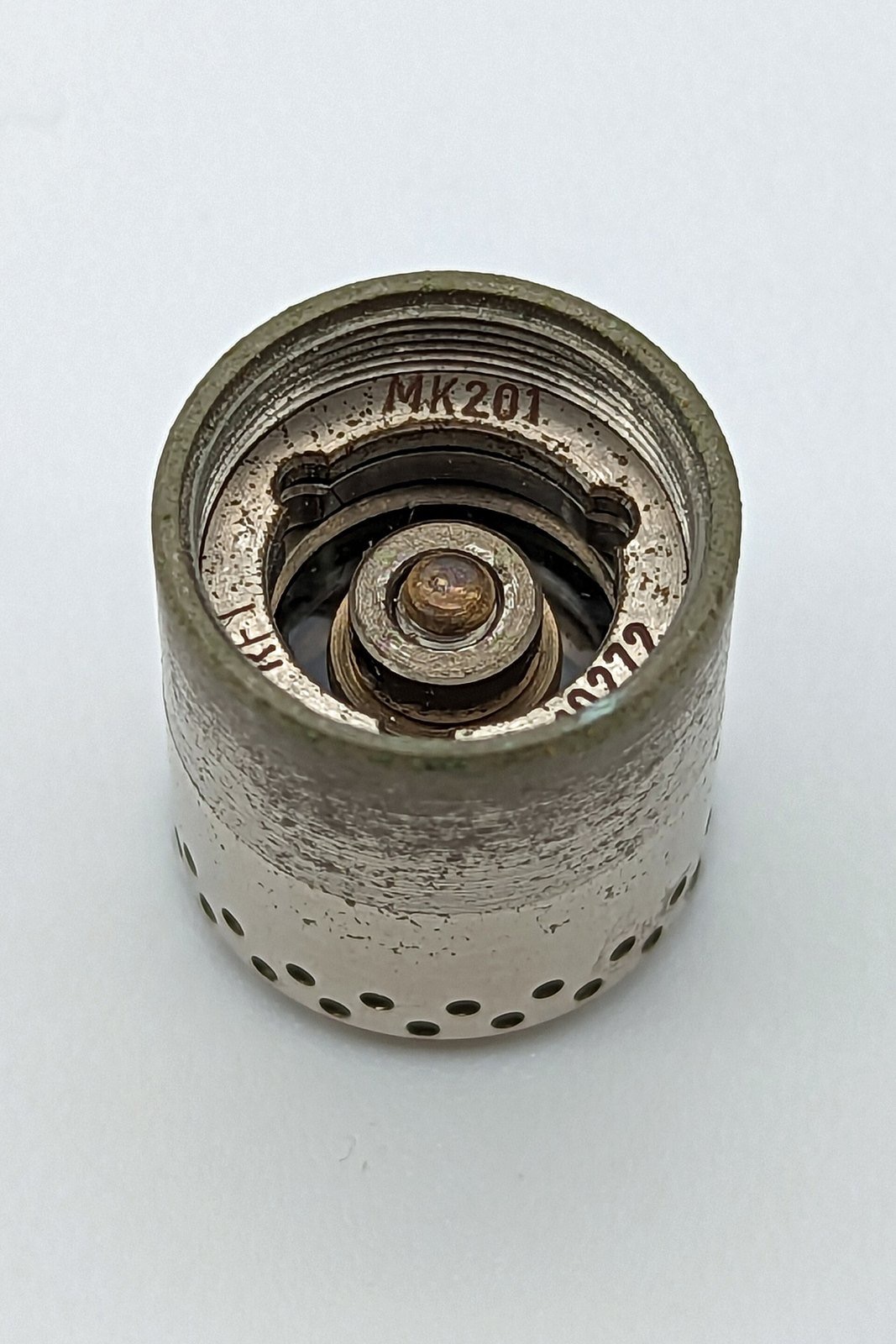
The M7 capsule is what makes Gefell especially distinctive.
The M7 is known as the capsule used in Neumann classics such as the U 47 and M 49. Some sources also say it was used in the early CMV 4, the microphone nicknamed “the bottle.”
Accounts differ on who designed the M7 and when. Some credit Neumann himself; others name German broadcasting researchers of the time. Here, we’ll describe it simply as a capsule born in 1940s Germany that became the heart of Neumann microphones.
Made by Hand, Just as Before
What is remarkable is how it is made.
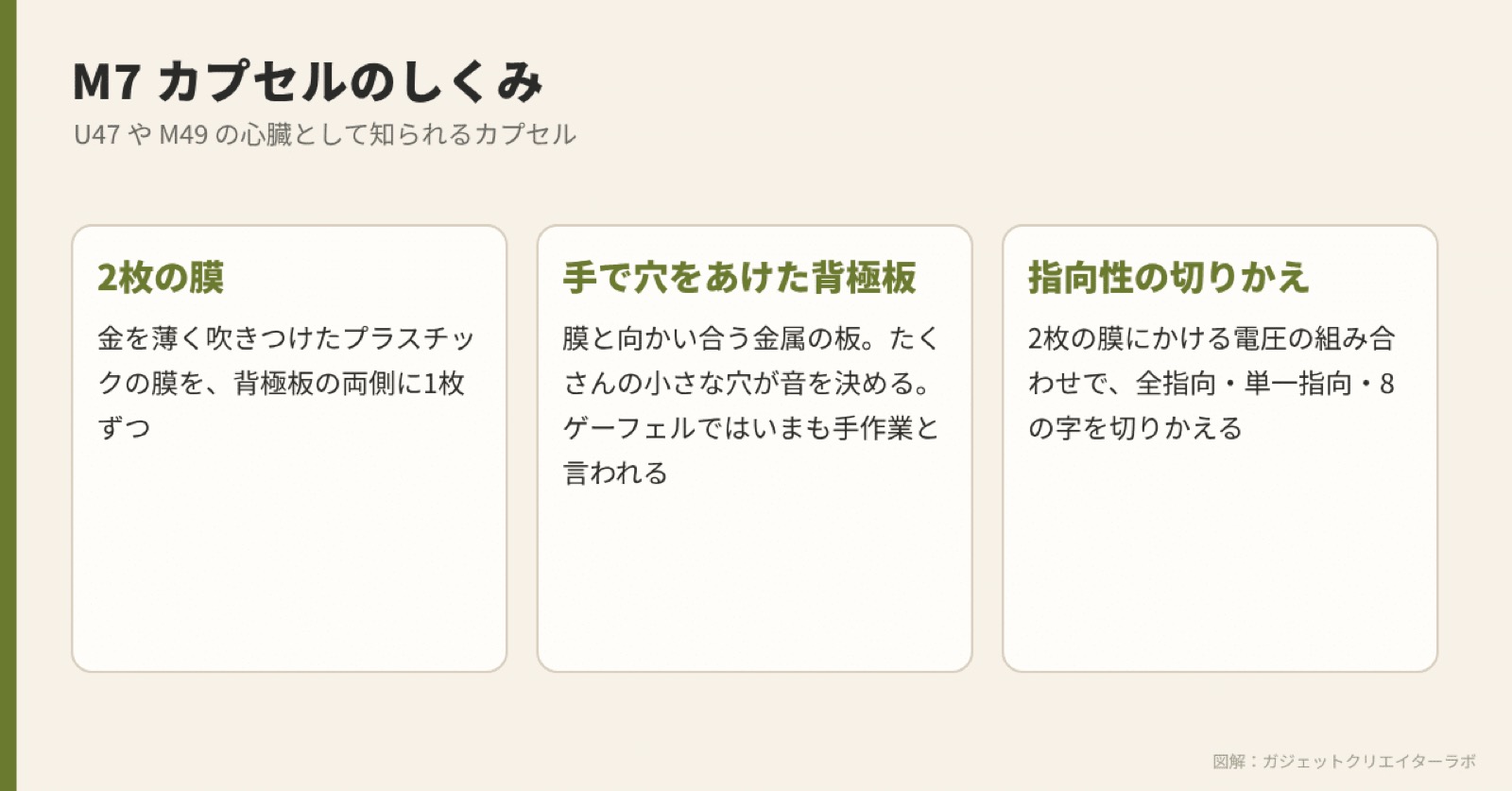
The M7’s backplate—the metal plate facing the diaphragm—is pierced with many tiny holes. Their number, size, and position are important factors in shaping the microphone’s sound.
At Gefell, those holes are still said to be drilled one by one, by hand. A 2004 trade magazine article reported that the capsules were still being made “the same way Neumann taught in the 1940s.”
Two Diaphragms
The M7 is a capsule with two diaphragms, one on each side of the backplate. Changing the voltages applied to the diaphragms switches the microphone’s pickup pattern.
The diaphragms are made from plastic film with a thin layer of gold sputtered onto it. The manufacturer says it selects capsules with good directional characteristics.
Chapter 4 — The UM92S: A Tube Microphone from the East
The Early 1990s
In the early 1990s, soon after German reunification, a tube microphone from Gefell reached the world stage.
It was the UM92S.
In 1993, British magazine Sound On Sound reviewed the microphone and gave it high praise: “a very high quality tube microphone which can hold its own against much more expensive established models.”
What’s Inside
The UM92S and its successor, the UM 92.1S, have these features:
- The capsule is the M7.
- The amplifier uses a vacuum tube. According to published sources, it uses an EF86 pentode wired to operate as a triode.
- It offers three pickup patterns: omnidirectional, cardioid, and figure-eight.
- The pattern selector is on the power supply, not on the microphone itself.
An M7 capsule descended from the same tradition as the U 47, powered by a tube—and at an accessible price. The workshop left in the East had once again made its name known in studios around the world.
What Does It Sound Like?
The UM92S and UM 92.1S are often described as:
- Natural, with little coloration
- Warm, in the way people associate with tube microphones
- Resistant to distortion, even at high sound levels
A 1999 review in an American recording magazine noted that the microphone did not distort when used overhead on drums, and that breath pops were not prominent. The reviewer also wished it had included a pad and a low-cut switch. It was a straightforward, no-frills microphone.
Chapter 5 — Using a Microphone Like This Today
Here are a few tips for using a tube microphone with an external power supply, like the UM92S.
1. Give It a Little Time After Powering Up
A tube’s sound is not stable until it warms up. After switching on the power, it’s a good idea to wait a few to fifteen minutes before recording.
2. Turn Off the Power Before Changing the Pattern
Microphones with a pattern selector on the power supply can make a loud noise when you switch patterns. Turn down your speakers or headphones, or follow the manual’s instructions before making the change.
3. Use Other Gear for a Pad or Low-Cut Filter
If the microphone itself has no pad or low-cut filter, use the features on your microphone preamp or recording software. When recording a loud instrument, lower the preamp input or use the pad on the preamp.
4. Take Care of the Dedicated Cable
A tube microphone connects to its power supply with a dedicated multi-pin cable. It is different from a standard mic cable, so take care not to lose it or mix it up with other cables.
Epilogue — What Was Kept Safe on the Other Side of the Wall
A technician fled the air raids and came to a town near the forest. The country split, the company split, and its name changed, but the workshop kept making microphones.
After the Wall came down, people around the world learned that a capsule built on the same ideas as the U 47’s heart was still being made, with its holes drilled by hand just as before.
Behind the history of the big companies, a craft had quietly passed from one pair of hands to another. The next time you hear a natural, warm vocal recording, take a moment to remember: its sound may have come from careful handwork in a small town near the woods.
Gefell Timeline
- 1928: Georg Neumann starts a company in Berlin.
- 1943: Air raids damage the Berlin factory; the company moves to Gefell.
- Around 1948: Neumann returns to Berlin and starts a new company. The Gefell workshop remains in the East.
- 1972: At the state’s direction, the workshop becomes “VEB Mikrofontechnik Gefell.”
- 1989–90: The Berlin Wall falls and Germany reunifies.
- 1991: Western Neumann becomes part of Sennheiser. Gefell becomes the independent private company “Microtech Gefell.”
- 1993: The tube microphone UM92S is reviewed in a trade magazine.
- Later: The UM 92.1S succeeds it. The M7 capsule continues to be made by hand.
References
- Wikipedia (English), “Microtech Gefell”
- Sound On Sound (August 1993), “Microtech Gefell UM92S” review (Muzines archive)
- Tape Op, “Microtech Gefell UM 92.1S” review
- recordinghacks.com, pages related to “M7”
- Product information from various retailers (Full Compass, KMR Audio, Sound Pure, among others)
Photo credits
- Header image, “Microtech Gefell (4)” — Subbass1 (cropped) / Wikimedia Commons / CC BY-SA 4.0
- “Microtech Gefell (1)” — Subbass1 / Wikimedia Commons / CC BY-SA 4.0
- “Gefell condenser microphones 04” — PaulT (Gunther Tschuch) / Wikimedia Commons / CC BY-SA 4.0
License: CC BY-SA 4.0 <https://creativecommons.org/licenses/by-sa/4.0/>
About the Illustrations
- All diagrams in this article were created by Gadget Creator Lab.