From One Mandolin Maker to Guitars Around the World — Gibson
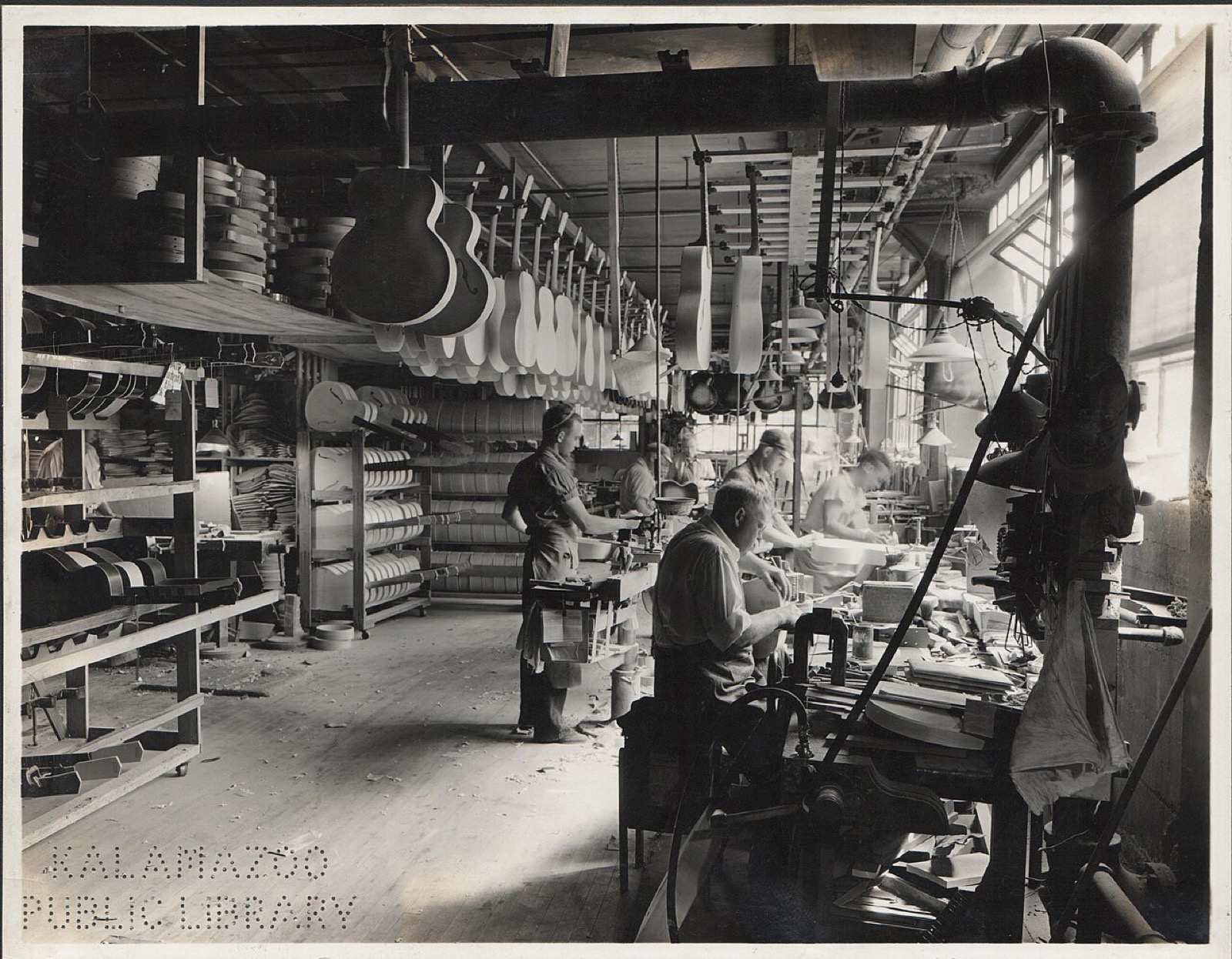
Prologue — 1984, the Kalamazoo factory
In 1984, an old brick factory on Parsons Street in Kalamazoo, Michigan, was nearing the end of its life. For nearly 70 years, it had made guitars held by country singers, archtops played by jazz musicians, and electric guitars that opened the door to rock. Every headstock bore the same name: Gibson.
The company was moving production to Nashville, Tennessee. The Kalamazoo factory would close, and longtime craftspeople would lose their jobs. But some stayed in town. In the same building, with their own hands, they began making guitars again.
To understand why, we need to turn the clock back about 90 years. In a small room in Kalamazoo, a man is carving a piece of wood.
📝 About this story
This story draws on books, interviews, and company materials I have read over the years. I have tried to stick to the facts, but I was not there, so familiar nicknames and commonly repeated accounts may have found their way in. Uncertain accounts are separated into “Legend & Lore” boxes, and sources are listed at the end.
Chapter 1 — The man who carved wood
From a farm in New York
Orville Gibson was born on May 8, 1856, on a farm near Chateaugay in northern New York. He was the youngest of five children. His father was born in England and his mother in the United States.
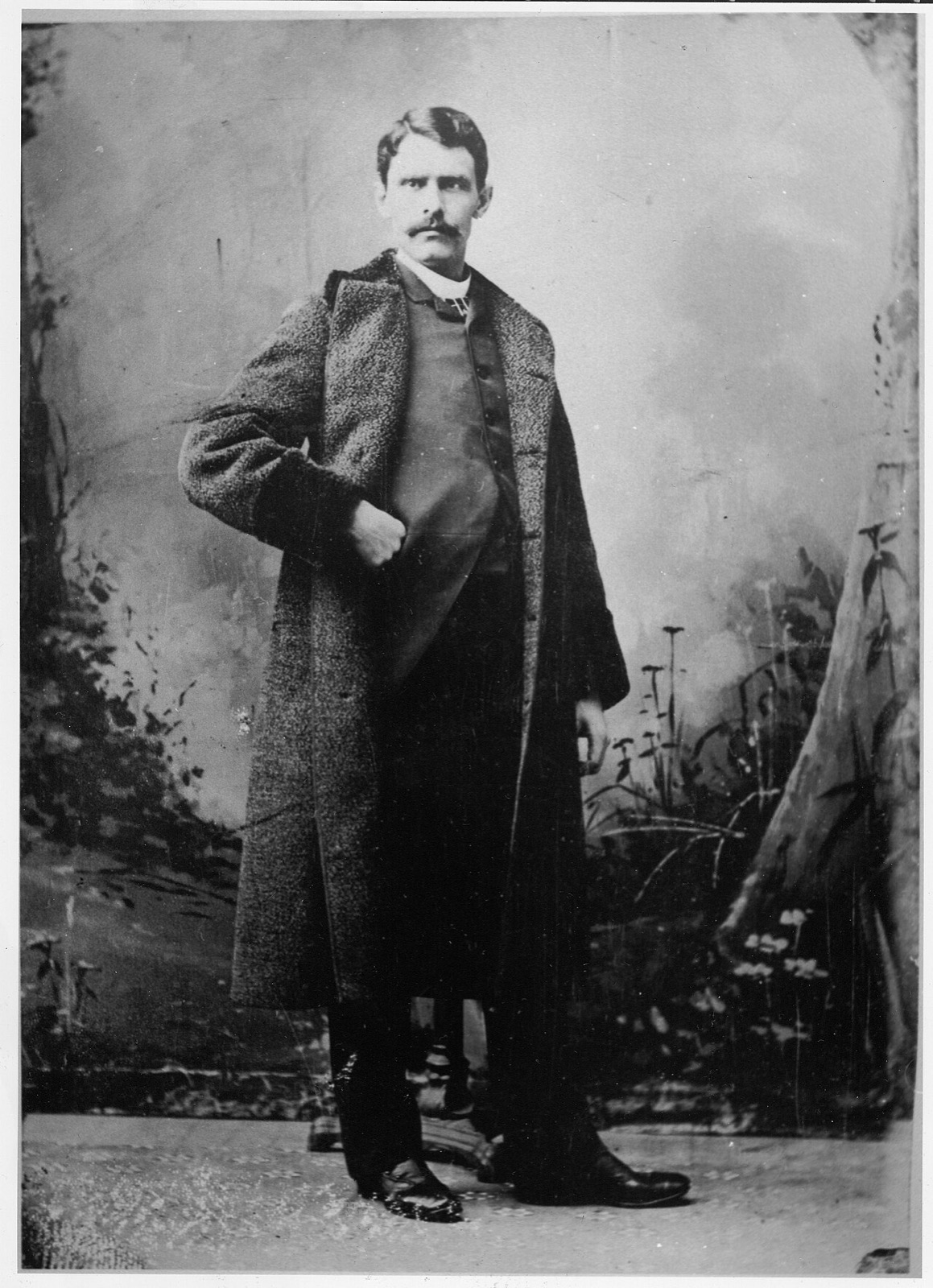
No records show that anyone formally taught him instrument making. Even so, he had a clear idea of how an instrument should sound. He was not simply copying the instruments around him; his approach to the wood itself reflected a distinct view of how an instrument could be built and made to resonate.
A small workshop in Kalamazoo
Around 1894, Orville opened a one-room workshop in Kalamazoo, Michigan, and began making and selling instruments.
The mandolin was hugely popular in America. Many instruments were built by gluing narrow strips of wood together into a rounded back. This construction was common, but Orville believed a different design could produce a stronger, more satisfying sound. Gibson later mocked these rounded instruments as “potato bugs.”
Carving like a violin
Orville worked differently:
- He carved the top and back from single pieces of wood, shaping them into gentle arches.
- He carved the sides from a solid block instead of bending thin strips.
Like a violin top, the wood was carved into shape. Orville believed this made a louder, richer instrument. The archtop idea became part of the lineage of Gibson guitars.
The 1898 patent
In 1898, Orville received a patent for his mandolin design.
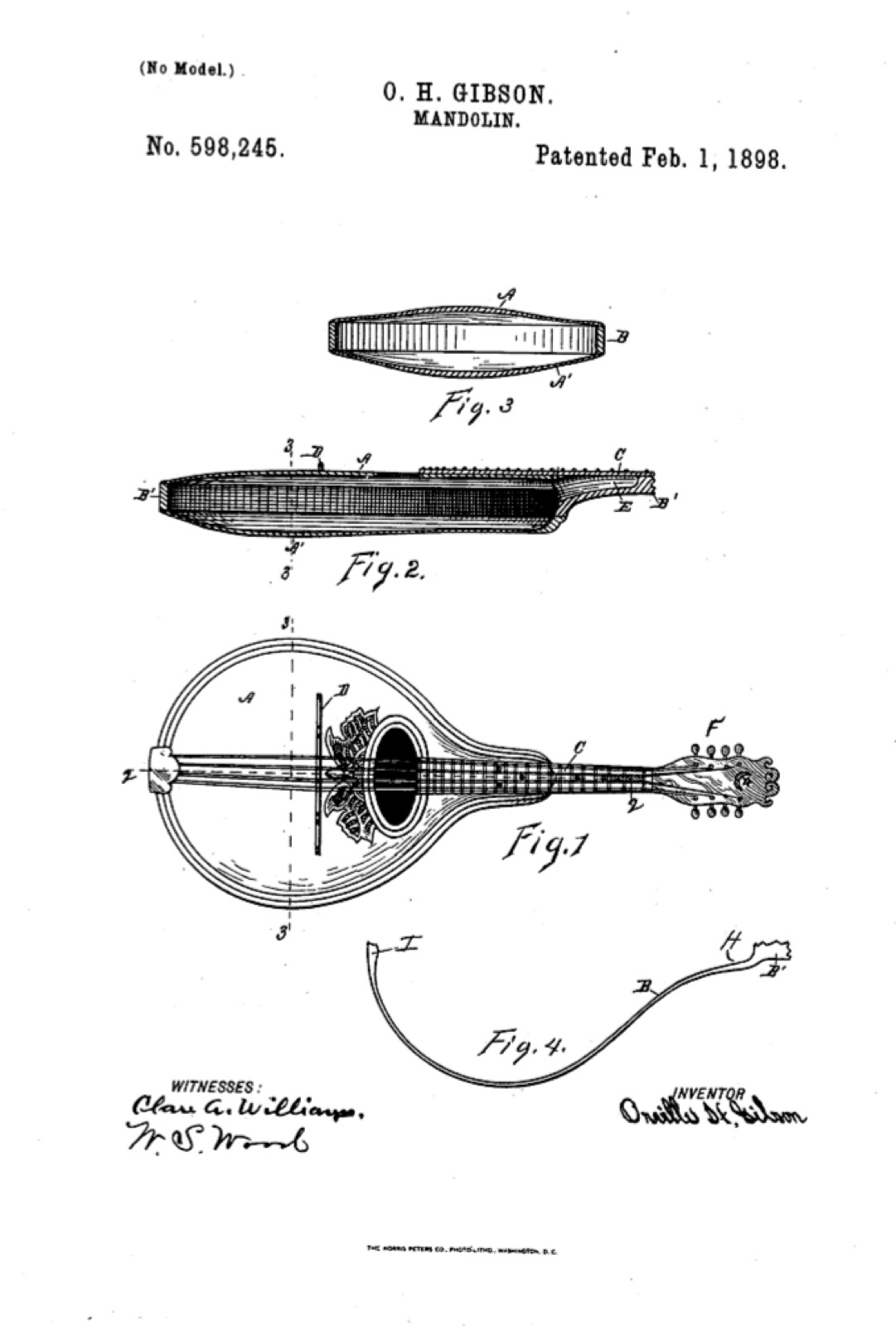
His instruments gained a following, and orders grew. The carved construction gave players a reason to seek them out, and word of the small Kalamazoo workshop spread beyond the local area. The demand created a practical problem: one craftsman in a one-room shop could make only so many instruments by hand. Five Kalamazoo businessmen saw an opportunity to turn Orville’s work into a larger operation.
Now let’s follow the story of how one craftsman’s name became a company name.