The Watchmaker’s Organ and the Rotary Speaker They Turned Down — Hammond and Leslie
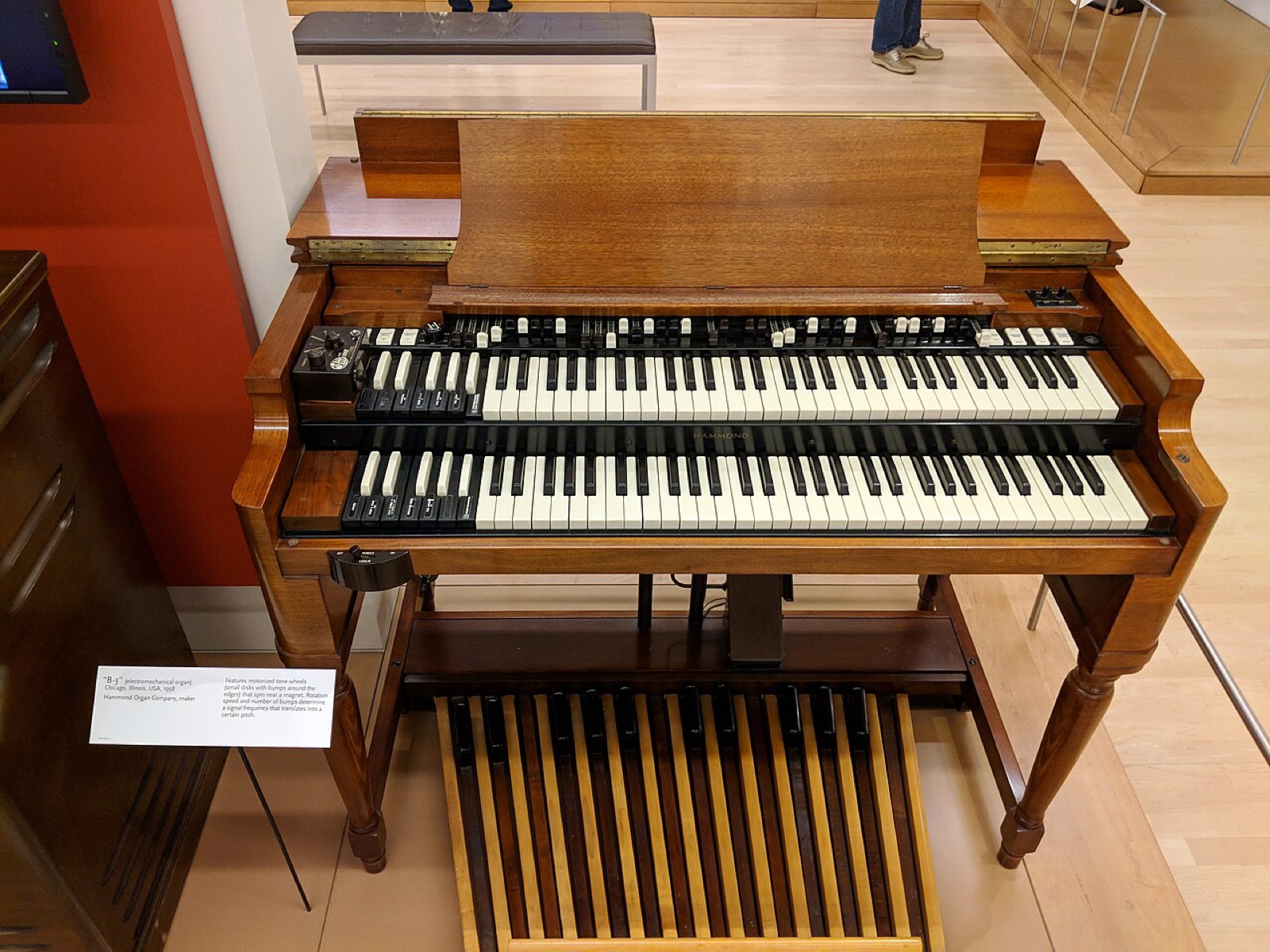
☕ A coffee-length story — about a 12-minute read. This is a story to enjoy, not a research paper. How did an organ built for churches become the growling sound of jazz and rock? It’s a story of two inventors who never quite saw eye to eye.
Prologue — Chicago, in the 1930s: A Clock Factory
In the early 1930s, in Chicago, a factory turned out electric clocks by the thousands.
Inside each one, a small motor kept turning in step with the rhythm of the electricity from the wall. The clock was quiet, with no ticking.
But the Great Depression sent clock sales into decline. The company president began to wonder: “Could we make something else with this motor that keeps turning so precisely?”
His name was Laurens Hammond. The answer he found had nothing to do with clocks: an organ.
📝 About this story
I’ve shaped this account from books, interviews, and manufacturers’ materials I’ve read over the years. I’ve tried to stick to the facts, but I wasn’t there, and some nicknames and received stories may have made their way in. I separate disputed accounts into “Legend & Lore” boxes and list the references at the end.
Chapter 1 — The Inventor-President
3D Glasses and a Bridge Table
Laurens Hammond was born in 1895 in Evanston, Illinois. He studied mechanical engineering at Cornell University and loved inventing from an early age.
His inventions included some unusual ideas:
- A 3D movie system using red and green lenses (early 1920s)
- An automatic card-dealing table for the card game bridge
- A silent synchronous-motor electric clock
The electric clock became a hit, and in 1928 the Hammond Clock Company was born. After the 1929 stock market crash and the Great Depression, though, clocks gradually stopped selling.
A Man Who Couldn’t Play Piano Builds an Organ
Hammond reportedly couldn’t play an instrument. Even so, he wondered if the precise motor from his clocks could power an electric instrument that would always play in tune.
At the time, a church organ meant a massive pipe organ with thousands of pipes. It was far too expensive and difficult to install for a small church.
“I want to bring an organ without pipes to ordinary churches and homes.” With that, the clockmaker began a new venture.
Now let’s look at the strange mechanism called the tonewheel, and the man who changed its sound.