The Swedish Box That Went to the Moon: Hasselblad
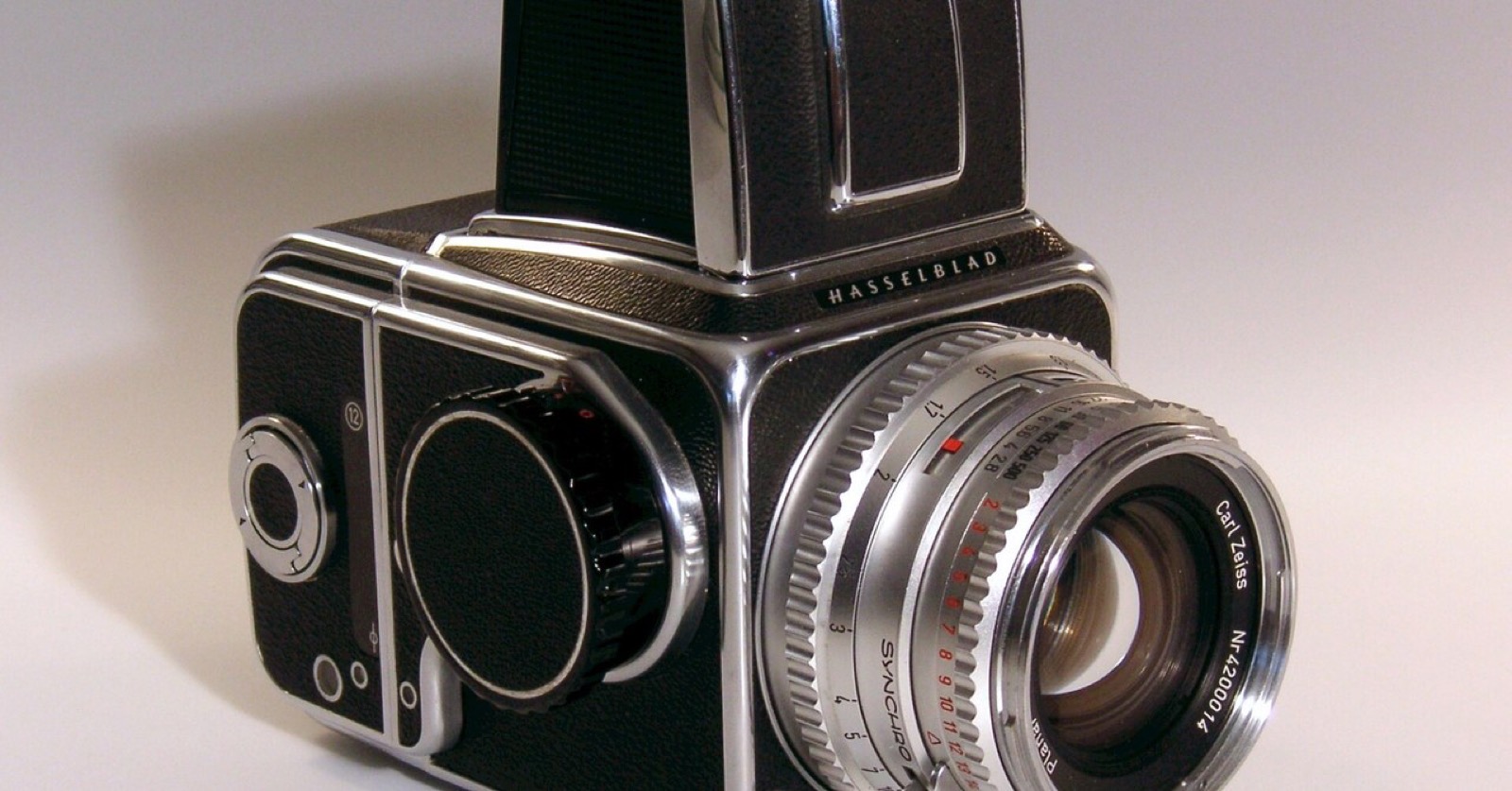
☕ A coffee-length story — about a 15-minute read. This is the tale of a square box, built by a young Swede who only wanted to photograph birds, that ended up travelling all the way to the Moon.
Prologue — The Camera Left on the Moon
On 20 July 1969, the Apollo 11 lunar module Eagle settled onto the Moon's Sea of Tranquility.
Neil Armstrong and Buzz Aldrin spent only about two and a half hours walking on the surface. In that short time they planted a flag, set up a seismometer, gathered rocks — and took photographs.
When we picture "humans standing on the Moon," we see an astronaut with a gold visor, grey dust underfoot, a black sky overhead. Those pictures were taken by a silver, square camera strapped to the front of a spacesuit.
Hasselblad.
A medium-format camera made in Gothenburg, a port city in Sweden.
Before leaving the Moon, the two men removed only the film magazines from that camera. The body and lens stayed behind on the surface. The craft that would carry them home had to be made lighter, gram by gram.
So that camera is still out there, somewhere in the Sea of Tranquility.
This is the story of the man who made it, Victor Hasselblad, and of the "square box" that carries his name. It does not begin in space, or even in war. It begins with a boy chasing birds through the Swedish countryside.
Chapter 1 — A Merchant House in Gothenburg, and a Boy Who Followed Birds
A business since 1841
Gothenburg, on Sweden's west coast, has long prospered on shipping and trade. In 1841 a trading company was founded there: F. W. Hasselblad & Co., started by Victor's great-grandfather and dealing in all kinds of goods.
In time the company moved into photography. In 1888 it became the sole Swedish distributor for the products of the American George Eastman — in other words, Kodak.
Selling film, handling developing, supplying photographic materials: long before it ever built a camera, the Hasselblad name was already familiar to every Swedish photography enthusiast.
A shy boy who drew birds
Victor Hasselblad was born into that family in Gothenburg on 8 March 1906.
His parents divorced and his father remarried. In a strict household the boy grew up very shy. His refuge was the outdoors. He would walk the countryside for hours, sketching the birds he found. Schoolwork never held him; biology and botany were about the only subjects he was good at, and he never finished Swedish school.
For a boy who loved watching birds, the camera gradually became a tool for recording them.
Learning the trade abroad
In the mid-1920s, in his late teens, Victor was sent abroad to learn the family business. France, Germany, the United States: he worked in camera factories, processing labs and photo shops, seeing the photographic trade from the outside in.
He also spent time in Dresden, in Germany — at the time a camera capital, full of workshops building precision cameras.
Back home, though, Victor did not settle easily into the family firm. In 1933 he married a woman named Erna, and in 1937 he left the family company to open his own shop, Victor Foto, dealing in photographic supplies and developing.
No camera was good enough
To photograph birds, Victor used many cameras.
An American Graflex that shot on large film. A small 35mm Leica. A twin-lens Rolleiflex that made square 6×6 cm pictures.
All of them were great cameras. But for a man chasing birds, each one lacked something. The big camera was too heavy to carry. The small camera's film was too small to capture every feather. The twin-lens reflex couldn't change lenses.
"A camera that shoots on big film, that you can carry by hand, and that takes interchangeable lenses." No such camera existed yet.
Around this time he also published a book of writing and photographs about migrating birds. For him, the camera was a tool for recording birds — and he wasn't satisfied with the tool. That small frustration would become the seed of a camera that changed the world.