1950–1958 — The Summer a White Teenager Sang Black Music — The Birth of Rock ’n’ Roll
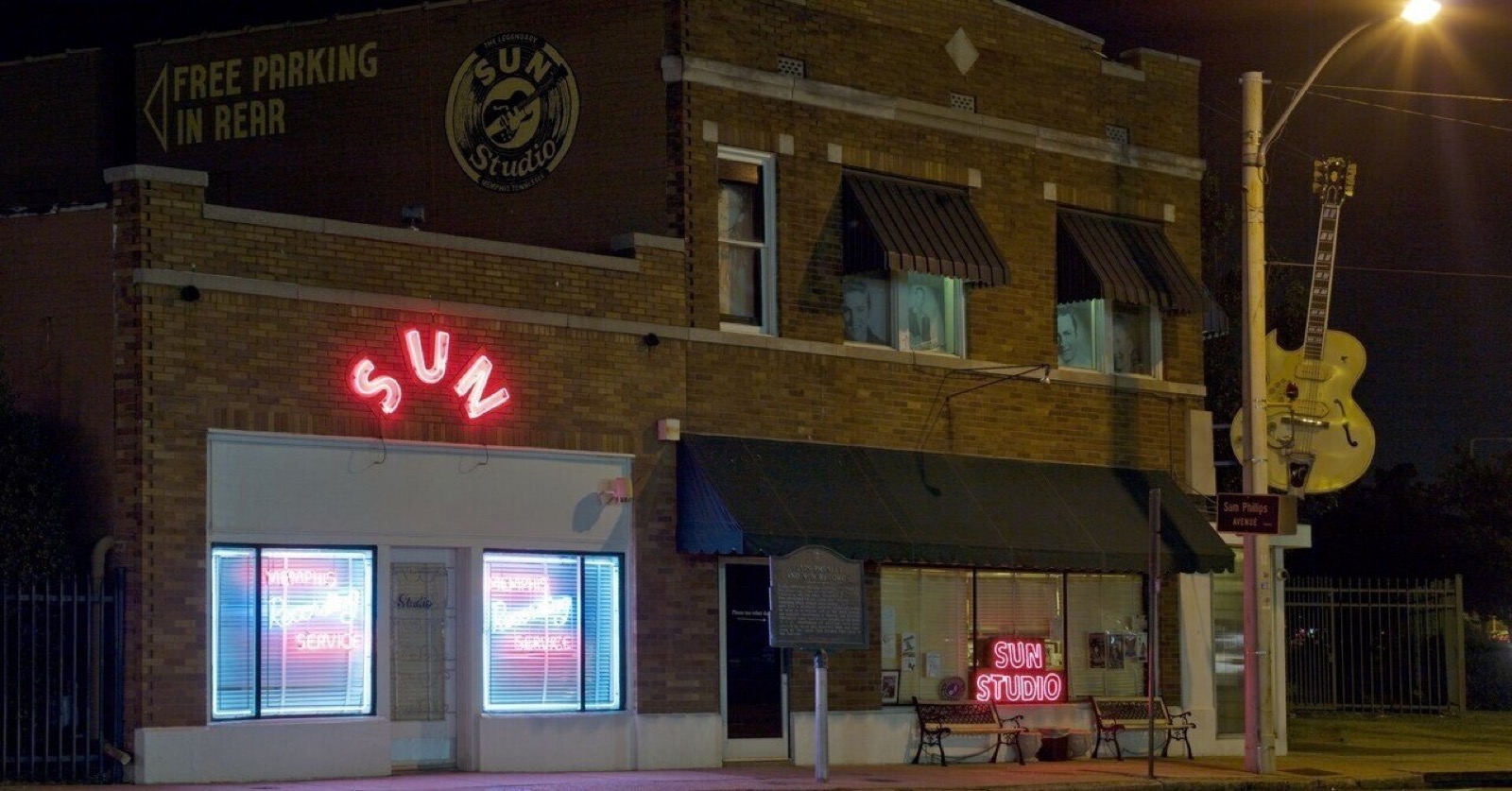
Prologue — A Night in Memphis, July 1954
July 5, 1954. Memphis, Tennessee, in the American South.
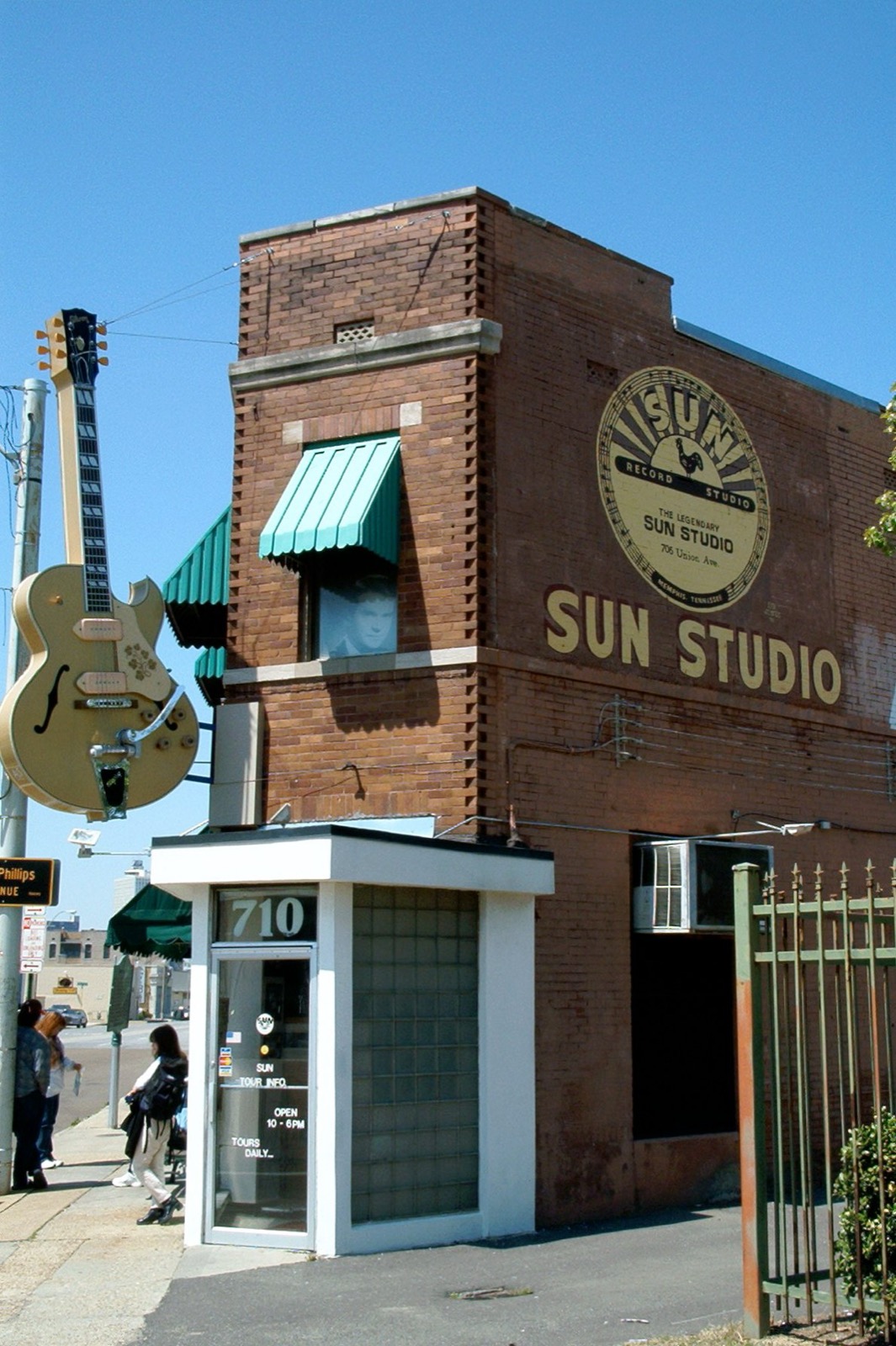
In a small recording studio on Union Avenue, three young men had been playing for hours. Scotty Moore was on guitar. Bill Black played upright bass. And then there was Elvis Presley, a 19-year-old truck driver.
Sam Phillips, the studio's owner, sensed something in the young man. But none of the tender ballads they tried that day seemed to click. As night wore on, it began to feel as if they were about to call it a day.
During a break, Elvis began strumming his guitar playfully and singing with a bounce in his voice. It was “That’s All Right” by Arthur “Big Boy” Crudup, a Black blues singer. Bill Black joined in, slapping the bass, and Scotty followed on guitar.
Sam, listening in the control room, reportedly stopped them at once and said, “Let’s do that again from the top.”
A few days later, when the song played on a local radio station, the station’s phones reportedly wouldn’t stop ringing. “What was that song?” “Play it again!”
A white teenager sang Black music with a light country feel. That small moment became the first drop in a wave that would come to be called rock ’n’ roll.
This is the story of 1950 to 1958: the years after the war, when young people found music of their own.
Chapter 1 — The Music Called “Race Records”
Music Kept Apart
Around 1950, laws and customs kept Black and white Americans’ lives apart. In the South, schools, bus seats, and restaurants were segregated.
Music was divided, too. For years, records made by Black musicians for Black listeners had been called “race records.”
In 1949, the trade magazine Billboard changed the name of that chart to “Rhythm & Blues.” The name changed, but radio stations and stores were still clearly divided into those serving white audiences and those serving Black audiences.
Late-Night Radio Crossed the Line
But radio waves have no walls.
At night, white teenagers began secretly tuning in to rhythm and blues on stations aimed at Black listeners. The pounding beat, powerful voices, and danceable rhythms were nothing like the sweet orchestral pop songs their parents listened to.
Alan Freed, a Cleveland, Ohio, DJ, was one of the people who brought this music to white teenagers. He introduced rhythm and blues songs using the phrase “rock ’n’ roll,” and is often credited with popularizing the term.
“Rocket 88” and Sun Studio
In 1951, a record was made at Sam Phillips’s studio in Memphis: “Rocket 88,” performed by a young Ike Turner and his band.
The story goes that an amplifier broke, leaving the guitar harshly distorted. But that distorted sound felt new. The song is often called one of the first rock ’n’ roll records.
Sam had been recording Black blues musicians one after another. He was said to have wondered for a long time whether there was a singer who could bring the heat of this music to white listeners.
That “someone” walked into his studio in the summer of 1954.
Chapter 2 — Rock ’n’ Roll Hits the Road
A “White Voice” on the Radio
“That’s All Right” quickly became a hit when it aired on a Memphis radio show. The DJ reportedly had Elvis name the high school he had attended on the program. In those days, hearing the name of a white high school told listeners that the singer was a white teenager.
Elvis’s records gradually spread, starting in the South. His onstage hip-shaking thrilled young people and made adults raise their eyebrows.
1955 — Rock ’n’ Roll Goes Nationwide
In 1955, rock ’n’ roll spread across the country in a rush.
- Bill Haley and His Comets, “Rock Around the Clock”
The song took off after it appeared in the film Blackboard Jungle and reached No. 1 on the national charts.
- Chuck Berry, “Maybellene”
Released by Chicago’s Chess Records, it helped establish the guitar riff as a defining feature of rock ’n’ roll.
- Little Richard, “Tutti Frutti”
Recorded in New Orleans, with a shout of a vocal and pounding piano.
Black and white singers began competing on the same charts. Of course, segregation did not disappear. Many Black songs were covered in “safer” versions by white singers, and those covers often sold better. Even so, young listeners kept turning the radio dial until they found the originals.
A New Audience Called “Teenagers”
Another big change was taking place: young people had money of their own.
After the war, the United States entered an era of prosperity. More teenagers could spend money on themselves, whether it came from a part-time job or an allowance. Around this time, “teenager” began to be recognized as a market in its own right.
Instead of paying for the music their parents liked, young people spent money on their own music. Record companies and radio stations could no longer ignore these young customers. Rock ’n’ roll was music, but it was also a badge that set the young apart from adults.
The “Two and Four” on the Backbeat
Let’s take a quick look at the rhythm of rock ’n’ roll.
Many popular songs before this era put the emphasis on beats one and three. In rock ’n’ roll, the snare drum hits hard on beats two and four. That rhythm is called the backbeat.
It came from rhythm and blues and gospel. It pushes your body forward and makes you want to clap along. The “two and four” we take for granted in pop and rock today was sinking into young people’s bodies in those years.
Elvis on Television Across America
At the end of 1955, Elvis signed with major label RCA Records. RCA paid Sun Records $35,000 for the contract—a staggering sum at the time.
In 1956, “Heartbreak Hotel” reached No. 1 nationwide. Elvis appeared on television programs, including The Ed Sullivan Show, bringing his hip-shaking performance into homes across the country. One famous story says that on a 1957 appearance, the cameras showed him only from the waist up. That gives you an idea of how provocative adults found his moves.
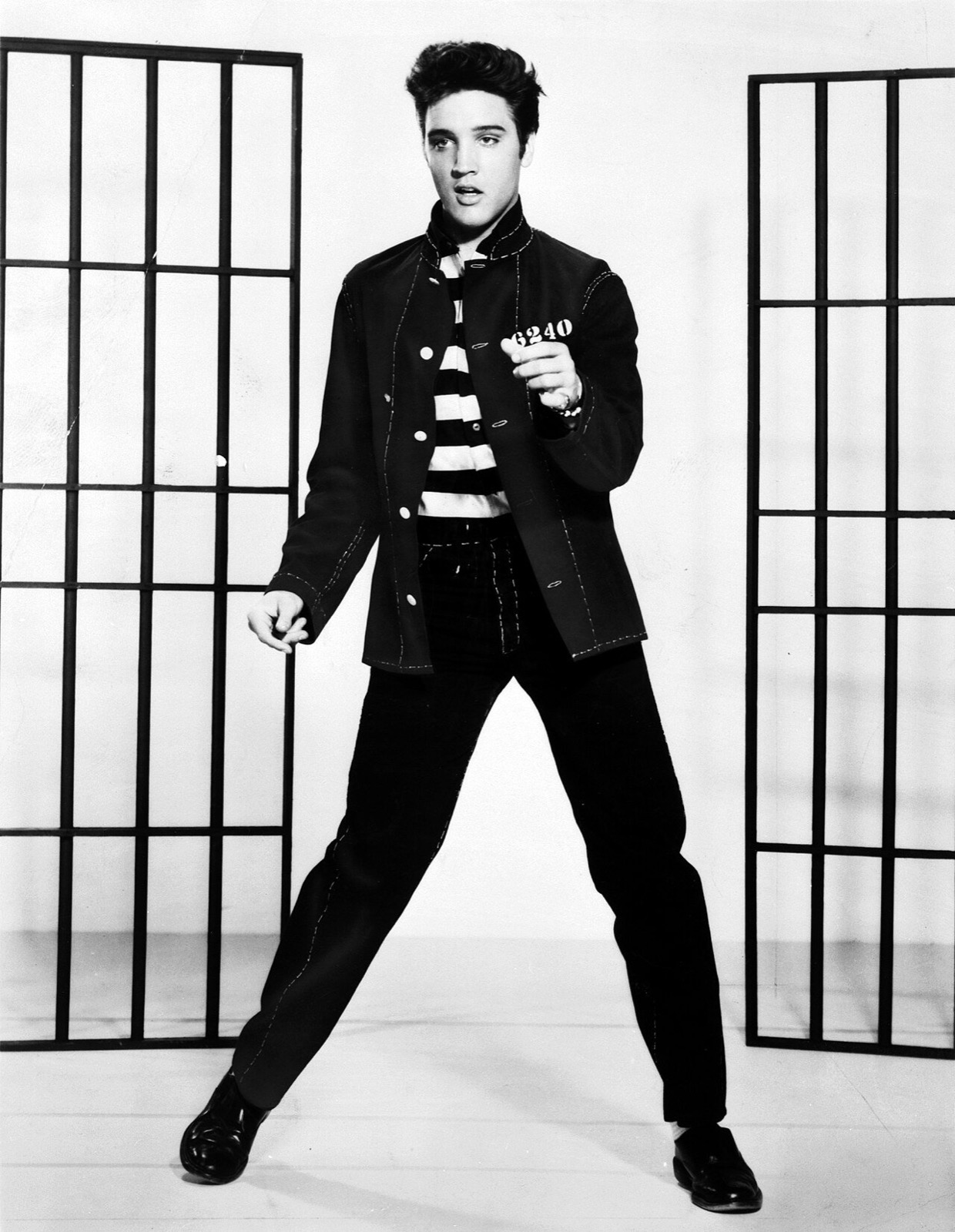
The Artists Who Took Off from Sun Studio
Even after Elvis left, Sun Studio kept producing remarkable talent: Carl Perkins and “Blue Suede Shoes,” Johnny Cash, and Jerry Lee Lewis.
One day in December 1956, Elvis, Carl Perkins, Jerry Lee Lewis, and Johnny Cash happened to be at the studio together. They gathered around a piano and sang. The recording later became known as the “Million Dollar Quartet.”
In Texas, Buddy Holly showed what a band could be: wearing glasses, holding a Fender Stratocaster, and playing songs the members had written themselves. His band was called the Crickets. Across the ocean in Liverpool, England, boys who admired them are said to have played on the insect name when choosing a name for their own band. That’s a story for next time.
Chapter 3 — The Tools That Changed the Times
Rock ’n’ roll wasn’t made by singers alone. New tools arriving around the same time helped drive the music forward.

1. The 45 — Music You Could Buy with Your Allowance
LP records arrived in 1948, followed in 1949 by 45 rpm singles from RCA. Their large center holes gave them the nickname “doughnut records” in Japan.
Earlier 78 rpm records were heavy and fragile. The smaller, lighter, sturdier 45 made records affordable for young people. They fit jukeboxes perfectly, too, filling diners and drugstores with rock ’n’ roll.
2. The Transistor Radio — Music in Your Own Room
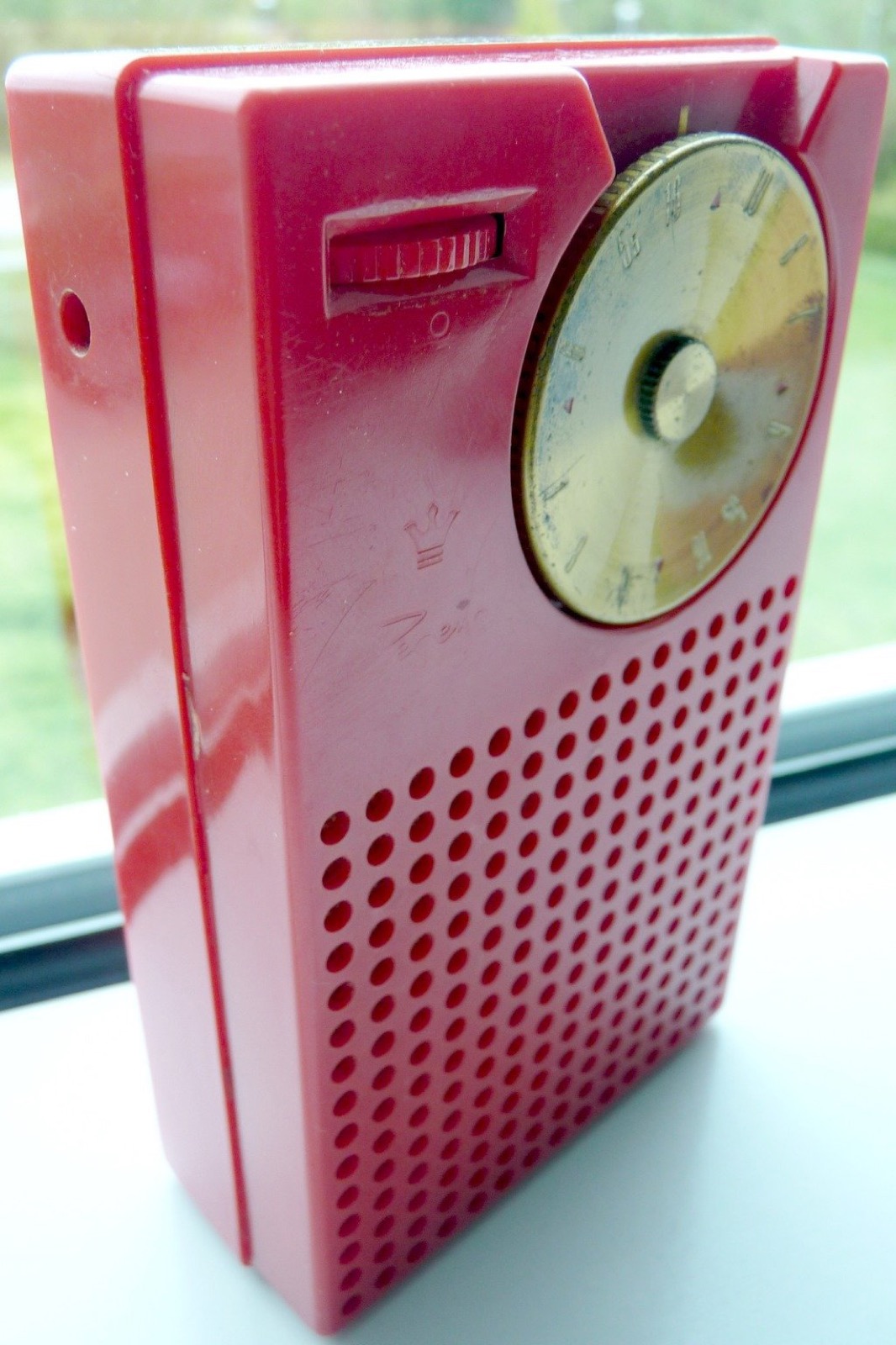
In 1954, transistor radios went on sale in the United States. With no vacuum tubes inside, they could be small, battery-powered, and carried anywhere.
What did that change? You could listen to the music you loved somewhere your parents weren’t. The big radio in the living room belonged to the whole family. A little radio belonged to you. Rock ’n’ roll spread through teenagers’ bedrooms, cars, and beaches—quietly, but at full volume.
3. Electric Guitar and Bass — A Band Could Play Loud
The first half of the 1950s was a golden age for electric guitar design.
- 1950: Fender’s solid-body guitar, named the Telecaster the following year
- 1951: Fender Precision Bass
- 1952: Gibson Les Paul
- 1954: Fender Stratocaster
A solid-body guitar, with no hollow chamber, was less prone to feedback at high volume and worked well with an amplifier. And with the electric bass, a band could produce a powerful low end without hauling around a huge upright bass. A small band could make a big sound. That helped shape the rock ’n’ roll band.
4. Tape Recording — Retakes, Overdubs, and “Echo”
In the late 1940s, Ampex in the United States brought tape recorders into broadcasting and recording studios. Tape could be recorded over, cut, and spliced.
Guitarist Les Paul used tape to layer his own performances again and again, pioneering multitrack recording and making hit records with his wife, Mary Ford.
Tape also helped define the sound of Sun Studio. Sam Phillips used a tape recorder to add a short echo that seemed to chase close behind the voice. You can hear this slapback echo right away on Elvis’s early recordings. The name still appears in delay presets in music-production software today.
5. “The Elvis Microphone”
One last thing. Have you seen 1950s stage photos with a big silver microphone and its large grille standing in front of the singer? That’s the Shure 55 series. It often appeared in photos of Elvis, so people sometimes call it the “Elvis microphone.”
Microphones, speakers, and amplifiers all developed in this era as tools for making big sound in big venues. The rock ’n’ roll craze was always linked to advances in the gear.
Chapter 4 — 🇯🇵 Meanwhile, in Japan
What kind of music were people in Japan listening to while rock ’n’ roll was being born in America?
U.S. Military Clubs and Jazz
After the war, U.S. military bases and clubs for servicemen appeared across Japan. Japanese musicians performed there, learning the latest American sounds—jazz, country, and Hawaiian music—on club stages.
In the first half of the 1950s, jazz concerts became hugely popular.
Hibari, Chiemi, and Izumi
Young women became stars in Japanese popular music.
- Hibari Misora: “Ringo Oiwake” (“Apple Blossom Road”) became a huge hit in 1952.
- Chiemi Eri: She debuted with “Tennessee Waltz” in 1952, singing American popular songs in both English and Japanese.
- Izumi Yukimura: A contemporary of the other two, she later appeared with them in films. Together, the three were known as the “Three Daughters.”
Cover pop—singing American popular songs in Japanese—became a major current in Japanese music from this point through the 1960s.
In 1956, Elvis’s “Heartbreak Hotel” was quickly covered in Japanese, too. American hits were being sung by Japanese performers almost as soon as they came out. Young people in Japan were beginning to chase the music across the ocean with the same excitement.
Jazz Cafés as Classrooms
There was another important place in Japan at this time: the jazz café.
Records and record players were expensive. For young music fans, a café that played imported records on big speakers became a classroom. For the price of a cup of coffee, you could listen to the latest American sounds for hours. Later, rockabilly singers would perform in these cafés, which became a gateway to youth culture in Japan.
Television and Transistor Radios
In 1951, NHK broadcast the first Kōhaku Uta Gassen (Red and White Song Contest) on radio. It was a New Year’s program in those days. Television broadcasting began in 1953. TVs were still expensive, so crowds gathered around “street televisions” in places like train stations.
Then, in 1955, Tokyo Tsushin Kogyo (later Sony) released the TR-55, Japan’s first domestically made transistor radio. The “small radio” born in America would soon spread around the world through the work of Japanese companies.
1958 — The Rockabilly Storm
American rock ’n’ roll captured young people in Japan under the name “rockabilly.”
In February 1958, the Nichigeki Western Carnival was held at the Nippon Theater in Tokyo’s Yurakucho district. The performers included Masaaki Hirao, Keijiro Yamashita, and Mickey Curtis. Young women in the audience threw paper streamers and screamed, and the theater erupted.
In just four years, the wave that began in a small Memphis studio had crossed the Pacific and reached Tokyo.
Epilogue — The Day the King Put on a Uniform, 1958
March 1958. Elvis Presley, the King of Rock ’n’ Roll, enlisted in the U.S. Army.
At the height of his fame, the King left the stage. Then, in February 1959, Buddy Holly died in a plane crash. The first wave of rock ’n’ roll excitement began to quiet down.
But the fire was still burning. Records by Elvis, Chuck Berry, and Buddy Holly crossed the ocean and were played until they wore out in the bedrooms of boys in English port towns.
Rock ’n’ roll was born in America, grew up in Britain, and then came back to America. The story of the day it “came back” begins next time, in 1959.
A Timeline of 1950–1958
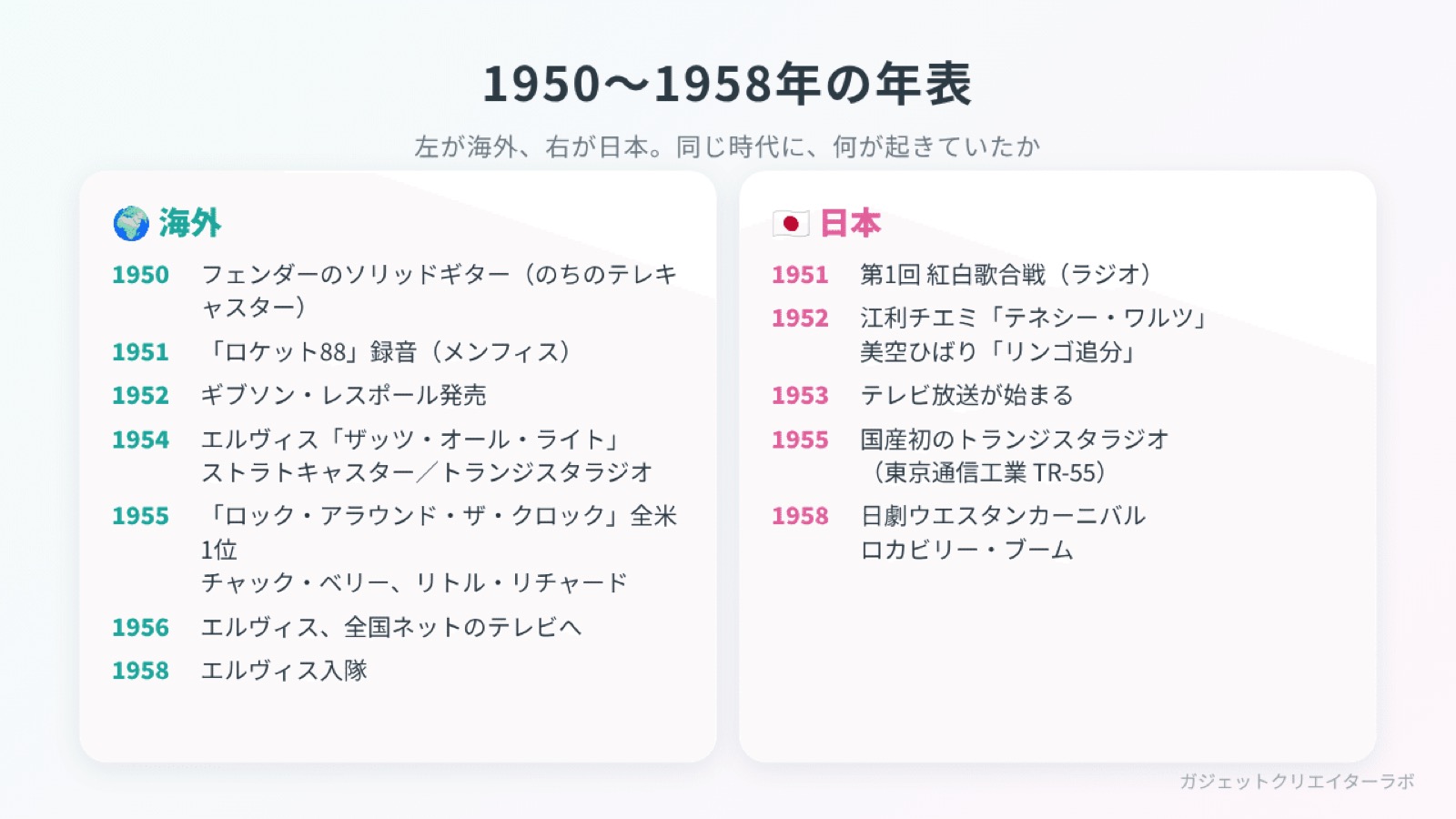
Around the world
- 1948: LP records arrive.
- 1949: 45 rpm singles arrive. Billboard renames its chart “Rhythm & Blues.”
- 1950: Fender solid-body guitar (named the Telecaster the following year).
- 1951: “Rocket 88” is recorded. Fender Precision Bass.
- 1952: Gibson Les Paul.
- 1954: Elvis records “That’s All Right.” Fender Stratocaster. Transistor radios go on sale.
- 1955: “Rock Around the Clock” reaches No. 1 nationwide. Chuck Berry and Little Richard break through. Elvis moves to RCA.
- 1956: “Heartbreak Hotel” reaches No. 1 nationwide. Elvis appears on network television.
- 1958: Elvis enlists in the U.S. Army.
Japan
- 1951: First Kōhaku Uta Gassen (Red and White Song Contest), broadcast on radio.
- 1952: Chiemi Eri debuts with “Tennessee Waltz.” Hibari Misora releases “Ringo Oiwake.”
- 1953: Television broadcasting begins.
- 1955: Japan’s first domestically made transistor radio, the Tokyo Tsushin Kogyo TR-55.
- 1958: Nichigeki Western Carnival. Rockabilly boom.
References
- English Wikipedia: “Elvis Presley,” “That’s All Right,” “Sun Studio,” “Sam Phillips,” “Rocket 88,” “Alan Freed,” “Rock Around the Clock,” “Buddy Holly,” “Million Dollar Quartet,” “Transistor radio,” and “45 rpm”
- Japanese Wikipedia: “Chiemi Eri,” “Hibari Misora,” “Nichigeki Western Carnival,” “NHK Kōhaku Uta Gassen,” and “TR-55”
Photo credits
- Diagram: created by the author
- Header image, “Sun Records Studio, Memphis, Tennessee” — Photo: Carol M. Highsmith / Library of Congress (via Wikimedia Commons) / Public Domain (cropped)
- Photo: Sun Studio — Photo: JeremyA / Wikimedia Commons / CC BY-SA 2.5
- Photo: Elvis Presley in a 1957 publicity photo for Jailhouse Rock — Photo: Metro-Goldwyn-Mayer / Wikimedia Commons / Public Domain
- Diagram: Four new tools that changed music in the 1950s: the 45, transistor radio, electric guitar and bass, and tape recording — created by the author
- Photo: Regency TR-1, released in 1954 — Photo: Cmglee / Wikimedia Commons / CC BY-SA 3.0
- Timeline of 1950–1958, with international events on the left and Japanese events on the right — created by the author