Honda — From a Hamamatsu Workshop to Motorcycles, F1, Cars, Robots and Jets
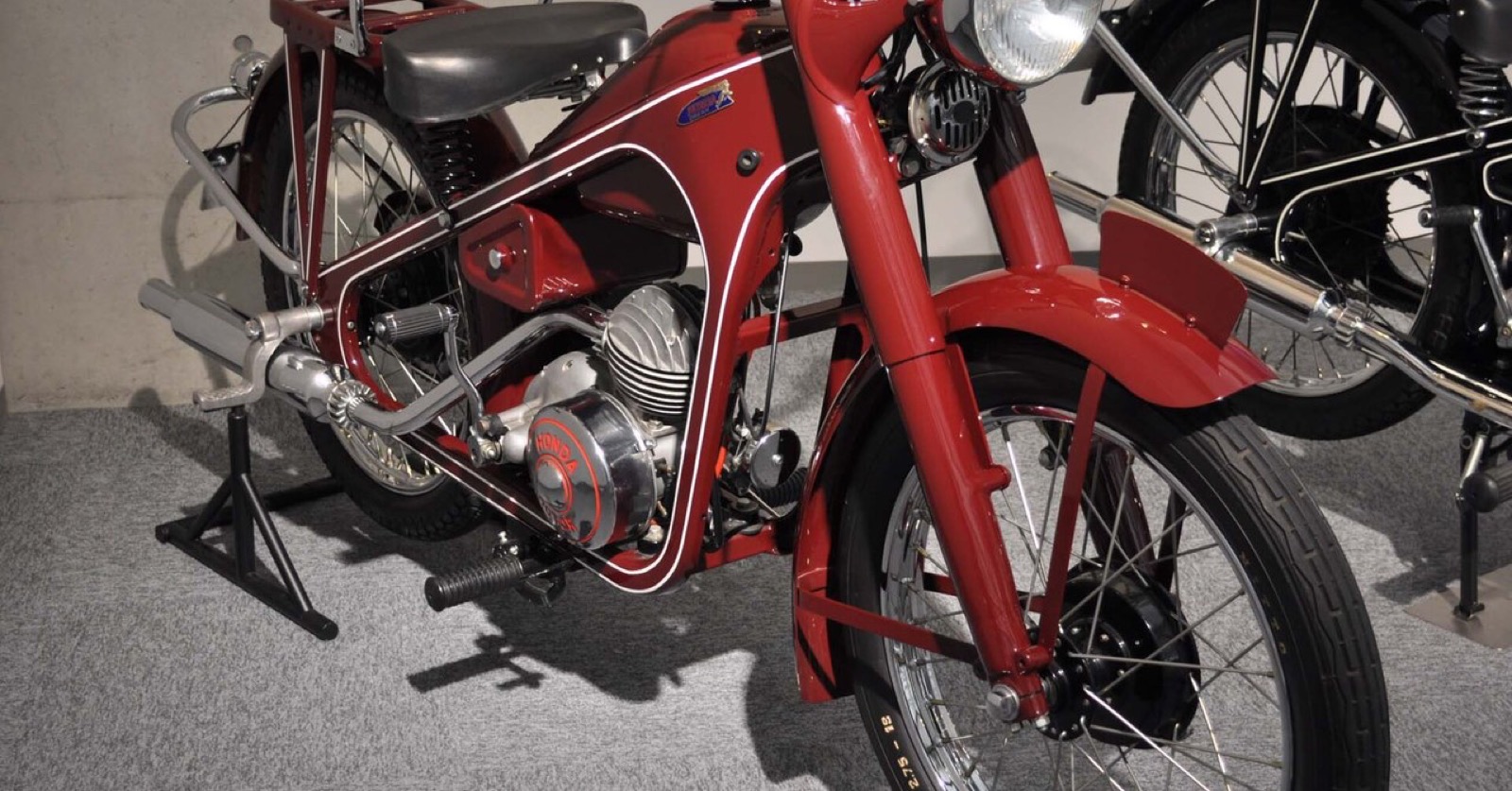
☕ A story from GC Lab’s motorcycle history series, tracing vehicles through the people and events behind them. After the Super Cub, two-strokes, and Ducati, this story follows Honda from its beginnings in Hamamatsu as it expanded from motorcycles into cars, racing, robotics, and the sky.
💡 What you’ll learn
- How Soichiro Honda’s engineering and Takeo Fujisawa’s business leadership worked together
- How the Isle of Man TT and the Super Cub helped propel Honda onto the world stage
- Honda’s subsequent challenges in F1, CVCC, overseas manufacturing, robotics, and jets
At a factory in Hamamatsu, an engineer is puzzling over a small metal part. A piston ring seals the gap between a piston and cylinder, contains combustion gases, and carries heat away. It looks like a thin loop, but a slight change in its dimensions or material can alter an engine’s power and durability.
In postwar Japan, this was the small ring Soichiro Honda had to master. The company that would later dominate the global motorcycle market, win in F1, and build cars, robots, and jets did not begin in a gleaming headquarters or a vast research center. It began with trial and error in a small workshop.
Tell Honda’s story as the tale of Soichiro’s genius alone and you see only half of it. Takeo Fujisawa turned engineering dreams into a viable company, alongside designers, factory workers, dealers, and colleagues overseas. The ability to build fast machines, and the ability to get them to the people who needed them and keep the business going, together made Honda a maker of vehicles.
Chapter 1 — Art Shokai in Hamamatsu and the Piston-Ring Challenge
Soichiro Honda was born in Shizuoka Prefecture in 1906. His father worked as a blacksmith and bicycle mechanic, so Soichiro grew up around machinery. He is said to have been drawn to machines after seeing an automobile for the first time. Looking back at his success, it can seem as though his path was set from the beginning. In reality, he spent years learning through hands-on work and failure.
In 1922, Soichiro joined Art Shokai, an automobile repair shop in Tokyo, and began working as a mechanic. Repair was not simply a matter of finding a broken part and replacing it. He had to read symptoms that varied from vehicle to vehicle, adjust components, and get each machine running again. He learned how machinery was built while gaining experience with the problems that arose in the field.
Eventually, he returned to Hamamatsu and opened a branch of Art Shokai. While running the repair business, he became interested in manufacturing parts. Making components himself would let him apply what he had learned from repairs to production. He chose to tackle piston rings for automobiles.
But copying what he saw was not enough to produce consistent quality. His prototypes varied in strength and dimensions, failing to meet customers’ requirements. Soichiro thought that expanding the factory and upgrading its equipment would bring success, but he also needed to learn about materials, heat treatment, and machining precision. Studying metals and casting at Hamamatsu Higher Technical School was part of his effort to master the technology systematically.
In 1937, he founded Tokai Seiki Heavy Industries and began producing piston rings in earnest. He worked to supply Toyota Motor, but the quality bar was high, and some deliveries were rejected. Shop-floor instinct alone was not enough. He needed to understand materials, control processes, and inspect each part. Soichiro learned the fundamentals of manufacturing through hard experience.
The factory was damaged by war and earthquakes, and the business was shaken. After equipment was damaged in events including the 1945 Mikawa earthquake, Tokai Seiki transferred its business to Toyota after the war. Soichiro stepped away from running a company for a time. Honda might never have existed if the story had ended there. He took time to consider what to make next and turned his attention to the need for transportation in an era when it was scarce.
A piston ring is not finished just because it has been machined into a circle. It must keep its spring under heat, press against the cylinder wall with the right force, and keep too much oil out of the combustion chamber. If the gap is too wide, combustion gases escape; if it is too tight, thermal expansion can make the ring bind. Repeated prototyping alone could not isolate the causes. He had to study metal composition, casting, heat treatment, and measurement.
What Soichiro learned at Hamamatsu Higher Technical School did not mean abandoning practical intuition. It meant explaining that intuition and turning it into knowledge that could be reproduced. He treated product failures as problems in materials and processes, then filled the gaps in his own knowledge. Honda would return to this approach when it later entered unfamiliar fields such as racing, emissions, and aviation. Learning again was part of development whenever the technology was new.
The lesson of making a small component was that a flash of invention alone could not make a product. You had to choose the material, produce consistent quality, and deliver it where it would be used. This challenge, familiar even in Honda’s later large factories, was there from the start.