[Motorcycle History] A Race Around an Entire Island — The Isle of Man TT and the Japanese Makers Who Took It On
☕ A coffee-length story from GC Lab's "Motorcycle History" series, where we follow machines through the people and events behind them. This time: the Isle of Man TT, a public-road race that has run for more than a hundred years on a small island between Britain and Ireland, and the Japanese manufacturers who came to take it on.
💡 What you'll learn
- Why a small island in the sea became the "holy ground" of motorcycle racing
- How many years it took Yamaha to win for the first time on 60 km of fog and stone walls
- The legend that carried on after the world championship left, and a silent Japanese electric machine
Prologue
Engines echo across the island in the morning.
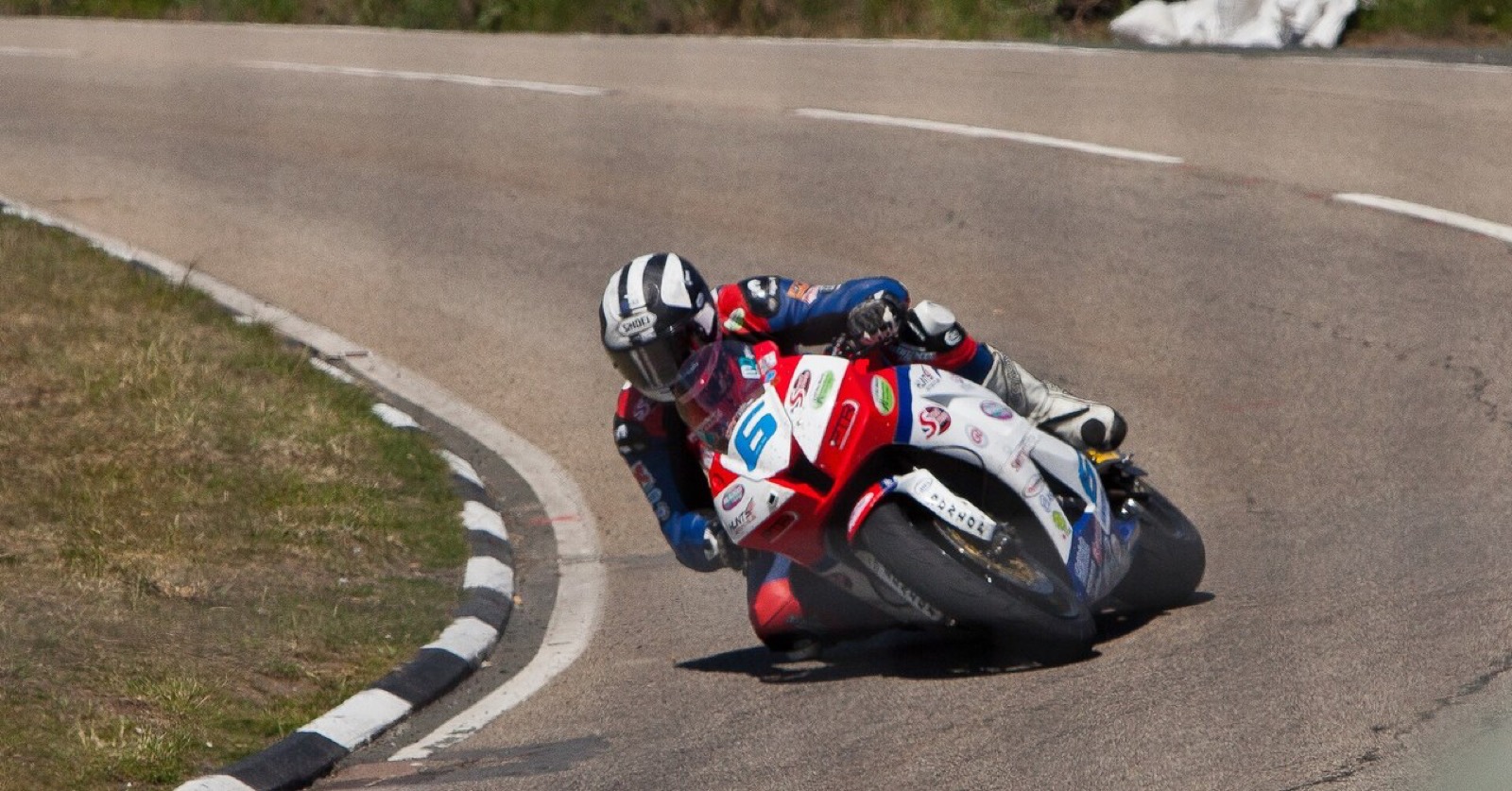
The start line is on a broad street in Douglas, the island's main town, a road normally full of everyday traffic. When the flag drops, riders set off one at a time, ten seconds apart. Right ahead is Bray Hill, a steep straight plunge through a residential street. Front doors and low stone walls line both sides. Between them, the machines drop down the hill at well over 250 km/h. At the bottom the bikes compress hard, sparks flying, then charge up toward the next rise.
This is not a racetrack. These are real public roads, the ones islanders use to go shopping and children use to walk to school. One lap is about 60 km. With more than 200 corners, it runs through towns, past farmland, over a mountain and back into Douglas. Only on race days are the roads closed, and riders from all over the world run them flat out.
The Isle of Man TT. Begun in 1907, more than a century later it is still running as one of the oldest, and one of the most dangerous, motorcycle races in the world. And this island was also where Japan's motorcycle makers first came face to face with "the world."
Chapter 1 — An island next door to the 20 mph country
The story begins with British traffic law.
At the start of the 20th century, cars were slowly becoming more common in Britain. In 1903 Britain passed a new law limiting vehicles to 20 miles per hour, about 32 km/h. Racing for speed on ordinary roads was out of the question.
But just next door was a place where things were a little different: the Isle of Man, in the Irish Sea between Great Britain and Ireland. The island is a possession of the British Crown, but it is not part of the United Kingdom; with its own parliament and more than a thousand years of history, it could make its own laws.
In 1904 the Manx parliament passed a special law allowing public roads on the island to be closed for an automobile race qualifier. Then, on 28 May 1907, a race for motorcycles was held on the same island for the first time. This was the beginning of the Isle of Man TT.
TT stands for "Tourist Trophy." The idea behind the name, it is said, was to compete not on specially built racing machines but on motorcycles meant for ordinary road use.
In the first race, Charlie Collier on a Matchless won the single-cylinder class, and Rem Fowler on a Norton won the twin-cylinder class. The winners averaged around 60 km/h. That sounds leisurely now, but simply finishing lap after lap on roads that were barely surfaced was a huge challenge for the motorcycles of the day.