Ikutaro Kakehashi — From Fixing Watches and Radios to Building the World of Electronic Instruments
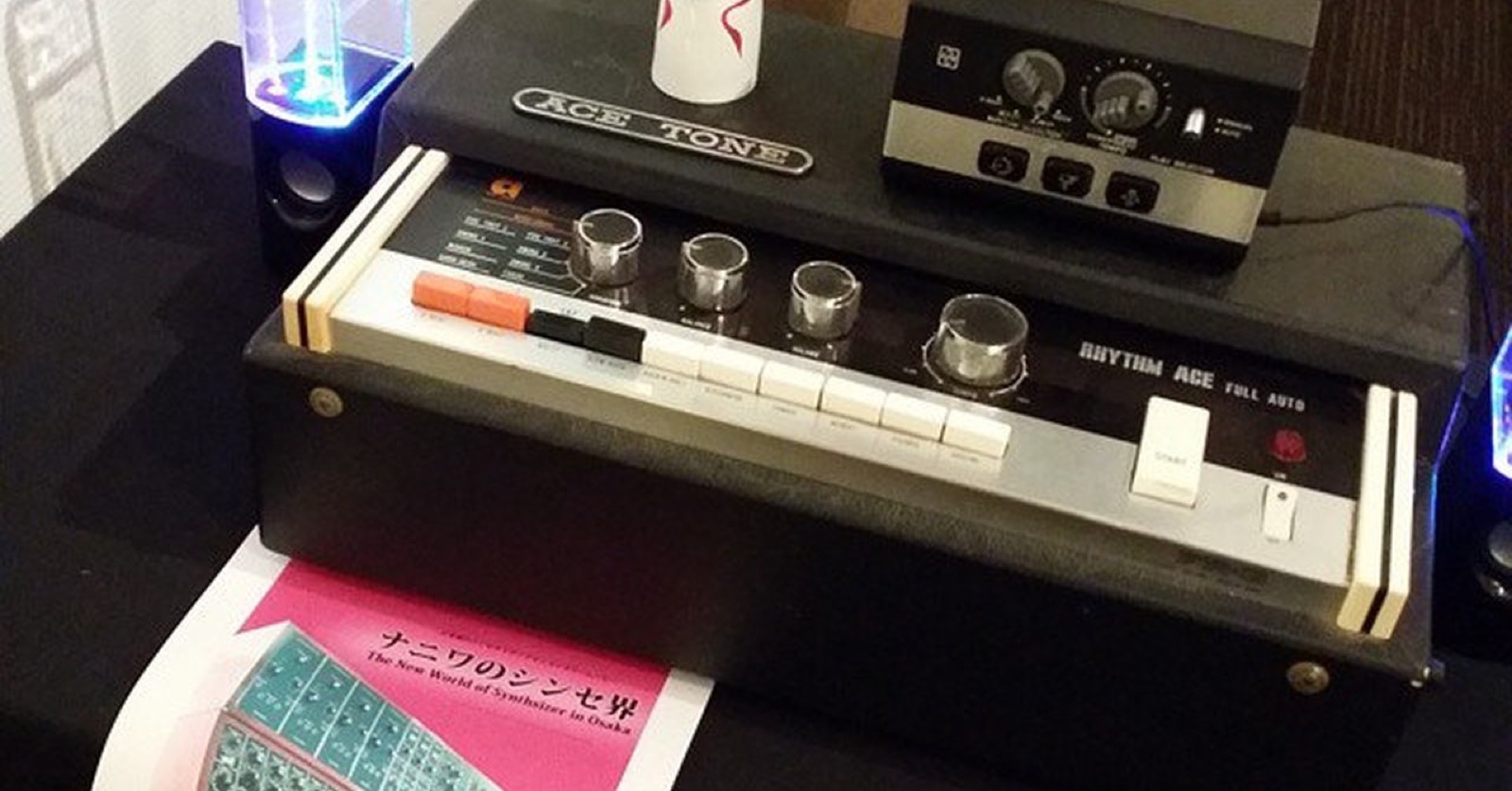
☕ A story about a pioneer of musical instruments and audio — tracing the people and events behind the gear. This time, we follow Ikutaro Kakehashi, from repairing watches and radios to founding Ace Tone and Roland.
💡 What you’ll learn
- How Kakehashi moved from repair work into electronic instruments
- How Ace Tone’s rhythm machines paved the way for Roland
- The founder’s work behind the spread of MIDI and the launch of ATV
Making a Beat Beside the Keyboard
A small box sits beside an electronic organ. When you play the keys, the box produces a steady rhythm. It gives a solo performer a foundation for accompaniment.
Today, it’s hardly unusual to find rhythm-making features in a synthesizer or DAW. But when electronic instruments were just beginning to reach homes and stages, having a machine play a rhythm was a new idea. Ikutaro Kakehashi was one of the people who pursued its potential.
Kakehashi was born in Osaka on February 7, 1930. He is remembered as the founder of Roland and as a leading advocate for MIDI, the standard that connects electronic instruments. But he didn’t set out to build a major instrument company from the start. His journey began with repairing watches and radios, and with a curiosity about making sound through electronic circuits.
Following his life reveals work that can be easy to miss if we focus only on the birth of famous instruments: the work of building an environment in which instruments can be played. A watch repairer moved into electronic instruments, built rhythm machines, founded a company, and championed a common standard that let different manufacturers’ products work together. Kakehashi’s story spans both making tools and creating ways for those tools to work together.

Chapter 1 — From Watch Repair to Sound Circuits
Skills Learned Hands-On
As a young man, Kakehashi made a living repairing watches and eventually worked with electrical products such as radios. Taking apart precision components, finding the cause of a fault, and getting a device working again takes an understanding of how things fit together and the patience to solve problems one by one.
A watch and a radio may both need repairs, but their inner workings are different. A watch depends on the motion of gears and springs; a radio handles electrical signals. In both, however, the condition of a small component can determine how the whole device works. The approach Kakehashi developed during this period—working with both mechanics and electricity—became a foundation for his later work on electronic instruments.
In postwar Japan, the radio was an important way to hear music and news. It received sound, amplified it, and sent it out through a speaker. Repair work that brought him close to this process also gave Kakehashi a path toward instruments that used electricity to make sound. He began to think not only about restoring broken things, but also about what electricity could make possible.
An Electronic Organ at Church
An electronic organ heard at church is often described as the turning point in Kakehashi’s life. It produced a sound like a pipe organ using electronic circuits and speakers. Pressing a key made a sound in a way that opened up possibilities beyond those of traditional instruments.
The appeal of an electronic organ wasn’t just its range of tones. An instrument that makes sound electronically can be designed without filling a large space with pipes or strings. Circuit and component choices can expand musical expression. For Kakehashi, whose work had brought him into contact with watches and radios, electronic instruments must have seemed like a field where technology and music met directly.
At the time, the electronic organ was still a new market. Overseas manufacturers were introducing products, and interest in electronic instruments was growing in Japan too. Kakehashi decided to make instruments his life’s work, turning his experience with repairs and electrical products toward music.
Chapter 2 — Ace Tone, a Playing Partner
1960: The Start of Ace Electronic Industries
In 1960, Kakehashi founded Ace Electronic Industries. Its Ace Tone brand became known as a maker of electronic instruments. Its products included electronic organs, amplifiers, effects, and rhythm machines.
For an electronic organ player, rhythm is an important part of a performance. Even when playing alone, a musician may want to keep a steady beat and establish the feel of a song. If a machine can supply the rhythm without a drummer, it opens up more possibilities. Kakehashi focused on rhythm machines that could be played alongside an organ.
Ace Tone’s early rhythm devices used electronic circuits to create percussion sounds and play set patterns. They weren’t like modern drum machines, where you can record any sound and arrange it freely. Even so, the ability to choose a tempo, play a rhythm, and perform on the keyboard at the same time changed how people could make music at home and in small venues.
From Manually Played Rhythms to Automatic Performance
Rhythm machines didn’t reach their finished form all at once. Some early models required the player to operate them to produce sounds; others offered a limited selection of rhythms. Later models could repeat a pattern automatically at the press of a switch.
Ace Tone’s Rhythm Ace FR-1 spread as a product that played rhythm patterns automatically. It was also used with Hammond organs, supporting organists with accompaniment. The machine didn’t take over the entire performance; it played alongside the keys under the musician’s hands. Rather than replacing the performer, the rhythm machine acted as a partner, adding another part to a solo performance.
The idea still resonates in today’s synthesizers and home-studio production. A machine keeps time while the performer builds sounds and phrases on top of it. With a repeating rhythm in place, the player can focus on melody and harmony. Automating rhythm wasn’t just a convenience. It expanded the range of music one person could perform alone.
Making Gear That Sits Beside an Instrument
Ace Tone’s business wasn’t limited to rhythm machines. It made a range of tools needed in performance settings, including electronic organs, guitar amplifiers, and effects. Instead of building just one kind of instrument, the company assembled gear that could make, amplify, and shape sound, and support a performance.
This broad approach carried over to Roland. The company would make synthesizers and electronic pianos as well as amplifiers, effects, and recording equipment. Making instruments means thinking beyond keys and sound sources: you have to consider where performers will use them and what they’ll use them with. From the company’s earliest days, Kakehashi was looking at the whole environment in which music is made.
For Kakehashi, Ace Electronic Industries must have been more than a box for selling products. It was a place where he could shape the instruments he imagined, guided by his own team’s decisions. When the market had no clear answers yet, the company could prototype new tools and put them in performers’ hands. A founder’s job wasn’t limited to designing circuits; it also meant deciding what to make.
Chapter 3 — Founding Roland and Looking Beyond Japan
1972: A New Company Name
In 1972, Kakehashi founded Roland. Building on the electronic instrument work he had developed at Ace Electronic Industries, he set out to serve a wider market. The name Roland was chosen because it would be easy to pronounce and remember in different countries. It suggests that the company had an international outlook from the start.
One of Roland’s early products was the TR-77 rhythm machine. The experience gained with Ace Tone’s rhythm gear carried into products from the new company. The product names and designs changed, but the basic idea remained: support keyboard performances with machine-played rhythms.
Roland later expanded into synthesizers, electronic pianos, guitar amplifiers, and effects. Synthesizers such as the Jupiter and Juno, Jazz Chorus amplifiers, and effects under the BOSS brand became familiar to musicians and producers. Rather than examine every model one by one here, I want to focus on the direction Kakehashi gave the company.
Roland delivered more than finished instruments. It made tools that let performers create sounds, record them, and combine them with other gear: sounds from keyboards, machines that keep a beat, effects that reshape sound, and amplifiers that make it louder. Combining these tools creates room for new expression.
What the TR-808 Came to Represent
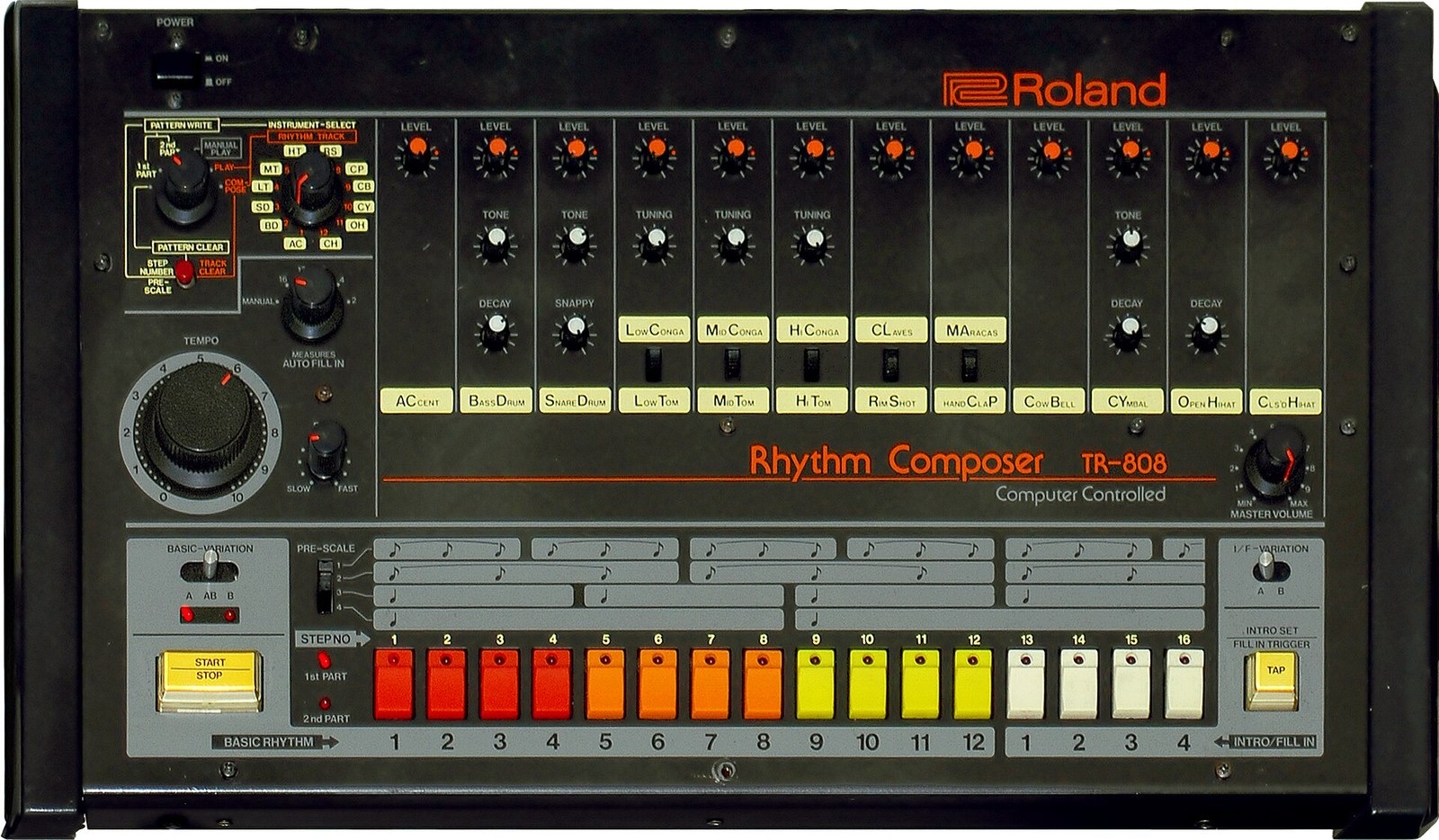
Of Roland’s rhythm machines, the TR-808, introduced in 1980, is especially well known. It wasn’t recognized as a classic by everyone from the moment it went on sale. Its distinctive deep kick and sharp snare had a character of their own, rather than simply reproducing an acoustic drum kit.
Those sounds later played an important role in hip-hop, electro, dance music, and other genres. The machine didn’t just imitate drums; sounds possible only through electronics moved to the center of the music. I’ll leave the full story of the TR-808 to an earlier article. The point here is that the “rhythm machine that supports a performance,” an idea Kakehashi had pursued since the Ace Tone days, grew into a tool for making music itself.
Synthesizers followed a similar path beyond being substitutes for existing instruments. A player could perform pitches on a keyboard while changing the sound electronically. Roland offered synthesizers for a range of budgets and uses, making electronic sounds more accessible to performers and creators. Under Kakehashi’s leadership, Roland grew into a company that put tools in the hands of people making the music of the future.
Chapter 4 — MIDI, a Common Language
Connecting Gear from Different Companies
In the early 1980s, electronic instrument makers each built their own products. Synthesizers differed in sound and operation from one manufacturer to another, and connecting gear from different companies raised questions about how to connect and control it.
Kakehashi believed there needed to be a common system that would let electronic instruments exchange information, even when they came from different manufacturers. Roland proposed developing a shared standard for connecting gear. Competing companies joined the effort, and with contributions from Dave Smith and others, MIDI (Musical Instrument Digital Interface) took shape.
MIDI doesn’t transmit sound itself. It sends performance information between devices, such as which note to play, how hard to play it, and when to play it. That lets a keyboard from one company trigger a sound module from another, or a sequencer control several pieces of gear. It’s a common language that lets different instruments understand the same instructions.
What matters here is that MIDI wasn’t designed to lock users into one company’s products. Because several manufacturers could use the same system, performers and producers could combine gear across brand lines. To understand Kakehashi’s work, it’s essential to see that Roland’s founder was thinking not only about his company’s interests, but also about connectivity across the electronic instrument industry.
A Standard That Changed How Producers Work
MIDI’s spread mattered to more than performers with several synthesizers lined up. It also reached production setups that used computers and sequencers to record performance data and play sound modules. You could record a phrase on a keyboard, then edit its notes or timing, or send it to another sound module. MIDI is at the heart of these basic tasks.
Today, entering notes on a screen and playing software instruments is routine in DAW-based production. Behind that workflow is a system for sharing performance data between devices. When MIDI arrived, computer music was just beginning to open up to a wider range of creators. If every company had adopted a different standard, combining gear and expanding production setups would have been much harder.
Kakehashi and Dave Smith were recognized for their contributions to MIDI’s development with a Technical Grammy Award in 2013, thirty years after MIDI’s introduction. The award recognized not the success of a single product, but the creation of shared infrastructure used by countless people making music.
Chapter 5 — Leaving Roland and Starting ATV
Taking on a New Challenge
In 2013, Kakehashi stepped down from his role at Roland. He later founded ATV, a company that makes video and audio equipment. After leaving the company he had built as its founder, he continued making things by starting a new one.
ATV developed electronic drums and video equipment, among other products. Kakehashi’s Roland work is closely tied to the history of electronic instruments, while his work at ATV expanded into tools for sound and video. It was another attempt to apply the electronic technologies he had developed in the instrument world to new forms of performance and expression.
When a founder leaves a company, the reasons can be complex. The full story can’t be reduced to a simple tale of success or conflict. What we can say is that after leaving Roland, Kakehashi chose to keep making things. The company name changed, but his effort to use electronics to build tools for performance and expression continued.
2017: The Work He Left Behind
Ikutaro Kakehashi died on April 1, 2017, at the age of 87. The work that began with watch repair continued through electronic organs, Ace Tone rhythm machines, Roland instruments, and MIDI, which connects gear across manufacturers.
If we tie his achievements only to the TR-808 or a particular synthesizer, we miss the bigger picture. Products certainly remain in people’s memories, but Kakehashi’s work also included systems beyond individual products: letting a performer get a rhythm without another musician, connecting equipment from different manufacturers, and making shared technology widely available as more people adopted electronic instruments.
From repairing watches to founding companies, championing an industry-wide standard, and starting another company, Kakehashi kept looking for the next problem to solve rather than stopping when a product was finished. For people playing electronic instruments, making music in a DAW, or connecting gear from different manufacturers, his story offers a way into the foundations of today’s production environment.
What Kakehashi built wasn’t just a catalog of classic instruments. He helped lay a path for electronic instruments to become widely used tools for performance. Let machines keep the beat, create tones with electricity, and get different pieces of gear speaking the same language. Those steps helped shape the way music is made today.
Timeline
- 1930: Born in Osaka
- 1950s: Worked repairing watches, radios, and other electrical products
- 1960: Founded Ace Electronic Industries
- 1960s: Developed Ace Tone electronic organs, rhythm machines, and other products
- 1972: Founded Roland
- 1980: Released the TR-808
- Early 1980s: Championed the development of MIDI, a shared standard for connecting electronic instruments
- 2013: Received a Technical Grammy Award with Dave Smith; stepped down from his role at Roland and founded ATV
- 2017: Died
Photo credits
- Header image, “Ace Tone Rhythm Ace FR-3 - ‘The Synth World in Naniwa’ screenings, talk, and live - UPLINK, Shibuya, 2014-08-24.jpg” — Kazuhisa OTSUBO from Tokyo, Japan (cropped) / Wikimedia Commons / CC BY 2.0
- Hammond Auto (Ace Tone Rhythm Ace FR-2L) — Synths_i_cannot_afford.jpg: stereogab, derivative work of Hammond Auto (Ace Tone Rhythm Ace FR-2L).png by Clusternote (talk), derivative work by Clusternote (talk) / Wikimedia Commons / CC BY-SA 3.0
- Roland TR-808 — Roland_TR-808_&_909.jpg by Brandon Daniel, derivative work by Clusternote (talk) / Wikimedia Commons / CC BY-SA 2.0
Licenses: CC BY 2.0, CC BY-SA 2.0, CC BY-SA 3.0.