From a Kabukicho Nightclub to the World's Synthesizers: KORG, the MS-20 and the M1
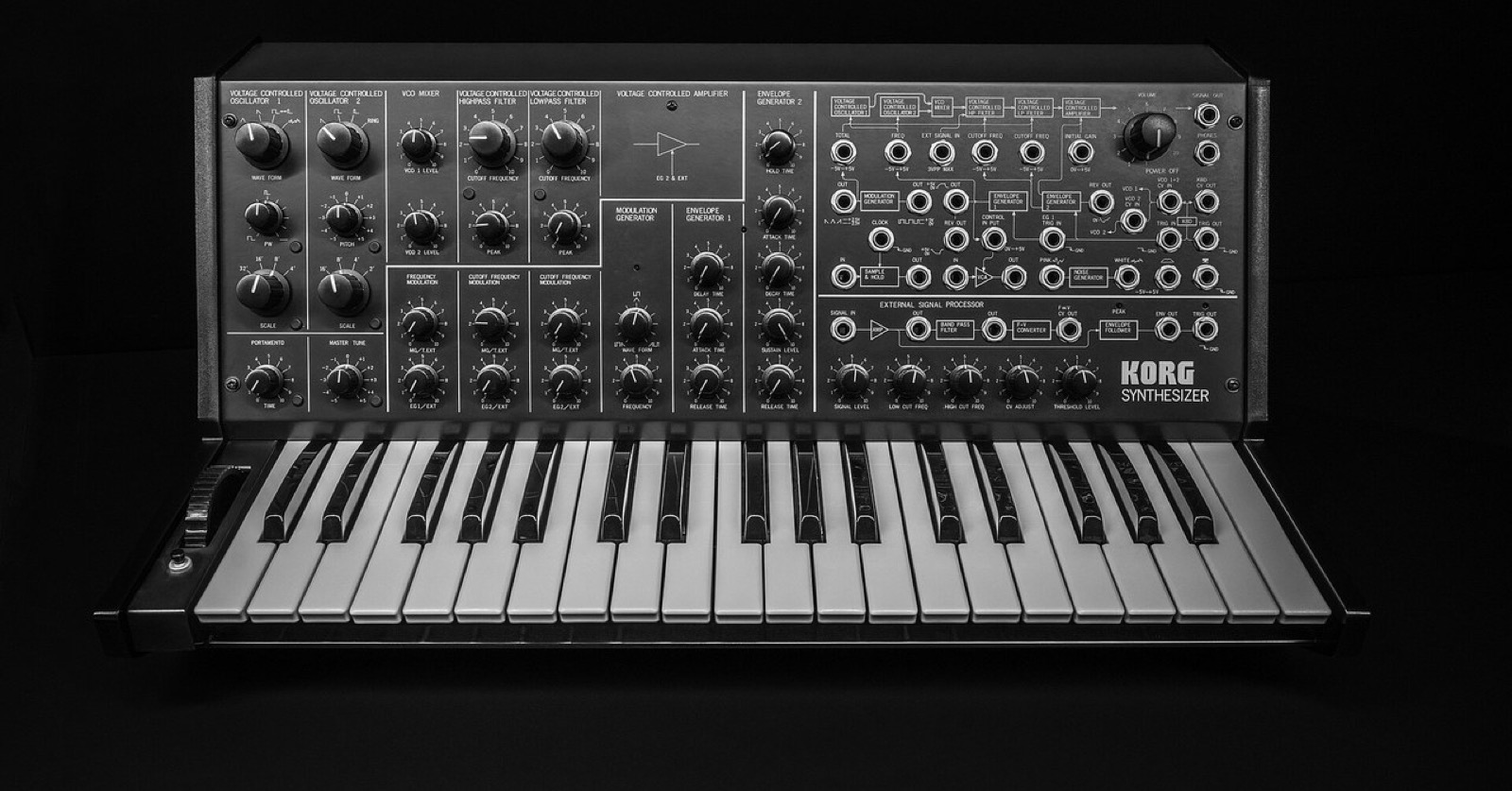
☕ A coffee-length story — about a 15-minute read. This is the tale of a man who ran nightclubs in Tokyo and a wandering accordion player, and how the company they started came to build synthesizers for the whole world.
Prologue — "Give Me the Donca"
For a long time, Japanese recording studios used a strange word.
"Can I have the donca, please?"
"Turn the donca up a little."
It meant the click — the "tick, tick, tick" that singers and players hear in their headphones to keep time. Today almost everyone calls it a click. But not so long ago, plenty of people in Japan called it donkama.
Donkama is short for the name of a machine: the Donca-Matic, a rhythm machine released in 1963 by a small company in Tokyo.
Long after the machine itself had disappeared from the studios, its name lived on as part of the trade's vocabulary. And the small company that built it would one day become a name known to musicians everywhere.
KORG.
This is the story of a musical instrument maker that began in the nights of Kabukicho.
Chapter 1 — A Kabukicho Nightclub and an Accordion Player
Born into a merchant family in Nagoya
The man who built Korg was Tsutomu Katoh. He was born in Nagoya on 28 August 1926, into a merchant family that ran a wholesale business in livestock feed.
His boyhood overlapped with the war years. Once the state began fixing prices, the family business could no longer run as it should. After graduating from a commercial school in Nagoya in 1944, Katoh joined the navy and is said to have been assigned to a unit at Yokosuka training for midget submarines — tiny craft crewed by a handful of men, built to ram enemy ships.
The war ended before he was ever sent out.
A trader in the ruins
After the war, Katoh was a trader who would sell anything. Electric wire and car parts paid better than food, he reasoned, so — the story goes — he marched into the Occupation offices with an English dictionary in hand, bought up wire and sold it on.
When his money ran out he reportedly pawned that dictionary to get back to Tokyo. He sold newspapers and took odd jobs, and eventually joined a company that was developing Kabukicho in Shinjuku.
In 1950 he was offered a nightclub in Kabukicho. He took it, and became a businessman of the night. Before long he was running several establishments in Shinjuku — clubs, a restaurant, a general store.
"A machine keeps better time"
Katoh's club had live music every night. Among the performers was an accordion player named Tadashi Osanai.
Osanai was an unusual musician: he had studied engineering at university. His passions were said to be the accordion, electronics — and gambling.
In America at the time there was a machine called the Wurlitzer Sideman, which played rhythms automatically: metal brushes swept across a spinning disc, triggering drum sounds in a fixed order. Osanai had used one and found it lacking.
"I could build something better."
Osanai asked Katoh to lend him money for parts. His argument, so the story goes, was simple: a machine keeps better time than a human drummer — especially after the drummer has had a few.
Katoh, who watched drunken customers and drunken musicians every night, probably understood that perfectly. He put up the money. Osanai bought parts in Akihabara and set to work on a rhythm machine.