The Camera That Made Japan's Makers Get Serious — Leica M3
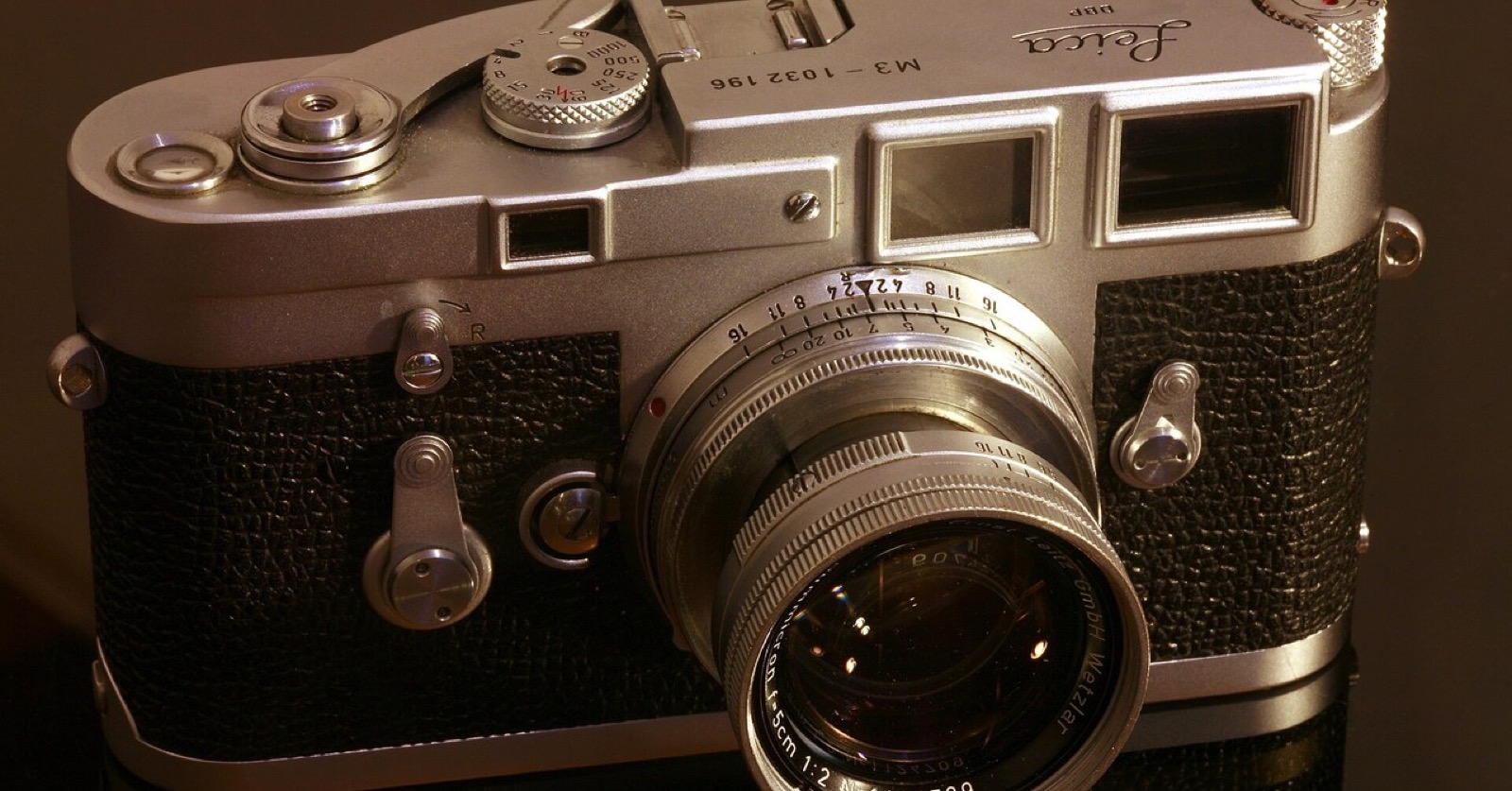
☕ A coffee-length story — about a 20-minute read. A side trip in our camera history series: this time, not a company but a single camera. The Leica M3 of 1954, the viewfinder that left people speechless, and the Japanese camera makers who looked through it.
What you will find here:
- How the M3 differed from the earlier "Barnack" Leicas
- The 0.91x viewfinder and its self-selecting frame lines
- What really lies behind the story that Japan turned to the SLR
- The family line that runs from the M3 to today's Leica M
Prologue — Cologne, April 1954
In the spring of 1954, the photo and imaging fair Photokina was held in Cologne, West Germany.
The war had ended less than ten years earlier. Camera makers from many countries brought their new products to the hall, and the world of photography was starting to move again.
There, Ernst Leitz of Wetzlar unveiled a new camera: the Leica M3.
Some of the promotional photographs from that time show a giant model of the M3, roughly as tall as a person. It was as if Leitz's ambitions for the camera had been given physical form.
At a glance, it did not look so different from earlier Leicas. A silver top plate, a body wrapped in black leatherette, small enough to sit in your palm.
But people who raised it to their eye are said to have been lost for words.
It was bright. It was big. And inside a single window floated both the double image used for focusing and a white frame showing what would be in the picture.
Over the next thirteen or so years, more than 200,000 of these cameras would be built and pass into photographers' hands. And far away, the M3 would hand Japan's camera makers a very difficult homework assignment.
This is the story of that one camera.
Chapter 1 — The thirty years before the M3
The Barnack Leica
The Leica first reached the public in 1925. It used 35mm motion-picture film to take 24×36mm pictures with a small body. (The story of the company and of the camera's creator, Oskar Barnack, is told in our earlier Leica column.)
For about thirty years after that, Leica refined the camera while keeping its basic form. Today, Leicas from this era are often grouped together as "Barnack" Leicas.
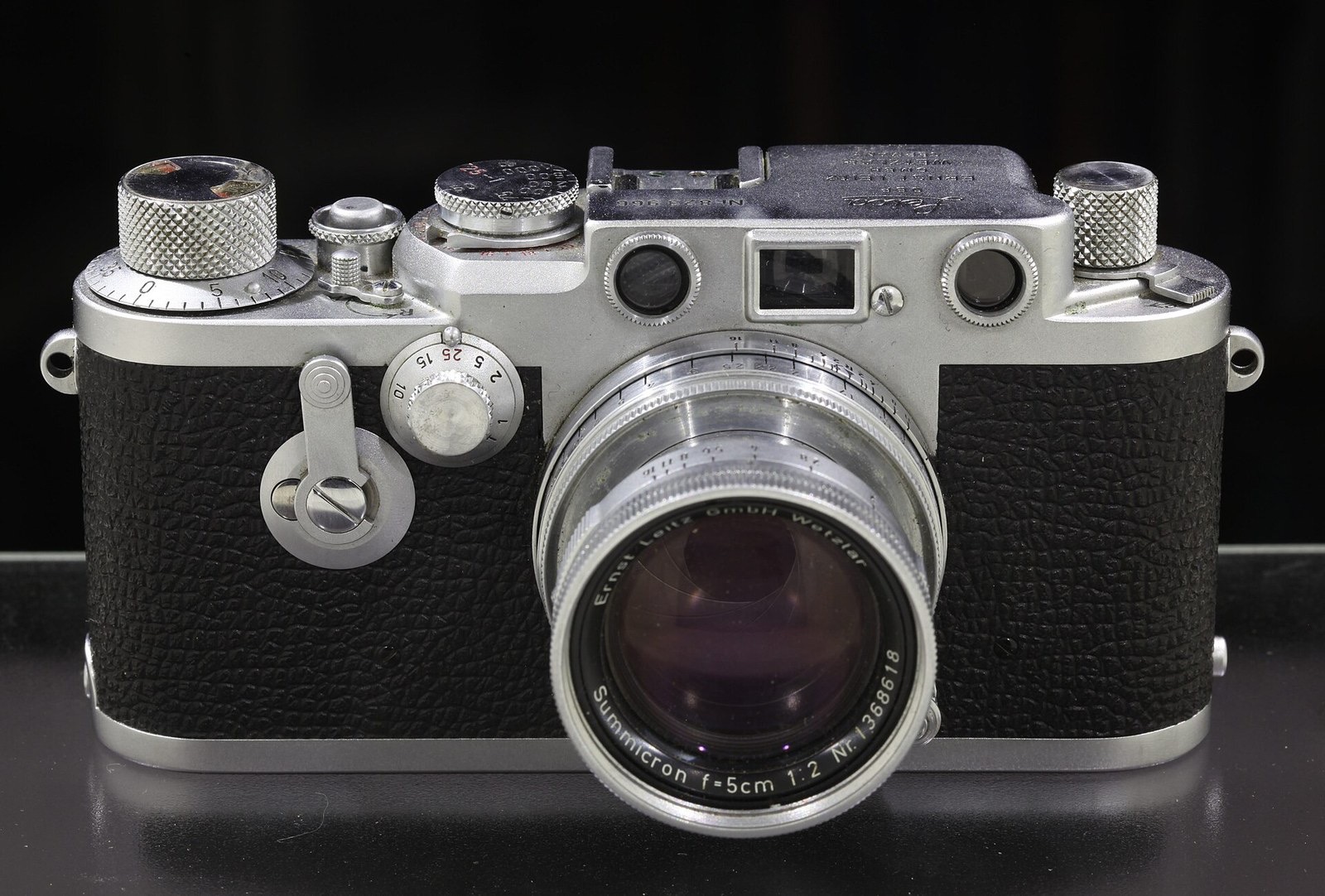
One of the most polished Barnack models was the Leica IIIf, introduced around 1950. Small, quiet, and sharp, it was used by many people, in newsrooms and on holiday alike.
Yet in use it asked a little effort of its owner.
Two windows
Look at the back of a Barnack Leica's top plate and you will see two small eyepieces side by side.
One is for the rangefinder, used for focusing. The other is the viewfinder, used for framing.
To take a picture, you first looked through the rangefinder window and brought the double image together to focus. Then you moved your eye to the neighboring window, composed, and pressed the shutter.
In the brief moment it took your eye to shift, a subject's expression could change. For anyone trying to catch an instant on a street corner, this "eye relocation" was no small source of stress.
Screw-in lenses and add-on finders
Lenses attached with a screw mount. You turned a 39mm thread around and around to fit one, taking care not to drop it each time you changed lenses.
What's more, the built-in viewfinder essentially showed only the field of a 50mm lens. To frame with a 35mm or 90mm lens, photographers slipped a separate small finder onto the top of the camera.
Film was advanced by turning a knob on top. Slow shutter speeds were set on a separate dial on the front.
Each step was manageable once you got used to it. But photographers must have been thinking all along: "Isn't there a faster, more natural way to shoot?"
What other cameras already had
In fact, several of the new features that went into the M3 had appeared first on other cameras.
Leica's rival, Zeiss Ikon's Contax, already used a bayonet mount in the 1930s, and the Contax II of 1936 combined the rangefinder and viewfinder into one window. Lever film advance also had precedents on other makers' cameras.
Leitz was not unaware of any of this. Perhaps it simply could not easily let go of a Barnack design it had spent thirty years perfecting.
Then, after the war, Leitz chose to rebuild everything at once.