Why Did Musicians Love Apple? — Mac and Music
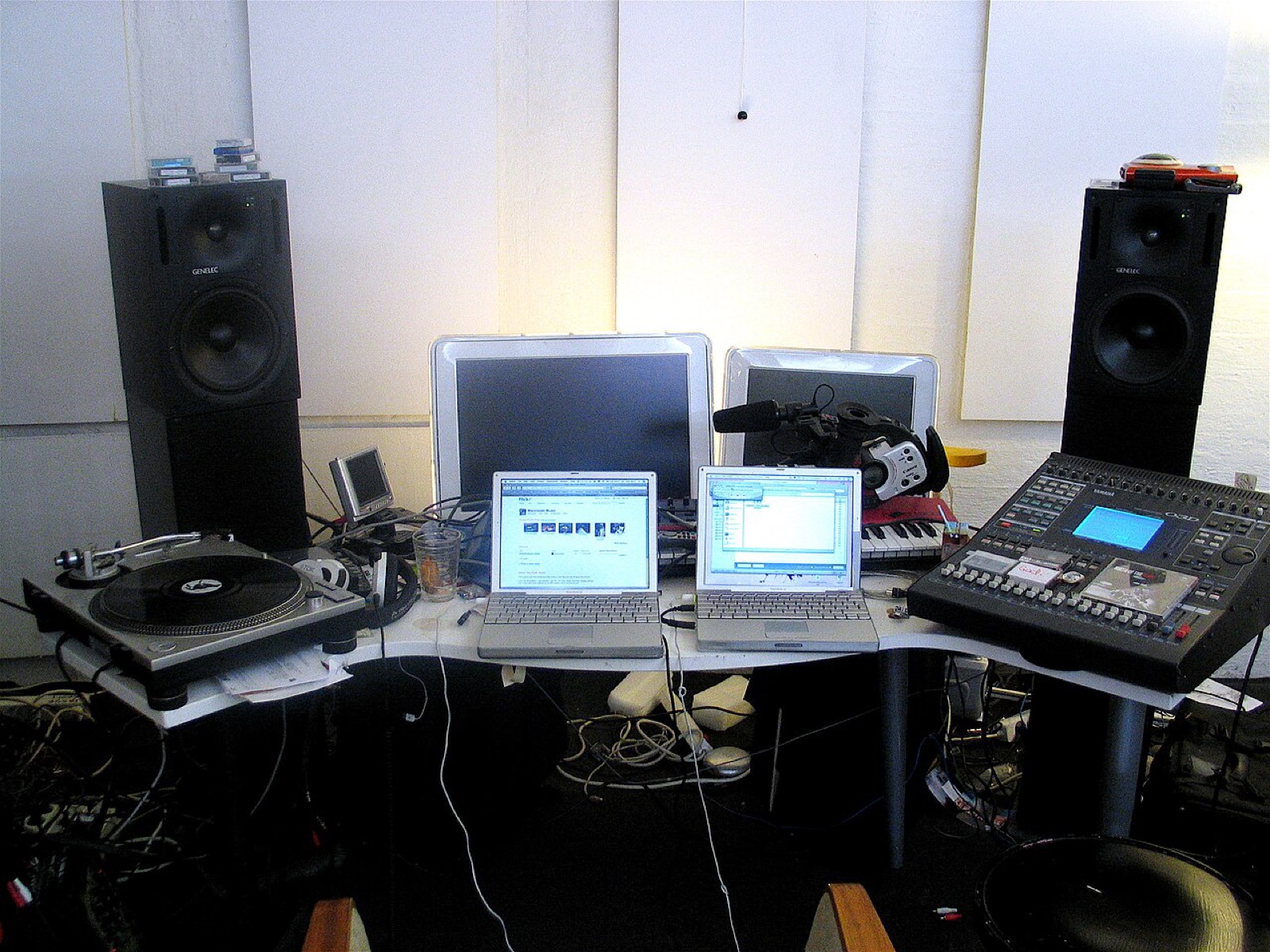
☕ A coffee-length story — about a 13-minute read. Enjoy this as a story, not a research paper. This is Part 3 of the story of Apple. Why is there a Mac on musicians’ desks in studios and bedrooms around the world? Let’s look for the answer across 40 years.
Prologue — The Grammy That Began in a Bedroom
In January 2020, at the Grammy Awards, America’s biggest music awards ceremony, Billie Eilish, then 18, won all four major categories.
Her debut album wasn’t made in a lavish recording studio. It was made in the bedroom of her brother’s ordinary home in Los Angeles.
Her brother Finneas used a Mac laptop and Logic Pro. There was a small speaker and one microphone. That was enough to make music that would be streamed hundreds of millions of times around the world.
But the story of going from a bedroom to the Grammys didn’t begin overnight. Behind it was nearly 40 years of history between the Mac and music.
📝 About this story
This story draws on books, interviews, and manufacturers’ materials I’ve read over many years. I’ve tried to stick to the facts, but I wasn’t there in person, so some nicknames and commonly repeated accounts may have crept in. I separate stories with multiple versions into “Legend & Lore” sections and list the sources at the end.
Chapter 1 — 1984: A Computer You Could Draw On
MIDI and the Mac Arrived Around the Same Time
In 1983, the electronic instrument world made an agreement: MIDI. It was a shared “language” that let electronic instruments from different manufacturers exchange performance information. (I tell the story of MIDI’s birth in another column.)
The following year, in 1984, Apple introduced the Macintosh.
Born at almost the same time, these two would eventually transform the way music was made.
Sheet Music and Keyboards on the Screen
The Mac’s biggest innovation was that it could display pictures and diagrams, not just text. With a mouse, you could grab things on the screen and move them directly.
That mattered a great deal to people making music:
- Put sheet music on the screen and place notes with a mouse.
- Display recorded notes as long bars in a piano roll, then adjust their length and position by eye.
- Arrange parts for several instruments on screen and see the whole composition at once.
Until then, making music on a computer required specialized knowledge of numbers and symbols. The Mac made music something you could see and touch.
By the mid-1980s, music software for the Mac was appearing one program after another. “Sequencing”—using a Mac connected over MIDI to play synthesizers—began to spread.
Chapter 2 — The Rival Was a Video Game Company
The Atari ST, a Formidable Opponent
In the second half of the 1980s, the Mac had a powerful rival in the music world: the Atari ST, a computer made by Atari, famous for its game consoles.
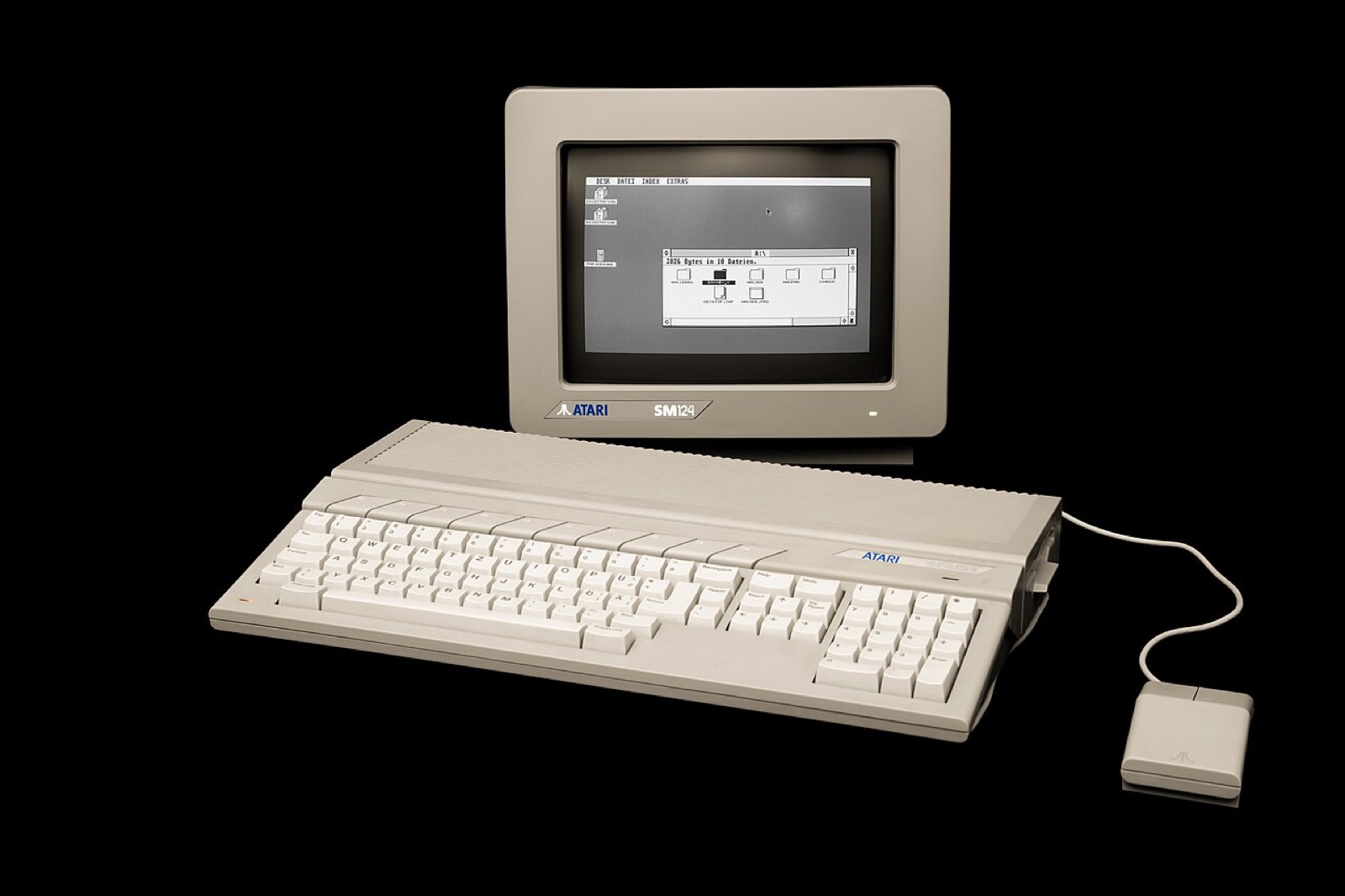
The Atari ST had a major advantage over the Mac: MIDI ports were built right into the computer. It was also much cheaper.
Especially in Europe, the Atari ST became hugely popular as “the computer for making music.” Many club-music hits were made on it.
Software That Came from Germany
One of the Atari ST’s most popular music programs was composition software created by a group of German engineers. They later founded a company called Emagic and developed new music software.
Its name was Logic—the ancestor of the software Finneas used to make music with Billie Eilish.
Born in Germany, Logic eventually moved beyond the Atari ST and grew into software for both Mac and Windows.
The Mac’s Strength Was Audio Itself
The Mac, meanwhile, had a different strength: working with audio itself.
In the late 1980s, a small American company called Digidesign developed a system that added dedicated hardware to the Mac and let users edit recorded audio on screen. Instead of cutting and splicing tape, you could edit while looking at the waveform and using a mouse.
That work led to Pro Tools in 1991. (I tell the story of Pro Tools’ birth in another column.)
Pro Tools eventually became the standard in professional recording studios around the world. For many years, it ran on the Mac. That’s where the idea that “professional studios have Macs” took hold.
Chapter 3 — In 2002, Apple Bought Logic
An Entire Music Software Company
In 2002, Apple acquired a company: Germany’s Emagic, the company that made Logic.
Apple made Logic its own software, ended development of the Windows version, and made it Mac-only. Windows users who relied on Logic were stunned. But the move made the image of “Mac for serious music-making” even stronger.
Why Was Apple So Invested in Music?
At the time, Apple was using the iPod and iTunes to change the way people listened to music. At the same time, it was trying to make the world of creating music its own, too.
Steve Jobs himself loved music, especially Bob Dylan and the Beatles. In Jobs’ oft-repeated phrase, Apple stood “at the intersection of technology and the liberal arts.” Music always had an important place in that vision.
🎙 Legend & Lore ①: The Other “Apple”
Apple had a longtime “nemesis”: Apple Corps, the company founded by the Beatles.
In the late 1960s, the Beatles named their company “Apple” and used an apple logo. Then along came a computer company with the same name and an apple logo.
The two companies fought over trademarks several times. There was a period when they reportedly agreed that “the computer company wouldn’t go into the music business.”
Macs once came with a system alert sound called Sosumi. A famous story says the name was a play on “So sue me.” It’s said to have been a small act of defiance by engineers who were putting sounds into the Mac while the company was fighting with a music business.
After a long dispute, the two companies reached a settlement. Then, in 2010, the Beatles’ music finally went on sale on iTunes.
Chapter 4 — 2004: GarageBand Makes Everyone a Composer
“You Can Make Music Without Knowing How to Play an Instrument”
In January 2004, Jobs announced new software: GarageBand.
As the name suggests, it was for amateur bands playing in the garage. And it came free with a Mac.
- Build a whole song by arranging ready-made drum, guitar, and piano phrases, or “loops.”
- Plug in a guitar or microphone and record your own playing or singing.
- Play a synthesizer on an onscreen keyboard or with your computer keyboard.
You didn’t need to play an instrument or read music to make a song. GarageBand led millions of people to think, “I can make music, too.”
A Studio Inside the iPhone
In 2011, GarageBand arrived on the iPad, followed by the iPhone.
You could drum, play guitar, and record vocals on the phone in your pocket. The young American musician Steve Lacy became known for contributing to songs by major artists using beats and phrases he made in GarageBand on an iPhone.
The day had come when you could make a song anywhere—not just in a garage, but on a train or in bed.
🎙 Legend & Lore ②: “Pros Don’t Use Free Software”
When GarageBand appeared, plenty of professional musicians and engineers dismissed it as “a free toy.”
But the kids who began making music in GarageBand eventually moved up to Logic, became professionals, and made hit songs. GarageBand and Logic shared many of the same ideas and controls, creating a natural path from “toy” to “professional tool.”
Let people take their first step for free, then guide them toward a tool they could use for a lifetime. Perhaps that was Apple’s longest-term “plan” in the music world.
Chapter 5 — Apple Silicon and Music Production Today
A Quiet Computer That Stays Cool
In 2020, Apple announced it would switch the Mac’s central chip to its own Apple silicon (the M series). (I explore the story of chips and semiconductors in another column, “How a 30-Ton Computer Fit in Your Palm.”)
The chip brought an unexpected gift to music makers:
- It uses less power and runs cooler → the cooling fan barely runs, so you don’t pick up fan noise while recording.
- A laptop can play many sounds at once → you can make a big production at a café or on tour.
- Long battery life → work for hours even where there’s no power outlet.
Record a delicate vocal or acoustic guitar in a quiet room. If the computer fan is humming beside you, it can spoil the take. A quiet computer was a welcome tool for anyone recording.
Into Three-Dimensional Sound
More recently, Logic Pro has made it possible to produce spatial audio (Dolby Atmos), placing sound not only in front, behind, and to either side, but also above and below. Streaming services are also offering more music in immersive formats.
The Mac, born in 1984 as “a computer you could draw pictures on the screen,” has become a tool for “drawing sound in space.”
Chapter 6 — Why Did Musicians Choose the Mac?
Look back over the last 40 years, and the reasons come into focus:
- From the start, it was a computer you could see and touch: sheet music and waveforms were intuitive to work with on screen.
- It became the professional studio standard: Pro Tools grew up on the Mac for years and became the shared language of professional studios.
- Apple made a full-featured music program its own: Logic—and made it available only on the Mac.
- Free GarageBand opened the door: children and adults alike could take their first steps in composition.
- Apple made quiet, reliable computers: a quality that mattered above all in recording rooms.
Of course, wonderful music is made on Windows computers today, too. There’s no single right choice.
But I think the biggest reason there’s a Mac on musicians’ desks is that Apple spent 40 years trying to be on the side of people who make music.
Epilogue — From the Garage to the Bedroom
In 1976, two Steves were assembling computers in a garage. (I told that story in Part 1.)
In 2004, software named after that garage appeared, and everyone could make music.
Then, in 2019, a brother and sister made music on a Mac in a Los Angeles bedroom and amazed the world.
The tools made by a company born in a garage turned bedrooms around the world into recording studios. Apple’s story is a story about computers, but it is also the story of the people who make music.
If there’s a Mac on your desk, open GarageBand tonight. The next song to change the world might come from your room.
Mac and Music: A Timeline
- 1983: MIDI is created.
- 1984: The Macintosh is introduced.
- 1985: The Atari ST launches with built-in MIDI ports.
- Mid-1980s: One Mac music program after another appears.
- Around 1989: Digidesign releases a system for recording and editing on a Mac.
- 1991: Pro Tools launches.
- 1990s: German-born Logic becomes available on the Mac.
- 2002: Apple acquires Emagic, and Logic becomes Mac-only.
- 2004: GarageBand launches.
- 2010: The Beatles’ music goes on sale on iTunes.
- 2011: GarageBand arrives on iPad, followed by iPhone.
- 2019: Billie Eilish’s debut album is made in a bedroom.
- 2020: Macs with Apple silicon (M1) arrive; Billie Eilish wins all four major Grammy categories.
- 2020s: Logic Pro adds spatial audio production.
References
- Wikipedia: “Logic Pro,” “Emagic,” “GarageBand,” “Pro Tools,” “Atari ST,” “Apple Corps v Apple Computer,” and “Apple silicon” (English editions)
- Apple’s official website (Logic Pro and GarageBand product information and press releases)
- Interviews about Finneas O’Connell’s production setup, including those published by Sound On Sound
- Walter Isaacson, Steve Jobs (Kodansha, 2011)
Photo credits
- Header image, “VilleHoo’s studio home” — Ville Hyvönen / Wikimedia Commons / CC BY-SA 2.0
- “Atari 1040 ST FM with a monochrome monitor” — Felix Winkelnkemper / Wikimedia Commons / CC BY-SA 4.0
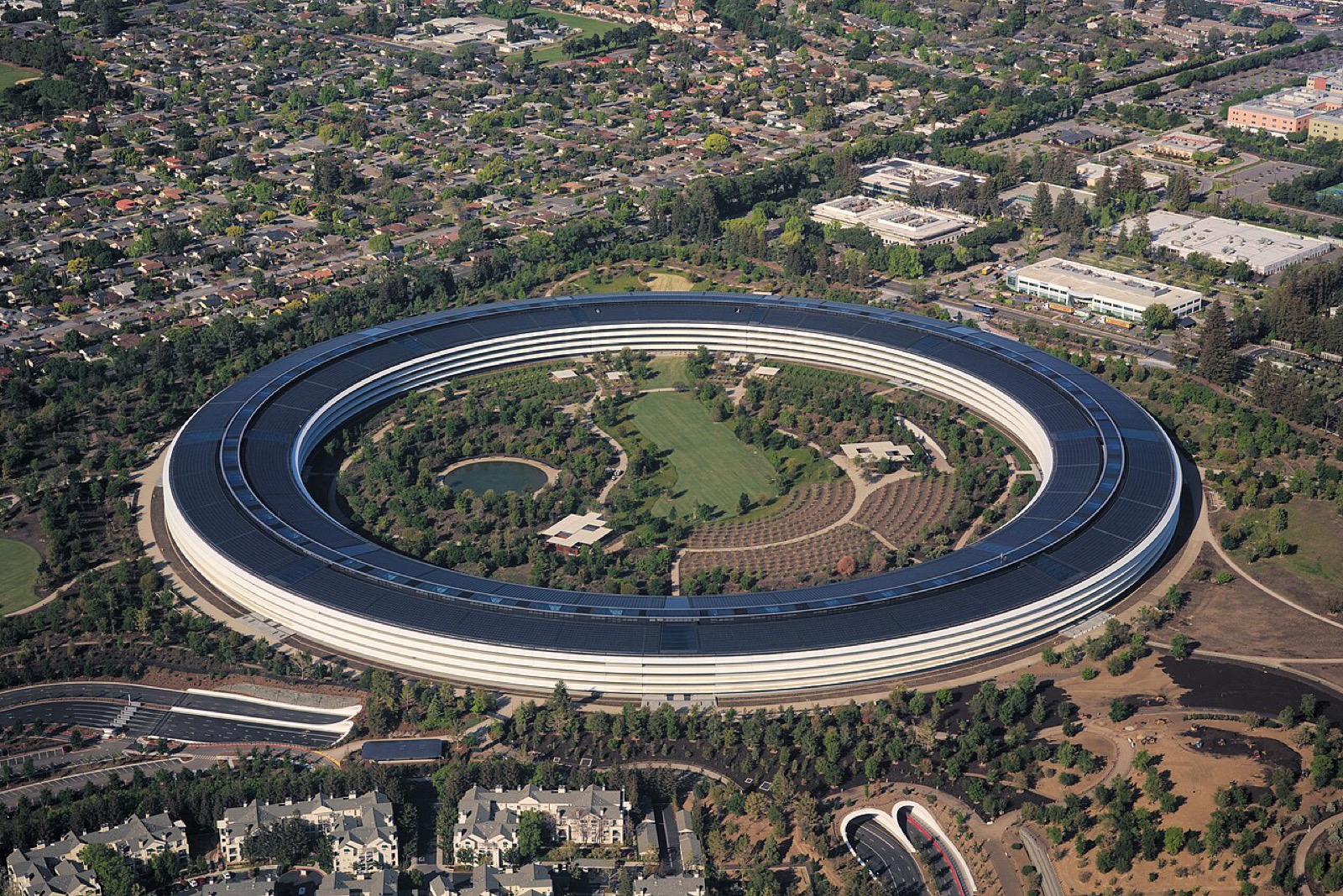
- “Aerial view of Apple Park” — Daniel L. Lu / Wikimedia Commons / CC BY-SA 4.0
Licenses: CC BY-SA 2.0 (https://creativecommons.org/licenses/by-sa/2.0/) and CC BY-SA 4.0 (https://creativecommons.org/licenses/by-sa/4.0/).