The Drum Shop Owner Who Built Rock's Wall: Jim Marshall and Marshall
☕ A coffee-length story — about a 15-minute read. This is the tale of a drum teacher who couldn't play guitar, and who ended up building the most famous guitar amplifier in the world.
Prologue — The Black Wall Behind the Stage
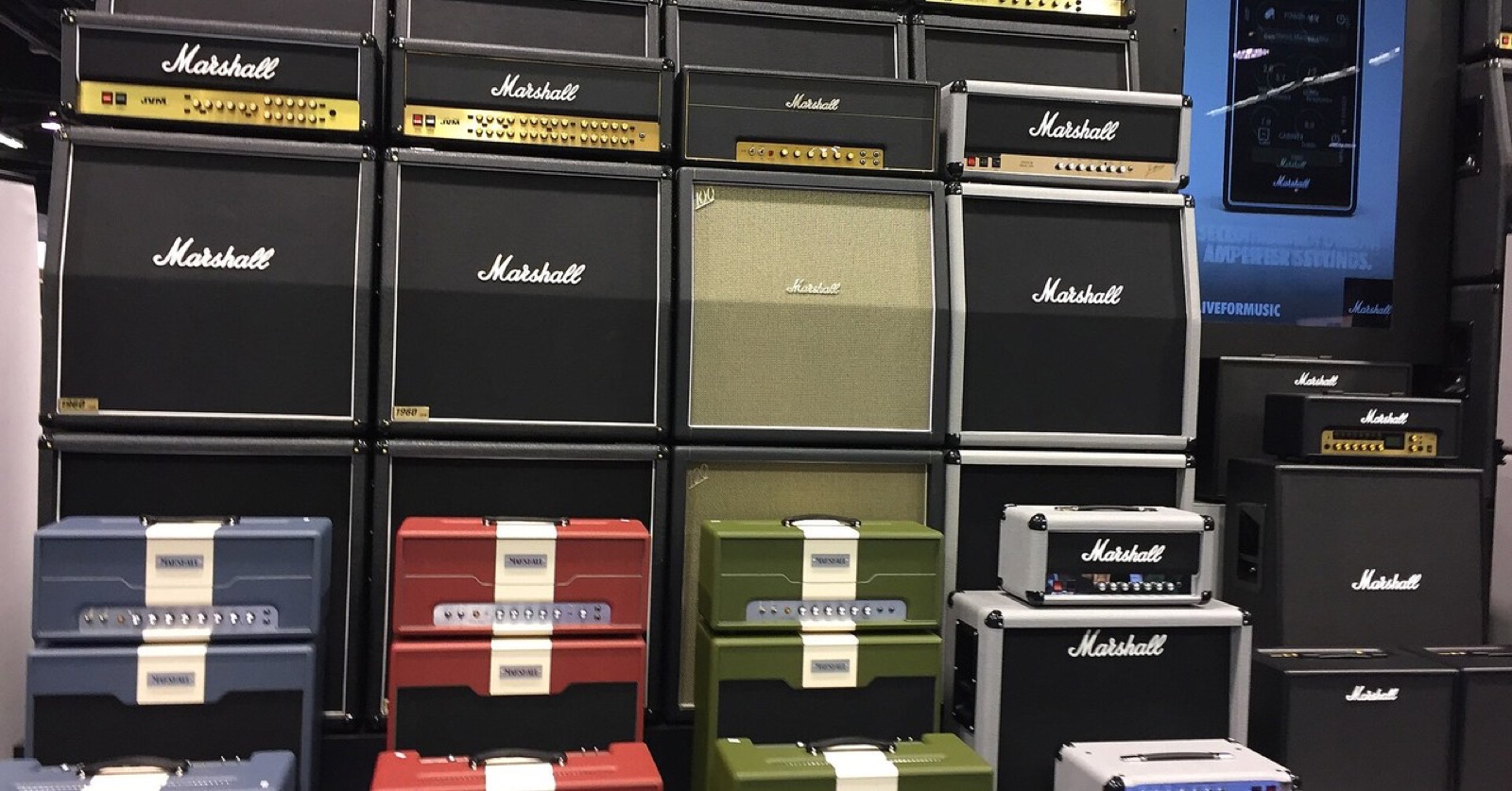
Picture a photo from a rock concert. Behind the guitarist's back, black boxes are stacked several high, and a row of white script logos runs across them.
Marshall.
Even people who have never touched a guitar have seen that word and that black wall. In the summer of 1969, on the open-air stage at Woodstock, it was this wall that stood behind Jimi Hendrix.
Yet the man who built the wall was not a guitarist. He was a drum teacher.
A drummer who opened a small music shop on the edge of London. A shopkeeper who simply listened while young guitarists came in, one after another, saying they wanted to be louder.
This is the story of that man, Jim Marshall, and of the amplifier that carries his name.
Chapter 1 — The Boy in the Plaster Cast, and the Drum Teacher
A childhood spent in hospital
James Charles Marshall was born in London on 29 July 1923. His family is said to have included boxers and music hall performers.
What waited for young Jim was tuberculosis of the bones. He spent long years in hospital, much of his childhood encased in a plaster cast that covered his body. He barely went to school.
By the time the illness had passed, the boy's legs were badly weakened. So he took up tap dancing — reportedly to build his legs back up.
Beating out rhythm on the floor. The first "music" to enter the boy's body was the sound of his own feet, almost like a percussion instrument.
The singer who ended up on drums
In his mid-teens, Jim began singing with a band in the evenings. He worked in factories and the like during the day and stood on stage at night. That hard-working streak, it seems, never left him.
In 1939 the Second World War broke out. Because of his poor health, Jim was exempt from military service.
One after another, young men were sent off to war, and the local bands ran short of players. In 1942, the drummer who led the band Jim sang with was called up. The singer slid into the empty seat behind the kit.
By day, Jim worked as an electrical engineer. So that his voice could still reach the audience while he played drums, he is said to have built his own portable amplification system. A drummer who made his own "machine to make sound louder" with his own hands — given what came later, it is a strikingly symbolic scene.
Sixty-five pupils a week
After the war, Jim set out to learn the drums properly. From 1946 to 1948 he took weekly lessons from Max Abrams, a well-known London teacher. His idol was the American jazz drummer Gene Krupa.
Before long, Jim became a teacher himself. In the early 1950s he was teaching around 65 pupils a week, and he said the work brought in roughly £5,000 a year — a considerable sum for the time.
Among his pupils were young men who would go on to make names for themselves: Micky Waller, Mick Underwood, and Mitch Mitchell. That last boy's name will come up again later in this story.