The Guitar Whose Shape Hasn't Changed in 190 Years: Martin and the D-28
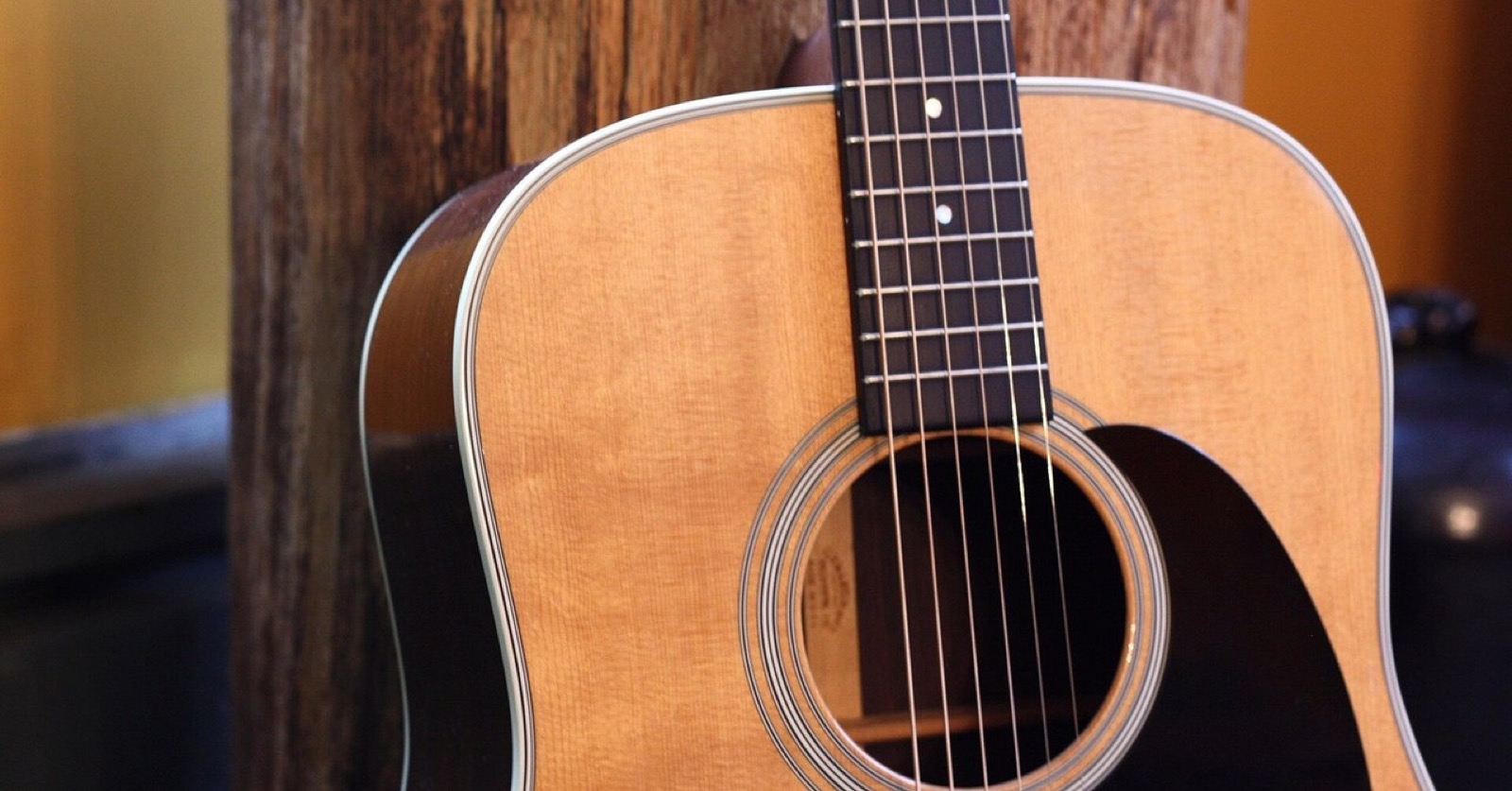
☕ A coffee-length story — about a 15-minute read. A cabinetmaker's son leaves a small German town and opens a guitar workshop in America. Handed down through six generations of the same family, that workshop went on to define the very "shape" of the guitar for the whole world.
Prologue — If You Draw a Guitar
"Draw an acoustic guitar."
Ask people to do that, and most of them will probably draw much the same shape.
A big, figure-eight body with broad, gently sloping shoulders.
A round hole in the middle, and a bridge below it.
A neck rising from around the body's shoulders.
Beside a campfire, at a folk gathering, on a country stage, or on a street corner with someone singing along.
That big-bodied shape we picture when we hear "acoustic guitar" has a name.
The dreadnought.
The company that created it is C. F. Martin & Company, a guitar maker in a small town in Pennsylvania.
Founded in 1833, it has spent more than 190 years building guitars, almost all of that time in the same town and in the hands of the same family.
And its signature model, the D-28, has been made with its basic shape barely changed since it appeared in 1931.
This is the story of how a quarrel between German craftsmen led, in the end, to a guitar named after a battleship becoming the world's standard.
Chapter 1 — The Craftsman Who Wasn't Allowed to Make Guitars
Born into a family of cabinetmakers
Martin's story begins in Markneukirchen, a town in Saxony, at Germany's eastern edge.
It had long been known for making string instruments, and many violin and guitar makers lived there.
On 31 January 1796, Christian Frederick Martin was born in that town.
His family had been cabinetmakers for generations.
The young Martin went to Vienna to train.
His master was Johann Georg Stauffer, a well-known Viennese guitar maker of the day.
Martin honed his skills in Stauffer's workshop and is said to have risen to foreman, overseeing the other craftsmen.
A quarrel between two guilds
But when Martin returned home, a dispute among craftsmen was waiting for him.
In Germany at that time, craftsmen belonged to trade associations called guilds.
Martin's family belonged to the cabinetmakers' guild.
The town also had a violin makers' guild.
The violin makers took the view that guitars were string instruments, and so only they had the right to make them.
It was wrong, they argued, for members of the cabinetmakers' guild to be building guitars.
The two guilds fought over who was allowed to make guitars.
Around the time that dispute coincided with his father's death, Martin made his decision.
He would go somewhere he didn't need anyone's permission to build a guitar.
A small shop in New York
In 1833 Martin crossed the Atlantic with his family and arrived in New York.
He opened a small shop at 196 Hudson Street in Manhattan.
Guitars were built in the back, and instruments and sheet music were sold in the front — a workshop and music store in one.
This is regarded as the beginning of the Martin company we know today.
As of 2026, that was some 193 years ago.