The Repairman's Prank That Got Called “Boogie”: Randall Smith and Mesa/Boogie
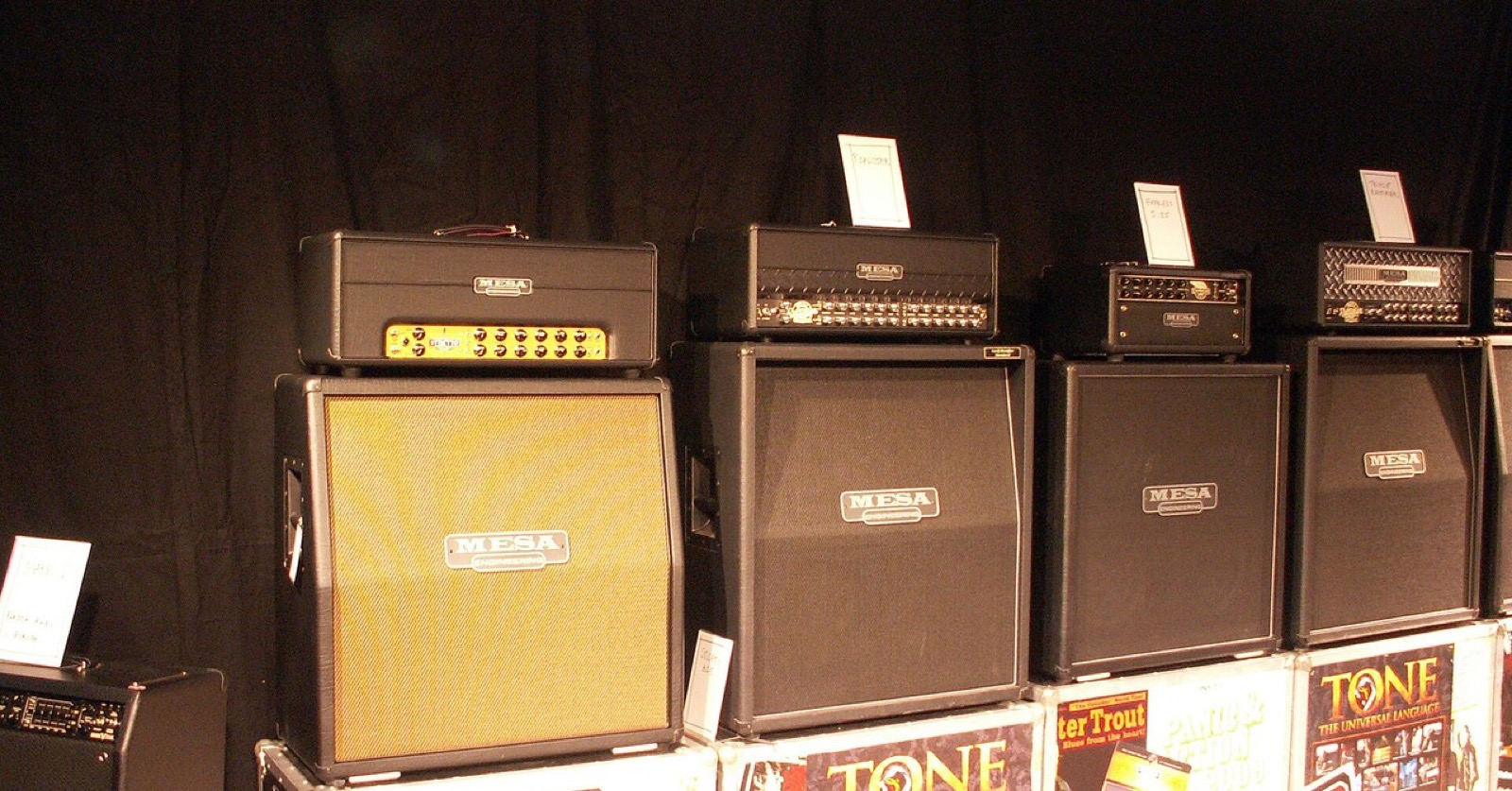
☕ A coffee-length story — about a 15-minute read. This is the tale of a California amp workshop that began with a practical joke played on a little practice amp.
Prologue — “This Thing Really Boogies”
The late 1960s, a small music shop in a quiet town just north of San Francisco Bay. On the floor sat a little amplifier.
A Fender Princeton — a compact amp meant for practising at home. But this one, though it looked exactly the same on the outside, was something else entirely on the inside.
A young guitarist wandered in and plugged into it. The moment he started playing, an unbelievably thick, loud sound came pouring out of that small box.
The guitarist laughed and, so the story goes, said something like: “Man, this thing really boogies!”
The guitarist was Carlos Santana. And the man who had rebuilt the amp's insides was the young repairman working in the back of the shop: Randall Smith.
That remark became the “Boogie” in a name guitarists all over the world would come to know: Mesa/Boogie. This is the story of an amp workshop that grew out of a repairman's prank.
Chapter 1 — The Berkeley Repairman
A musician father and a curious boy
Randall Smith was born in 1946 in Berkeley, California. His father was a professional saxophonist and clarinettist who had held a first chair in the Oakland Symphony, and it was from him that Smith learned music.
After high school, Smith spent a year at the University of California's Santa Barbara campus and four more at Berkeley. He never graduated.
Berkeley in the late 1960s was a town boiling over with student protest and rock music. Outside the classroom there was new music and a new way to live.
A broken amp, the first job
Around 1967, a keyboard-playing acquaintance of Smith's, Dave Kessner, had his amp die in the middle of a gig in Berkeley. It was a big amp made by a company called Sunn.
Smith fixed it. He had never formally studied amplifier repair. Still, he traced the broken circuit, found the fault, and got it working again.
Kessner had an idea: “Let's open a music store. You can do the repairs.”
Prune Music, in an old Chinese grocery
The two rented a small storefront that had once sold Chinese groceries. The rent, it is said, was $75 a month.
They called it Prune Music. Smith's repair room was the grocery's old meat locker.
The customers were a remarkable lineup: the Grateful Dead, Jefferson Airplane, Country Joe and the Fish, Quicksilver Messenger Service. The bands that defined San Francisco psychedelic rock came through the door carrying their broken amps.
Rock bands of the day played loud, full stop. Amps were pushed to their limits night after night — and then they broke. A shop with a good repairman never ran out of work.
From a noisy town to a quiet one
In 1969, Prune Music crossed the bay and moved north to Mill Valley. Smith later recalled that Berkeley had become too turbulent to run a business in peace.
Mill Valley is a quiet town ringed by forests and hills. There, Prune Music also became known for vintage instruments; stories survive of 1950s Stratocasters at $200 and a goldtop Les Paul at $300.
And it was in this shop that the “prank” took place.