Rival Companies Join Hands with Five Pins — The Birth of MIDI
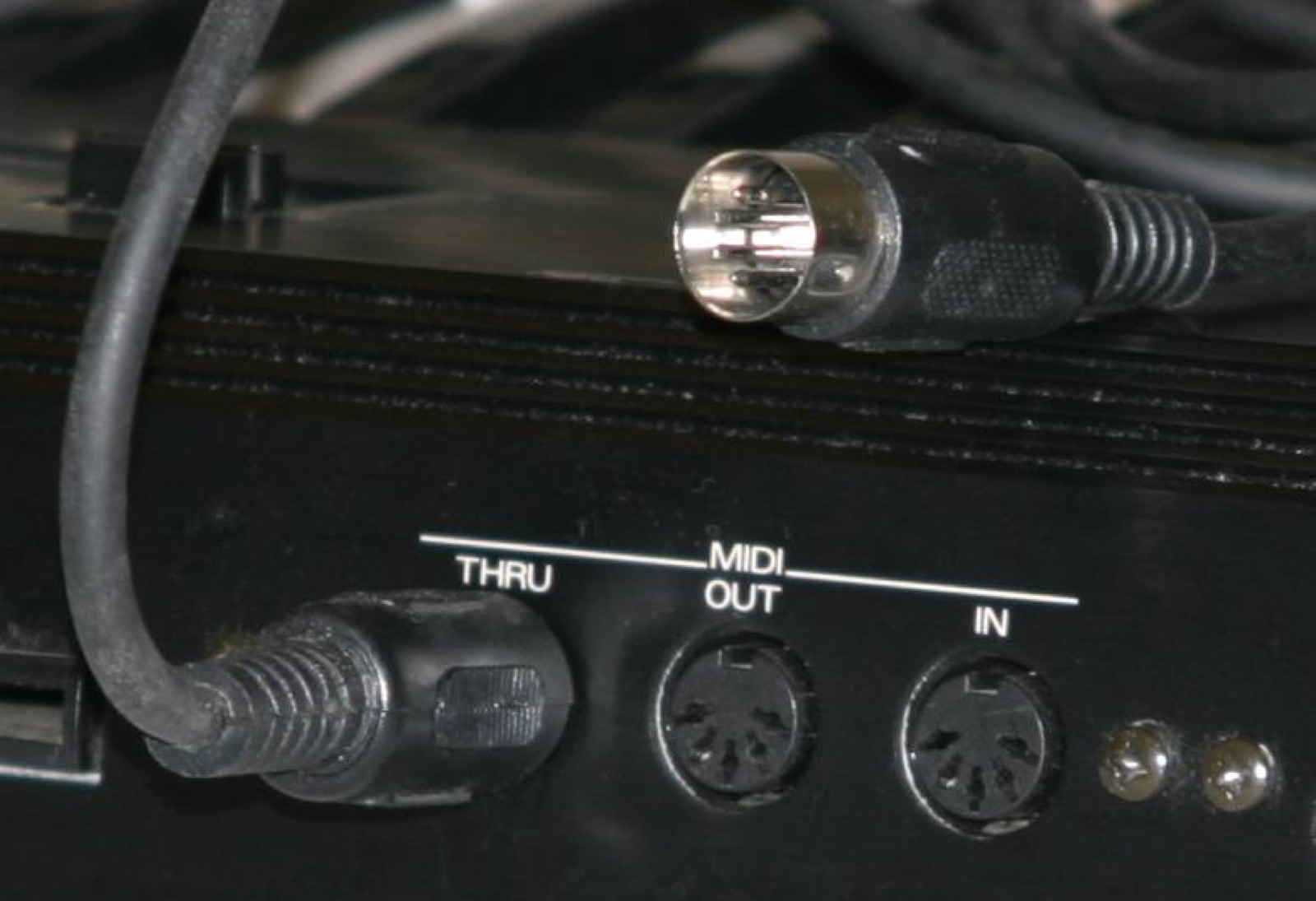
Prologue — January 1983, the NAMM Show
In January 1983, the NAMM Show, a trade event for musical instruments, opened in Anaheim, California.
At one booth, two synthesizers were connected by a single cable, allowing them to exchange musical performance information.
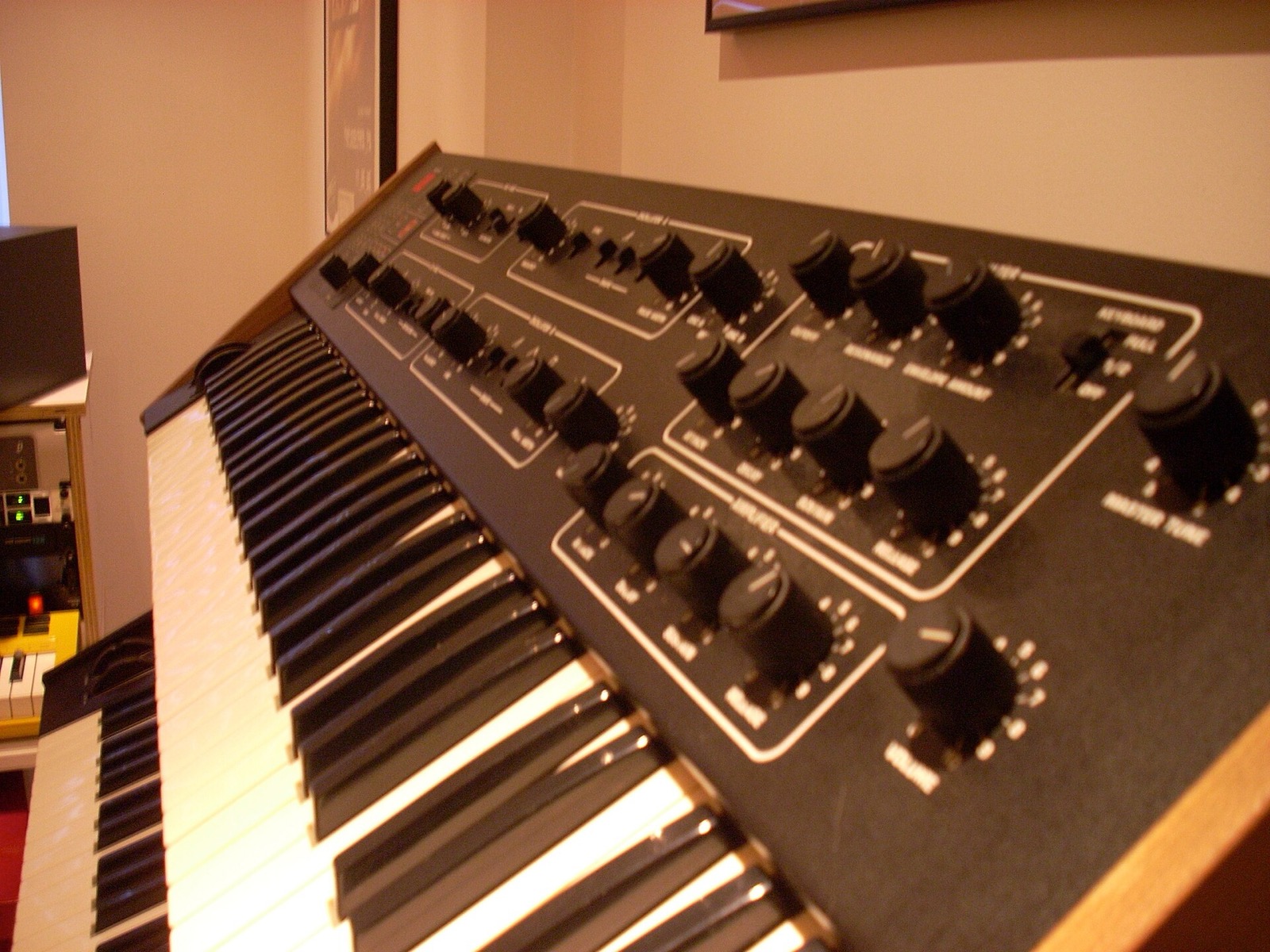
One was the Prophet-600 from the American company Sequential Circuits.
The other was the Jupiter-6 from Japan's Roland.
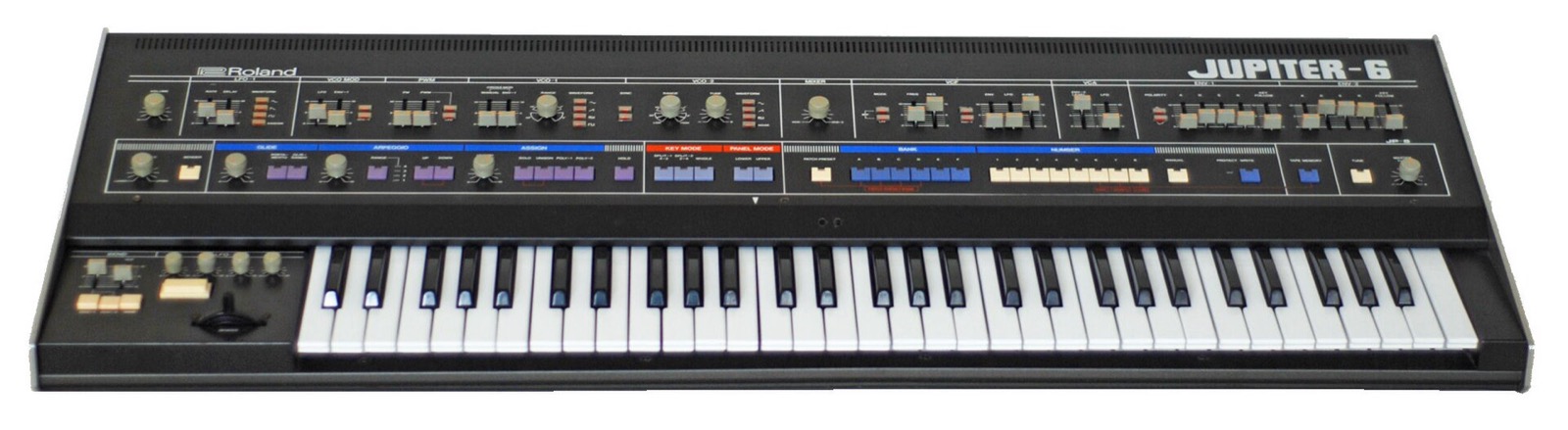
Play one keyboard, and the other synthesizer sounded at the same time.
That may seem unremarkable today. Back then, it was extraordinary. For the first time, instruments made by rivals in different countries were able to “talk” to each other.
At the end of the cable connecting them was a round connector with five pins. The standard was called MIDI.
📝 About this story
This story draws on books, interviews, and manufacturers’ materials I have read over many years. I have tried to stick to the facts, though I was not there at the time, and some popular terms or accounts may have become mixed in. Where accounts differ, I separate them into “Legend & Lore.” References appear at the end.
Instruments That Couldn't Connect
Different “Languages”
From the late 1970s into the early 1980s, synthesizers and drum machines were advancing rapidly.
But there was a major problem: instruments from different manufacturers couldn't connect to one another.
Each company had its own way of linking instruments, and those systems were not designed to work together across brands. Some sent pitch information as voltage; Roland had its own system for synchronizing tempo. In effect, each instrument spoke a different language.
You might want to play a Roland synth together with a Yamaha synth and one from an American maker. It wasn't easy.
Two Calls to Action
Ikutaro Kakehashi's Proposal
In June 1981, Ikutaro Kakehashi, founder of Roland, proposed creating a common standard that could cross the boundaries between manufacturers.
As he built rhythm machines and synthesizers, Kakehashi imagined a future in which instruments could connect freely. (His story is told in more detail in the separate article “The Story of the TR-808.”)
Dave Smith's “USI”
Around the same time, Dave Smith of the American company Sequential Circuits was working on the same problem.
Smith believed they needed a simpler system that would be inexpensive to build.
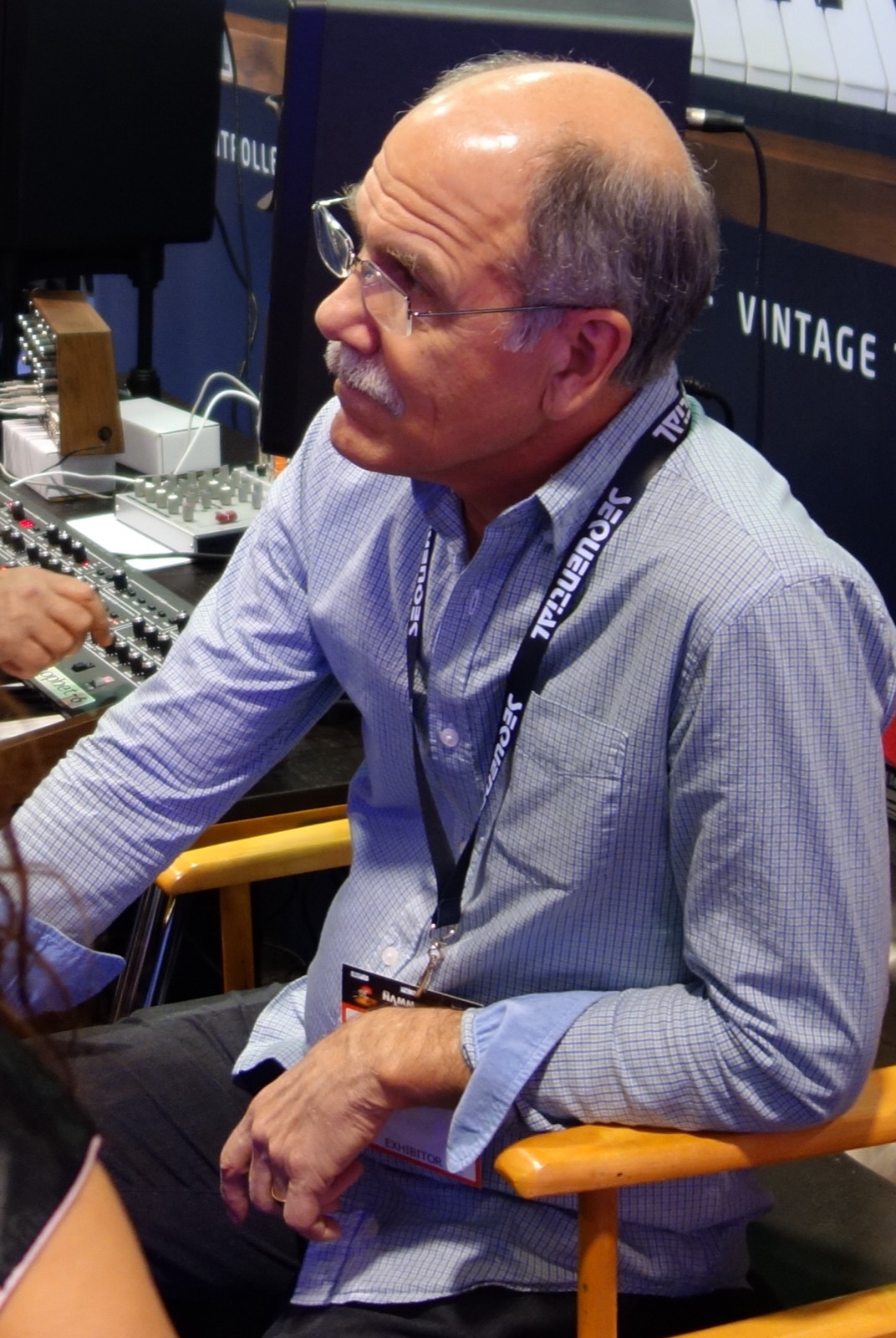
In October 1981, he and engineer Chet Wood presented a proposed standard at the Audio Engineering Society (AES) convention: the Universal Synthesizer Interface, or USI.
Manufacturers from Japan and the U.S. Come Together
Manufacturers in Japan and the United States answered the call, bringing engineers and companies on both sides of the Pacific into the discussion.
Roland, Yamaha, Korg, Kawai, and Sequential Circuits.
Though they usually competed fiercely in the musical instrument market, the rivals sat down at the same table and worked out the details of a shared standard. At Smith's suggestion, they settled on a name:
Musical Instrument Digital Interface. Its initials spelled MIDI.
In October 1982, Robert Moog, often called the father of the synthesizer, announced MIDI's arrival in the music magazine Keyboard.
1983 — MIDI Comes to Life
The “Conversation” in the Prologue
Then came the NAMM Show in January 1983. In the scene from our prologue, Dave Smith demonstrated a MIDI connection between his company's Prophet-600 and Roland's Jupiter-6.
In August of that year, the MIDI specification was officially published.
The First MIDI Instruments
MIDI-equipped instruments began appearing one after another in 1983, turning the proposed connection into something musicians could use with real instruments and equipment.
- Prophet-600 and Jupiter-6: among the first MIDI-equipped synthesizers
- Roland TR-909: the first MIDI-equipped drum machine
- Roland MSQ-700: the first MIDI sequencer
Yamaha's DX7, released the same year, also spread around the world as a MIDI-equipped synthesizer. (The separate article “The Story of the DX7” tells its story.)
🎙 Legend & Lore: “We Had to Give It Away”
MIDI had another important feature.
There were no patent fees; anyone could use it.
Dave Smith believed MIDI would succeed only if every manufacturer adopted it. That's why, as he put it, they “had to give it away.”
The BBC later described MIDI as an early example of what we would now call “open source.” Because no single company kept it to itself, MIDI could become the world's common language.
A Common Language for More Than 40 Years
How the Standard Was Maintained
In 1984, the manufacturers working with MIDI formed the MIDI Manufacturers Association (MMA). A detailed specification followed in 1985.
In 1991, General MIDI (GM) was added so that the same instrument sound would play back on different equipment. It became an era when computers and mobile phones could make music from MIDI files, extending the standard well beyond the synthesizers that first inspired it.
The 2013 Grammy Award
In 2013, Ikutaro Kakehashi and Dave Smith received Technical Grammy Awards for their contributions to the creation of MIDI.
MIDI 2.0
Then, in 2020, MIDI announced a major evolution: MIDI 2.0. Nearly 40 years after the 1983 standard, MIDI was finally passing into a new generation.
Epilogue — What Five Pins Connected
In 1983, a single cable linked two synthesizers at a trade show in Anaheim.
Those five-pin connectors have since given way to USB and wireless connections. Yet the same “language of MIDI” is still exchanged inside musical instruments, computers, and music apps on smartphones, carrying performance instructions between devices.
Rivals joined hands to create a common language for the world. Thanks to that, we can connect the instruments we want and make music freely, without worrying about the manufacturer or country of origin.
You can also read the stories of two legendary instruments from the era when MIDI was born: “The Story of the TR-808” and “The Story of the DX7.” Both are closely connected to this story of MIDI.
MIDI Timeline
- June 1981: Roland's Ikutaro Kakehashi proposes a common standard
- October 1981: Dave Smith and Chet Wood present USI at AES
- October 1982: Robert Moog introduces MIDI in Keyboard magazine
- January 1983: Prophet-600 and Jupiter-6 connected in a MIDI demonstration at the NAMM Show
- August 1983: MIDI specification published; MIDI instruments including the TR-909, MSQ-700, and DX7 appear
- 1984: MIDI Manufacturers Association (MMA) founded
- 1991: General MIDI
- 2013: Ikutaro Kakehashi and Dave Smith receive Technical Grammy Awards
- 2020: MIDI 2.0 announced
References
- Wikipedia: “MIDI,” “Dave Smith (engineer),” and “Ikutaro Kakehashi” (English editions)
- The MIDI Association official website
Photo credits
- Header image, “Midi ports and cable” — Pretzelpaws / Wikimedia Commons / CC BY-SA 3.0
- “SCI Prophet 600 (right angled)” — M Maeghan Donovan / Wikimedia Commons / CC BY 2.0
- “Roland Jupiter-6” — Svuntutheysari / Wikimedia Commons / CC BY-SA 3.0
- “Dave Smith at Sequential booth - 2015 NAMM Show (cropped)” — Pete Brown / Wikimedia Commons / CC BY 2.0