Let the Camera Focus — Minolta α-7000
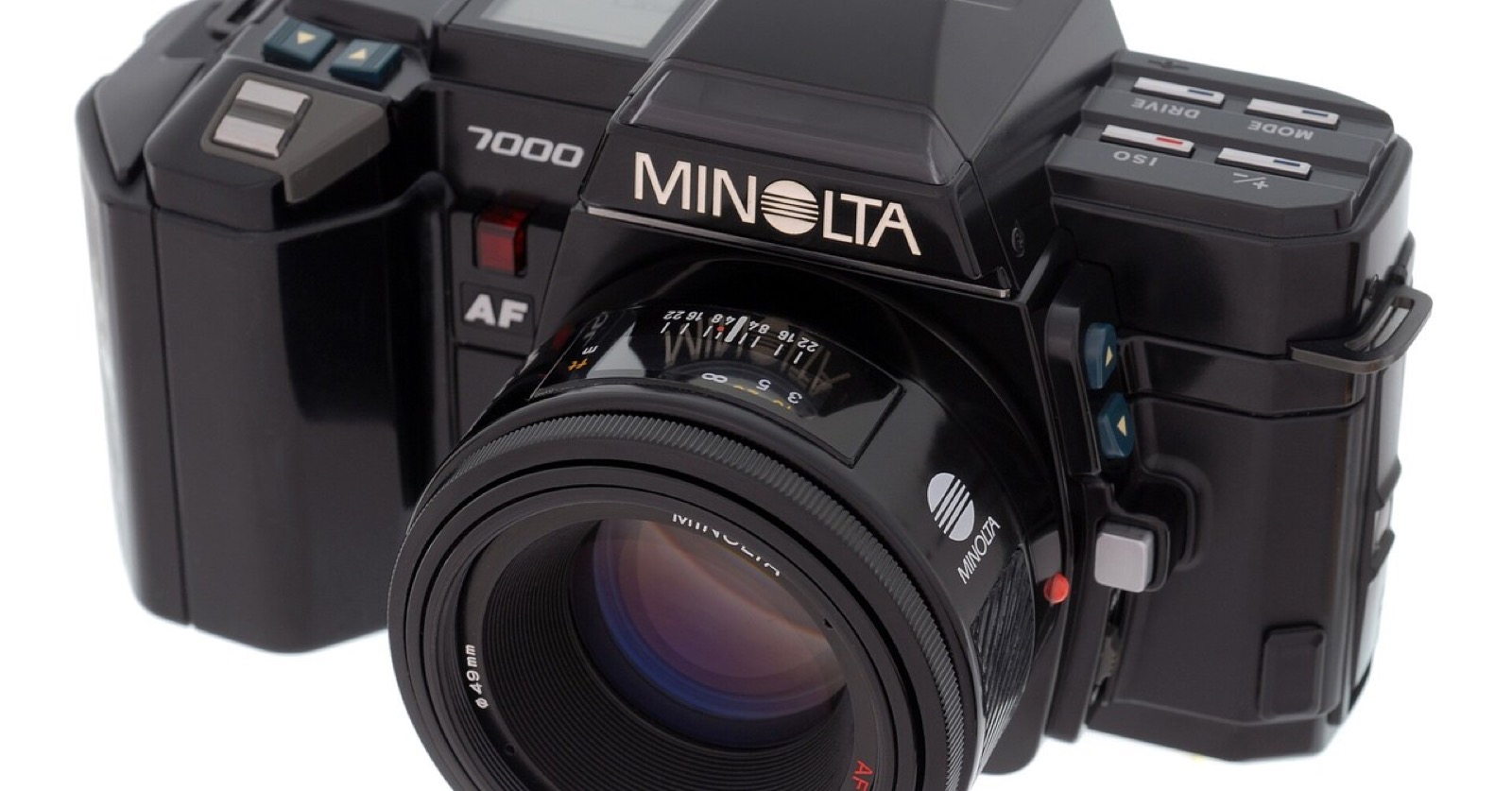
☕ A coffee-length story — about a 20-minute read. A side trip in our camera history series: this time, not a company but a single camera. The Minolta α-7000 of 1985, the camera that took the job of focusing an SLR out of human hands and gave it to the machine.
What you will find here:
- How far autofocus had come before the α-7000
- Why Minolta put the motor in the body instead of in every lens
- The decision to leave the old lenses behind and build a new mount
- How rival makers answered the "α shock"
Prologue — A camera-shop showcase, February 1985
In February 1985, a slightly unfamiliar SLR appeared in the showcases of Japanese camera shops.
A black body with softened corners. On the top plate there was no needle meter, no dial crowded with numbers. Instead, a small LCD window and a handful of buttons.
Its name was the Minolta α-7000.
A shop assistant hands it to you. You raise it to your eye, rest a finger on the shutter button and press it halfway. From inside the lens comes a small whirr, and the blurry scene snaps into crisp focus. Below the viewfinder image, a little green lamp lights up.
That is the signal: in focus.
Until then, focusing an SLR was the photographer's job. You turned a ring on the lens with your own fingers. The better you were, the faster and more accurately you could do it. In other words, focusing was part of your skill.
The α-7000 handed that job to the camera. And not as a special tool for professionals or a few enthusiasts, but as an SLR that anyone could pick up in a camera shop.
It became a hit the moment it went on sale, and the camera industry coined a phrase for what happened: the "α shock." Forty years later, the feeling we take for granted on smartphones and mirrorless cameras — that the camera will find the focus for us — may well be said to have started on that day.
This is the story of that one camera.
Chapter 1 — Automatic focus was a long-held dream
Focusing: the hardest job
When you take a photograph, you decide roughly three things. How long the shutter stays open. How wide the lens aperture is. And where the focus falls.
The first two, both tied to brightness, became automatic step by step through the 1960s and '70s. Cameras gained built-in light meters; choose a shutter speed or an aperture, and the camera would pick the other. By the late '70s, SLRs like that were ordinary purchases.
Focus, however, stubbornly refused to become automatic.
Brightness can be known by measuring the amount of light. Focus requires knowing both how far away the subject is and where the lens is currently focused. And the subject could be anywhere in the frame. If a person moves, the distance changes.
For a camera, focusing was the hardest job of all.
Compact cameras got there first
The first answer came not from the SLR but from small cameras whose lenses could not be changed.
In 1977, Konishiroku (later Konica) released the Konica C35 AF. It is said to be the first mass-produced camera with a built-in automatic focusing system. In Japan it was nicknamed "Jaspin Konica" — roughly, "spot-on-focus Konica."
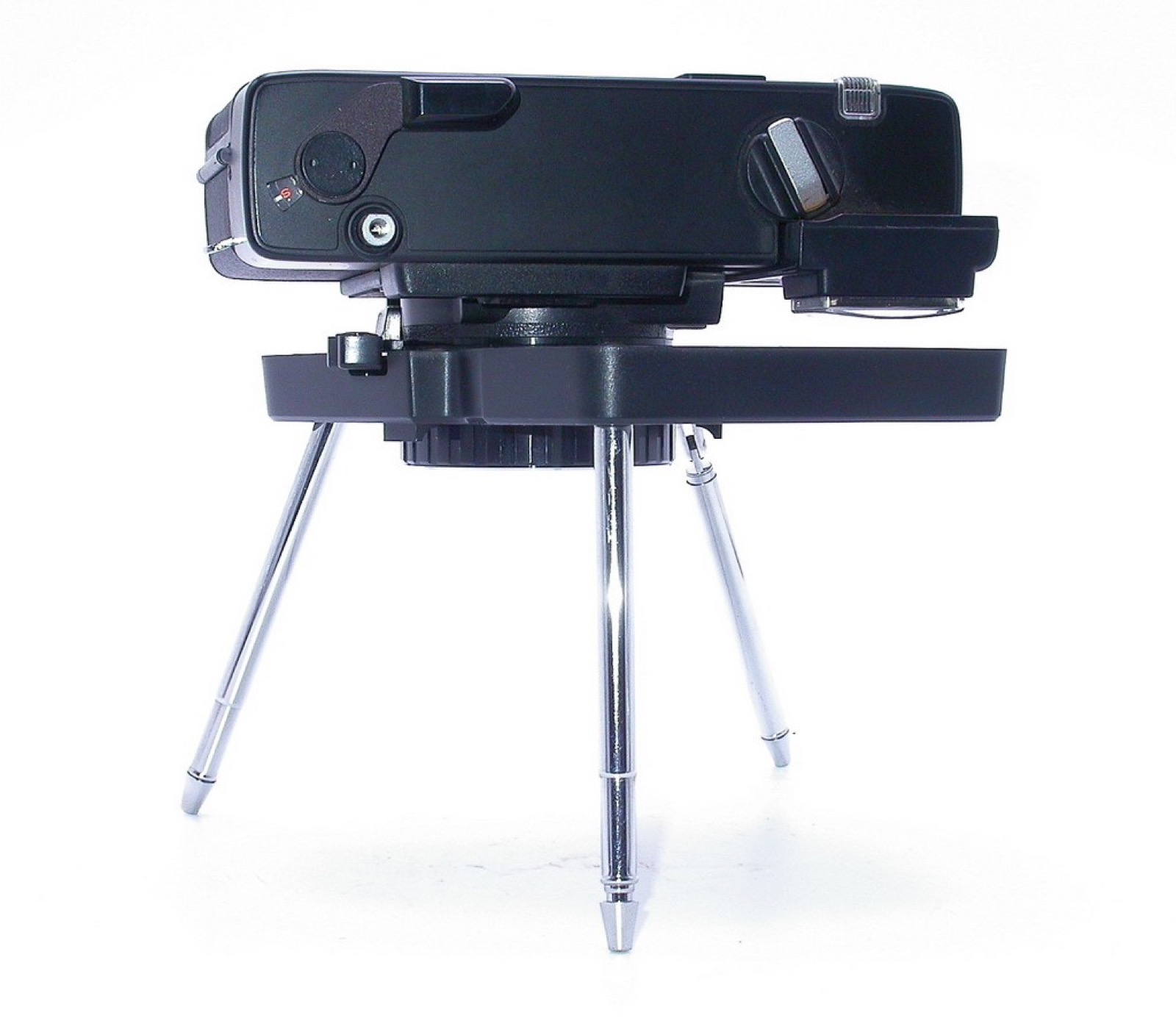
Its focusing relied on a component called "Visitronic," developed by the American company Honeywell. The idea was to compare the images seen through two small windows and work out the distance from how far they were offset.
After the C35 AF, "auto-focus" compacts appeared one after another from many makers. Press the shutter, and the camera took care of both focus and exposure. For parents photographing their families, that was a welcome leap forward.
A high wall for the SLR
So why didn't the SLR follow straight away?
A compact camera has just one lens. The maker can design the focusing system around that single lens from the start.
The SLR is different. Wide, normal, telephoto, zoom: dozens of interchangeable lenses, millions of them already in customers' hands around the world. Every one of those lenses had been designed on the assumption that a human finger would turn it.
You could put a focus-measuring sensor in the body, but that alone could not move the focusing ring of an old lens. At best, the viewfinder could display "in focus," "too near," or "too far," and ask the photographer to do the turning. That half-automation was called "focus aid."
The vast stock of existing lenses was the greatest barrier to automation.
The SLRs that tried first
Still, some makers took on the challenge.
In 1981, Asahi Optical (Pentax) released the Pentax ME F. A sensor in the body measured focus, and a motor inside a dedicated lens moved it. It is said to be the first mass-produced SLR that truly focused itself.
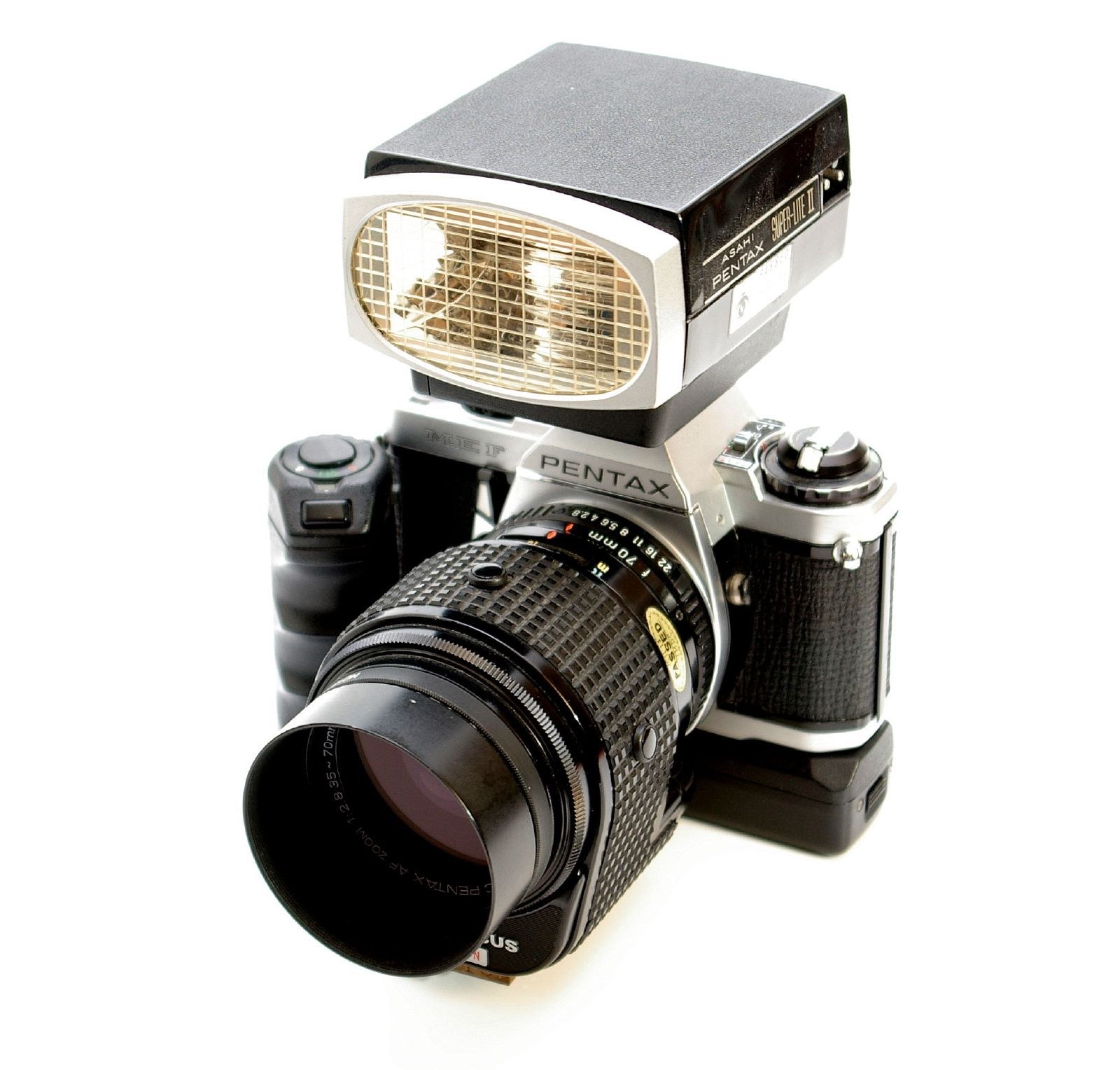
But there was only one lens that could focus automatically. With both the motor and its batteries packed inside, the lens was large and slow. It was a camera that offered a brief glimpse of the future, but it did not change how people took pictures.
In 1983, Nippon Kogaku (Nikon) paired its professional F3 with a focus-measuring unit to create the F3AF. Here too, only two dedicated lenses could focus automatically, and few people used it.
Every autofocus SLR so far had been a special camera with a few special lenses. Unless the entire camera system was rebuilt, the wall could not be crossed. The company that saw this — and really did rebuild everything — was Minolta.