The Theremin Kid Who Turned Electricity into Music — Moog
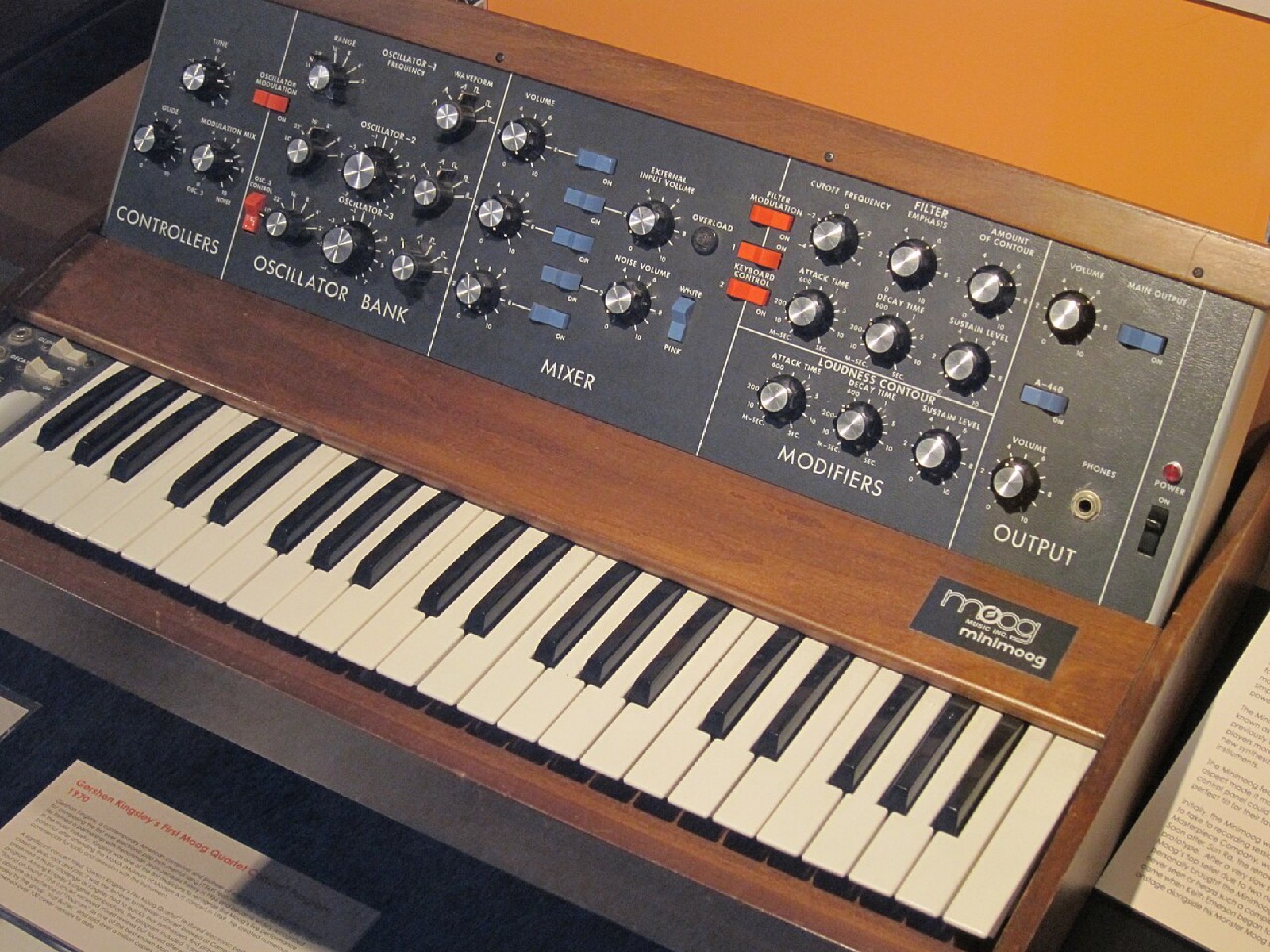
☕ A coffee-length story — about a 14-minute read. A story from before the word “synthesizer” existed. By the end, the electronic sounds in the songs you know may feel a little more human.
Prologue — New York, 1948: A Basement Workshop
Around 1948, in New York, a 14-year-old boy sat with a soldering iron and vacuum tubes, building something from a circuit diagram he had found in a magazine.
What he made was a strange instrument you could play without touching it: the theremin. Move your hand toward its antenna and the pitch rises; move it away and the pitch falls. It was a magical-looking box that let you shape sound in midair.
The boy was Robert Moog, later known around the world as “Bob.”
He had no idea that his name would one day become a word for electronic sound itself.
📝 About this story
This account draws on books, interviews, and manufacturers’ materials I have read over many years. I have tried to stick to documented facts, but I was not there, so popular names and conventional stories may have crept in. Accounts with uncertain details are set apart as “Legend & Lore,” and the sources are listed at the end.
Chapter 1 — The Graduate Student Who Sold Theremins
A Father, a Soldering Iron, and a Piano
Robert Arthur Moog was born in New York on May 23, 1934. His father was an electrical engineer and amateur-radio enthusiast. There was a workshop in the basement, where young Bob learned electronics from him.
His mother, meanwhile, hoped he would become a pianist, and Bob took piano lessons for years. Electronic circuits and the piano—the two things that would shape his life were both part of his childhood home.
1953: R.A. Moog
After high school, Bob studied physics at Queens College and electrical engineering at Columbia University. Alongside his studies, he and his father started a small company, R.A. Moog, in 1953. They sold theremin kits.
In 1954, Bob wrote an article for an electronics magazine explaining how to build a theremin. Orders began to come in. He later entered Cornell University’s graduate program and set up a workshop in Trumansburg, a small town in New York State.
Study engineering physics in graduate school, then build and sell theremins in a basement. That was Bob Moog’s daily life in his twenties.
1963: Meeting a Composer
A turning point came in the winter of 1963. At a music education trade show in New York State, Moog met Herb Deutsch, a composer and music teacher.
Deutsch was interested in composing with electronic sounds. But the equipment for making them was then either roomfuls of machinery in research labs or the painstaking work of cutting and splicing tape. It was far beyond the reach of most musicians.
Deutsch is said to have asked Moog: “Could you make an electronic instrument that a musician could operate hands-on?”
That one question started everything.
Now let’s look at the moment the instrument called a “synthesizer” began to take shape.