Why a 50-Year-Old Box Still Plays Around the World — Neve 1073
☕ A coffee-length story — about an 18-minute read. Settle in and enjoy it as a story, not a research paper. By the end, you may have a better sense of where the warmth in your favorite vocal recordings comes from.
Prologue — North London, August 1970
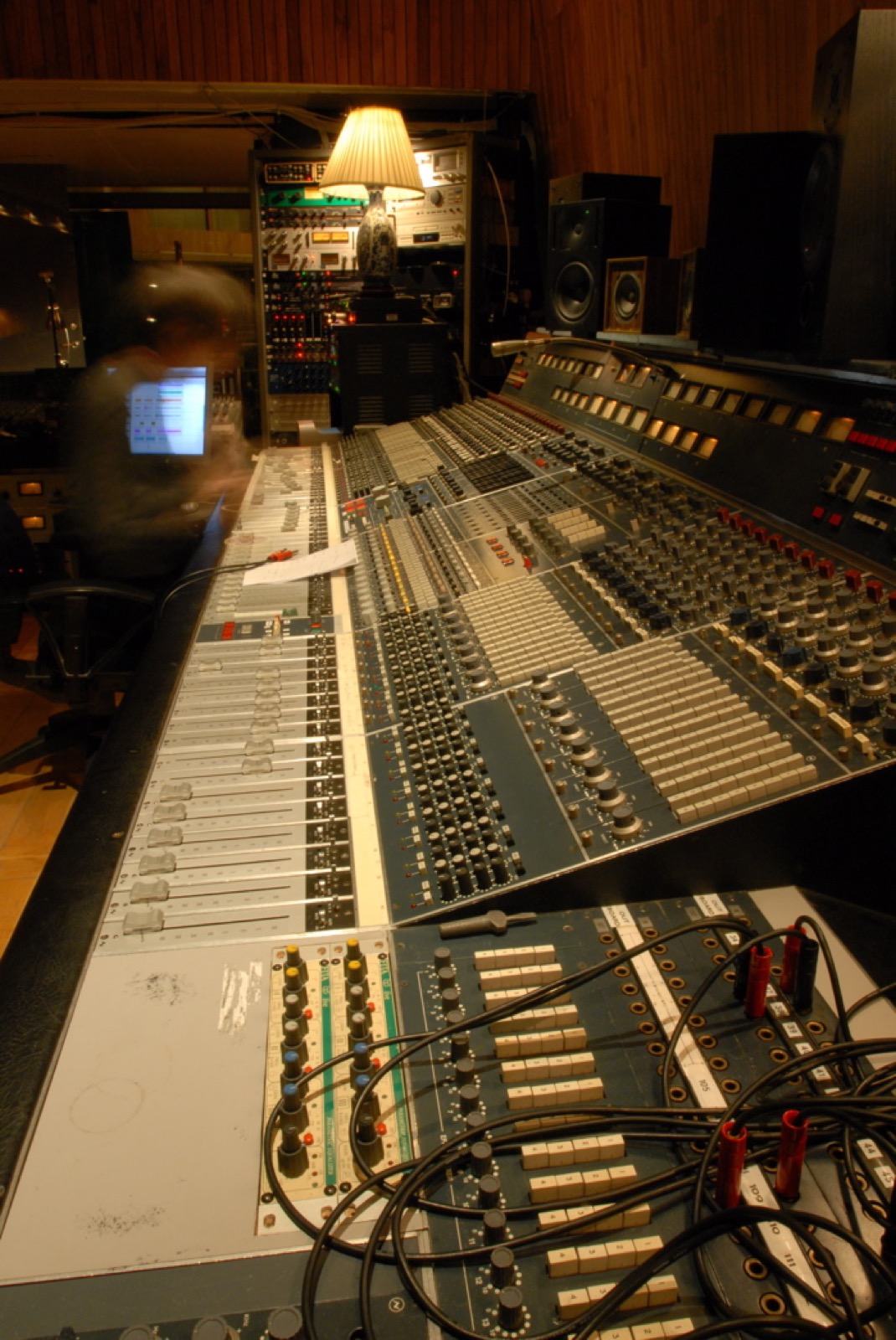
In the summer of 1970, a huge mixing console was delivered to Wessex Sound Studios in Highbury, North London.
It had 28 channels and 24 group buses—a monster of a desk by the standards of the day. Each channel held a new module whose name was not yet known to anyone.
Its model number was 1073.
More than half a century later, that model number is still at work in studios around the world. You’ll find “1073” on racks in professional recording studios and on plug-in screens in the DAWs of people making music at home.
In electronics, a 50-year-old design almost never stays at the cutting edge. Smartphones and computers are obsolete within a few years.
So why did the 1073 survive?
This is a search for the answer. Its protagonists are one engineer, one module, and engineers around the world who never let it go.
About this story
I’ve shaped this account from books, magazine interviews, manufacturer materials, and eyewitness recollections I’ve read over the years. I’ve tried to stick to facts confirmed by multiple sources. I wasn’t there, though, so industry nicknames and commonly repeated stories may have found their way in. Accounts that conflict or are told as legends are separated into “Legend & Lore” sections. The sources I used are listed at the end.
Chapter 1 — The Man Named Rupert Neve
A boy building radios in Argentina
On July 31, 1926, a boy was born in Newton Abbot, in southwest England. His name was Arthur Rupert Neve, later called “the designer of the modern recording console.”
Rupert spent much of his childhood in Buenos Aires, Argentina, where his father worked as a missionary for the Bible Society. By the age of 13, he was already said to be designing his own amplifiers and radio receivers.
War, then an encounter with recording
During World War II, 17-year-old Rupert volunteered for the Royal Corps of Signals in the British Army. After the war, he returned to England. He designed public-address systems and recorded speeches and songs onto lacquer discs. One of those recordings was reportedly a speech by Winston Churchill.
He later worked for Rediffusion, a broadcasting and wired-broadcasting company, then went independent and started CQ Audio, a loudspeaker manufacturer.
Neve Electronics is born, 1961
In 1961, Rupert and his wife, Evelyn, founded Neve Electronics. Their first mixing console was built for composer Desmond Leslie, who lived at Castle Leslie in Ireland.
In 1964, they built a transistor-based mixing console for Philips Studios in London. In an era when vacuum tubes were the norm, building a desk with transistors was a major challenge.
In 1968, the company moved to a purpose-built factory in Melbourn, near Cambridge. Orders gradually increased, and Neve consoles began to earn a reputation as the choice of studios that cared deeply about sound.
Then came 1970. An order from a London studio would change the history of audio.
Now let’s look at the moment the 1073 was born—and the half-century that followed.