How a Speaker Nobody Enjoyed Listening To Became the World Standard — Yamaha NS-10M
☕ A coffee-length story — about a 13-minute read.
A story about the strange value of a speaker that wasn’t pleasant to listen to.
Prologue — A Room Full of White Woofers
It’s the 1990s. Take a look at the mixing consoles in recording studios around the world.
New York, London, Los Angeles, Tokyo. Chances are, you’d find the same speakers in all of them.
Small black boxes. In the middle of each one, a bright white paper woofer.
The Yamaha NS-10M.
Countless hit records from the 1980s and ’90s were mixed on these speakers.
Yet they had a rather curious reputation.
“They’re no fun to listen to.”
“The highs are so harsh they hurt your ears.”
And in fact, they weren’t originally designed as studio monitors.
Let’s turn the clock back a little. Our story begins in Japan in 1978, where Yamaha engineers were designing a speaker for people’s living rooms.
📝 About this story
This story draws on books, interviews, and manufacturer materials I’ve read over the years. I’ve tried to stick to the facts, but I wasn’t there at the time, so some common lore and received wisdom may have found its way in. I’ve separated accounts that are disputed into “Legend & Lore” sections and listed the references at the end.
Chapter 1 — The Bookshelf Speaker That Didn’t Sell
1978: The NS-10
In 1978, Yamaha released a new speaker: the NS-10. It is said to have been designed by Yamaha engineer Akira Nakamura.
The NS-10 was a home bookshelf speaker, made to sit on a living-room shelf while you enjoyed records.
The White Woofer
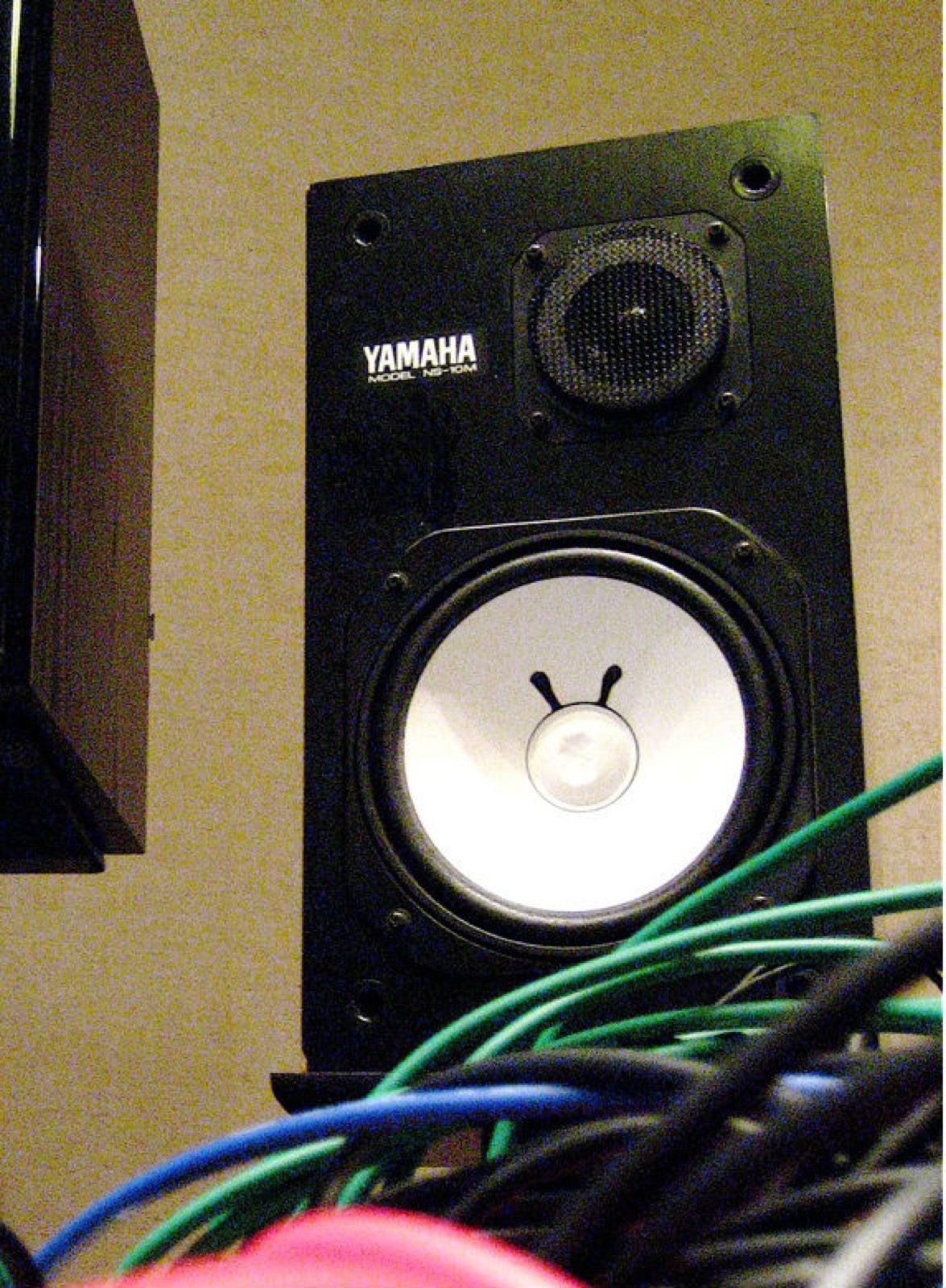
The most striking feature of the NS-10 was its bright white woofer, the large driver that produces low frequencies.
- An 18-centimeter white paper cone
- A 3.5-centimeter soft-dome tweeter for the highs
- A sealed enclosure, with no port for air to flow in and out
“The Highs Are Harsh”
As a home speaker, though, the NS-10 didn’t earn many good reviews.
The highs were harsh and grating.
The bass was weak, too.
For people who wanted to relax and enjoy music in their living rooms, the NS-10 sounded somehow unsettling.
But a different group of people saw value in these “flaws”: recording engineers.
Now let’s follow the story of how an unpopular home speaker became the “yardstick” of studios around the world.
Chapter 2 — The Speaker Engineers Discovered
From Japan to America
The engineer said to have brought the NS-10 into American studios was Greg Ladanyi. The story goes that he encountered the speaker on a visit to Japan and took a pair home.
From there, the NS-10 spread to prestigious New York studios such as Power Station.
The Idea of Nearfield Monitoring
Studios at the time had huge speakers built into their walls. They sounded powerful at high volume, and let you hear fine details.
But engineers had noticed something: “A mix that sounds impressive on big speakers can sound completely different on a home boombox or in a car.”
A practice began to catch on: put small speakers on the mixing console, about a meter from the engineer’s ears, and check the mix there. This became known as nearfield monitoring.
The NS-10 turned out to be an ideal speaker for nearfield monitoring.
🎙 Legend & Lore 1 — Tissue Paper on the Tweeter
There’s a famous story about the NS-10.
“Engineers used to tape tissue paper over the tweeter to soften its painfully harsh highs.”
The practice is often credited to Bob Clearmountain, one of the leading mix engineers of the 1980s.
Later, audio expert Bob Hodas reportedly looked into it and found that tissue paper could cause a phenomenon called “comb filtering,” where certain frequencies cancel each other out, making the sound less natural.
It’s not clear whether Clearmountain really started the practice, or how many studios did it. But many engineers seem to have shared the same feeling: “We have to do something about these painfully harsh highs.”
Chapter 3 — The Value of “No Fun to Listen To”
The Midrange Comes Forward
The NS-10 had a clear sonic character.
- The midrange around 2 kHz was boosted by about 5 dB.
- The bass gradually rolled off below 200 Hz.
The area around 2 kHz is where the core of a voice, guitar, or snare drum sits. With that range emphasized, imbalances in vocals and instruments jump out right away.
A Speaker That Reveals the Rough Edges
A good mix sounds pretty good on the NS-10. A bad mix, though, sounds mercilessly bad.
Engineers came to say:
“If a mix sounds good on NS-10s, it’ll sound good anywhere.”
Pleasant-sounding speakers can hide a mix’s rough edges. The NS-10 did the opposite. Because it wasn’t fun to listen to, it made problems in the mix easier to hear. That’s why studios came to love it.
Bass That Doesn’t Linger
In 2001, a study by audio researchers examining the NS-10 revealed another characteristic.
Low notes stopped quickly.
The combination of a sealed enclosure and a light paper woofer meant the NS-10’s bass decayed very quickly. Because the bass didn’t linger, you could hear the timing of a sound’s attack and decay precisely.
Researchers had found a scientific explanation for part of what people had long described as the NS-10 being “easy to mix on.”
Chapter 4 — The NS-10M Studio
The “M” for Studio Use
As the speaker grew popular with engineers, Yamaha took notice.
In 1987, Yamaha announced the NS-10M Studio and NS-10M Pro, models intended for studio use.
The NS-10M Studio was designed for studios, with:
- A design intended for horizontal placement
- A new tweeter and revised circuitry that softened the harsh highs somewhat
- No protective grille on the front
200,000 Pairs
The NS-10M Studio is said to have sold more than 200,000 pairs. The “unpopular home speaker” had somehow become a studio “standard” around the world.
You could walk into almost any studio and find NS-10Ms. That meant engineers could mix to the same familiar “yardstick,” even in a studio they’d never visited before. That ubiquity was another big part of the NS-10M’s value.
In 2007, Yamaha received a Technical GRAMMY Award in recognition of the NS-10’s contribution.
Chapter 5 — Discontinued, and What Came After
Discontinued in 2001
In 2001, Yamaha ended production of the NS-10 series.
The reason announced was that the wood pulp used to make the woofer’s white cone was no longer available.
🎙 Legend & Lore 2 — Was Paper Really the Reason?
Some people have questioned the explanation that the pulp was no longer available.
Phil Ward, who wrote a history of the NS-10 for the British music-production magazine Sound On Sound, raised doubts about that account. Was the real reason a materials shortage, or a decision made as the times changed? The truth isn’t clear.
By around 2000, though, powered monitors—with built-in amplifiers—were beginning to take over as the studio standard. It seems clear that the NS-10M era was reaching a turning point.
Still Looking for That White Woofer
Even after production ended, the NS-10M remained in use at many studios.
Used NS-10Ms still change hands today. Some companies have even started making replacement parts for damaged woofers.
Then, in 2018, American company Avantone released the CLA-10, a speaker designed to look and sound much like the NS-10M. It even inherited the white woofer’s distinctive appearance. As an “NS-10M clone,” it drew the attention of many engineers.
Chapter 6 — In Practice: Using Nearfield Monitors
Let’s step away from the history for a moment and go over a few tips for using nearfield monitors at home. These apply whether or not you own NS-10Ms.
Set Them Up as an Equilateral Triangle
The basic setup is to place the left speaker, right speaker, and your head at the three points of an equilateral triangle.
- Keep the distance between the speakers the same as the distance from each speaker to your ears.
- Angle the speakers slightly inward, toward you.
- Aim to have the tweeters—the drivers that produce high frequencies—roughly at ear level.
With speakers designed to sit horizontally, such as the NS-10M, placing the tweeters on the outside or inside can slightly change the stereo image. Listen both ways and choose the setup that works best for you.
Leave Some Space from the Wall
Placing speakers right against a wall can make the bass too strong. If possible, move them a little away from the wall and keep the placement symmetrical on both sides.
A desk can vibrate and muddy the sound if you put the speakers directly on it. Isolation pads or stands beneath them can help reduce those vibrations.
Don’t Listen Too Loud
When working with monitor speakers, it’s best to listen at a moderate volume.
Listening loudly for a long time tires your ears, making it harder to hear fine differences. Speakers with an emphasized midrange, like the NS-10M, can be especially fatiguing.
Don’t Trust One Speaker Too Much
As the NS-10M showed, every speaker has its own quirks.
- Studio monitors
- Headphones
- Smartphone speakers
- Car speakers
Listen on different systems and check whether the balance holds up wherever you hear it. That’s a basic principle of mixing that hasn’t changed since the NS-10M era.
Epilogue — A Speaker as a Yardstick
In 1978, Yamaha made a speaker for living rooms, and people called its highs harsh.
Recording engineers turned it into a “yardstick.”
It wasn’t a sound designed to be pleasing. It was a sound that made problems easy to hear.
Engineers wrestled with the NS-10M’s harsh midrange and worked to make mixes that sounded good wherever people listened. Maybe that’s part of why we can still enjoy the hit records of the 1980s and ’90s on the radio or a smartphone today.
Somewhere, in a studio, a bright white woofer is quietly moving right now. A speaker Yamaha engineers made for living rooms more than 40 years ago is still right beside engineers’ ears, telling them what the sound is really like.
NS-10M Timeline
- 1978 — Yamaha releases the NS-10, a home bookshelf speaker (designed by Akira Nakamura).
- Early 1980s — It spreads among American engineers as a nearfield monitor.
- 1987 — Yamaha announces the studio-oriented NS-10M Studio and NS-10M Pro.
- 1980s–90s — It becomes a studio-monitor “standard” around the world. The NS-10M Studio sells more than 200,000 pairs.
- 2001 — Yamaha discontinues the NS-10 series, citing difficulty sourcing the woofer material. A study analyzing the NS-10’s bass characteristics is published that same year.
- 2007 — Yamaha receives a Technical GRAMMY Award for the NS-10’s contribution.
- 2018 — Avantone releases the CLA-10, a speaker modeled on the NS-10M.
References
- Wikipedia, “Yamaha NS-10” (English edition)
- Sound On Sound (Phil Ward’s history of the NS-10)
- P. R. Newell, K. R. Holland, and J. P. Newell, “The Yamaha NS10M: Twenty Years a Reference Monitor. Why?” (2001)
- Yamaha official website
Photo credits
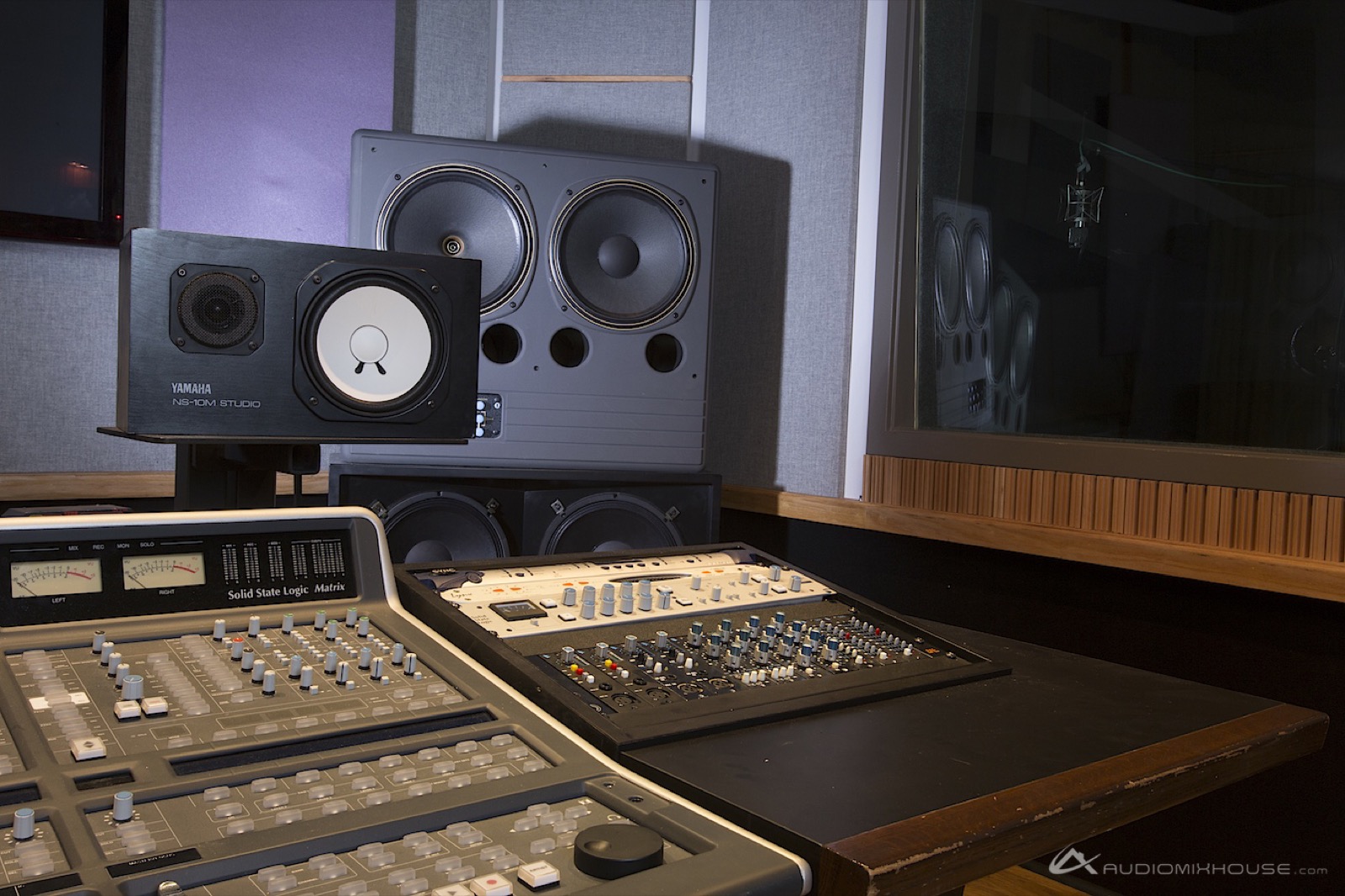
- Header image, “Yamaha NS-10 monitor at Audio Mix House, Studio C” — Audio Mix House / Wikimedia Commons / CC BY 2.0
- “Yamaha NS10” — CJ Sorg / Wikimedia Commons / CC BY-SA 2.0
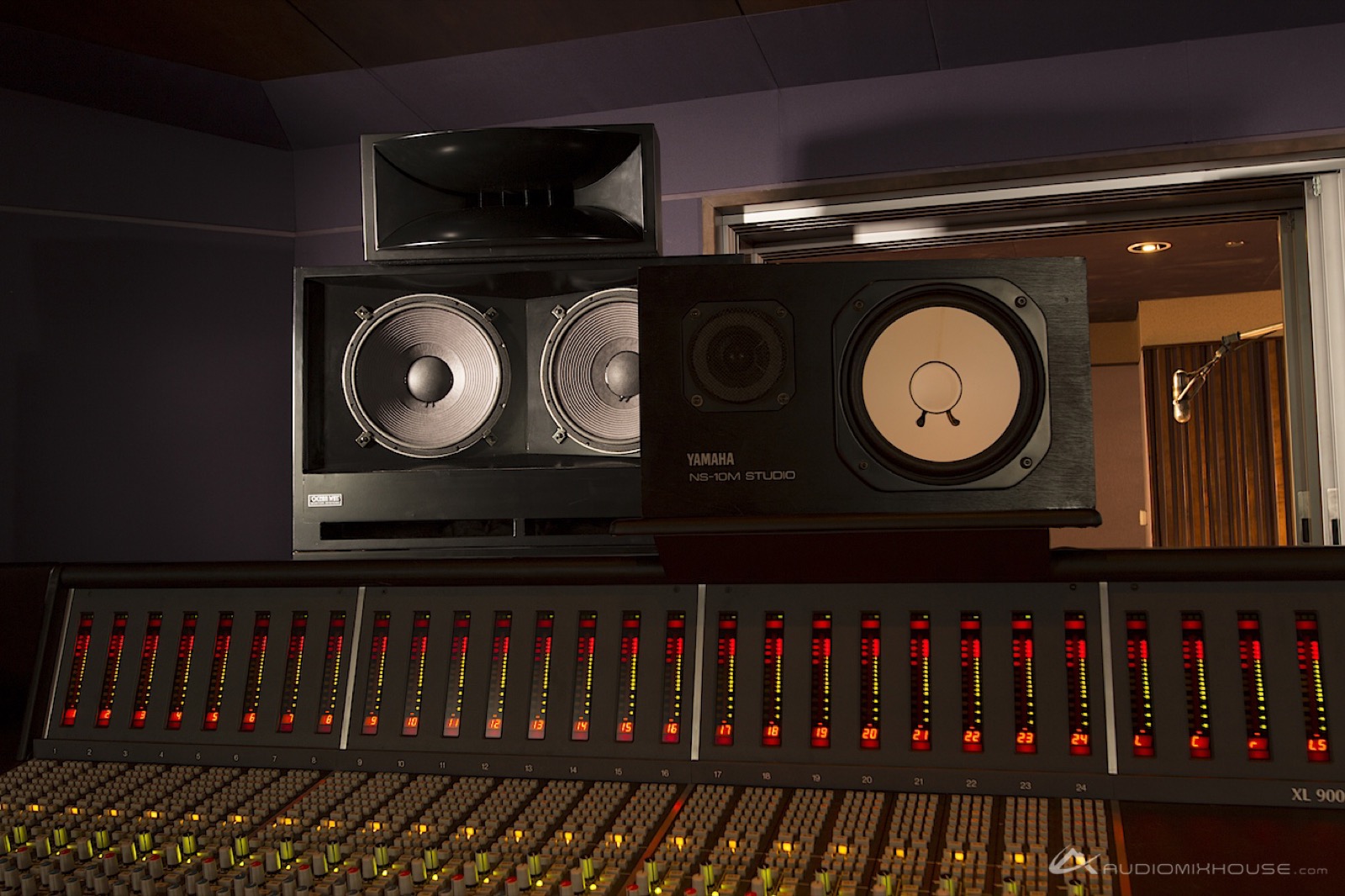
- “Ocean Way and Yamaha NS-10 Monitors at Audio Mix House, Studio B” — Audio Mix House / Wikimedia Commons / CC BY 2.0
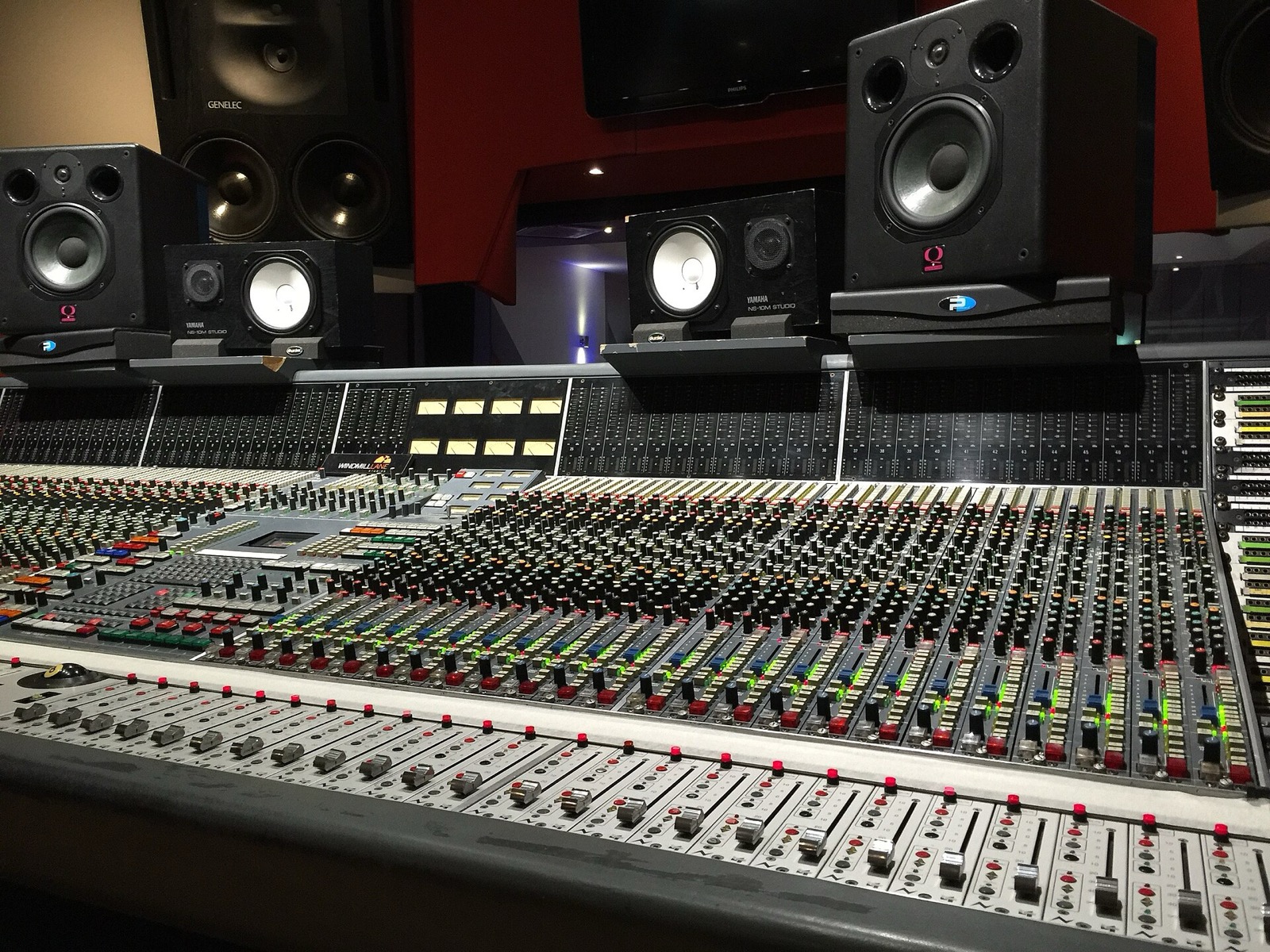
- “Neve VR Legend 72 ch. ... Yamaha NS-10M Studio - Studio One, Windmill Lane Studios, Dublin” — pxhere / Wikimedia Commons / CC0