Olympus — How a Microscope Maker Created the OM and PEN ‘Small Cameras’
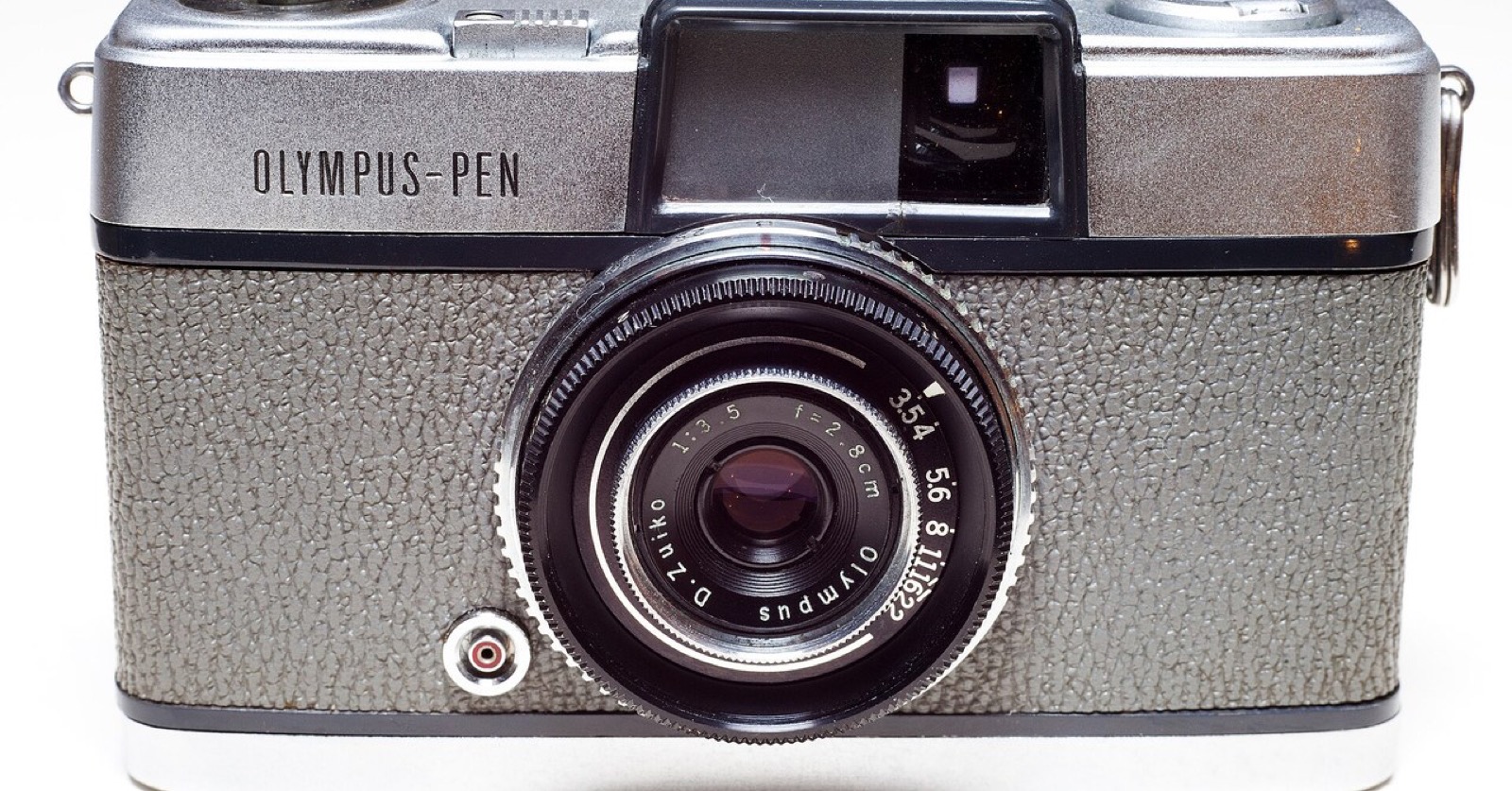
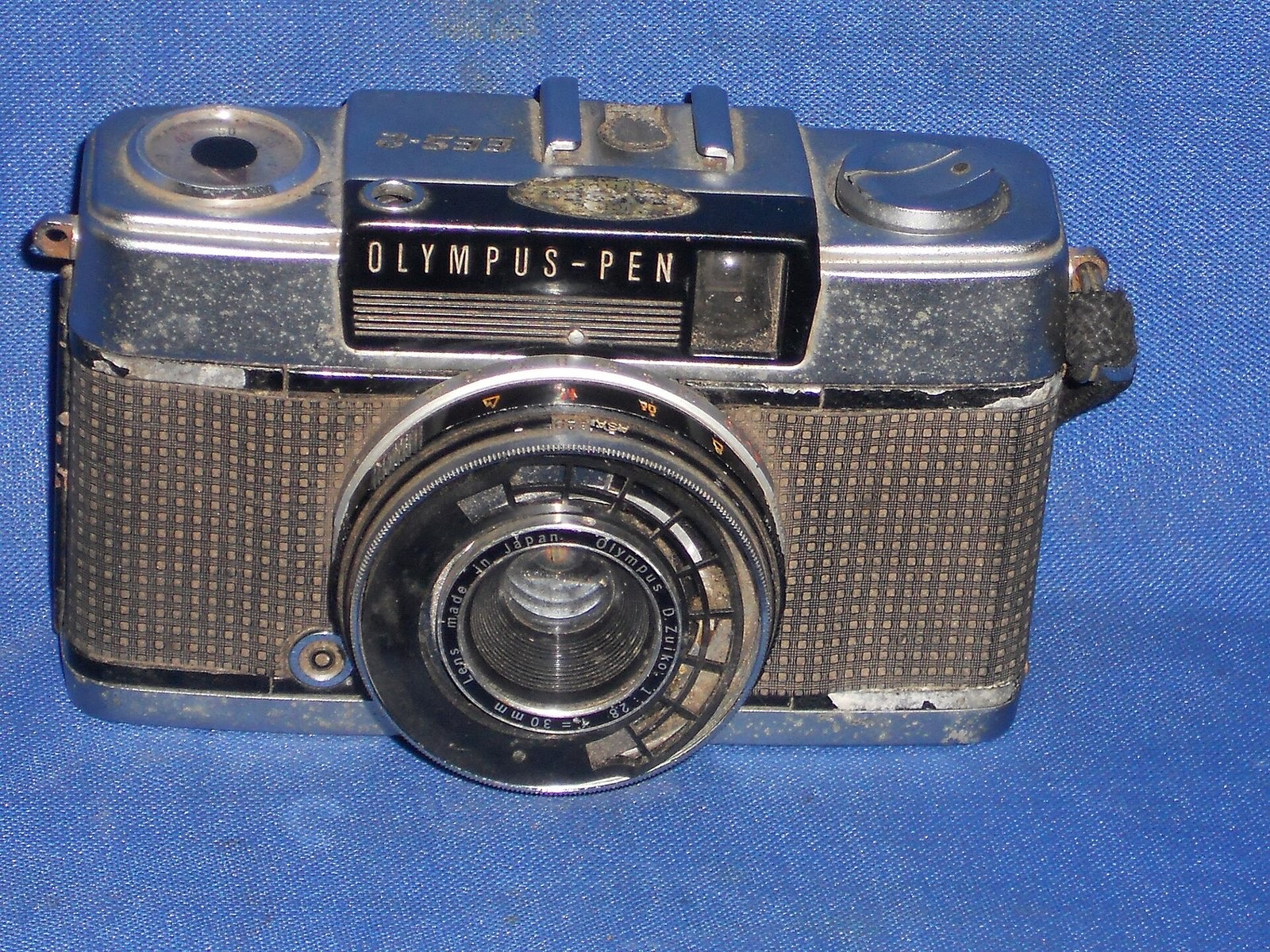
☕ A story from our camera history series. We trace a company’s history through the decisions of the people who built it and the products that changed its era. This time, we follow Olympus from microscope maker to a company that kept pursuing cameras you could carry everywhere, from the PEN to the OM.
💡 What you’ll learn
- Why a microscope maker began building cameras
- How Yoshihisa Maitani changed ideas about camera size with the PEN and OM
- How Olympus’s medical business grew alongside cameras, while the PEN and OM names carried on into the digital era and OM SYSTEM
One question, asked again and again: Can a camera be smaller?
When choosing a camera, portability matters as much as image quality and features. A large, heavy camera may be reassuring, but if it stays at home, it won’t take any pictures. A camera you can bring everywhere, on the other hand, can record whatever happens in front of you.
That question comes up repeatedly in Olympus’s history. The first camera made by a microscope company. The PEN, which doubled the number of shots by using half the area of a roll of film. The OM, which rethought the SLR from the ground up. Even in the DSLR and mirrorless eras, portability remained central to the company’s products.
This is more than a story about a lineup of classic small cameras. It’s the story of an optics company trying to bring its precision instruments closer to people’s everyday lives. And that same commitment to compactness also found another outlet in medical endoscopes.
Chapter 1 — From a company making microscopes in Japan
Takachiho Seisakusho begins, 1919
In 1919, Takeshi Yamashita founded Takachiho Seisakusho in Tokyo. His goal was to make microscopes in Japan, rather than rely on imports. A microscope is more than a set of lenses. Its small components must be made precisely, the light carefully controlled, and the focus adjusted so the instrument can deliver a stable view.
The company released its first microscope, the Asahi, in 1920, the year after it was founded. “Takachiho” comes from a mountain in Japanese mythology. It was the beginning of a company devoted to revealing the invisible world through a microscope. The Olympus brand, which later spread around the world, takes its name from Mount Olympus, home of the gods in Greek mythology. A company rooted in Japanese mythology adopted a name with international ambitions.
Cameras and microscopes share a need for optical design. How should light passing through a lens form an image? How can distortion and color fringing be reduced? How can focus be set precisely? The precision Olympus developed for microscopes could also serve the lenses and mechanisms of cameras.
But microscopes and cameras are used differently. A microscope sits on a desk, aimed at a subject, while the user carefully adjusts magnification and focus. A camera is carried around and pointed at changing scenes to capture a moment. To enter the camera business, Olympus needed more than optics: it had to design products that were portable and easy to use.
The first camera, 1936
In 1936, Olympus released its first camera, the Semi-Olympus I. Its lens bore the name Zuiko, which would continue to appear on later products. The company that had made lenses for microscopes had moved into cameras designed to take photographs.
Early cameras were not the simple, load-the-film-and-shoot devices we know today. Users needed to understand how the camera worked and learn how to handle film and exposure. Even so, entering the camera business was significant. Olympus was taking the lens technology it had developed for the laboratory and applying it to a tool people could use to preserve everyday scenes.
In 1949, after the war, Takachiho Seisakusho changed its name to Olympus Optical Co., Ltd. The company replaced a name drawn from a Japanese place with a brand already known through its products. The change reflected its ambition to grow from a domestic microscope maker into an optical manufacturer serving markets around the world.
A challenge from the medical field
Alongside the camera business, Olympus found a path into medical equipment. In 1949, a doctor at the University of Tokyo Hospital asked whether the company could build a camera that could photograph the inside of the stomach. The goal was to record parts of the body that could not be seen from the outside and help doctors detect disease.
To photograph inside the stomach, the team had to fit a lens and a light source at the end of a narrow tube, insert the tube into the body, and retrieve the film after shooting. It wasn’t enough to make the device small: it also had to illuminate a dark interior and capture the intended area. The development team tackled component size, the light source, tube materials, and other challenges one by one.
In 1950, the team succeeded in building a practical prototype gastrocamera. The product, the GT-I, went on sale in 1952. A gastrocamera was unlike an ordinary camera: it was designed to be inserted into the body. But it drew on some of the same skills Olympus would continue to develop in both cameras and medical devices, including working with small lenses and light and fitting mechanisms into tight spaces.
Over time, this business grew into the medical endoscope operation that became one of the company’s main pillars. It did not begin as a side business for a camera maker; it was an effort to address an urgent need in medicine. If we look at Olympus only through its cameras, this other path is easy to miss. To understand where the company’s technology went, we need to consider both the camera that photographs the world and the camera that looks inside the human body.