Catching the Voice of Radio with a Sheet of Aluminum Foil — RCA 44BX and 77DX
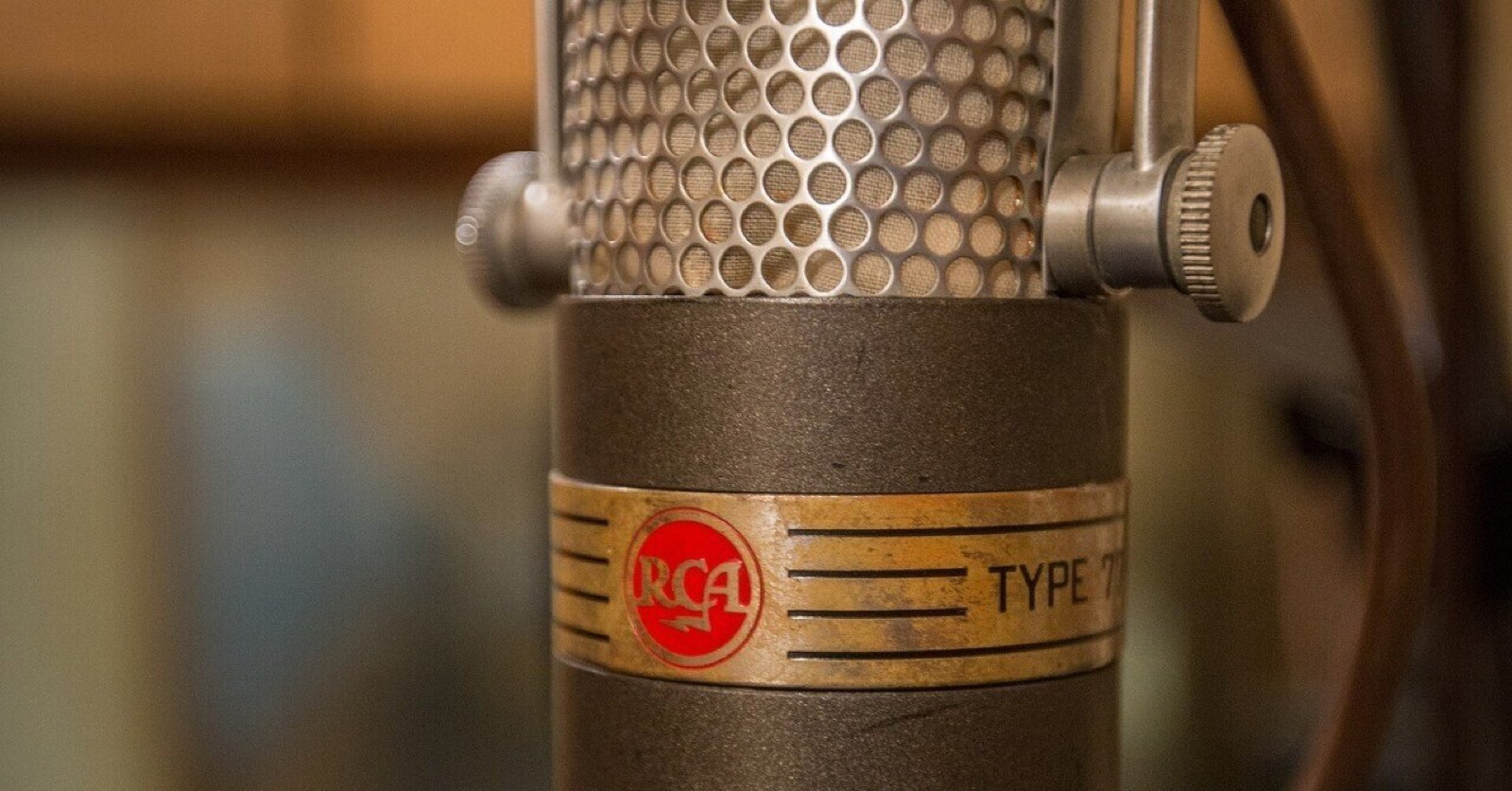
☕ A coffee-length story — about a 10-minute read. This is a story to enjoy, not a research paper. In old movies, there is often a large, rounded microphone in front of the announcer at a radio station. Inside it was a single sheet of aluminum foil, thinner than a human hair.
Prologue — The Iron Face at the Center of the Studio
America in the 1930s. At night, a family gathers in the living room and sits around a large wooden box—the radio.
News, dramas, and big-band music pour from its speaker. Before television entered the home, the radio was the window at the center of the house.
At the center of the studio where those voices were made stood a familiar microphone: a heavy metal head, square with rounded corners, its sides covered in fine mesh.
The RCA 44. Beside it stood the slightly slimmer, capsule-shaped RCA 77.
Even today, old movies and posters use these two shapes to evoke a radio station from the past. They had become the very image of “the voice of radio.”
Yet inside those imposing shells was something surprisingly small and fragile.
📝 About this story
This is a narrative drawn from books, manufacturer materials, and trade-magazine articles I have read. I have tried to stay as close to the facts as possible, but sources sometimes disagree on dates. Where they do, I say so in the text. The sources are listed at the end.
Chapter 1 — A Thin Strip of Metal Listens to the Air
How a ribbon microphone works
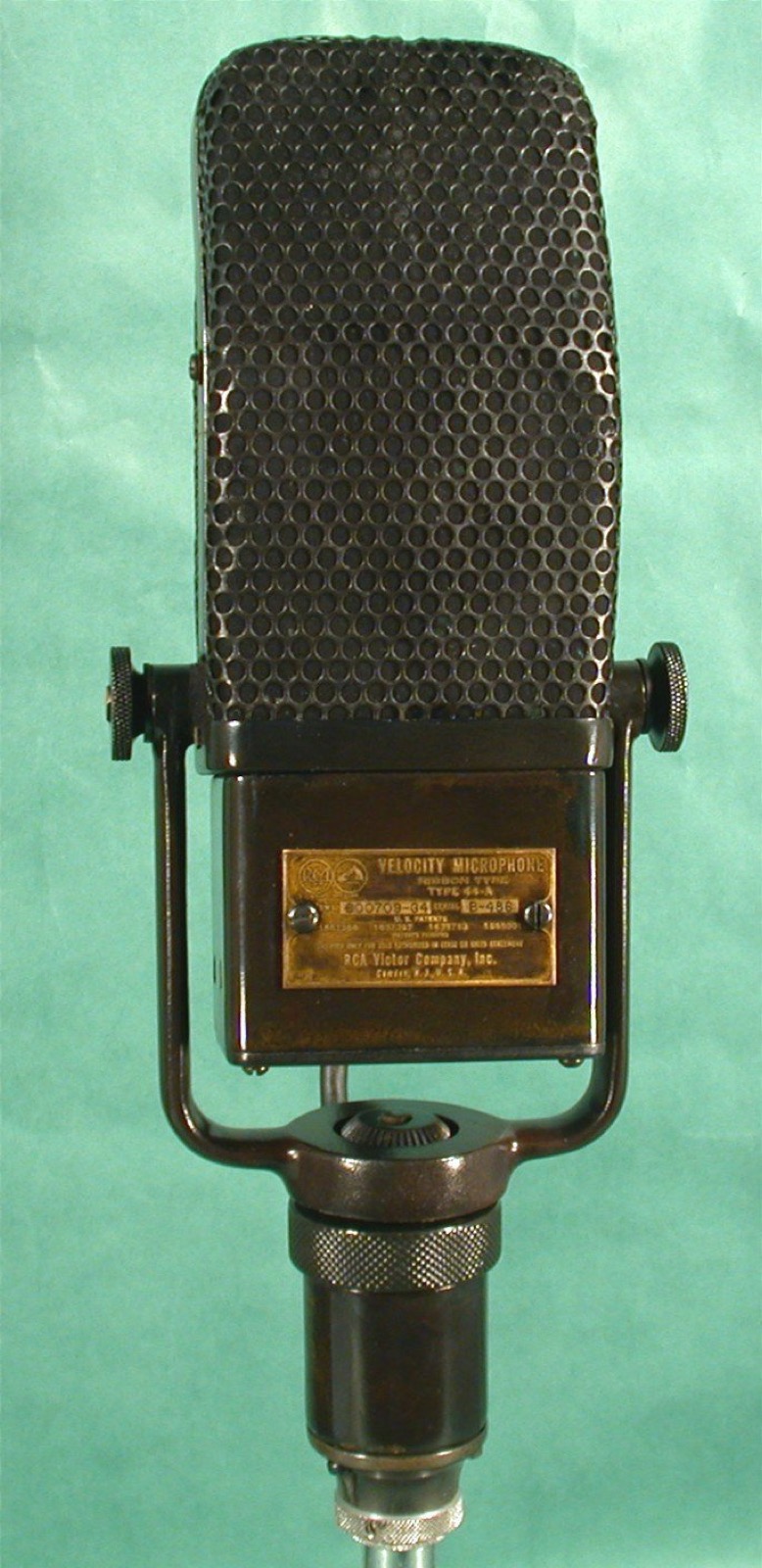
The RCA 44 and 77 are both types of ribbon microphone.
The principle is simple:
- Place two strong magnets facing each other.
- Suspend a very thin strip of aluminum (the ribbon) in the gap.
- Sound moves the air, and the ribbon moves with it.
- As the metal moves between the magnets, it generates a tiny electrical current.
That “tiny electricity” becomes the microphone’s signal. It is electromagnetic induction—the principle you may have learned in science class—put to work in sound.

The ribbon is said to be thinner than a human hair. Because it is so light, it follows even the slightest movement of air. That is why ribbon microphones are often described as smooth, with few harsh edges.
The figure eight: hearing front and back
A ribbon is a single strip with both sides exposed. So it responds to sound from both the front and the back. Sound arriving from directly to the side has little effect because the ribbon presents only its edge to it.
Viewed from above, the pickup area looks like the number eight. This is called a bidirectional, or figure-eight, pickup pattern.
That pattern was handy for radio drama. Two actors could stand facing each other across one microphone. It would pick up less of the crew’s noise from the sides. It was just right for making spoken drama in a small studio.
Why RCA called it a “velocity” microphone
RCA marketed this type as a velocity microphone. The ribbon moves in response not to air pressure itself, but to the speed of the moving air. That is where the name came from.
(Coming up: the two engineers who turned the ribbon into a product, the differences between the 44 and 77, and the story of the 77DX, which survived into the television era.)