How Steel Plates and Springs Trapped Reverb — Plate and Spring Reverb
☕ A coffee-length story — about a 7-minute read.
Enjoy this as a story, not a research paper. To create the soft, spacious sound that blooms behind a singer's voice, people once used everything from bathrooms to steel plates to springs.
Prologue — In the Studio Bathroom
Chicago, 1947.
An engineer at a recording studio had an unusual idea.
Bring a speaker and a microphone into the studio bathroom.
Play the performance through the speaker, record the sound as it bounces off the tiled walls, then mix that “reverb” back into the original performance.
The song made this way became a radio hit.
The engineer was Bill Putnam, who would later create the legendary 1176 compressor.
Add the sound of a room to a recording.
For this one simple idea, engineers went on to devise some astonishingly elaborate solutions.
📝 About this story
This story draws on books, interviews, and manufacturers’ materials I’ve read over many years. I’ve tried to stick to the facts, but since I wasn’t there, some commonly used nicknames and received wisdom may have found their way in. Sources are listed at the end.
Chapter 1 — A Room for Reverb
Echo chambers
After Putnam’s bathroom experiment, major studios began building rooms devoted entirely to reverb. They were called echo chambers.
These were empty rooms made of concrete or tile. A speaker and a microphone went inside; sound bounced around the room and was recorded.
The basement of Capitol Records’ building in Los Angeles housed several such chambers. Guitarist and inventor Les Paul is said to have helped design them. The sound from those rooms enveloped the voices of Frank Sinatra and many other great singers.
But you can’t take a room with you
Echo chambers had some serious drawbacks:
- They took up a whole room, which cost space and money.
- Changing the reverb time wasn’t easy.
- Outside noise and building vibrations could affect the sound.
Could reverb be trapped in a “box” instead of a room?
That question led to two very different ideas.
Chapter 2 — The Sound of Steel: Plate Reverb
1957: A big box from Germany
In 1950s Germany, a broadcast engineering research institute was exploring ways to create reverb with a thin sheet of steel.
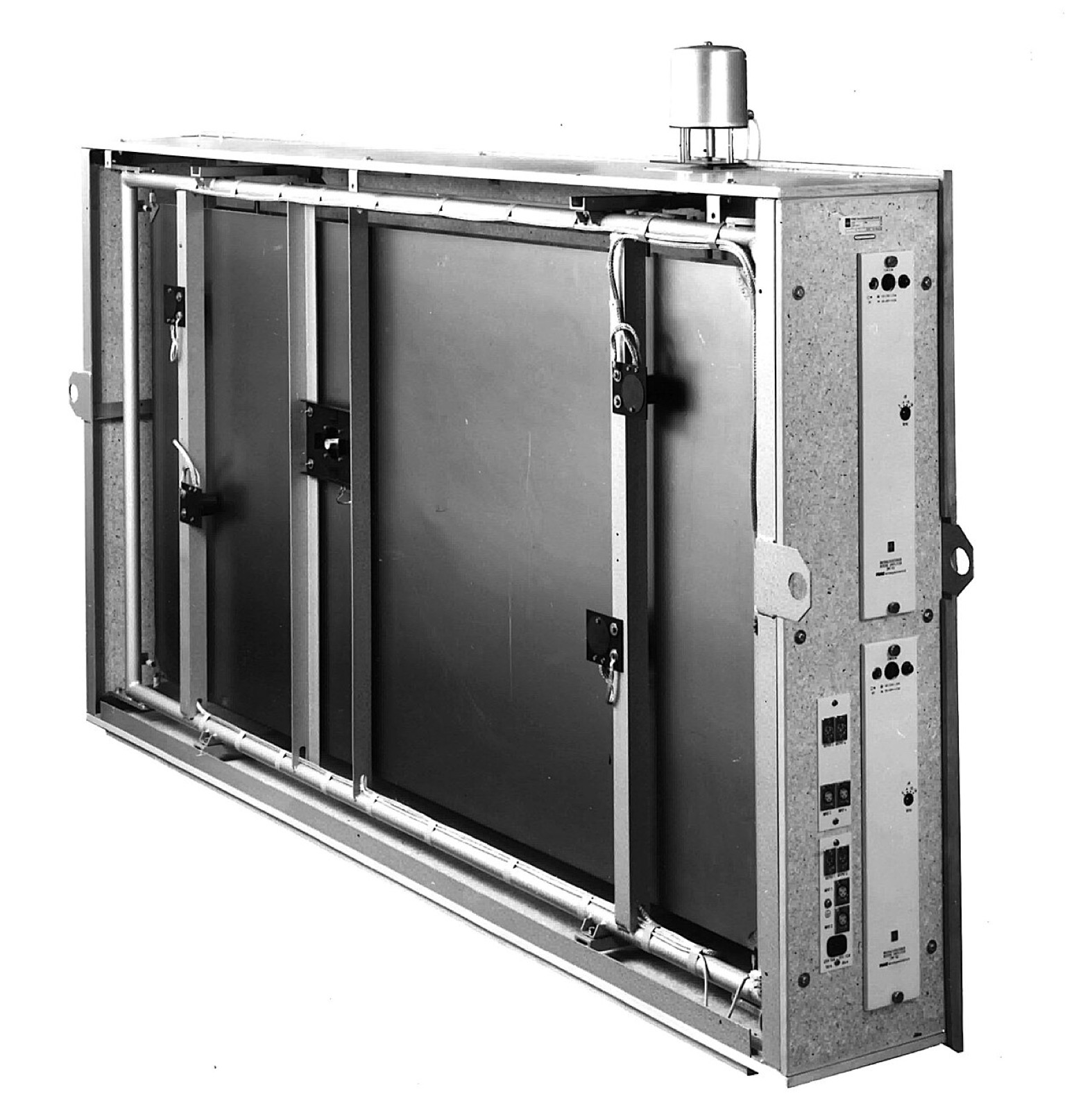
The German company EMT turned that technology into a product. Released in 1957, the EMT 140 worked like this:
- A thin steel plate, roughly one to two meters across, was stretched taut in a wooden frame.
- A device like a speaker was attached to the center of the plate to make it vibrate.
- Sensors mounted elsewhere on the plate picked up the reverb created by its vibrations.
It’s said to have weighed more than 200 kilograms. Calling it a “box” is a little misleading: it was closer in size to a substantial piece of furniture tucked into a corner of the studio.
Adjusting the reverb by hand
The EMT 140’s breakthrough was that you could change the reverb time.
Another plate, an “absorber,” sat near the steel sheet. A handle moved it closer or farther away, making the reverb longer or shorter. No need to rebuild an entire room: just turn the handle and the sound changed.
The plate had a sound unlike a real room’s: bright, smooth, and dense. It became a favorite on pop and rock vocals and snare drums in the 1960s and ’70s. Today, it remains a classic sound known simply as “plate.”
Chapter 3 — The Sound of Springs: Spring Reverb
An organ maker’s idea
Elsewhere, a much smaller reverb device was taking shape. It came from the American organ maker Hammond.
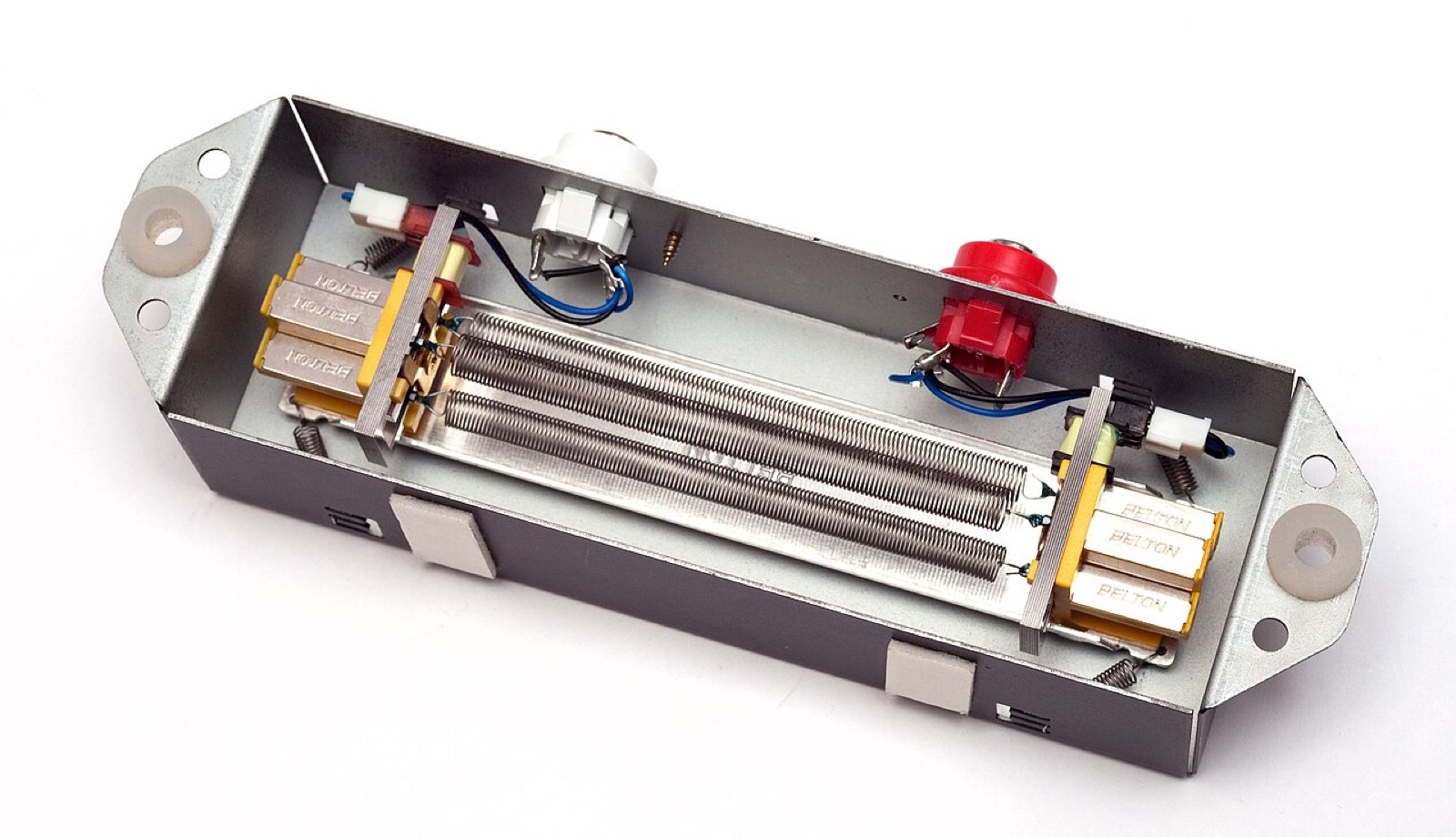
Hammond made electric organs for the home. But an organ played in a living room didn’t have the reverberation of a church. The solution they came up with used metal springs:
- One end of a long spring is set vibrating by the sound.
- The vibration travels through the spring, bouncing back and forth at the other end.
- That back-and-forth motion sounds like reverb.
Reverb in a small box
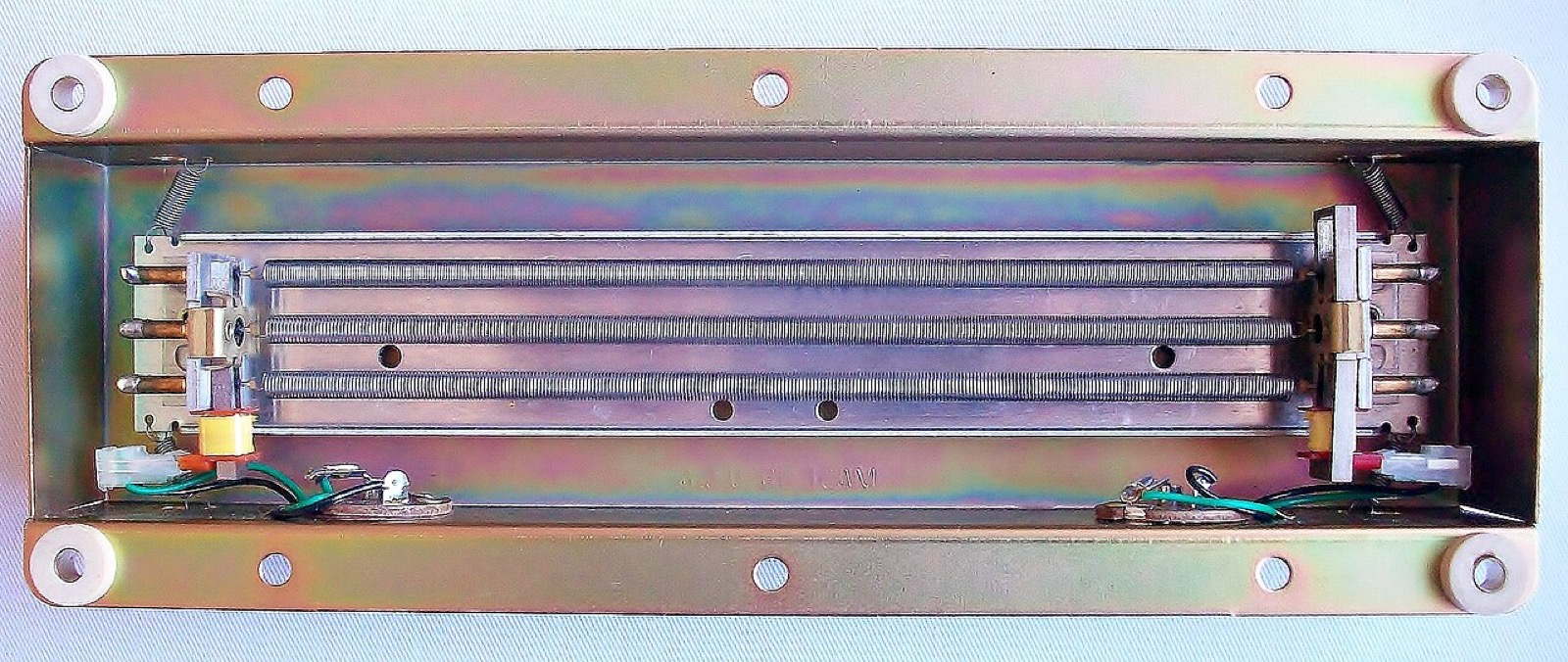
The biggest advantages of spring reverb were that it was small, light, and inexpensive. Just a few springs inside a long, narrow metal tank—that was enough to fit one into an organ or guitar amp.
In the 1960s, guitar amp maker Fender saw the potential in that springy sound. Fender built spring reverb into its amps, and in 1963 the legendary Twin Reverb was born.
It sounded nothing like a real room: it had a distinctive boing, with a little bounce to it. That character became an essential part of surf music, rockabilly, reggae dub, and more.
Chapter 4 — Reverb in Numbers
By the late 1970s, reverb was being created with computer calculations.
In 1976, EMT, maker of the plate reverb, released the digital EMT 250. Lexicon in the United States and other companies followed with digital reverbs, helping shape the sound of ’80s music.
Today, a computer can run as many rooms, plates, and springs as you like, all as plugins. The interesting thing is that many of them still bear the names “Plate,” “Spring,” and “Chamber.”
Bathroom tiles, a 200-kilogram steel plate, a thin spring. The names of ideas from more than 70 years ago still live on in the menus of the digital world.
Epilogue — Where Did the Reverb Come From?
It began with a sound bouncing around a studio bathroom in Chicago in 1947. From there came echo chambers, steel plates, springs, and finally computers.
The tools changed, but engineers wanted the same thing all along:
“We want the sound to feel like it’s playing in a wide-open space.”
Next time you listen to a song you love, take a moment to listen to the reverb blooming behind the singer. It might come from a steel plate, a spring, or a basement somewhere.
A Reverb Timeline
- Late 1930s onward: Hammond develops a system for creating reverb with springs.
- 1947: Bill Putnam uses the sound of a studio bathroom in a recording.
- 1950s: Major studios build echo chambers.
- 1957: The EMT 140 plate reverb is released.
- 1961: Fender releases a standalone spring reverb unit.
- 1963: The Fender Twin Reverb is introduced.
- 1976: The EMT 250 digital reverb is released.
References
- Wikipedia: “Reverberation,” “Plate reverb,” “Spring reverb,” “EMT 140,” “Bill Putnam,” and “Capitol Studios” (English editions)
- Universal Audio, “EMT 140 Classic Plate Reverberator” (product information)
- Sound On Sound, “A History Of Reverb”
Photo credits
- Header image, EMT 140 plate reverberator (Photo: EMT-Archiv-Lahr / Wikimedia Commons / CC BY-SA 4.0)
- EMT 140 plate reverberator (Photo: EMT-Archiv-Lahr / Wikimedia Commons / CC BY-SA 4.0)
- “Spring Reverb 8325” (Photo: Ashley Pomeroy / Wikimedia Commons / CC BY-SA 4.0)
- Inside a spring reverb unit; these thin springs create the reverb (Photo: DaMag / Wikimedia Commons / CC BY-SA 3.0)
Licenses: CC BY-SA 4.0 and CC BY-SA 3.0.