A Professional in Your Pocket — Ricoh GR
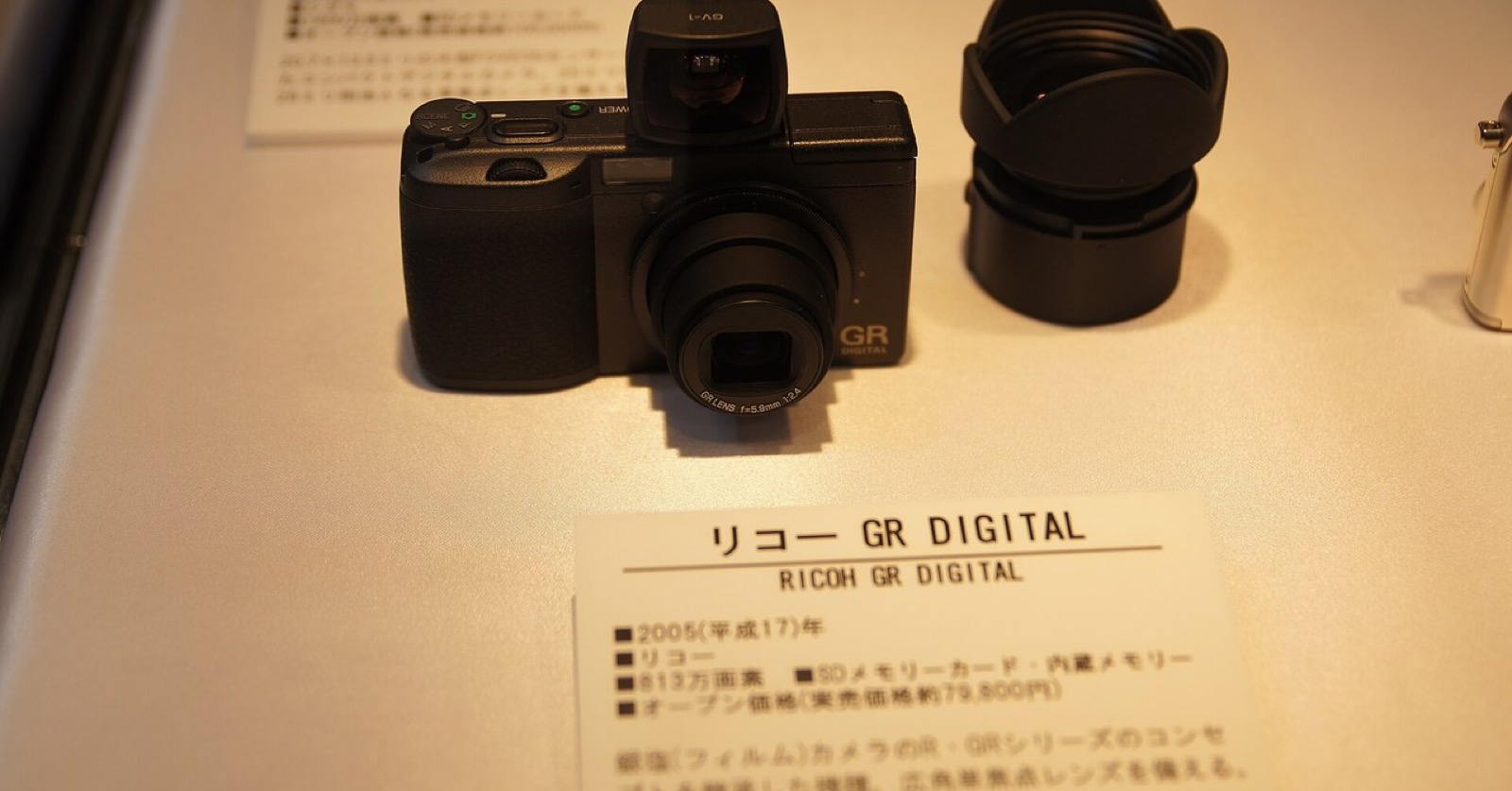
☕ A coffee-length story — about a 16-minute read. No zoom, a plain little black box — and yet photographers won't let it go. From the film GR1 to the digital GR, this is the thirty-year story of "a professional in your pocket."
Prologue — What Comes Out of a Coat Pocket
Picture people taking photographs as they walk through a city.
Some have an SLR with a big lens hanging from their neck. Some hold a smartphone in one hand.
And then there are those who do neither: they slip a small black camera out of a coat pocket, take a single shot one-handed, and put it back.
On the front of the camera are two white letters: GR.
There's no zoom. For almost its whole history it has had just one angle of view, a 28mm wide-angle. It looks modest; to anyone who doesn't know, it's just an ordinary compact camera.
Yet for nearly thirty years, photographers have kept choosing it. One of them is Daido Moriyama, one of Japan's best-known photographers. He has used a GR ever since he first got one around 1996, and has said that more than 90 percent of the work he exhibits was shot on Ricoh cameras.
This is the story of a "professional's tool" that fits in a pocket — made by a company that started out making photosensitive paper.
Chapter 1 — A Paper Company and a 6,800-Yen Twin-Lens Reflex
A company born from a research institute
Ricoh didn't begin with cameras.
On 6 February 1936, a company called Riken Kankoshi — Riken Sensitized Paper — was founded. It was part of the group set up to commercialise inventions from Riken, Japan's Institute of Physical and Chemical Research, and what it made was photosensitive paper, used to copy drawings and plans: paper that holds an image when light falls on it.
The man who led it was Kiyoshi Ichimura, later known as Ricoh's founder, who grew the company out of the Riken group.
In the sense of "recording an image with light," photosensitive paper and cameras are distant relatives. Before long the company took the name Riken Optical and set off down the road to cameras.
A camera people queued for
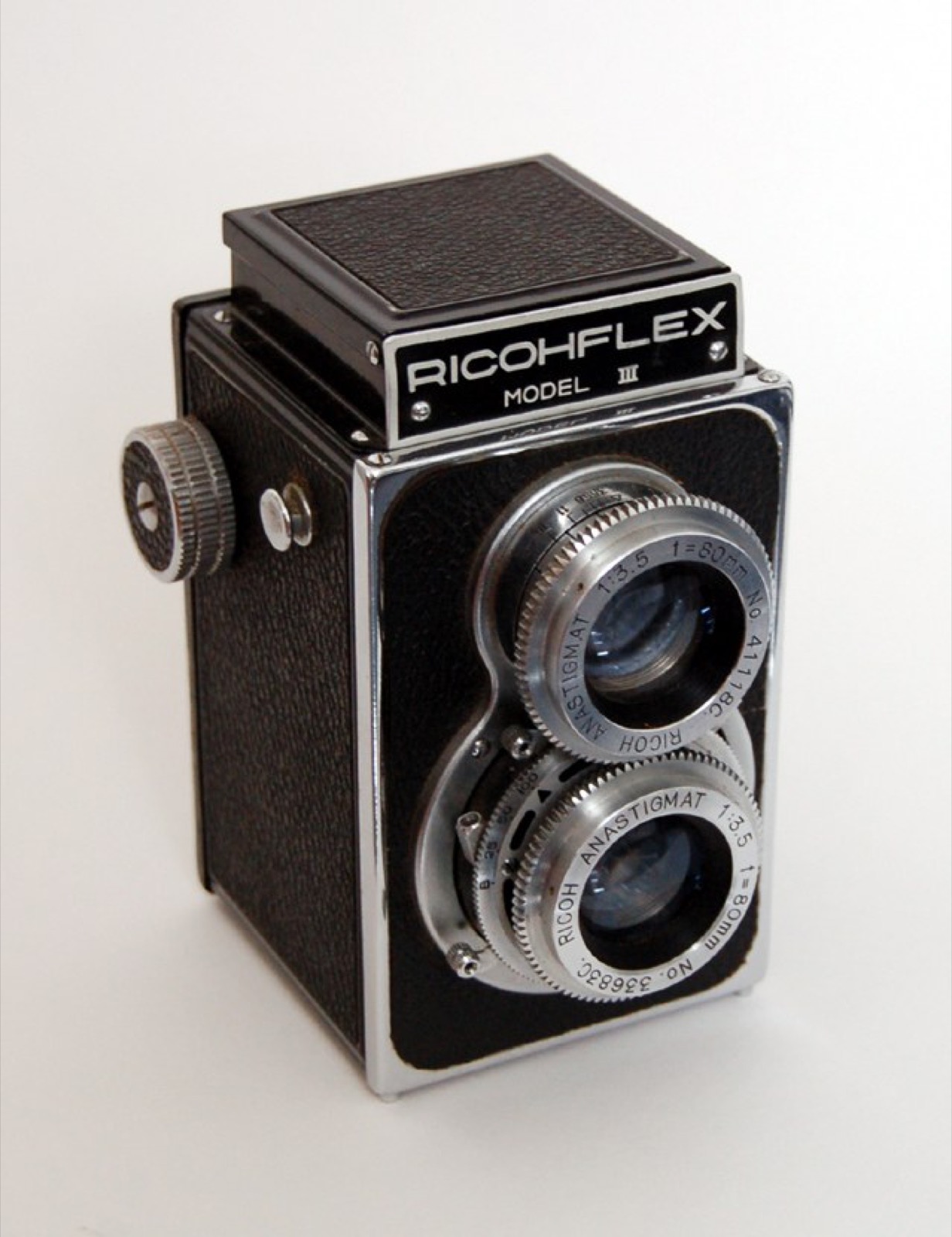
In 1950 Riken Optical released the Ricohflex III.
It was a twin-lens reflex, with two lenses stacked one above the other. At the time, any decent camera cost 20,000 yen or more; even a domestic twin-lens reflex was around 30,000 yen. The Ricohflex arrived at 6,800 yen.
It linked the focus of the viewing and taking lenses with meshing gears so they moved together — a simple, no-waste design that let the price drop dramatically.
Queues formed in front of the counter, with people coming from the provinces to buy, and in town it sometimes sold at a premium of 11,000 yen.
To make it in volume, Ricoh became the first Japanese camera maker to assemble on a belt conveyor. The Ricohflex came to be described as the camera that set off the spread of cameras across Japan.
"Good things, in a form people can reach, for as many people as possible." Somewhere, that starting point seems connected to the GR that came later.