Into the War Zone with a Leica — Robert Capa
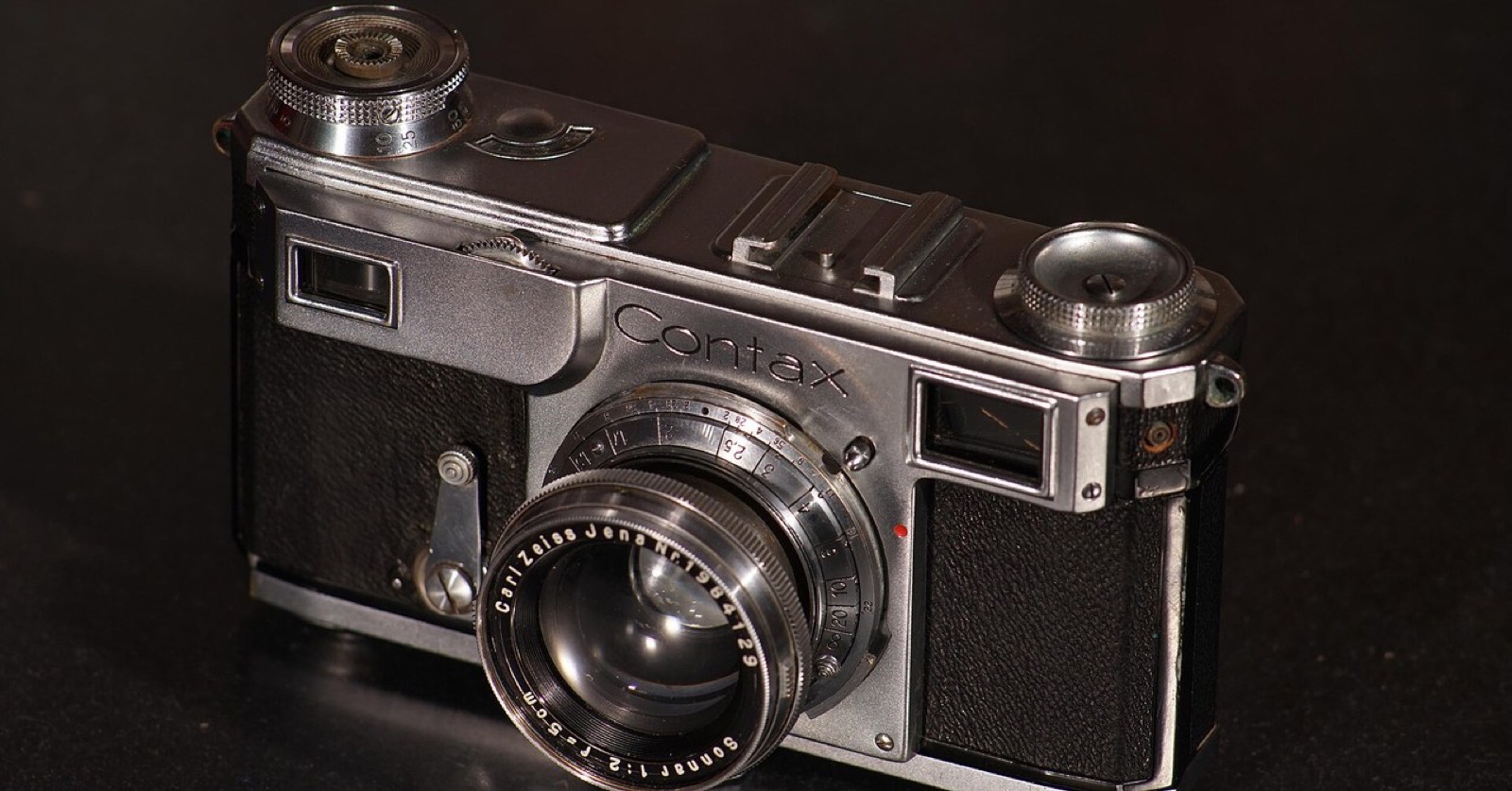
☕ A coffee-length story — about a 20-minute read. A side trip in our camera history series: this time, the story of a person holding the camera. Our lead is Robert Capa, the photographer who stood on the front line of five wars with a small 35mm camera in his hands. A forty-year life that began with an invented name.
What you will find here:
- How the name "Robert Capa" was born
- How small cameras like the Leica and Contax changed war photography
- What lies behind the story of the "eleven frames" from D-Day
- Magnum, where photographers own their pictures, and Capa's last link with Japan
Prologue — The morning of 6 June 1944
The morning of 6 June 1944. Across a grey sea, a fleet of small landing craft was heading for the coast of Normandy in north-western France.
This was the Allied invasion of Normandy. The beach the Americans had code-named "Omaha" became the scene of the fiercest fighting that day.
Among the soldiers in one of the boats was a man without a gun. Hanging from his neck were two Contax cameras — palm-sized 35mm cameras made by Zeiss Ikon of Germany.
When the ramp at the front of the boat dropped, he jumped into the cold sea with the soldiers. As bullets slapped the water, he crouched behind a steel obstacle and began releasing the shutter.
His name was Robert Capa. He was 30 years old, and he was already being called "the greatest war photographer in the world".
Yet for a while, that name had belonged to someone who did not exist.
This is the story of that photographer.
Chapter 1 — The boy from Budapest
Endre Friedmann
Robert Capa's real name was Endre Friedmann (Friedmann Endre, in the Hungarian order). He was born on 22 October 1913 in Budapest, the capital of Hungary, into a Jewish family. His parents ran a dressmaking business.
As a boy, Endre is said to have wanted to be a writer, not a photographer. He was also interested in politics and, while still in his teens, drew close to left-wing movements.
In 1931, at 18, he was arrested by the police for his political activity. The condition of his release was that he leave the country at once. And so Endre left his home town and headed for Berlin.
In a Berlin darkroom
In Berlin he attended a school of political studies, but he also had to work to live. The job Endre found was with Dephot, an agency that sold photographs to magazines.
At first he was a darkroom helper, assisting with developing and printing. Before long, though, he was handed a camera and sent out on small assignments.
In November 1932, the Russian revolutionary Leon Trotsky was due to give a lecture in Copenhagen, Denmark. Trotsky was known to dislike cameras, and photographers with large cameras are said to have been kept out of the hall.
But what Endre carried was a Leica, small enough to fit in a pocket. He slipped into the hall and photographed Trotsky up close as he spoke passionately at the lectern, gesturing as he went.
This was the first time Endre's pictures ran big in a magazine. Get closer than anyone else, with a small camera. The shape of Capa's later photography was already there.
To Paris
In 1933, the Nazis took power in Germany. For a young man who was Jewish and close to the left, Berlin had become a dangerous city.
He packed his bags again, this time for Paris. But work was hard to find. Pawning his camera, then redeeming it, then pawning it again — that is said to have been his life for a while.