The Camera with Two Eyes — Rolleiflex
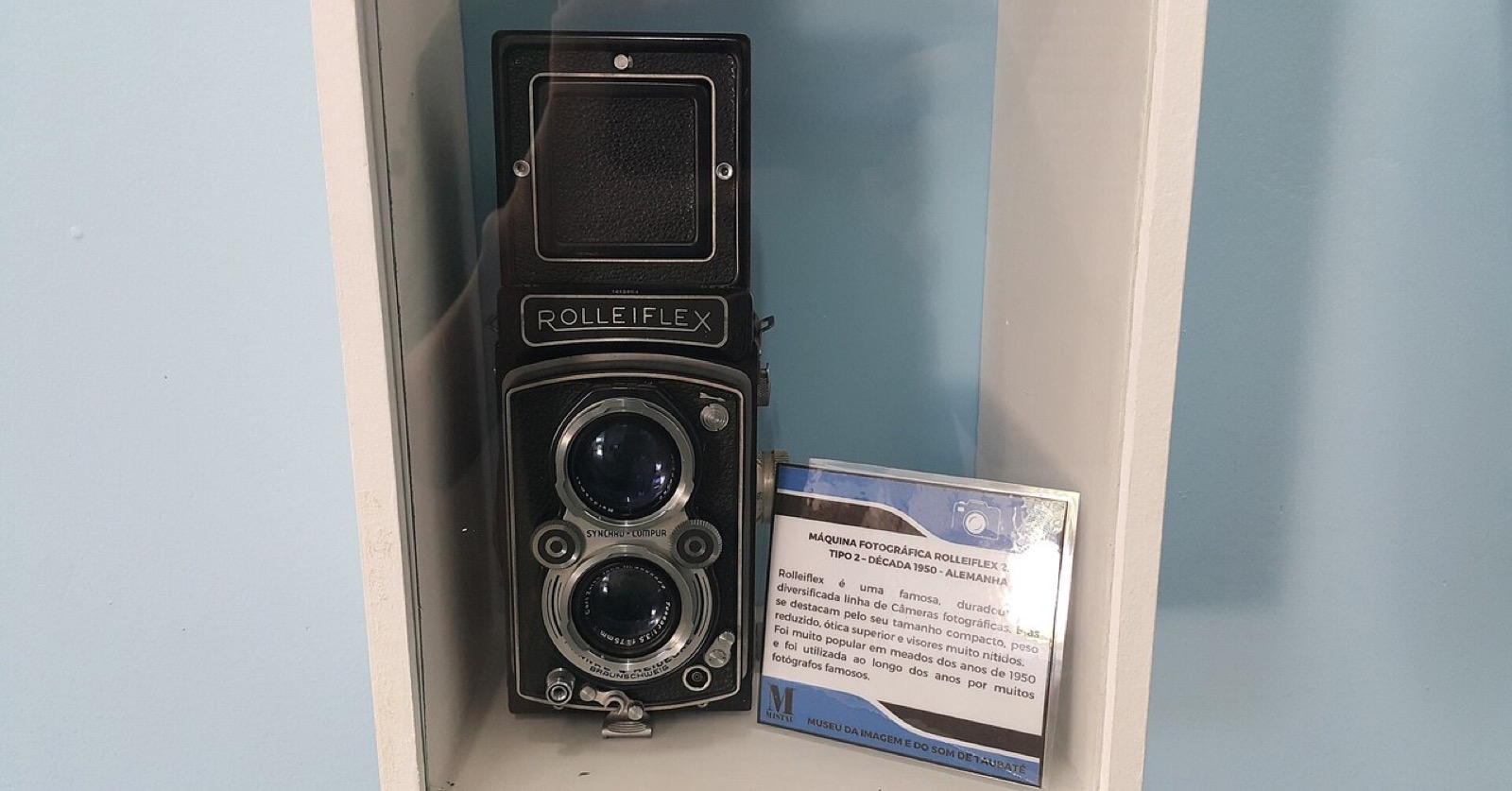
☕ A coffee-length story — about a 16-minute read. A square box with two lenses stacked one above the other: this is the tale of a twin-lens reflex that grew out of a rejected design and went on to be loved by photographers all over the world.
Prologue — The People Who Looked Down
Leaf through an old photobook and, every so often, you come across someone taking pictures in an odd way.
They aren't holding the camera up to their eye. They're holding a box-like machine in both hands at chest height, around the stomach, and peering into it from above — looking down.
On the front of that box, the lenses are stacked two high.
In Chicago there was a woman named Vivian Maier. She worked as a nanny, looking after other people's children, and she kept doing that work for some forty years while photographing on street corners. She is said to have left behind more than 150,000 photographs.
While she was alive, almost no one saw them. In 2007 the payments on a storage unit she rented lapsed and its contents were sold at auction. A young man bought boxes of negatives, looked through them, and only then did one photographer's life's work come to light.
The camera that had hung around her neck was the one with two eyes, one above the other: the Rolleiflex.
This is the story of how a square camera born in a small German workshop came to be loved by photographers for more than ninety years.
Chapter 1 — The Rejected Design
The production manager at Voigtländer
Our story begins in the middle of the First World War.
In Braunschweig, in northern Germany, stood Voigtländer, a long-established optical maker. Around 1916, the man in charge of its production was Reinhold Heidecke.
Heidecke had an idea for a new camera — one that used not glass plates but film on a roll: roll film.
At the time, serious cameras mostly took glass dry plates, loaded one at a time. With roll film, you wouldn't need to carry a stack of plates around.
The company's answer, though, was no. Keeping film flat was too difficult, they said, and their plate cameras were selling well. Heidecke's proposal was turned down.
A salesman gives him a push
The man who stepped forward was a former colleague, Paul Franke, who had worked in sales at Voigtländer. One person who designed, one who sold. The two decided to start a company of their own.
On 1 February 1920, "Franke & Heidecke" was entered in the trade register in Braunschweig. Its formal name was the "Workshop for Precision Mechanics and Optics." It would later be known as Rollei.
Germany had lost the war and was in the grip of savage inflation. The two men launched their workshop in an age when money lost value by the day.
The first product: a stereo camera
The first thing Franke & Heidecke made was the Heidoscop, a camera for stereo photographs.
Two lenses side by side took two pictures at once, just as your left and right eyes see. Look at them through a special viewer and the scene appeared in three dimensions. Stereo photography was a popular hobby in those days.
The Heidoscop carried two Carl Zeiss Tessar lenses, and in the middle there was a third lens just for viewing and checking focus. A lens for seeing, separate from the lenses for taking: that idea would lead straight to the Rolleiflex.
The camera sold well. In 1923 a version appeared that used roll film instead of plates — the "roll-film Heidoscop." It is said that the name "Rollei" was born as a shortening of that.
The man whose company had rejected his roll-film camera had brought one into the world under his own name. A small revenge, and a happy success.