The Man Who Kept Refining Sound Until 94 — Rupert Neve
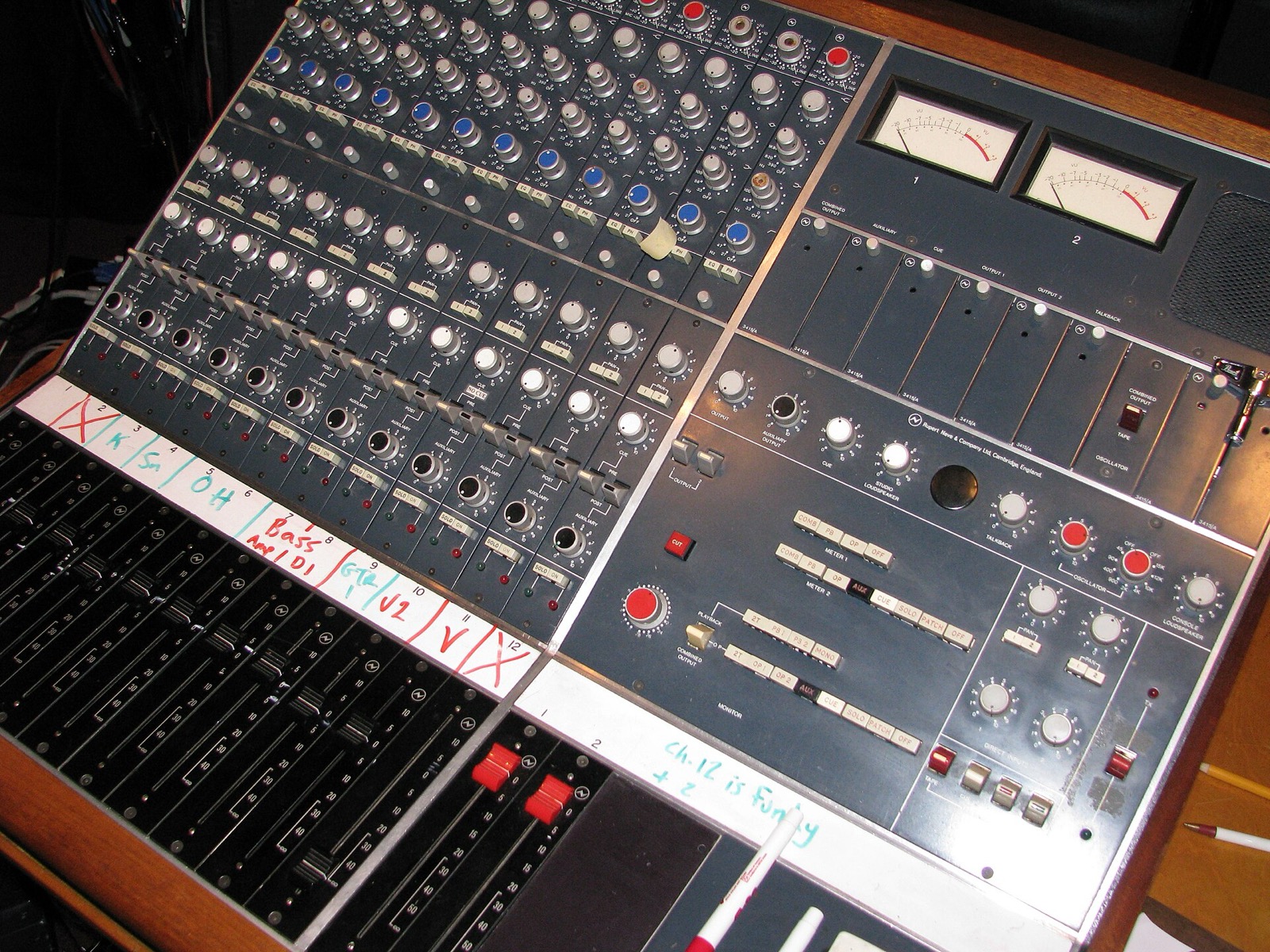
Prologue — A Workshop in Texas, February 2021
February 12, 2021. Wimberley, a small town in Texas. A British-born engineer had reached the end of a 94-year life.
Until the year before his death, he was still visiting the workshop of the company that bore his name, teaching design to young engineers and taking part in the development of new products.
His name was Rupert Neve.
In the world of mixing consoles, hardly anyone needs an introduction to the name Neve. The 1073, the 1081, the 80 Series consoles. The modules he built for Beatles producer George Martin. And today, the red audio interfaces found in home studios around the world. One man stood at the beginning of all of it.
Let’s turn the clock back more than 80 years. Our story begins in Buenos Aires, Argentina, where a boy sits in his room, quietly building radios.
About this story
This is a story of Rupert Neve’s life, pieced together from books, magazine interviews, manufacturer materials, and accounts from people who knew the period.
- I have tried to base the story on documented facts. I describe something as fact when I could confirm it in multiple sources.
- I was not there, and the sources may repeat industry nicknames or conventional wisdom. Please keep that in mind.
- Where accounts conflict or a story is told as legend, I separate it into a Legend & Lore section.
- Sources are listed at the end.
- I cover the birth of the 1073 in detail in a separate story, “The Story of the Neve 1073.” Here, I follow Rupert Neve the person.
Chapter 1 — The Boy in Buenos Aires
Born into a missionary family
Arthur Rupert Neve was born on July 31, 1926, in Newton Abbot, a town in southwest England.
His father was a missionary with the Bible Society. Because of his work, Rupert spent much of his childhood in Buenos Aires, Argentina.
Designing radios at 13
Young Rupert was fascinated by electronics. By the age of 13, he was already designing his own amplifiers and radio receivers.
When World War II began, he started repairing radios and building sets to sell. His hobby was already becoming a job.
At 17, into the war
At 17, Rupert volunteered for the British Army’s Royal Corps of Signals, a unit responsible for radio and communications equipment. It may have been the perfect place for a boy who loved radios to sharpen his skills. The unit handled the equipment that allowed people to communicate across distance, putting his early interest in receivers to practical use.
After the war, a recording job
After the war, Rupert returned to England and began designing public-address systems for lectures and events. He also recorded choirs, talks, and songs onto lacquer discs.
Among the recordings, he is said to have captured a speech by Winston Churchill.
Rupert later worked for Rediffusion, a broadcasting and wired-radio company. He eventually set out on his own and founded CQ Audio, an audio manufacturer that made loudspeakers and other products.
Radios, communications, recording, loudspeakers: Rupert got hands-on experience across the whole signal chain, from sound’s input to its output.
Then a request arrived from an unconventional composer living in Ireland:
“Could you build me a machine for mixing sounds?”
Now let’s follow the story of how Rupert Neve became a console designer.