The Tiny Switch That Changed Music — Semiconductors and Music
☕ A coffee-length story about a classic piece of gear
About a 15-minute read. Set research aside and enjoy this as a story.
Rock ’n’ roll spread, guitars found their distortion, the drums of the ’80s took shape, and music became something we could carry in our earbuds. Behind all of it was a tiny semiconductor.
Prologue — A Radio Beneath the Covers
It was the late 1950s, in some American home. One night, a teenage boy crawled under the covers.
In his hand was a radio about the size of his palm. He slipped an earphone into his ear. Out came rock ’n’ roll, the music that made adults frown and call it “troublemaking.”
Until then, a radio was more like a piece of living-room furniture. The whole family listened to the same programs, and the parents usually chose what was on.
But with this little radio, he could listen to his own music in his own room. His parents wouldn’t hear it.
Inside that palm-sized radio was a transistor. A tiny semiconductor switch gave young people music of their own and helped usher in the rock ’n’ roll era. This is a story about how deeply semiconductors changed music over more than 70 years.
📝 About this story
This story draws on books, interviews, and manufacturers’ materials I’ve read over many years. I’ve tried to keep it grounded in fact, though I wasn’t there at the time, so some popular names and familiar stories may have found their way in. I’ve set debated stories apart in “Legend & Lore” sections and gathered the references at the end.
Chapter 1 — Transistor Radios and Rock ’n’ Roll
1954: The First Transistor Radio
The transistor was invented at Bell Labs in the United States in 1947. For a while, it remained an expensive component used by the military and telephone companies.
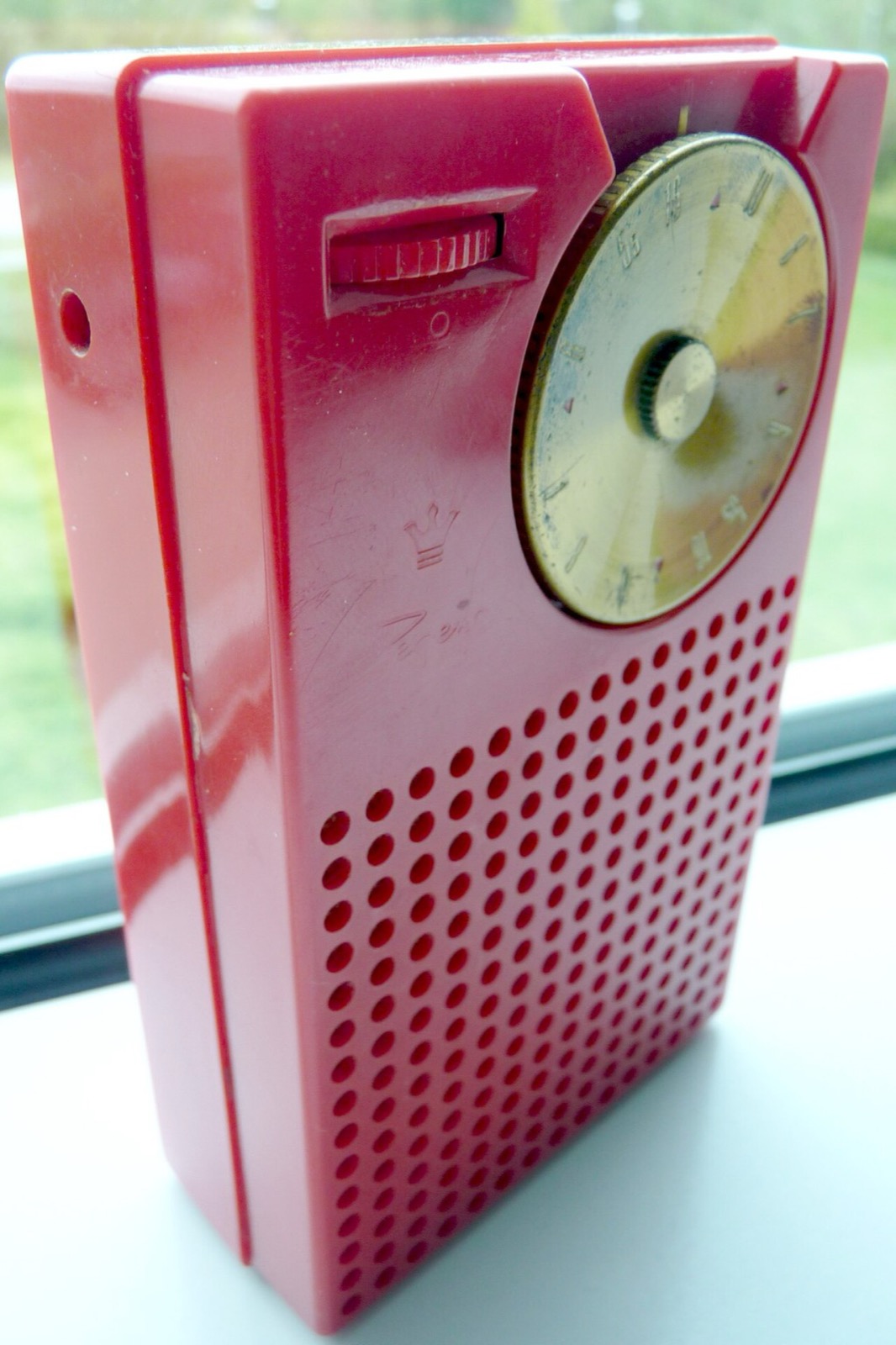
One of the first products to put it within reach of ordinary buyers was the Regency TR-1, released in the United States in 1954. It was a palm-sized radio powered by four transistors.
A Small Tokyo Company Takes a Chance
Around the same time, a small company in Tokyo spotted the potential in this technology. It was called Tokyo Tsushin Kogyo.
People around them said transistors were only good for hearing aids. Still, the company secured the rights to transistor technology and set out to make transistors of its own.
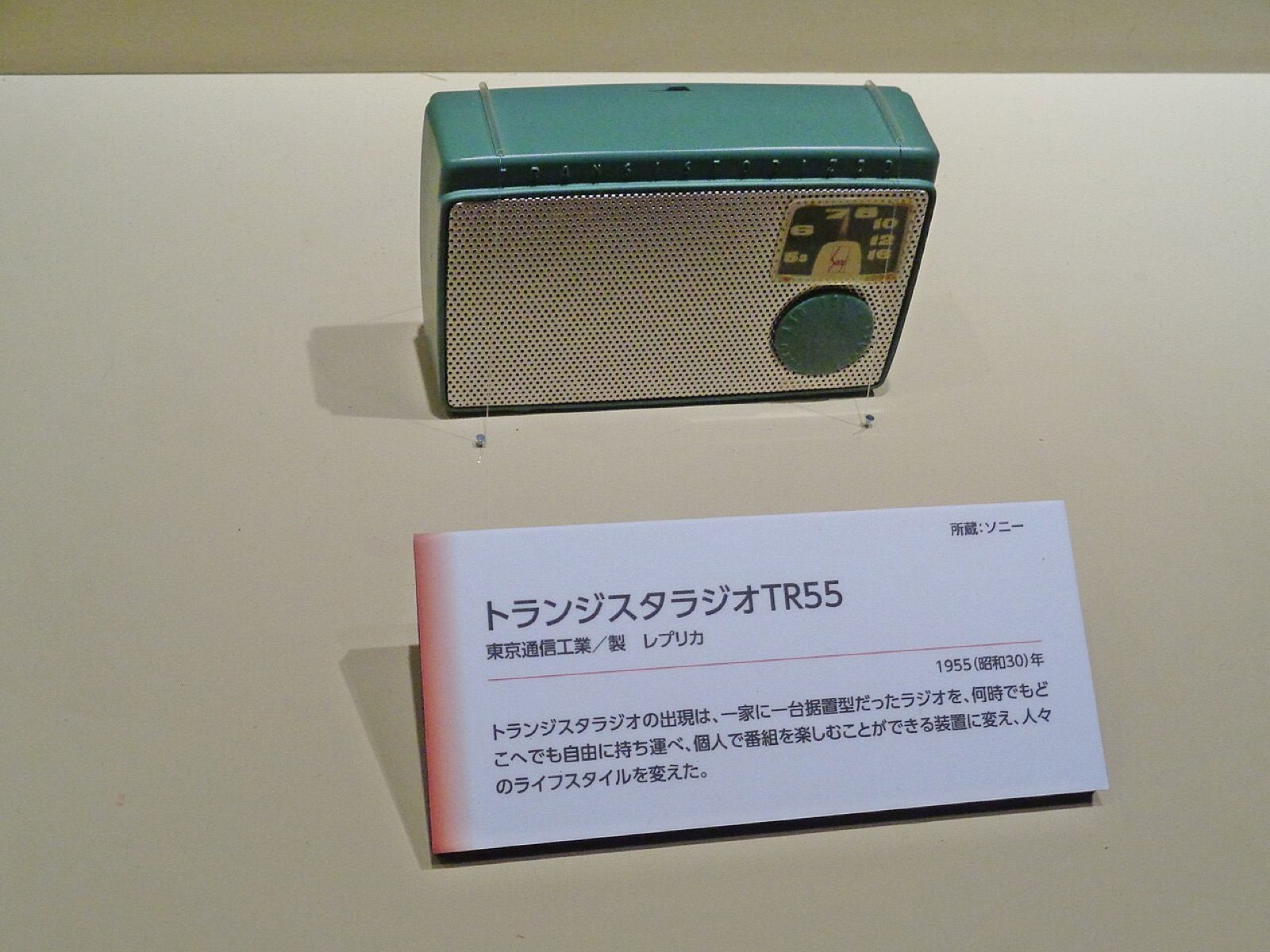
In 1955, it released Japan’s first transistor radio, the TR-55. (That’s the radio in the header.jpg image.)
Later, the company adopted a new, memorable name for its push into the world: Sony.
In 1957, Sony introduced a radio small enough to fit in a shirt pocket. It became a huge hit in the United States, too, where the word “pocketable” helped sell the idea.
🎙 Legend & Lore 1 — The Pocket That Was Too Small
A story has long been told about Sony’s small radios. The company advertised that the radios fit in a pocket, but they were a little too big for an ordinary shirt pocket. So, the story goes, Sony made special shirts with larger pockets for its salespeople.
It’s hard to know where the truth ends and a well-crafted anecdote begins. Either way, the story captures the determination of the moment: they were going to sell a radio that fit in a pocket, one way or another.
Radio Becomes a Young Person’s Thing
Transistor radios were affordable, lightweight, and ran on batteries. Young people began listening to the music they liked in their rooms, at the beach, and in the car.
This happened just as Elvis Presley and Chuck Berry arrived and rock ’n’ roll exploded. Now music came from a small radio in your pocket, rather than a big radio in your parents’ living room. This little semiconductor helped make music something you could call your own.
Chapter 2 — The Semiconductor That Made the Guitar Sound “Broken”
An Accidental Buzz
In the early 1960s, a small accident happened at a recording studio in Nashville. A part in the mixing console broke, and the bass sound started to buzz and crackle.
But that “broken” sound had a certain coolness to it. Someone decided to build a device that could make the sound on purpose. In 1962, a small transistor-powered box appeared under Gibson’s Maestro brand.
It was the Maestro Fuzz-Tone, one of the earliest commercially available fuzz effects—a device that distorts the sound.
1965: “Satisfaction”
At first, the Fuzz-Tone barely sold. That changed in 1965.
The Rolling Stones’ Keith Richards used one for the guitar riff in a new song. That unforgettable “chanka, chanka, chanka” riff. The song was “(I Can’t Get No) Satisfaction.”
Richards later said he thought the fuzz sound was a stand-in for a horn section he planned to add. But the song was released as it was and became a worldwide hit. The Fuzz-Tone is said to have sold out almost overnight.
The Temperamental Germanium Transistor
In 1966, a round fuzz pedal called the Fuzz Face appeared in the UK. Jimi Hendrix used it, making it part of rock history.
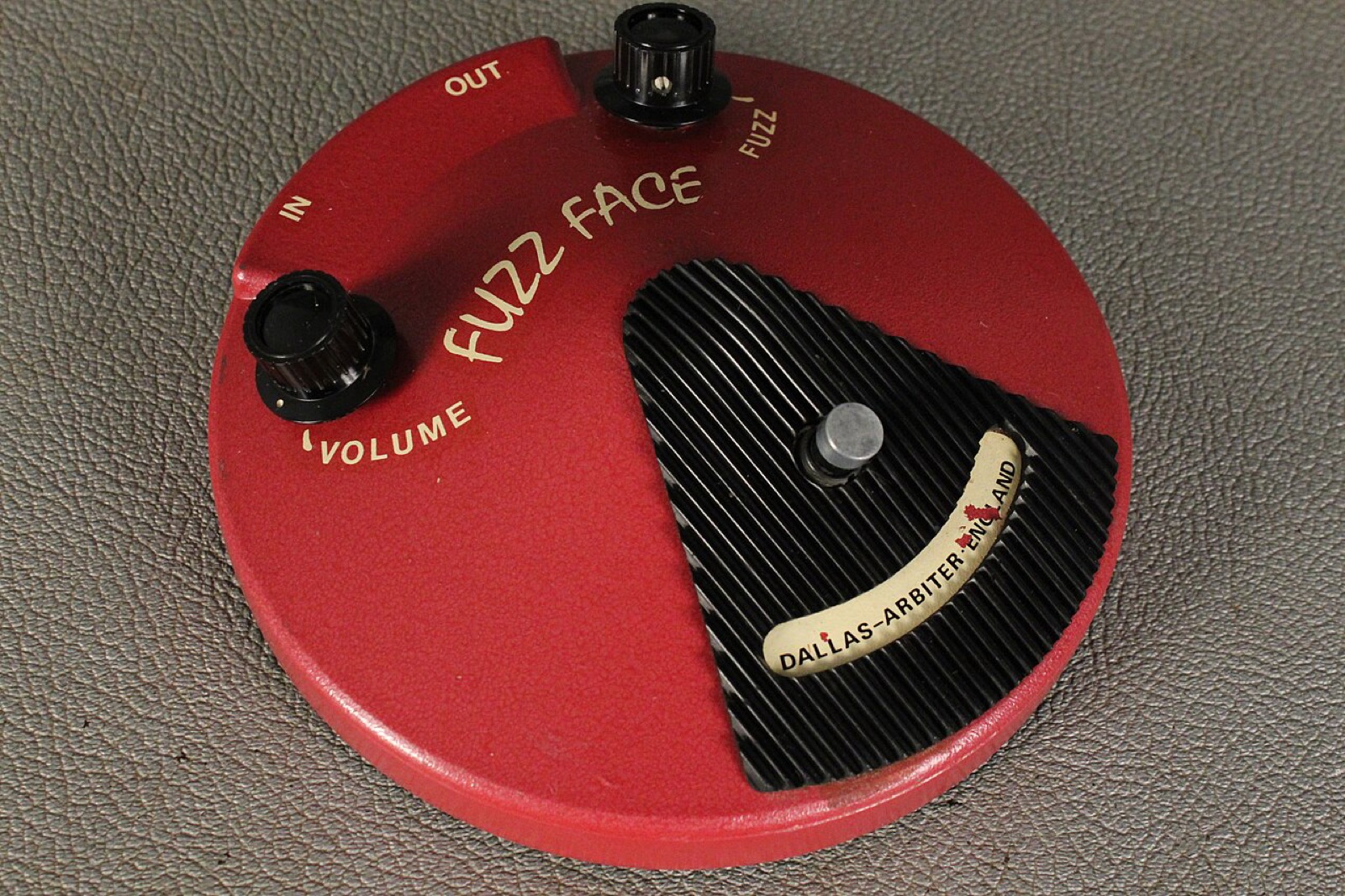
Early Fuzz Faces used transistors made from germanium, a semiconductor. Germanium transistors can be a little temperamental:
- Their characteristics vary from one unit to the next.
- Their sound changes with temperature.
The same fuzz could sound different on a hot stage and outdoors on a cold day. That would normally be a drawback. But plenty of guitarists love the rounded, warm distortion germanium can produce. “Germanium fuzz” still has a special place in the conversation.
A part doesn’t have to be perfect to make a sound people love. A slightly temperamental semiconductor made a sound that captured people’s hearts. That’s one of the fascinating things about the relationship between music and semiconductors.
Chapter 3 — Electronic Instruments: Synthesizers and Rhythm Machines
Transistors Make the Sound Itself
In the 1960s, American engineer Bob Moog built an instrument that used transistors to create sound directly from electrical signals: the synthesizer.
In the vacuum-tube era, electronic sound required machines that filled a room. Transistors made it possible to take those sounds onto a stage. (I tell Moog’s story in more detail in another column.)
1980: The “Failure” of a Rhythm Machine
In 1980, Japan’s Roland released the TR-808 rhythm machine. It was meant to sound like real drums, but the result was strange and a little artificial. At the time, people dismissed it for not sounding like an acoustic drum kit, and production ended after a few years.
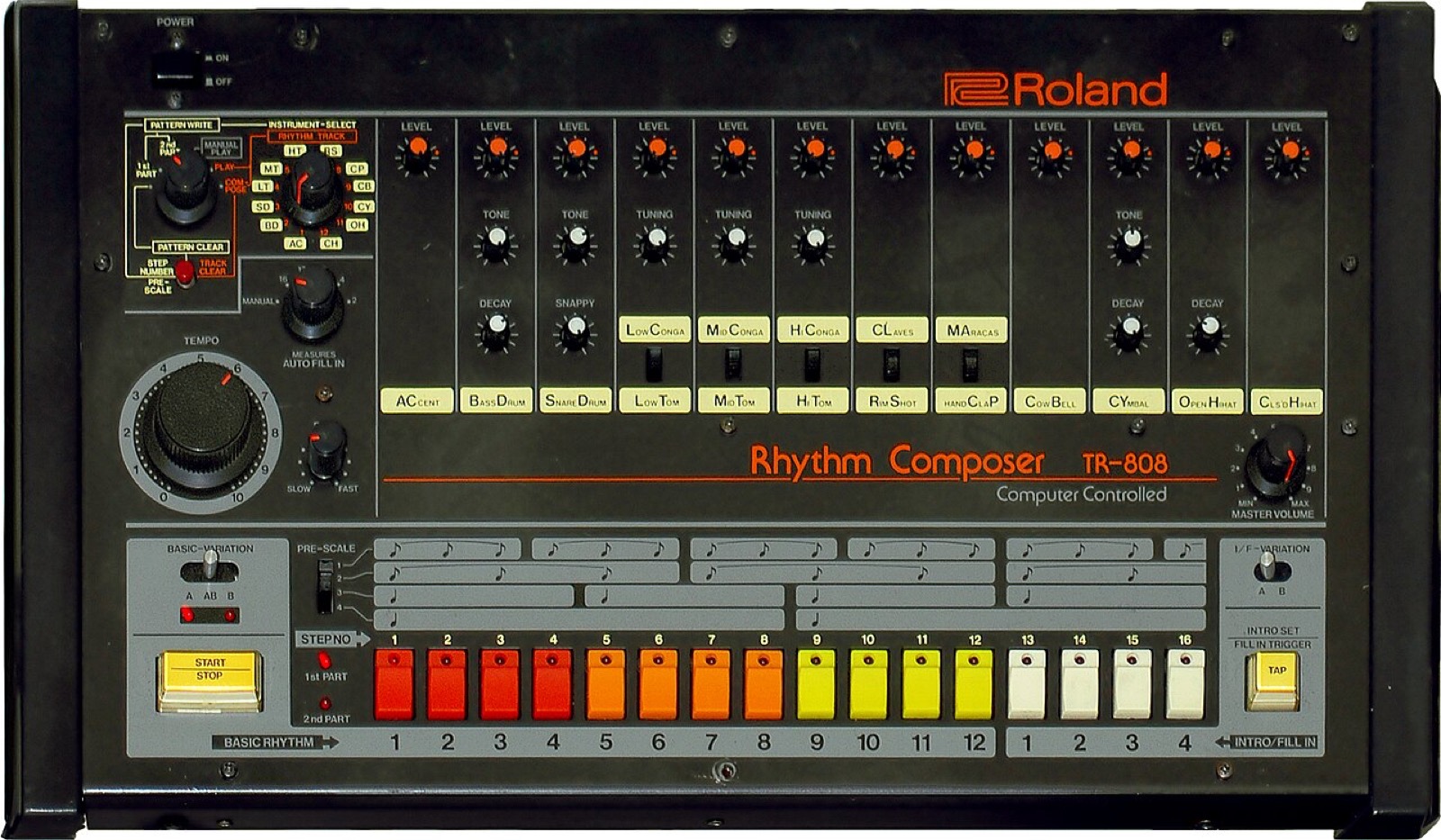
Those “unrealistic” sounds would later become essential to hip-hop and dance music. (I tell the TR-808’s story in more detail in another column.)
🎙 Legend & Lore 2 — The “Defective” Transistors
There’s a famous story about the TR-808.
To make the shushing noise of cymbals and snares, Roland deliberately used noisy transistors that would normally have been considered defective. Then semiconductor manufacturing improved, and Roland could no longer get those “just noisy enough” parts. The story says that this made it impossible to keep building the 808.
Roland founder Ikutaro Kakehashi is also said to have spoken about this story. It’s unclear how decisive this was in ending production. Still, “an imperfect semiconductor made that sound” may capture the relationship between music and semiconductors better than anything else.
1983: An Orchestra Inside a Chip
In 1983, Yamaha released the DX7 synthesizer, which made sound in an entirely new way. It used FM synthesis, a method of synthesizing sound through calculations that had been researched at an American university.
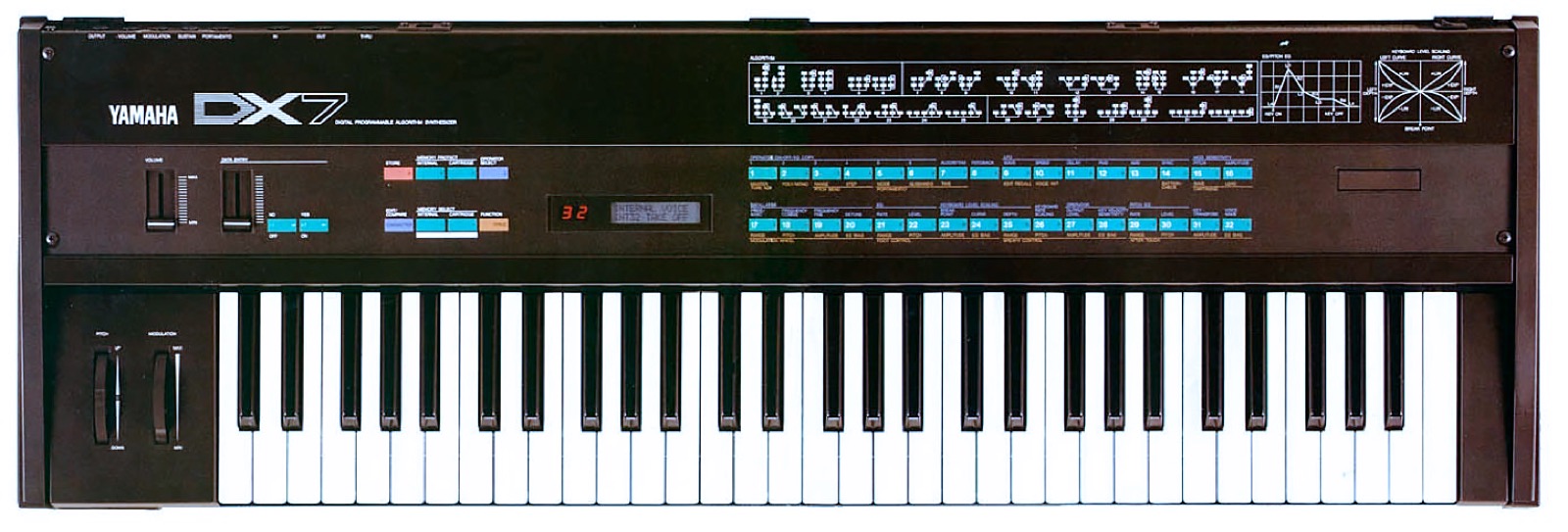
Yamaha was able to put these complex calculations into an affordable instrument thanks to a custom large-scale integration (LSI) chip it developed in-house. Its sparkling electric-piano tones and hard-edged bass sounds filled hit records throughout the ’80s.
The instrument itself had changed. Sound was no longer made by the circuit alone; it was becoming a calculation inside a chip.
Chapter 4 — Recording, Carrying, and Sharing Music
The Magic of the Sampler
Another revolution arrived in the 1980s: the sampler.
You could record a real instrument, a voice, a sound from the street, or a snippet of a record, then play it from a keyboard or pad. To do that, samplers needed a lot of memory—semiconductor storage that could hold sound as digital data.
Memory was very expensive at the time. Early samplers could record only a few seconds, and their sound was grainier than it is today. But that grain became part of the thick, rough texture of hip-hop beats.
Once again, the limits of the technology became part of a new musical identity.
The Walkman
In 1979, Sony released a small cassette player: the Walkman.
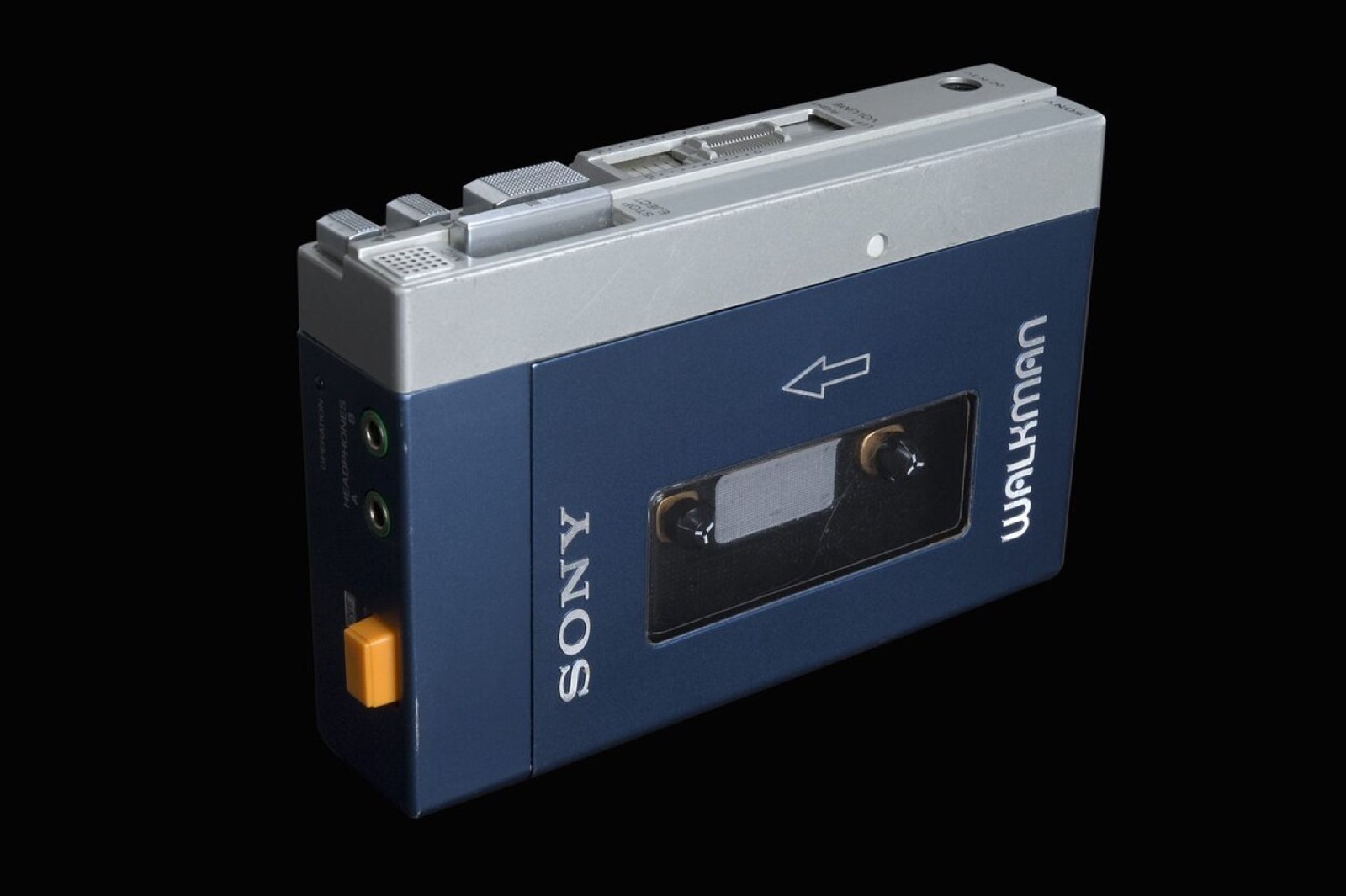
It was a small box built just for listening through headphones, with recording deliberately left out. Some people inside Sony reportedly wondered whether anyone would buy a tape recorder that couldn’t record.
The Walkman became a worldwide hit. On the train to work, while jogging, or walking through town, music became your own soundtrack, wherever you went.
The experience of a boy listening to a transistor radio under the covers in the 1950s had now spread to street corners around the world.
CDs, and Then Digital Music
In 1982, the CD (Compact Disc) developed by Sony and Philips arrived. Music was recorded as numbers, then converted back into sound by semiconductor chips. Clear audio, without the surface noise of a record, fit on a disc that could sit in your palm.
Music kept changing shape after that:
- 1990s: Technologies for compressing music files into smaller sizes became widespread.
- 2000s: Music players arrived that could hold thousands of songs in a tiny memory.
- 2010s onward: Smartphones ushered in the era of streaming music from around the world.
When we listen to music on a smartphone today, a relay team of semiconductors carries it along: a chip receives the data, another converts it to sound, another sends it wirelessly, and still more chips sit inside our earbuds.
Chapter 5 — Music Is Being Made Inside Semiconductors
A Studio Inside a Computer
Today, a lot of music is made on computers.
- Recording, editing, and mixing happen in music software.
- Compressors and EQs once called classics are recreated on screen as plugins.
- Pitch correction is done through calculations on a chip.
Things that once required a studio full of gear worth millions of dollars can now be done on a single laptop. A song made in your room can be heard around the world. The progress of semiconductors helped make that ordinary.
Amps Move Inside the Chip
The guitar world has changed, too. Amp simulators and modeling amps use chip-based calculations to recreate the sound of famous amplifiers and effects. They’re now common even on professional stages.
You can get the sound of dozens of classics from one small box, without carrying a heavy amp. The same idea has continued since the transistor radio of 70 years ago: make things smaller, lighter, and freer.
And Yet We Love Imperfection
Here’s the curious thing. However far semiconductors advance, musicians still love the unpredictable sound of germanium fuzz and the 808 tones born from “defective” transistors.
A sound that’s a little unstable and human can matter more than one made by perfect calculations. What matters in music isn’t only technical “correctness.” The 70-year story of semiconductors and music may be reminding us of just that.
Epilogue — Music in Your Pocket
In the 1950s, a boy pressed his ear to a little radio under the covers. The rock ’n’ roll he heard was made audible by a handful of transistors in the palm of his hand.
Today, the smartphone in your pocket contains tens of billions of transistors. They bring you tens of millions of songs from around the world.
As tiny switches multiplied, music became freer and closer to us. And every so often, the “imperfection” of those switches gave rise to a new sound no one expected.
The next time you listen to a favorite song through your earbuds, take a moment to remember the tiny switches carrying that sound.
Semiconductors and Music: A Timeline
- 1947: The transistor is invented at Bell Labs.
- 1954: The Regency TR-1, a transistor radio, goes on sale in the United States.
- 1955: Tokyo Tsushin Kogyo, later Sony, releases the TR-55.
- 1962: The Maestro Fuzz-Tone is released.
- 1965: The Rolling Stones release “(I Can’t Get No) Satisfaction.”
- 1966: The Fuzz Face appears.
- 1960s: Bob Moog builds synthesizers using transistors.
- 1979: Sony releases the Walkman.
- 1980: Roland releases the TR-808.
- 1982: The CD arrives.
- 1983: Yamaha releases the DX7, using a custom LSI to make FM synthesis possible.
- 1980s: Samplers help shape the sound of hip-hop.
- 2000s onward: Digital music players arrive, followed by the streaming era.
References
- Wikipedia: “Transistor radio,” “Regency TR-1,” “Sony,” “Maestro FZ-1 Fuzz-Tone,” “Fuzz Face,” “Roland TR-808,” “Yamaha DX7,” and “Walkman” (English editions)
- Sony official website, “Sony History”
- Akio Morita, Made in Japan (1986)
- Interviews with Keith Richards in Rolling Stone and other publications
Photo credits
- Header image, “Transistor radio TR-55 by Sony” — Bruno Plas / Wikimedia Commons / CC0
- Regency TR-1 — Cmglee / Wikimedia Commons / CC BY-SA 3.0
- Dallas Arbiter Fuzz Face — sploshette / Wikimedia Commons / CC BY 2.0
- Roland TR-808 (large) — Brandon Daniel (derivative by Clusternote) / Wikimedia Commons / CC BY-SA 2.0
- Yamaha DX7 — Finnianhughes101 / Wikimedia Commons / Public domain
- Walkman TPS-L2 — Anna Gerdén / Wikimedia Commons / CC BY-SA 3.0
Licenses:
- CC0: https://creativecommons.org/publicdomain/zero/1.0/
- CC BY-SA 3.0: https://creativecommons.org/licenses/by-sa/3.0/
- CC BY 2.0: https://creativecommons.org/licenses/by/2.0/
- CC BY-SA 2.0: https://creativecommons.org/licenses/by-sa/2.0/