The ‘Accident’ That Created the ’80s Drum Sound — SSL 4000
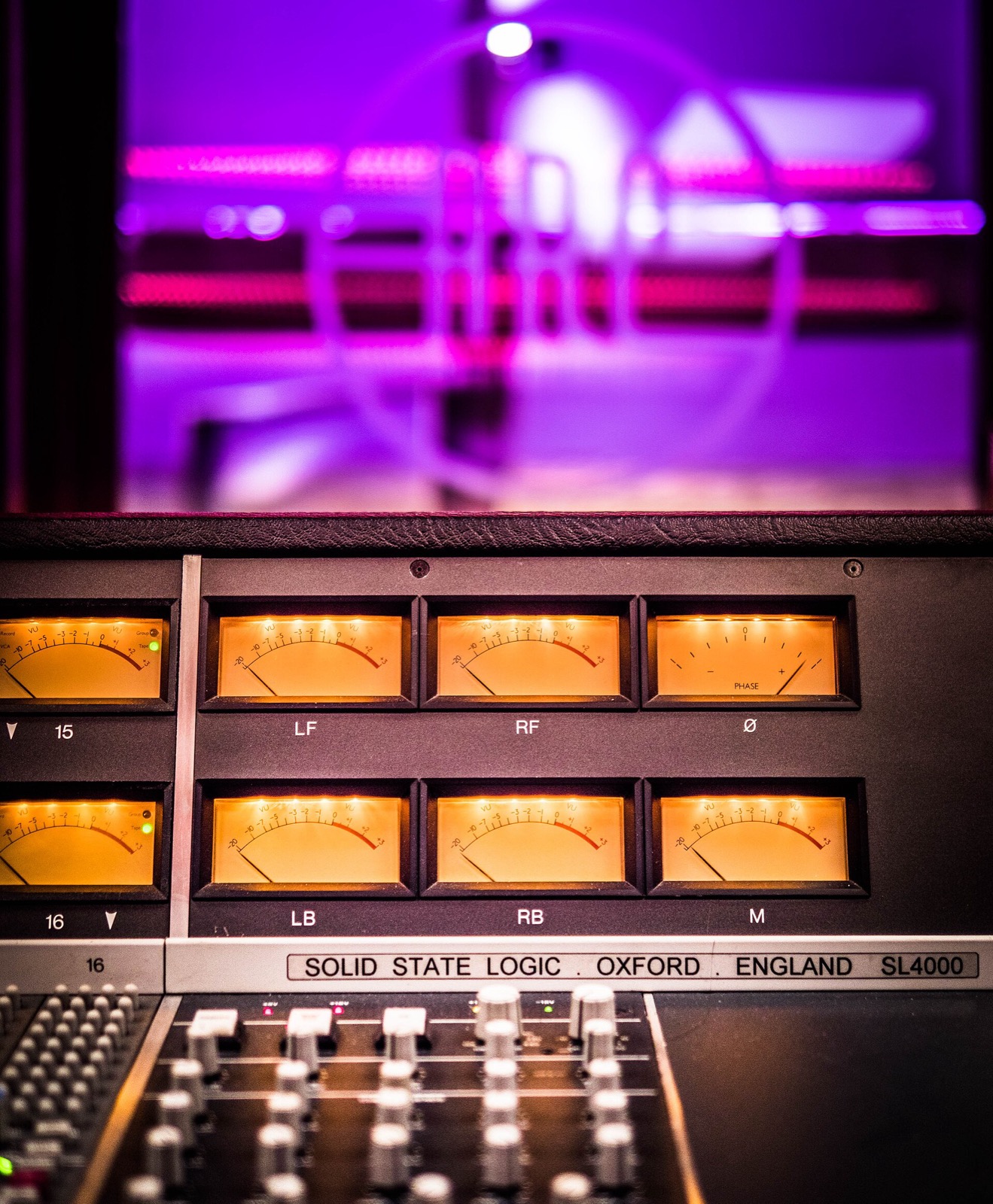
☕ A coffee-length story — about an 11-minute read. The huge drum sound behind so many ’80s hits began with a happy accident.
Prologue — A London Studio, 1980
In 1980, Peter Gabriel was recording an album in Studio 2 at Townhouse Studios in London. The drummer was Phil Collins of Genesis.
In the control room, engineer Hugh Padgham noticed an “accident.”
The talkback microphone, used to speak to musicians in the studio, had been left on. It was designed to make voices easy to hear, so it had extremely heavy compression.
Then Phil Collins’s drums hit that microphone. What came through the speakers was a drum sound nobody had heard before: crushed and explosive, with the room’s reverberation bursting out around it.
That accidental sound would become known as gated reverb, one of the defining sounds of 1980s pop. It is the famous drum sound in Phil Collins’s “In the Air Tonight.”
And the console that helped create it was made by Solid State Logic (SSL).
About this story
This story brings together books, magazine interviews, manufacturer materials, and firsthand accounts I have read over the years. I have tried to stick to facts confirmed by multiple sources. I was not there, though, so industry nicknames and commonly repeated stories may have made their way in. Where sources disagree or a story is told as legend, I set it apart in a “Legend & Lore” section. The sources are listed at the end.
Chapter 1 — Colin Sanders and the Pipe Organ
A company that began with organs
SSL’s story begins somewhere unexpected: the pipe organ.
In 1969, British engineer Colin Sanders founded Solid State Logic. The company’s first job was to build a system that used electronic circuits—transistors and other solid-state components—to switch the controls of pipe organs.
The name “Solid State Logic,” it is said, was chosen to explain to organ builders how the switching worked: with transistors and FETs.
Imagining the console he wanted in his own studio
Sanders also owned a studio called Acorn Studios in Stonesfield, Oxfordshire.
Working in the studio, he ran into a problem. Whenever the work shifted from recording to overdubbing or mixing, people had to rewire and reconfigure the console by hand, often on a large scale.
“Wouldn’t it be great if one button could switch between recording and mixing?”
Sanders was already using electronic circuits to switch organ controls. The idea seemed like a dream he could actually build.
Now let’s look at the moment the SSL 4000 was born—and how it went on to change the world.
Chapter 2 — The Day a Computer Joined the Console
SL 4000 A — Two prototypes
Sanders first built two prototypes of a computer-controlled console. They could switch between recording, overdubbing, and mixing at the press of a button. They were called the SL 4000 A.
1976 — SL 4000 B
The SL 4000 B arrived in 1976.
- Automation recorded fader movements and played them back.
- Engineers could control tape cueing from the console.
Only six were built. The first reportedly went to Abbey Road Studios, famous as the Beatles’ studio. The Townhouse Studios console from our prologue was also from the B series.
At a time when several people had to move faders by hand for every mix, the console could remember and repeat those moves itself. It changed the work of recording in professional studios around the world.
🎙 Legend & Lore 1 — The birth of gated reverb
Let’s take a closer look at the story from the prologue.
The SSL in Townhouse’s Studio 2 was a brand-new console. It was unusual at the time because every channel had a compressor and a noise gate.
Padgham is said to have modified the console so that the heavily compressed talkback-mic signal—which normally could not be recorded—could be sent to a channel. Putting that channel’s gate on the signal made the reverb cut off suddenly, creating that distinctive sound.
Peter Gabriel and Phil Collins both liked it, and the console was rewired to make it easier to record the talkback microphone. The sound was then used on Phil Collins’s solo album “In the Air Tonight,” released in 1981.
There are a couple of details to keep in mind:
- Many sources identify the console as a B series, while others name a different series.
- Some point out that the first part of “In the Air Tonight” uses a drum machine; the famous acoustic drums arrive with the song’s later build.
SSL later changed the console design so engineers could record the talkback (listen) microphone without modifying the desk. An “accident” on the studio floor changed the product itself.
Chapter 3 — 1979: SL 4000 E Becomes the Studio Standard
A console that remembered everything
The SL 4000 E arrived in 1979.
- It could save console settings and recall them later.
- It introduced a new four-band EQ developed with Beatles producer George Martin.
- Every channel had a compressor and gate.
- A master (bus) compressor could process the whole mix.
The bus compressor became so famous that it eventually lived on as a piece of standalone gear and as a plugin.
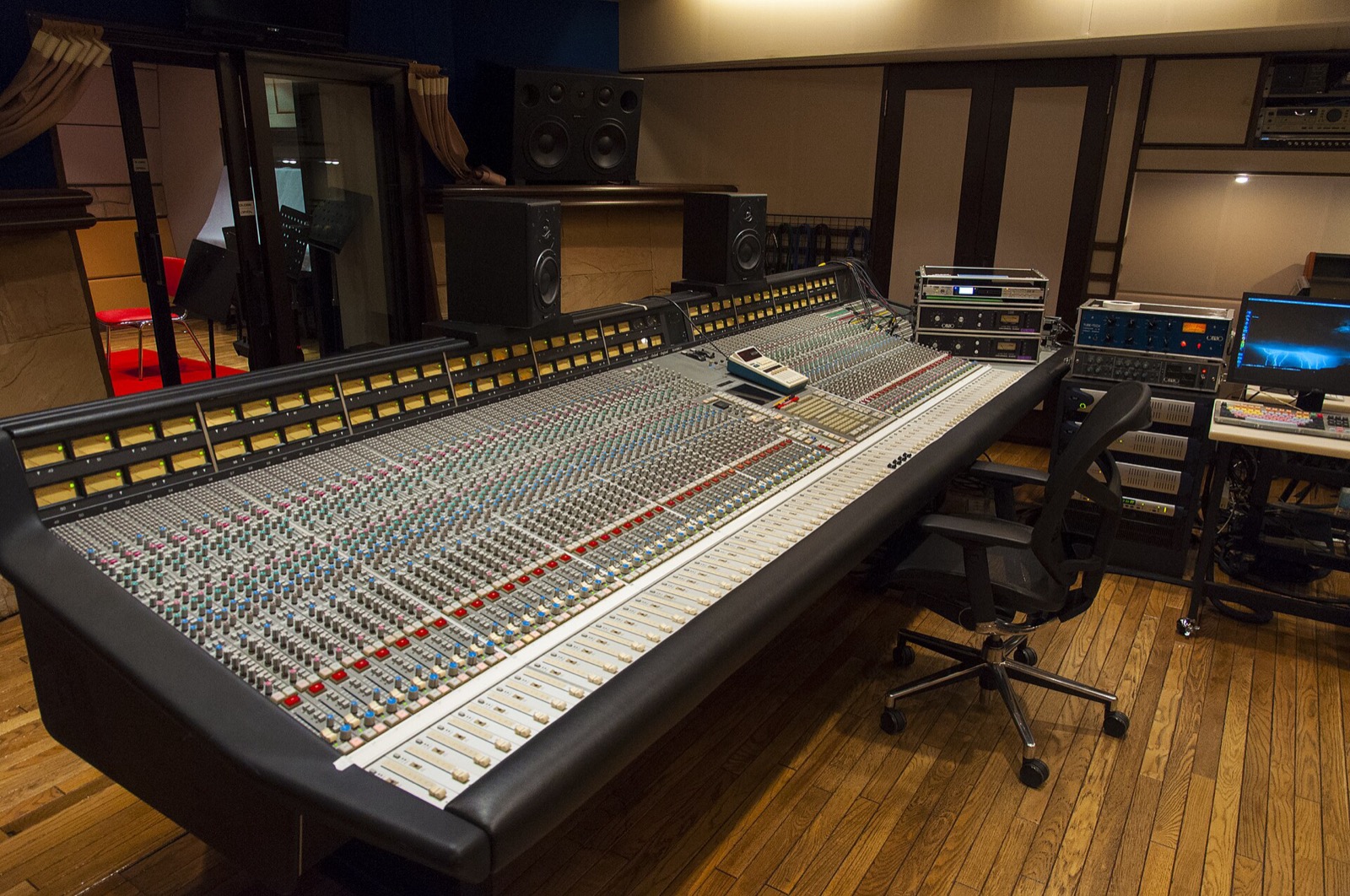
🎙 Legend & Lore 2 — When did the bus compressor first appear?
Sources disagree about when SSL first put its bus compressor into a console.
- Some say it was already present on the 1976 B series.
- Others say it first appeared on the 1979 E series.
Either way, it was during the E-series era that the “SSL bus compressor” spread around the world. People began saying that putting one across the mix at the end brought a track together.
1987 — G series
In 1987, SSL unveiled the SL 4000 G, with a redesigned EQ, at an audio trade show in New York.
E and G: both generations are still loved, and engineers continue to compare their sounds.
83 percent
SSL consoles found their way into famous studios around the world: The Power Station in New York, Sarm in London, and Larrabee in Los Angeles.
Engineers and producers who made hits in the ’80s and ’90s—including Bob Clearmountain, Steve Lillywhite, Tom Lord-Alge, and Trevor Horn—worked at SSL desks.
According to a tally published by an American music-industry magazine, 83 percent of the singles that reached number one in 1996 were made on SSL consoles.
Chapter 4 — SSL After the 4000
Colin Sanders’s final years
Colin Sanders left SSL in 1991 and moved into work outside audio. He reportedly died in 1998 in a helicopter accident near his home.
The company carries on
- 2002: SSL sold the organ division, the business it had started with.
- 2004: The company received a Technical Grammy Award.
- 2005: Musician Peter Gabriel and others became major shareholders.
- 2006: SSL unveiled the large-format Duality console.
- 2017: SSL became part of the audio-equipment group Audiotonix.
Peter Gabriel, who sang on the recording that gave us the gated-reverb sound, would later become one of SSL’s owners. It is almost too neat an ending for a story.
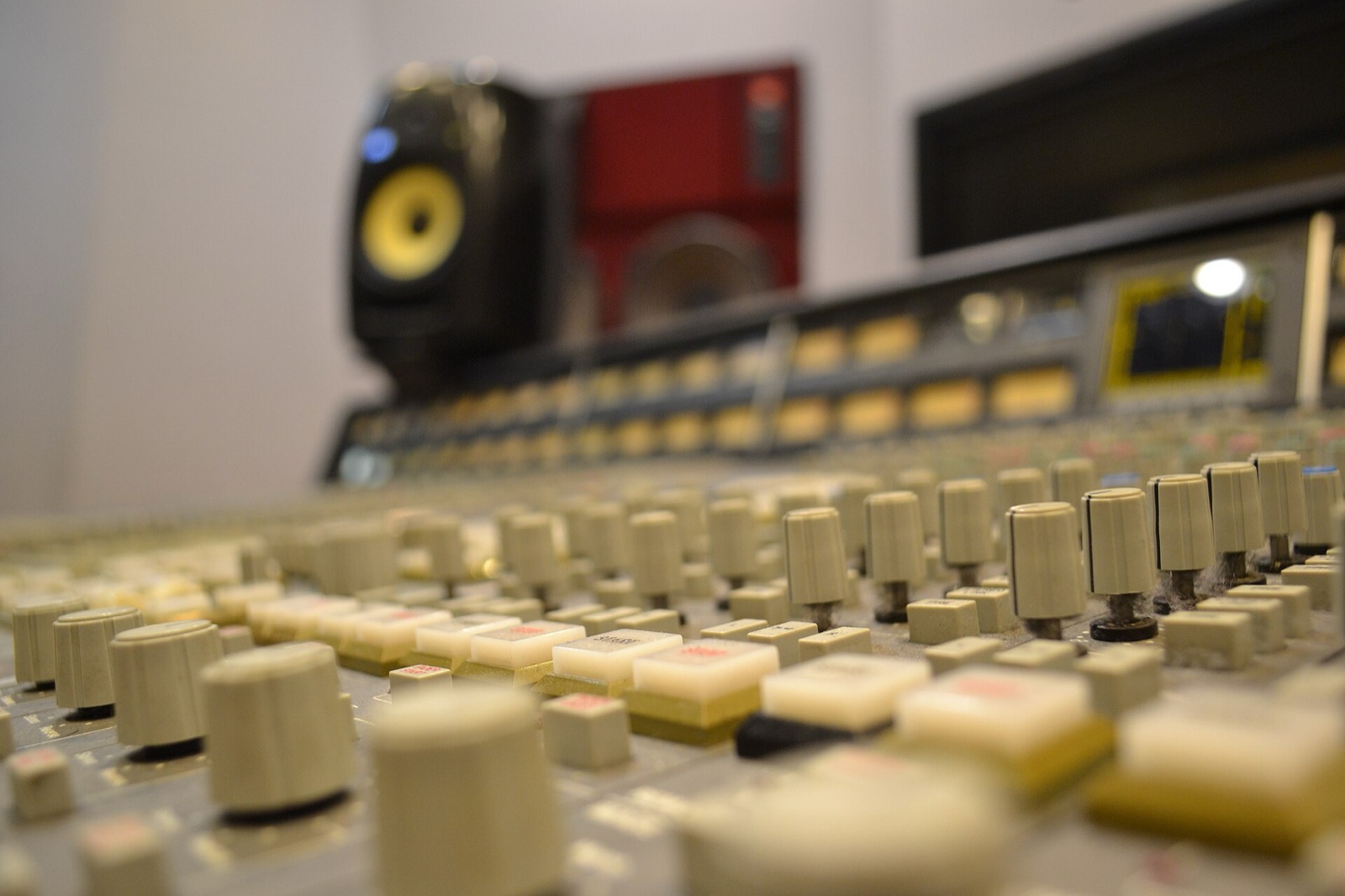
From the console to the desktop
SSL consoles once belonged only in large studios. Today, their bus-compressor and channel circuits are available in standalone hardware and plugins, ready to use on a desk at home.
Music schools around the world also teach with SSL consoles. The idea is simple: learn one, and you will feel at home in studios almost anywhere.
Epilogue — The Accidental Sound and the Organ Circuit
An engineer set out to switch pipe-organ controls with electronic circuits. The consoles he built could move faders by computer, remember settings, and put a compressor and gate on every channel.
On one of those consoles, an “accident” with a talkback microphone helped create one of the defining drum sounds of the ’80s.
New tools become legendary when people use them in ways their makers never imagined. The next time you see the SSL name, think of that drum sound hitting a microphone left on in a London studio in 1980.
SSL timeline
- 1969: Colin Sanders founded Solid State Logic, beginning with controls for pipe organs.
- Around 1976: After prototypes of the SL 4000 A, the SL 4000 B arrived. Six were built; the first went to Abbey Road.
- 1979: The SL 4000 E arrived, with save-and-recall, an EQ developed with George Martin, channel dynamics, and a bus compressor.
- 1980: The gated-reverb drum sound emerged at Townhouse Studios.
- 1981: “In the Air Tonight” was released.
- 1987: The SL 4000 G was unveiled.
- 1991: Colin Sanders left SSL.
- 1996: SSL consoles were used on 83 percent of that year’s number-one singles.
- 1998: Colin Sanders died.
- 2004: SSL received a Technical Grammy Award.
- 2005: Peter Gabriel and others became major shareholders.
- 2017: SSL joined the Audiotonix group.
References
- Wikipedia: “Solid State Logic,” “Solid State Logic SL 4000,” and “Hugh Padgham” (English editions)
- Mix, “Classic Tracks: Phil Collins ‘In the Air Tonight’”
- Produce Like A Pro, “Songs that Changed Music: Phil Collins – In the Air Tonight”
- Solid State Logic, “From a small Acorn grew a mighty console company”
- Mix, obituary for Colin Sanders
- NAMM Oral History, “Colin Sanders”
Photo credits
- Header image, “SSL 4000” — Marco Tucconi / Wikimedia Commons / CC BY-SA 4.0
- “Solid State Logic SL4064G+” — JacoTen / Wikimedia Commons / CC BY-SA 3.0
- “SSL G+4000” — Richardwolffe / Wikimedia Commons / CC BY-SA 4.0
Licenses: CC BY-SA 4.0 and CC BY-SA 3.0.