[SUZUKI Motorcycle History] The Bird That Broke the 300 km/h Barrier — The Hayabusa and the End of the Top-Speed Era
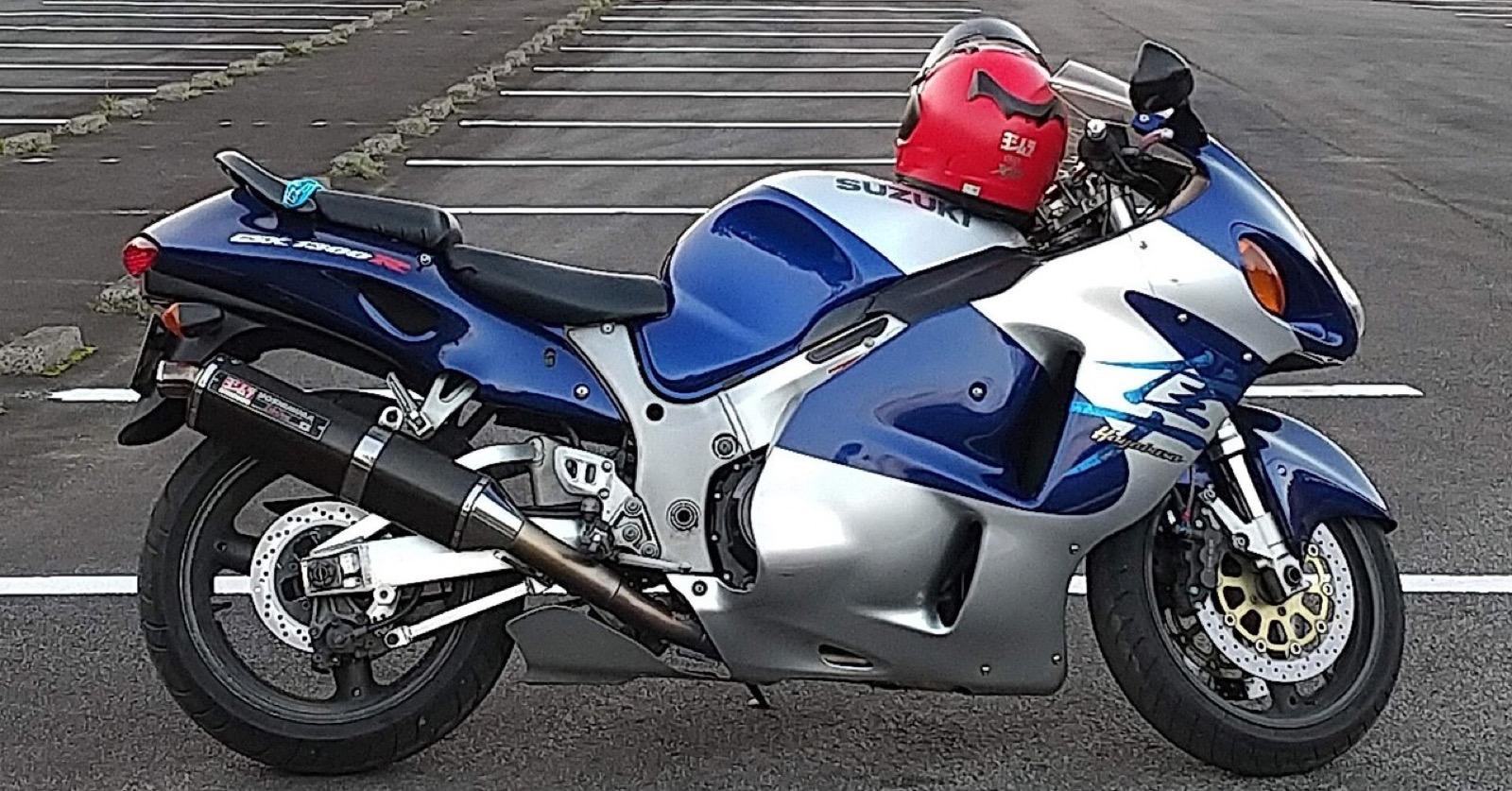
☕ A coffee-length story from GC Lab's "Motorcycle History" series, where we follow machines through the people and events behind them. This time: the Suzuki Hayabusa, launched in 1999 and said to be the first production motorcycle to top 300 km/h in stock form.
💡 What you'll learn
- The 1990s, when the makers' big bikes fought over top speed
- The thinking behind the Hayabusa's shape and its name
- Why the top-speed race ended after the Hayabusa
Prologue
Spring 1999. A Japanese motorcycle magazine ran a road test.
What the test rider saw was the speedometer needle passing the "300" mark and continuing on. The speedometer scale ran all the way to 350 km/h. The figure the article reported: more than 320 km/h on the speedometer.
The bike had a strange, rounded shape. A nose that jutted out like a bird's beak. A broad, swelling fairing. And on its side, not letters of the alphabet but a single large Japanese character.
"隼" — Hayabusa.
This was Suzuki's GSX1300R Hayabusa. It would become known as the first production motorcycle to exceed 300 km/h, measured, in stock condition. And this bird would also be the machine that ended the era in which big bikes did nothing but fight over top speed.
This is the story of the bird that broke the 300 km/h barrier.
Chapter 1 — The top-speed race of the 1990s
In the 1990s, the motorcycle world had a contest: which production bike was the fastest?
It began with Kawasaki. The ZZ-R1100, launched in 1990, rewrote the record with a big four-cylinder engine and a large, wind-cheating fairing. Its top speed was said to reach 280 km/h, and it held the title of "world's fastest" for a long time.
In 1996 Honda took up the challenge with the CBR1100XX Super Blackbird. Its name came from the American SR-71 Blackbird reconnaissance plane, which flew at Mach 3 — the fastest airplane in the world. And true to its name, the Super Blackbird took the fastest-bike crown from Kawasaki.
Every time a new big bike came out, magazines measured its top speed on a test track. How fast did it go? How many km/h did it beat the old record by? Those numbers had become billboards for each maker's engineering strength.
For Japanese riders, though, this race felt a little far away. Japan had a voluntary rule among the makers: motorcycles sold domestically were capped at 100 horsepower. The big bikes fighting over top speed, even when built by Japanese makers, couldn't be bought new through official channels in Japan. Anyone who wanted to ride one had to get a "reverse import" — a bike exported overseas and brought back. In 1990 another voluntary rule, limiting domestic bikes to 750 cc, had been lifted, and big-displacement bikes were now sold officially in Japan. But the 100-horsepower cap remained. The true power of the big speed machines existed only across the sea.
Then, at the end of the 1990s, Suzuki sent one bike into the race.