The Day a Record Player Became an Instrument: The Technics SL-1200
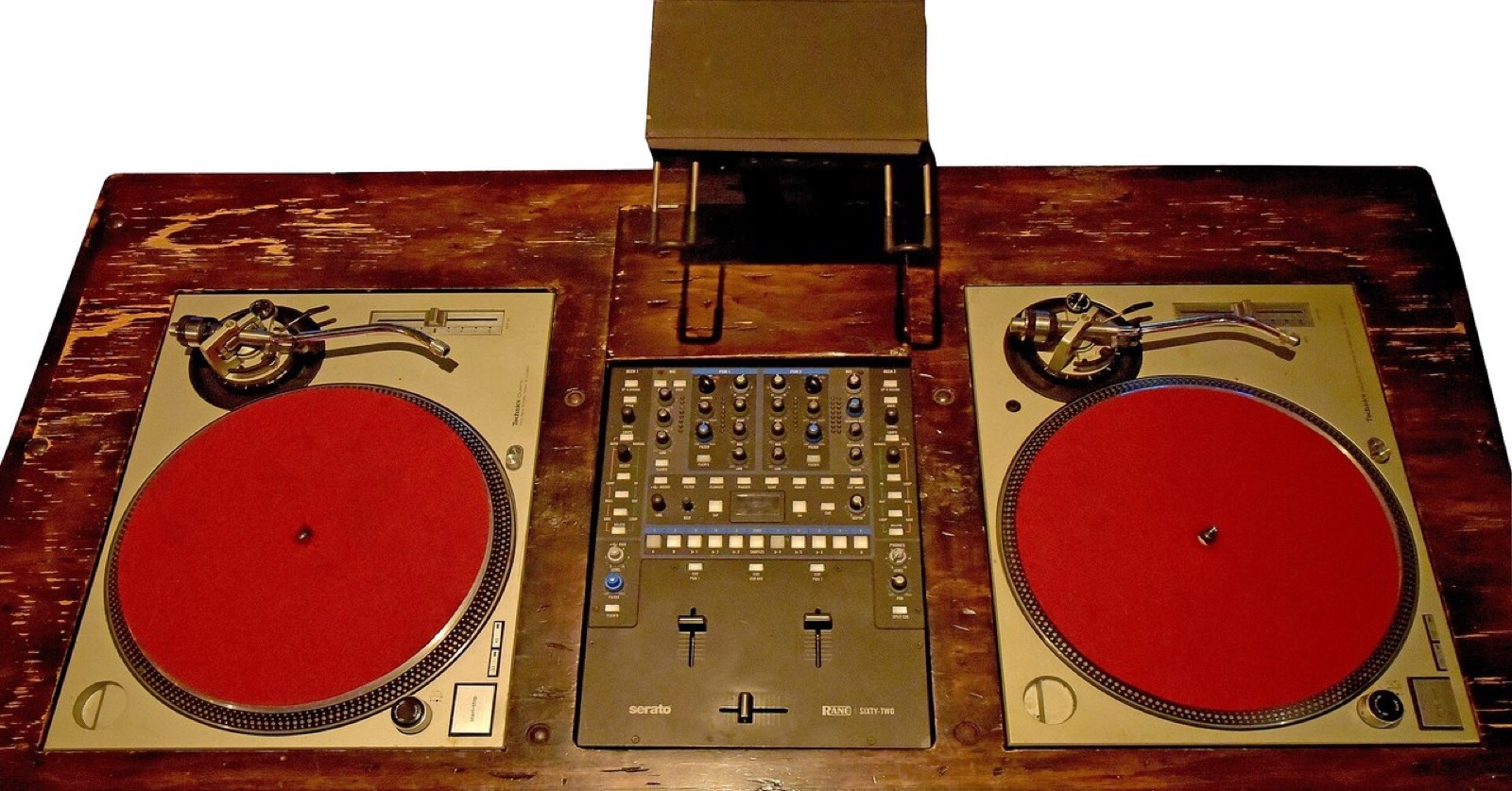
☕ A coffee-length story — about a 15-minute read. This is the tale of a Japanese turntable built for quiet listening at home, how young people in New York turned it into an instrument, and how it became the standard in clubs all over the world.
Prologue — A Kid's Bedroom in the Bronx
The Bronx, New York, 1975.
A 12-year-old boy stood in his bedroom in front of two record players. His name was Theodore Livingston — later known as Grand Wizzard Theodore.
He was practising playing the same section of a record over and over. He must have had it pretty loud. The door opened and his mother stormed in: turn that music down.
While she scolded him, the boy didn't take his hand off the record. Holding it down, his fingertips rubbed it forward and back. A sound came out of the speakers that no one had heard before.
Zigga, zigga-zig.
The sound of a record being rubbed — what would come to be called a scratch. The moment a machine made for playing records turned into an instrument that made sounds of its own.
There are several versions of this story, and no one knows for certain what turntable he was using. But the machine that carried this sound around the world was, without doubt, a Japanese record player.
The Technics SL-1200.
This is the story of a turntable made for quiet listening, and how it changed the world's music.
Chapter 1 — A Motor Without a Belt
A record player's small headache
A record player's job is very simple: spin the disc at exactly the right speed. 33⅓ revolutions per minute for an LP, 45 for a single.
But "exactly the right speed" turns out to be surprisingly hard.
Until the 1960s, most turntables passed the motor's rotation to the platter through a rubber belt or a rubber wheel called an idler. The motor spun fast, and the belt or idler slowed that down to turn the platter.
This had weaknesses. Rubber stretches, hardens and wears with use. Then the rotation wobbles slightly and the sound wavers — wow-wow-wow. Motor vibration could also travel through the rubber and come out as a low rumbling noise.
Driving the platter directly
One company took this problem head on: Matsushita Electric Industrial of Osaka, today's Panasonic. Its high-end audio brand was Technics.
Engineers led by Shuichi Obata came up with a bold idea. No belt, no idler. Build a slow-turning motor and connect its shaft straight to the platter. This is direct drive.
But a slow-turning motor brought a new problem. An electric motor turning slowly tends to move in tiny jerks, catching slightly as it goes round. Unless this unevenness — called cogging — could be suppressed, there would be no smooth rotation.
Matsushita's engineers overcame it by controlling the motor finely with electronic circuits.
A turntable for broadcasters
In 1970, Technics introduced the SP-10, the world's first turntable to use direct drive. (A prototype is said to have been shown in 1969.)
The SP-10 was a machine for professionals. Start it, and it reached speed almost instantly — then kept turning without a wobble. Radio stations need to start the next record from exactly the right spot with no gap between songs, so that fast start and accuracy were prized in broadcasting.
Turning with a belt was no longer the obvious way. The SP-10 changed the history of the record player.