The Green Box That Became the Voice of the Blues: The Ibanez TS808 Tube Screamer
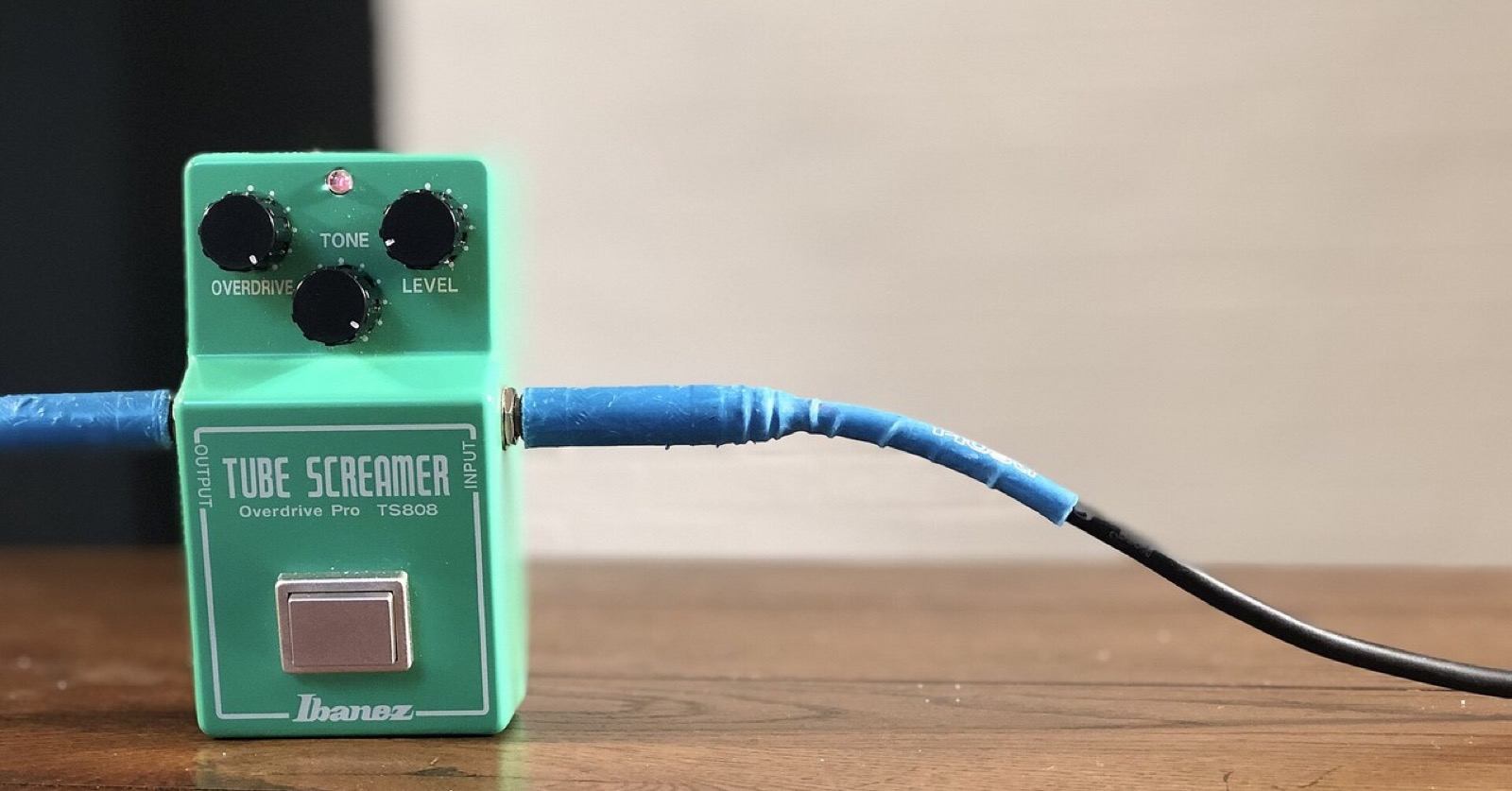
☕ A coffee-length story — about a 15-minute read. This is the tale of how a Nagoya instrument company and an engineer who studied electronics in Shinshu ended up shaping the sound of the blues across the ocean.
Prologue — A Little Green Box Between Guitar and Amp
Picture a Texas blues guitarist on stage in the 1980s.
A battered Stratocaster with its paint worn away. Fender amps behind him. And at his feet, next to a wah pedal, a little green box.
The guitarist is Stevie Ray Vaughan. That thick, hot guitar tone — where every single note still rings out clearly — became something countless guitarists longed for.
The green box is called the Tube Screamer: an overdrive pedal whose name means, more or less, “the thing that makes tubes scream.”
What's interesting is how it was used. The knob for the depth of distortion was kept nearly all the way down, and only the volume knob was turned up high. Rather than distorting the sound itself, it was reportedly used as a box for pushing the amp from behind.
This green box was born in Japan — from an instrument company in Nagoya and an engineer who studied electronics in Shinshu. This is the story of how that little box became part of the “voice” of the blues on the other side of the ocean.
Chapter 1 — A Bookstore's Instrument Department and a Spanish Guitar
1908: a bookstore in Nagoya
Above the Tube Screamer name sits the Ibanez logo. The brand belongs to Hoshino Gakki, an instrument company in Nagoya.
It began not with instruments but with books. In 1908, an instrument department was set up inside a Nagoya bookstore, Hoshino Shoten. In 1929 it became an instrument company in its own right.
The name of a guitar maker in Valencia
Around 1929, Hoshino began importing guitars made in Valencia, Spain — from the workshop of guitar maker Salvador Ibáñez.
In 1935, Hoshino began making Spanish-style guitars of its own, and named them “Ibanez Salvador.” The name was later shortened, and only “Ibanez” remained.
A Japanese company's brand carrying the name of a Spanish guitar maker. It's an unusual origin, but it shows a company that had long been delivering instruments inspired by music from overseas.
To America, and to “a shape of our own”
After the war, Ibanez guitars crossed the ocean and went on sale in the United States. From the mid-1960s, Hoshino teamed up with an American distributor and launched in North America in earnest.
Where the guitars were built changed over time, too. Hoshino opened its own factory in 1962; later, other Japanese guitar makers' factories built Ibanez guitars. Curiously, Ibanez guitars didn't go on sale in Japan until much later, in 1982. For a long time, Ibanez was a brand that was made in Japan and sold overseas.
In that era, Ibanez had made its name building guitars that closely resembled famous American models, at affordable prices. But in 1977, Gibson's parent company sued, claiming the headstock shape and logo were too similar. The dispute was settled early in 1978, and from then on Ibanez steered away from copying other makers' designs towards guitars with a shape of its own.
In 1986, the way the brand name was pronounced was also changed, from the original Spanish-style reading to today's English-style one.
And alongside guitars, there was another thing Ibanez was sending overseas: effects pedals to put at a player's feet.