Why Didn’t the Glowing Glass Tube Disappear? — From Vacuum Tubes to Transistors, ICs and Nutube
☕ A coffee-length story — about a 17-minute read. Enjoy this as a story, not a research assignment. Why does a component supposedly displaced by the transistor still glow inside guitar amps? And what part does a “new vacuum tube” born in Japan play in that story? By the end, the orange light inside an amplifier may look a little different.
Prologue — The Orange Glow Inside the Amp
A corner of a rehearsal studio. You flip on an old guitar amp and wait a moment.
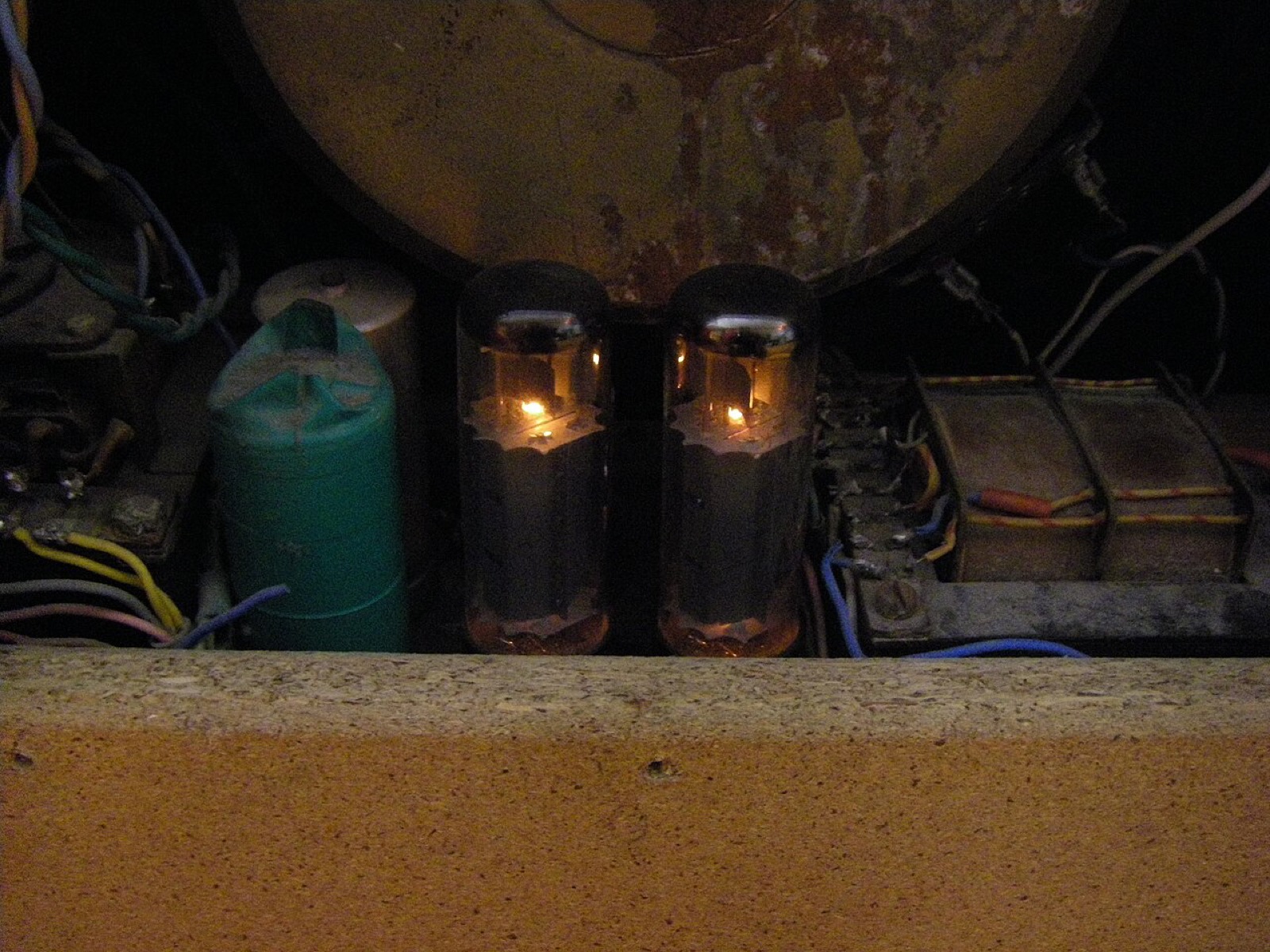
Peek around back, and a faint orange glow appears inside a glass tube. Before long, a soft hiss comes from the speaker. The amp is waking up.
You strike a guitar string. Play hard, and the sound breaks up naturally and smoothly. Play softly, and it clears right up.
The vacuum tube. It was invented more than a century ago and should have been obsolete long ago. It vanished from televisions, radios, and computers. Yet in the worlds of guitar amps and audio, it is still glowing away.
Why didn’t this glowing glass tube disappear? And what new chapter did a Japanese company write with its “new vacuum tube”? This is a 120-year story, from vacuum tubes to transistors, ICs, and Nutube.
📝 About this story
This story draws on books, interviews, and manufacturers’ materials I’ve read over many years. I’ve tried to stick to the facts, but I wasn’t there at the time, so some popular names and conventional wisdom may have slipped in. I’ve separated disputed stories into “Legend & Lore” sections and gathered the references at the end.
Chapter 1 — The Flow of Electrons Inside Glass
Born from experiments with the light bulb
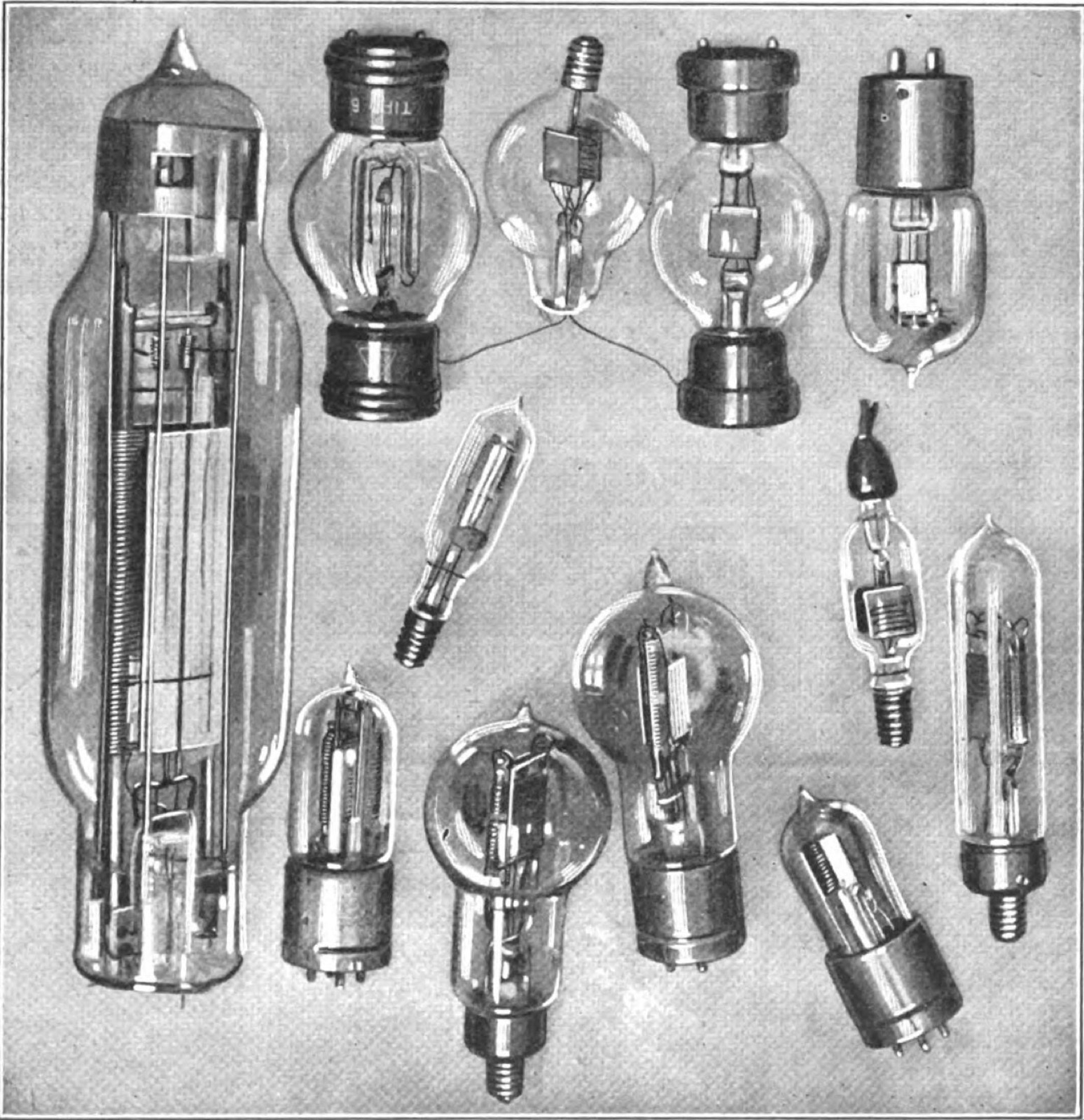
The vacuum tube’s roots reach back to Edison’s experiments with the light bulb. Something invisible seemed to leap from the hot filament inside a bulb. We later learned that it was a stream of electrons.
In 1904, Englishman John Fleming used this effect to make a tube that allowed electricity to flow in only one direction. Around 1906, American inventor Lee de Forest added another component: a grid placed between the filament and the plate that collected the electrons.
Controlling a large current with a small voltage
That grid changed everything.
- Heat the filament, and electrons fly off.
- The electrons flow toward the plate across from it.
- Apply a small voltage to the grid in their path, and you can strengthen or weaken the flow of electrons.
In other words, a small signal can control a large flow of electricity. That is amplification. A quiet voice picked up by a microphone can come booming out of a speaker. A faint radio signal from far away can become audible. Vacuum tubes became the foundation of the 20th century’s electronic world.
Radios, telephones, televisions, movie-theater sound systems, record players, and the earliest computers: in the first half of the 20th century, the world ran on the glow of vacuum tubes.
The heart of the guitar amp
When the electric guitar emerged in the 1940s and ’50s, its amplifiers naturally used vacuum tubes to make its sound louder.
Different tubes do different jobs inside a guitar amp:
- Preamp tubes amplify the guitar’s small signal first. A common example is the small 12AX7.
- Power tubes create the muscle needed to drive the speakers. 6L6, EL34, and EL84 are well-known examples.
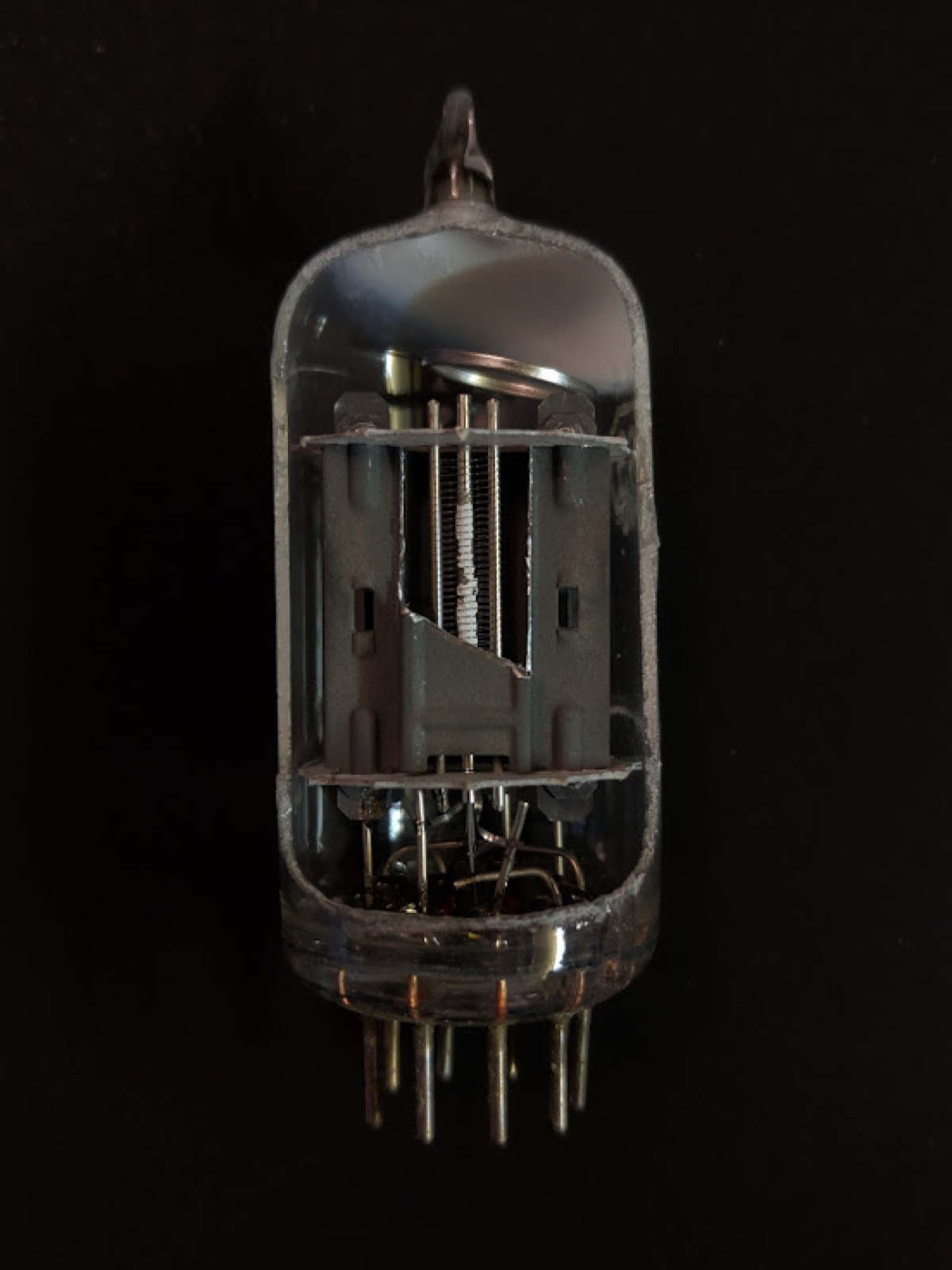
The 6L6 helped give Fender amps their clear American sound; the EL34 brought the raw British crunch of Marshall; and the EL84 helped shape Vox’s bright, chiming voice. The tubes an amp used could define its “national character” as well as its personality.
Now let’s meet the transistor, a powerful new rival, and find out why vacuum tubes still didn’t disappear.