The Allure of Two-Strokes — Eight Bikes of White Smoke and High-Pitched Howls
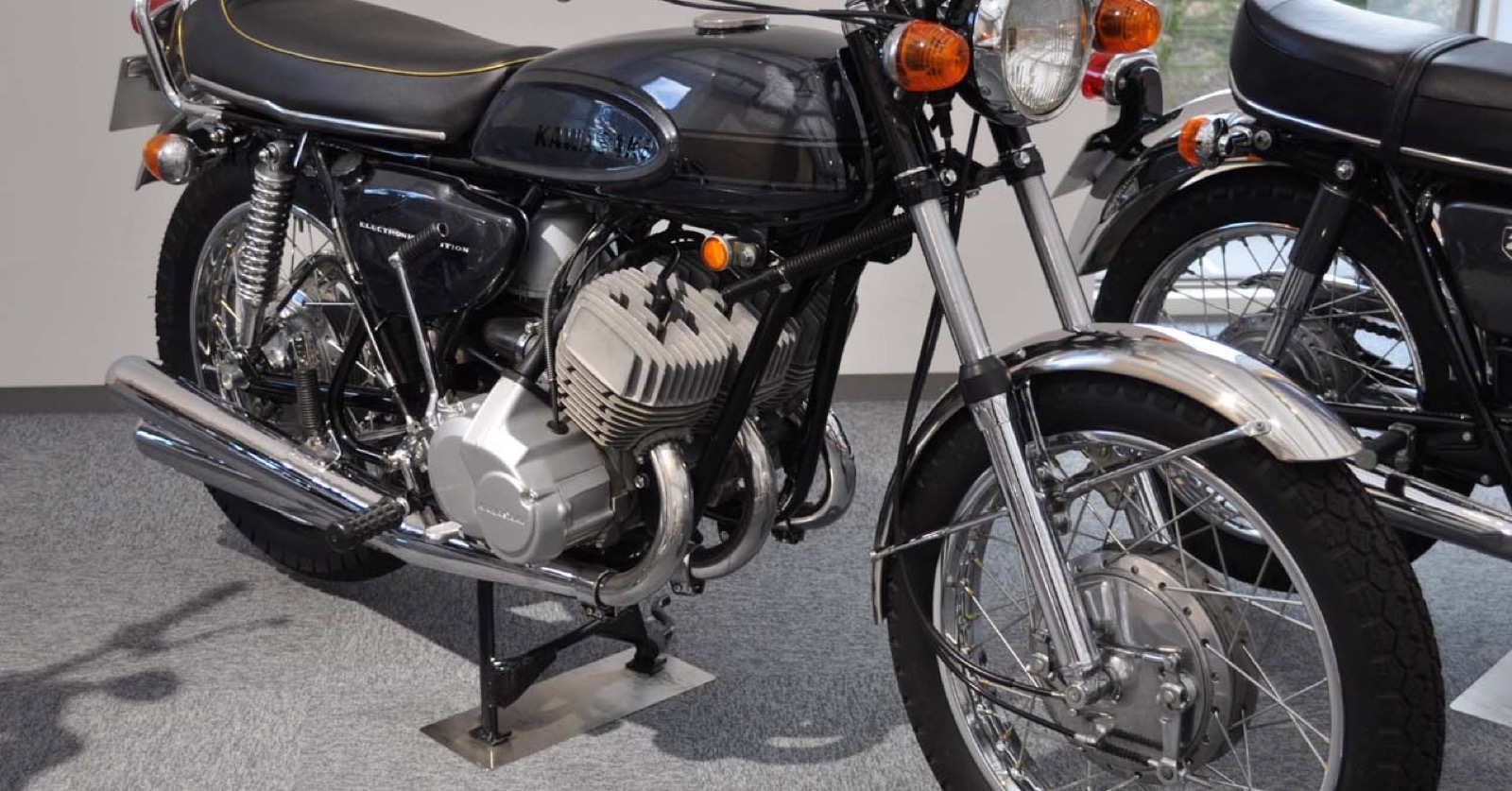
☕ GC Lab’s “Motorcycle History” series traces machines through the people and events behind them. This time, we look at two-stroke motorcycles that made power in short cycles and raced through their era.
💡 What you’ll learn
- How two-strokes work, and where their white smoke and distinctive sound come from
- The technology and era shaped by eight bikes, from the Mach III to the NSR250R
- Why two-strokes still captivate riders after emissions rules pushed them off the scene
An engine climbs to a high-pitched howl, and white smoke unravels behind it. That may be the first image that comes to mind when you picture a two-stroke motorcycle. A light chassis and sharp acceleration. The feeling that the engine’s character changes in an instant when you open the throttle. That forceful personality is still talked about more than half a century later.
But a two-stroke is more than “an old fast bike.” It represents an era of engineering in which Kawasaki, Yamaha, Suzuki, and Honda put their technologies to the test, making use of an engine layout that could be built light. They brought road-racing technology to production bikes and refined frames, exhaust systems, and electronic controls. That competition gave rise to a family of motorcycles known as racer replicas.
Let’s start with what a two-stroke is, then follow eight bikes through the years. We’ll look beyond the numbers at the problems each maker tackled and the spirit of the times in which each machine arrived.
Chapter 1 — What Is a Two-Stroke?
An engine turns the energy released by burning fuel into the up-and-down motion of a piston. The piston moves, the crankshaft spins, and that rotation reaches the rear wheel. Four-strokes and two-strokes work the same way up to this point. The key difference is how many piston movements it takes to burn fuel and exchange gases.
A four-stroke completes four stages—intake, compression, combustion, and exhaust—in two up-and-down cycles of the piston. It draws in and compresses the fuel-air mixture, burns it, then expels the spent gases. Because each stage is separate, fuel and exhaust are easier to manage, which can make good fuel economy and lower emissions easier to achieve.
A two-stroke handles intake and compression, then combustion and exhaust, in a single up-and-down cycle. As the piston moves down and takes the force of combustion, it also pushes exhaust out of the cylinder and draws in a fresh mixture. The engine can be built with fewer parts, and it has an opportunity to fire with every crankshaft revolution. That makes high output easier to target from the same displacement.
Of course, that does not mean a two-stroke is always faster than a four-stroke. Intake and exhaust overlap in a very short window, so engineers have to keep the fresh mixture in the cylinder while clearing spent gases efficiently. The shape of the intake ports and exhaust pipe, ignition timing, and tuning for engine speed all affect performance. The layout was simple, but designing a fast machine took finesse.
The way a two-stroke handles lubricating oil is another part of its character. To keep internal parts moving smoothly, oil is mixed with the fuel or metered in by an oil pump. Some of that oil burns with the fuel and leaves with the exhaust. The white smoke visible just after startup or when engine speed changes can come from unburned oil, moisture, and other factors. The smell of the oil became part of what people remember about two-strokes, too.
Smoke is both a symbol of their appeal and a sign of their environmental cost. Some fuel and lubricant can pass through without burning, making clean exhaust harder to achieve. As emissions standards tightened, manufacturers had to burn fuel efficiently and reduce pollutants. They advanced exhaust and electronic controls, but four-strokes gained ground in fuel economy and emissions, and gradually took the lead in production sport bikes.
Two-strokes did not disappear because they stopped being exciting. The demands placed on engines changed: fuel economy, emissions, noise, and ease of use all had to reach a high standard at once. At the same time, their light, sharp character and exposed mechanical response captivated engineers and riders during a remarkable stretch of history.