The UA 1176: Bill Putnam and a 20-Microsecond Revolution
☕ A coffee-length story — about a 13-minute read. This is a story to enjoy, not a research paper. It begins with an engineer who chased a fraction of a second. By the end, you’ll know why a rock vocal can leap out of the speakers.
Prologue — Chicago, 1947: The Bathroom
In 1947, in a room inside Chicago’s Civic Opera Building, a young engineer tried something unusual.
He put a speaker and a microphone in a bathroom.
Music played through the speaker. A microphone picked up the sound as it bounced around the small, tiled room. Blend that recording back into the original performance, and the sound gained depth and space.
The song recorded this way was “Peg o’ My Heart,” by the harmonica group The Harmonicats. It is considered one of the first examples of artificial reverberation used as an expressive effect in popular music.
The man who brought a microphone into that bathroom was Bill Putnam. Twenty years later, he would create a compressor still used in studios around the world.
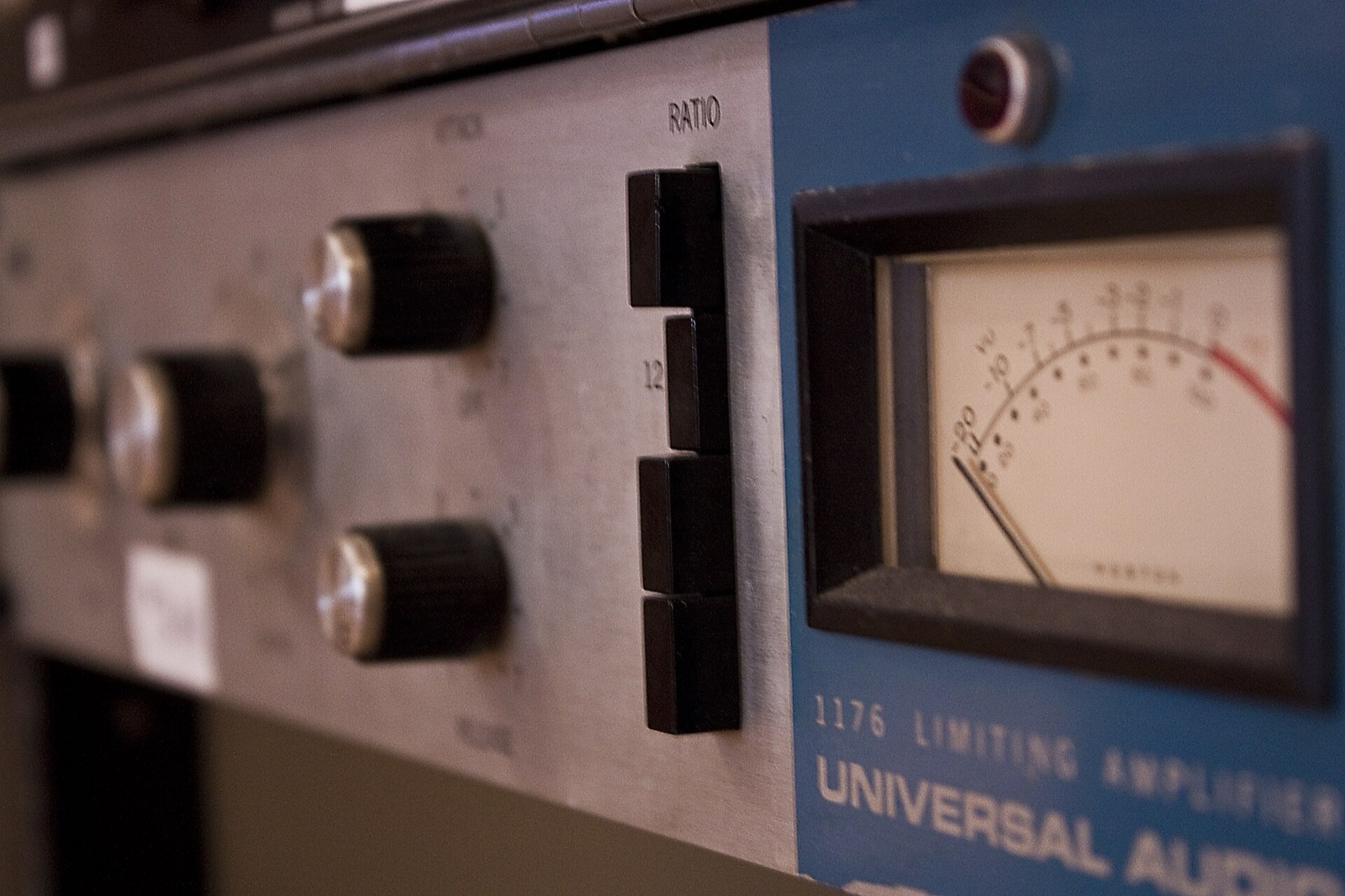
Its model number: 1176.
You’ve probably seen those four digits on a professional studio rack or in a list of DAW plug-ins. This is the story of the 1176 and the man often called the father of modern recording.
About this story
This account traces the 1176 through books, magazine interviews, manufacturer materials, and the recollections of people who knew the era. I have tried to stick to facts confirmed by multiple sources. I wasn’t there, though, and familiar industry lore may have found its way in. I’ve marked disputed stories and legends separately. The references are listed at the end.
I also own a compressor descended from the 1176, a Warm Audio WA76. I use it nearly every day. I wrote this story because I wanted to understand the history behind the unit on my desk.
Chapter 1 — The Man Behind the 1176
A boy on the ham bands
Milton T. “Bill” Putnam was born on February 20, 1920, in Danville, a small town in Illinois.
Building a crystal radio as a Boy Scout drew him into electronics. He earned an amateur radio license at 15. After high school, he studied at a technical school for broadcast engineering.
During the war, he worked with Army engineers and others. One project miniaturized mine-detection equipment into a “gun detector” that could be concealed, according to accounts of his work. At the same time, he recorded big-band performances for military radio broadcasts.
His own studio in Chicago
In 1946, Putnam started Universal Recording in Evanston, near Chicago. The following year, he moved the studio into Chicago’s Civic Opera Building. The bathroom reverb in the prologue happened there.
In 1955, he opened a much larger studio in Chicago, covering about 1,400 square meters. There, Putnam became more than a recording engineer. He began designing recording equipment himself.
Los Angeles, and Sinatra’s recording engineer
In 1957, with encouragement from Frank Sinatra and Bing Crosby, Putnam moved to Los Angeles. He opened United Recording on Sunset Boulevard and acquired neighboring Western Recorders in 1961.
Sinatra is said to have made Putnam one of his favorite recording engineers. While the man recording one of the world’s greatest singers worked upstairs in his studio, he was also building a recording-equipment company: Universal Audio, founded in 1958.
When he wanted a piece of gear for the studio, he made it himself. That habit would eventually produce a classic.
Now let’s look at the moment the 1176 was born—and the more than 50 years that followed.