From One Channel on the Console to Desks Around the World — UA 610
Prologue — Studio 2 in Hollywood
Hollywood, the 1960s. In Studio 2 at Western Recorders, the studio run by Bill Putnam, stood a console that was unmistakably out of the ordinary.
Long, narrow boxes lined with knobs were inserted into the console, one after another. Each one could be pulled out and replaced: a tube console.
Its name was the 610.
The console—or later 610 consoles descended from it—is said to have been used on a long list of landmark recordings, from Frank Sinatra and the Beach Boys to the Doors and even Van Halen’s debut album.
Today, a single 610 channel lives on inside audio interfaces around the world, making sound every day. Perhaps there’s one inside the red or silver box on your desk.
📝 About this story
This story draws on books, interviews, and manufacturer materials I have read over many years. I have tried to stay close to the facts, but I was not there at the time, so some nicknames and commonly repeated accounts may have slipped in. I’ve separated stories with competing accounts into “Legend & Lore” sections, and listed the sources at the end.
Bill Putnam’s early life is covered in more detail in a separate story, “The UA 1176 Story.”
Chapter 1 — Putnam and the Console You Could Pull Apart
The company founded by the “father of modern recording”
In 1958, Bill Putnam founded the audio equipment company Universal Audio. Putnam was an engineer who worked on Sinatra recordings, but he was also a designer who would build a piece of gear himself whenever he thought, “I wish the studio had something like this.”
Putnam’s early life and the birth of the 1176 are covered in more detail in a separate story, “The UA 1176 Story.”
The world’s first modular console
One console Putnam designed was the 610. It is regarded as an early example of a modular console, with the circuitry for each channel built into a module that could be pulled out and replaced on its own.
That was a major breakthrough. If one channel failed, you could remove just that module for repair. And when a new circuit became available, you could upgrade the console simply by swapping modules.
The modular console, now an everyday sight, began here.
A small, eight-channel console
By today’s standards, the 610 console was remarkably simple:
- Eight channels
- Mic and line switching
- Two-band EQ
- A way to bring echo (reverb) back into the mix
- Rotary level controls, turned by hand, instead of vertically moving faders
Why has this small console remained part of the conversation for more than half a century? The secret was inside each channel.
Now let’s follow the story of how a 610 channel became a legend.
Chapter 2 — One Tube Channel
A tube microphone preamp
At the heart of each 610 channel was a tube microphone preamp. It took the tiny signal coming from a microphone and amplified it with tubes. Along the way, the sound gained a distinctive weight and a pleasing softness around the edges.
🎙 Legend & Lore 1 — When Was the 610 Born?
The sources disagree about when the 610 console first appeared.
- 1958: Some accounts say it was designed in the same year Universal Audio was founded.
- 1960: Universal Audio’s own blog and manuals for later products place its arrival in 1960.
There is also a record that the 610 was installed in Studio 2 at Western Recorders in 1962. The safest way to put it is that the console emerged sometime between the late 1950s and early 1960s, then made its mark in Hollywood during the ’60s.
🎙 Legend & Lore 2 — The List of Classic Records
The 610 console is said to have been used on recordings such as:
- Recordings by Frank Sinatra and Sarah Vaughan
- The Beach Boys’ Pet Sounds
- The Doors’ L.A. Woman
- Van Halen’s debut album
These stories come mainly from Universal Audio and retailer materials. Major recording sessions use many pieces of equipment, so it’s impossible to confirm from the outside exactly which sounds passed through a 610, or how much it was used. I’ll describe these as records said to have involved the 610.
Chapter 3 — A New Start for the Next Generation: From the 2-610 to the 6176
Universal Audio returns in 1999
In 1999, Bill Putnam’s two sons, Bill Putnam Jr. and Jim Putnam, revived their father’s company as Universal Audio. Their first product was a reissue of the 1176LN.
The 2-610 arrives in 2001
In April 2001, the revived Universal Audio announced the 2-610, the first analog piece of equipment the company had designed from the ground up.
The 2-610 was a two-channel tube microphone preamp based on the preamp section of the 1960s 610 console. The individual channels that had once lived inside a console had become standalone pieces of gear.
The 610’s children
After the 2-610’s success, more products based on the 610 circuit followed:
- M610: a single-channel version
- LA-610: a 610 channel paired with an LA-2A-style optical compressor (sources give the release year as either 2002 or 2005)
- 6176: a 610 microphone preamp and an 1176 compressor combined in one unit
- SOLO/610: a compact, portable single-channel version
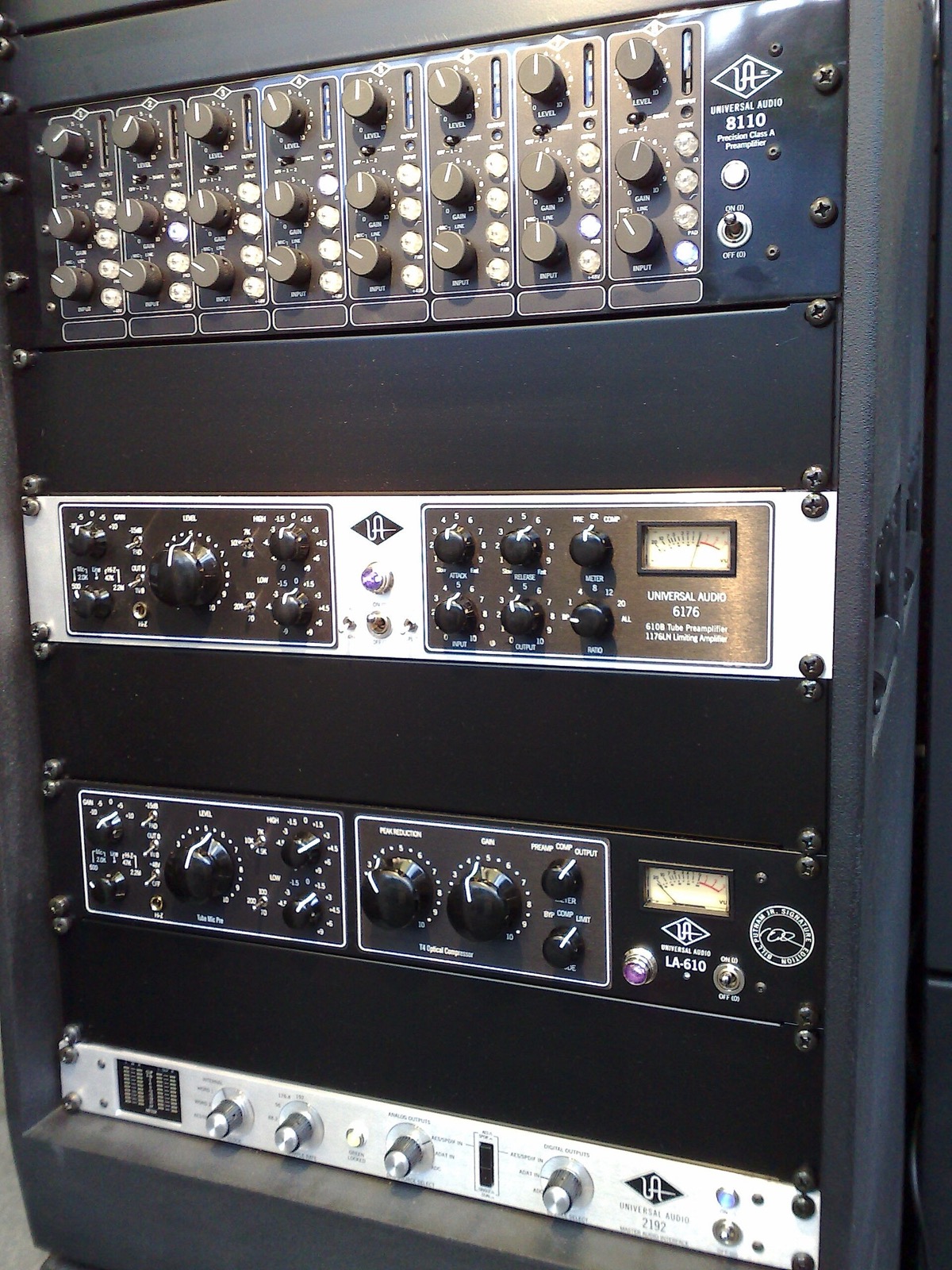
The 6176 is a particularly luxurious pairing: record through a 610, then shape the sound with an 1176, bringing two Universal Audio classics together in one box. It’s moving to think that two landmark designs by a father were united in a single piece of gear by his sons.
Chapter 4 — Unison: The 610 Inside an Interface
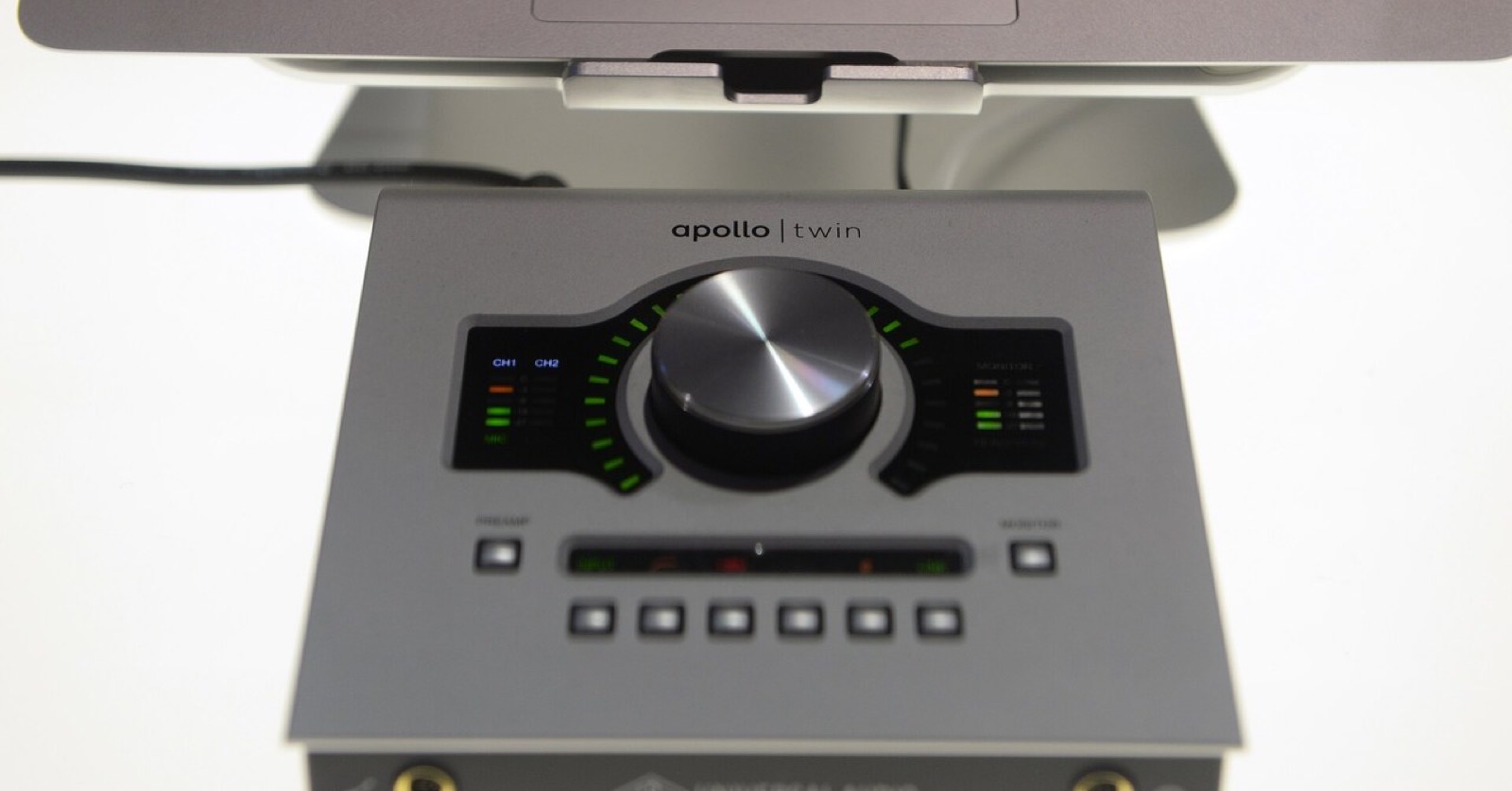
Apollo Twin and Unison, 2014
In 2014, alongside the announcement of the Apollo Twin audio interface, Universal Audio introduced a new technology called Unison.
Here’s how Unison works:
- It changes the input characteristics—such as impedance—and the way the real microphone preamp in the interface amplifies the signal.
- Those changes are matched to the plug-in selected on screen.
Choose “610” in a plug-in, and the interface’s own microphone preamp changes its behavior to more closely resemble a 610. It’s not just an effect added afterward: you can record through a 610 sound from the moment you plug in a microphone. That was the breakthrough behind Unison.
The first Unison plug-in was a 610
The first plug-in to support Unison was the 610-B. It was provided free to Apollo owners, giving Apollo users around the world the ability to record through a 610 from the start.
A 610 Collection followed, adding another model, the 610-A.
🎙 Legend & Lore 3 — What’s the Difference Between the 610-A and 610-B?
Here’s the short version:
- 610-A: a simple model, closer to a channel from the original 610 console
- 610-B: a more feature-rich model, with selectable input impedance, high- and low-frequency EQ, a wider gain range, and more
There’s no single right choice. You can aim for the character of an old recording with the straightforward 610-A, or shape the sound in more detail with the 610-B. Having both lets you choose what suits your taste and purpose.
Chapter 5 — From One Console Channel to Desks Around the World
Let’s trace the 610’s journey:
- Late 1950s–1960s: born as an eight-channel tube console in a Hollywood studio
- 2001: one of its channels becomes a standalone piece of gear, the 2-610
- 2000s: the circuit is combined with other classics in products such as the LA-610 and 6176
- 2014: Unison brings it inside audio interfaces around the world
At first, the console existed in just one Hollywood studio. Today, it makes sound every day on the desks of people making music at home.
💡 Tip
If you use an Apollo, try recording vocals or acoustic guitar through the 610-B. As you turn up the gain, you should hear the sound grow a little thicker and move forward. That’s an echo of the tube sound heard in Hollywood 60 years ago.
Epilogue — A Console You Could Pull Apart
The 610 console’s defining feature was that you could pull out and replace its channels one at a time.
Perhaps that feature foreshadowed the console’s future. A channel was pulled out and became the 2-610, combined with other classics in the 6176 and LA-610, and eventually “plugged into” an interface.
Over 60 years, Bill Putnam’s console—built to be taken apart one channel at a time—found its way onto desks around the world, one channel at a time.
The next time you see “610” in a list of plug-ins, think of that tube console lined up in Studio 2 at Western Recorders in 1960s Hollywood.
UA 610 Timeline
- 1958: Bill Putnam founds Universal Audio
- Around 1958–1960 (accounts vary): The 610 console is born; it is regarded as the beginning of modular consoles
- 1962: A record indicates that a 610 was installed in Studio 2 at Western Recorders
- 1960s: Said to have been used on recordings by Sinatra and on Pet Sounds, L.A. Woman, and other records
- 1999: Putnam’s sons revive Universal Audio
- 2001: The 2-610 is announced as the revived UA’s first original analog product
- 2000s: The M610, LA-610, 6176, SOLO/610, and other models appear
- 2014: Unison is announced; the 610-B becomes its first supported plug-in and is provided free to Apollo users
References
- Universal Audio, “UA 610: The Console That Changed Recording”
- Universal Audio WebZine, “Analog Obsession: History of the 610 Preamplifier” (2004)
- Universal Audio press release, “Universal Audio Announces Groundbreaking Unison Technology”
- Universal Audio 2-610 and LA-610 manuals
- Vintage King, “History of Consoles”
- Sonicstate and Audio Technology articles from the Unison announcement
Photo credits
- Header image, “Universal Audio Apollo Twin - High-Resolution Interface with Realtime UAD Processing - 2014 NAMM Show” (cropped) — Photo: Brandon Daniel / Wikimedia Commons / CC BY-SA 2.0
- “Universal Audio (AES 124)” — Hens Zimmerman / Wikimedia Commons / CC BY 2.0
Licenses:
CC BY-SA 2.0 https://creativecommons.org/licenses/by-sa/2.0/
CC BY 2.0 https://creativecommons.org/licenses/by/2.0/