The Era of Black Panels and Silver Panels — UREI, the LA-3A, and the 813
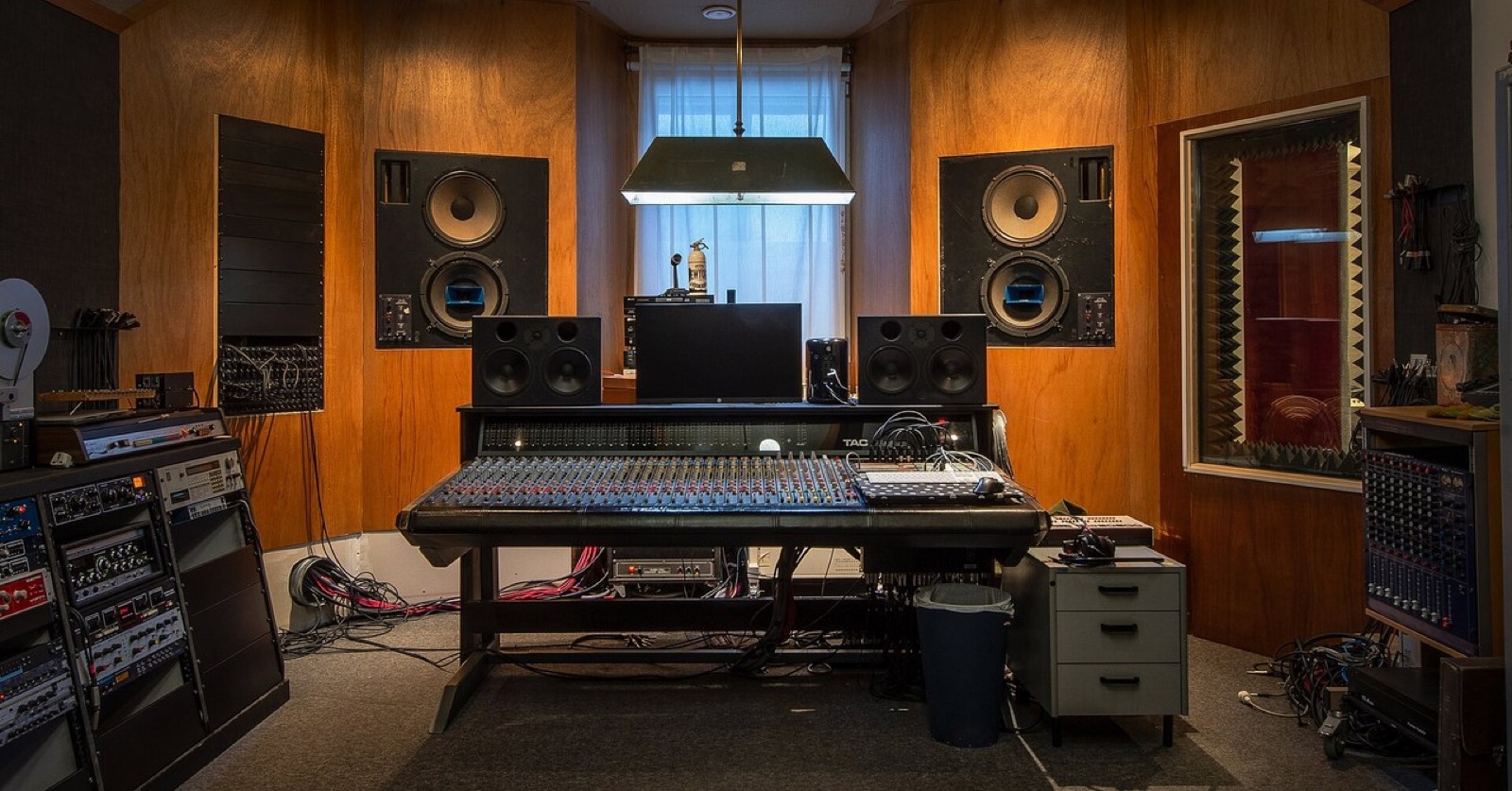
☕ A coffee-length story about classic equipment. Enjoy the history and practical advice as a story.
In the 1970s, four letters appeared on racks in studios around the world: U, R, E, and I. This is the story of the company behind those letters and the era in which it produced one classic piece of gear after another.
In this article: the story of UREI and what Bill Putnam left behind; the origins of the LA-3A, 1176, and 813, along with the changing colors of their panels; and how to choose an optical compressor like the LA-3A for use today. Read on for the background to the sound and the machines, as well as practical ways to use them.
Prologue — Matching faces in the rack
In a recording studio in the 1970s, beside the mixing console stood a rack: a set of shelves designed to hold equipment. It was built to house the machines used to shape and reproduce the sound being recorded.
Machines with matching faces lined the rack.
Black panels with white lettering. In time, the panels became silver. Every machine carried the same four-letter logo:
UREI.
Compressors, equalizers, and speakers: engineers trusted equipment bearing this logo and used it every day.
There was a time when UREI was a studio standard. Its story began with a purchase.
Chapter 1 — Bill Putnam and a purchase
A man who built studios and equipment
At the center of UREI was an engineer named Bill Putnam.
Putnam ran recording studios and designed equipment, building mixing consoles and compressors himself. In 1958, he founded his own company, Universal Audio.
His FET compressor, the 1176, appeared in 1967 and became a classic that brought rock and pop vocals forward.
In 1967, he acquired an optical compressor
Around 1967, Putnam’s company bought the broadcast equipment division of another company.
It included the Teletronix brand and the patent for the optical compressor LA-2A.
The LA-2A uses light and a light-sensitive component to reduce volume, giving it a gentle sound. Rather than controlling the signal with a fast electronic circuit, it relies on the response of the optical parts. It was originally created for radio stations.
The fast FET compressor 1176 and the gentle optical compressor LA-2A had very different personalities, but now they were together under one company.
The birth of UREI
The resulting company was called UREI (United Recording Electronics Industries).
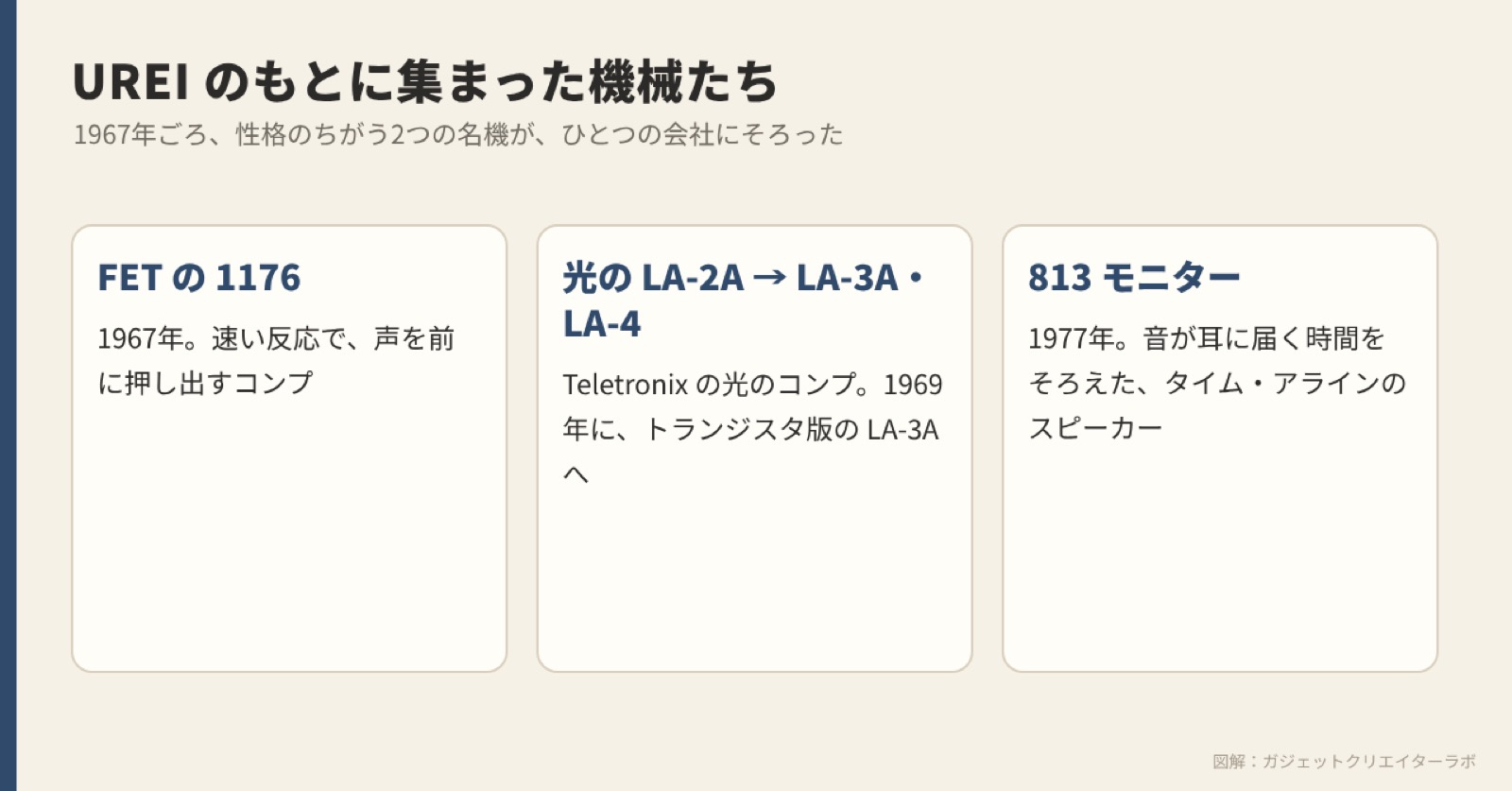
This was the beginning of the UREI era.
Chapter 2 — The LA-3A: an optical compressor rebuilt with transistors
1969, New York
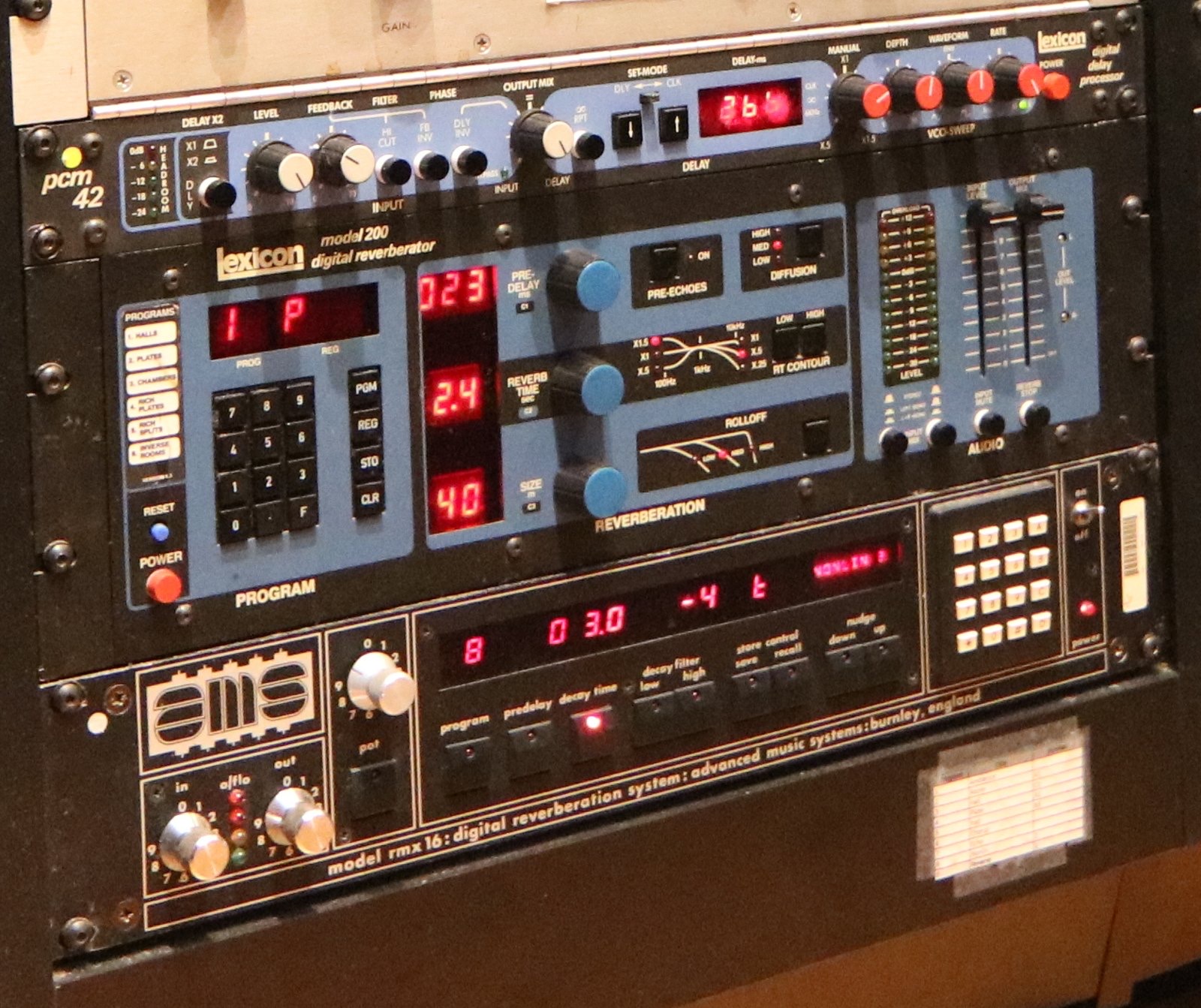
In 1969, UREI is said to have introduced a new compressor at an Audio Engineering Society (AES) exhibition in New York.
It was the LA-3A.
In brief, the LA-3A was a machine that re-created the LA-2A’s approach using transistors.
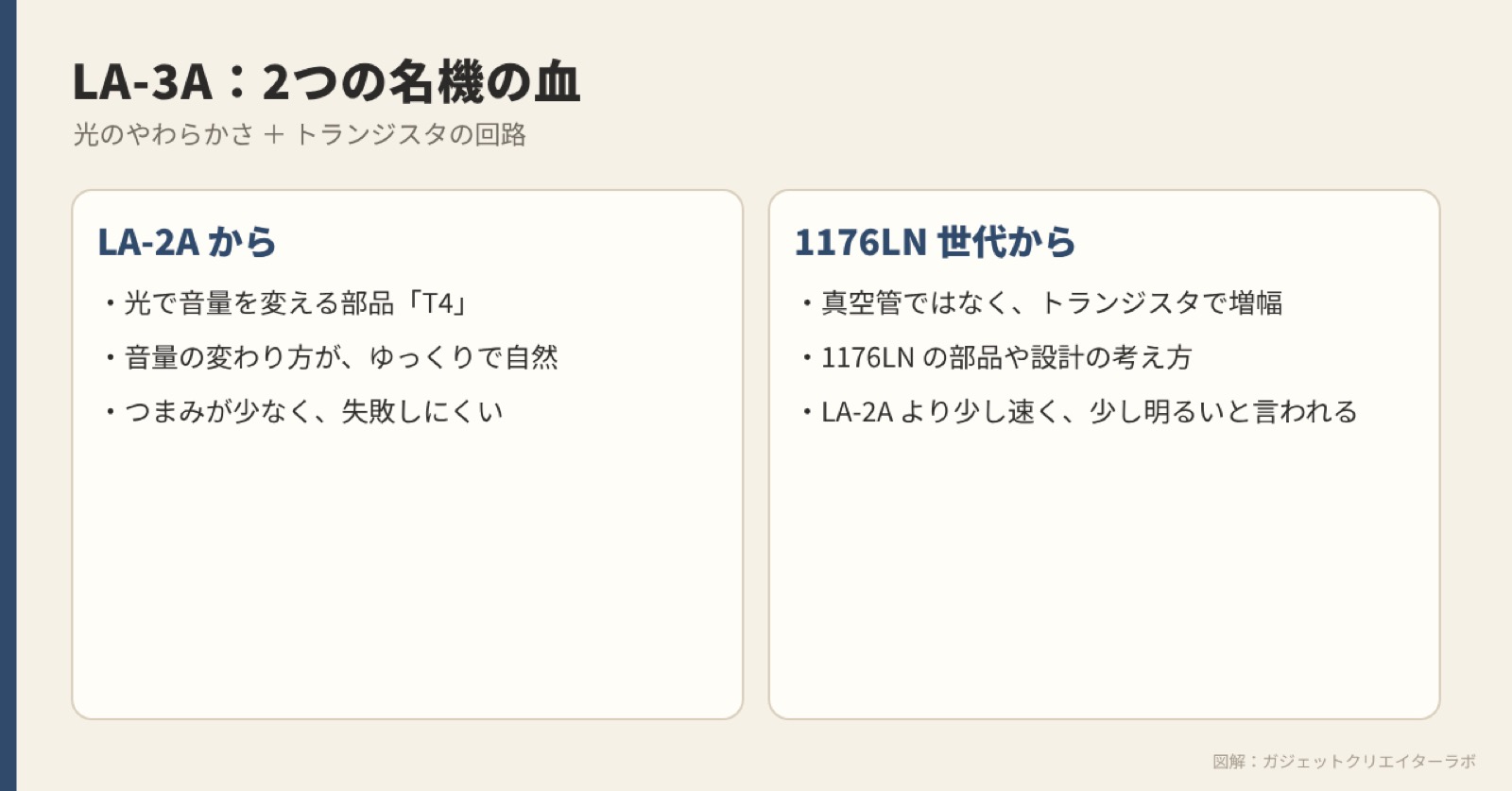
What it inherited from the LA-2A
The LA-3A contained a component based on the same idea as the LA-2A: the T4, which changes the volume using light.
Inside the T4 are a light-emitting component and another component whose electrical conductivity changes when light reaches it. As the sound grows louder, the light becomes brighter and the volume goes down. When the light reaches the sensor, its electrical conductivity changes and the level is reduced. The light responds at a suitably gradual pace, making the volume change feel very natural.
What it inherited from the 1176
The part of the LA-3A that amplifies sound uses transistors rather than vacuum tubes. It also incorporated components and design ideas from the 1176LN, an improved version of the 1176. So although it retained the optical approach to controlling level, the LA-3A used a different kind of circuitry to amplify the sound.
The LA-3A inherited the LA-2A’s softness and the transistor circuitry of the 1176 generation. It carried the lineage of two classic machines.
UREI engineer Brad Plunkett was involved in its design. Early LA-3As are also said to have been sold under the Teletronix brand.
Just two knobs
The LA-3A was simple to operate. It had just two large knobs: how much compression to apply (Peak Reduction) and the level of the output (Gain). One set the amount of level reduction, while the other set how loud the signal coming out of the unit would be.
There were few fine adjustments. Still, whatever sound you fed into it tended to come together pleasingly.
Because it was difficult to set badly, the LA-3A came to be used on guitars, vocals, and a range of other instruments. It is often described as a little faster and slightly brighter than the LA-2A.
The LA-4
UREI continued making optical compressors. The LA-4, too, was an optical compressor in the Teletronix tradition.
Chapter 3 — From black to silver: the changing face of the 1176
What the panel colors tell us
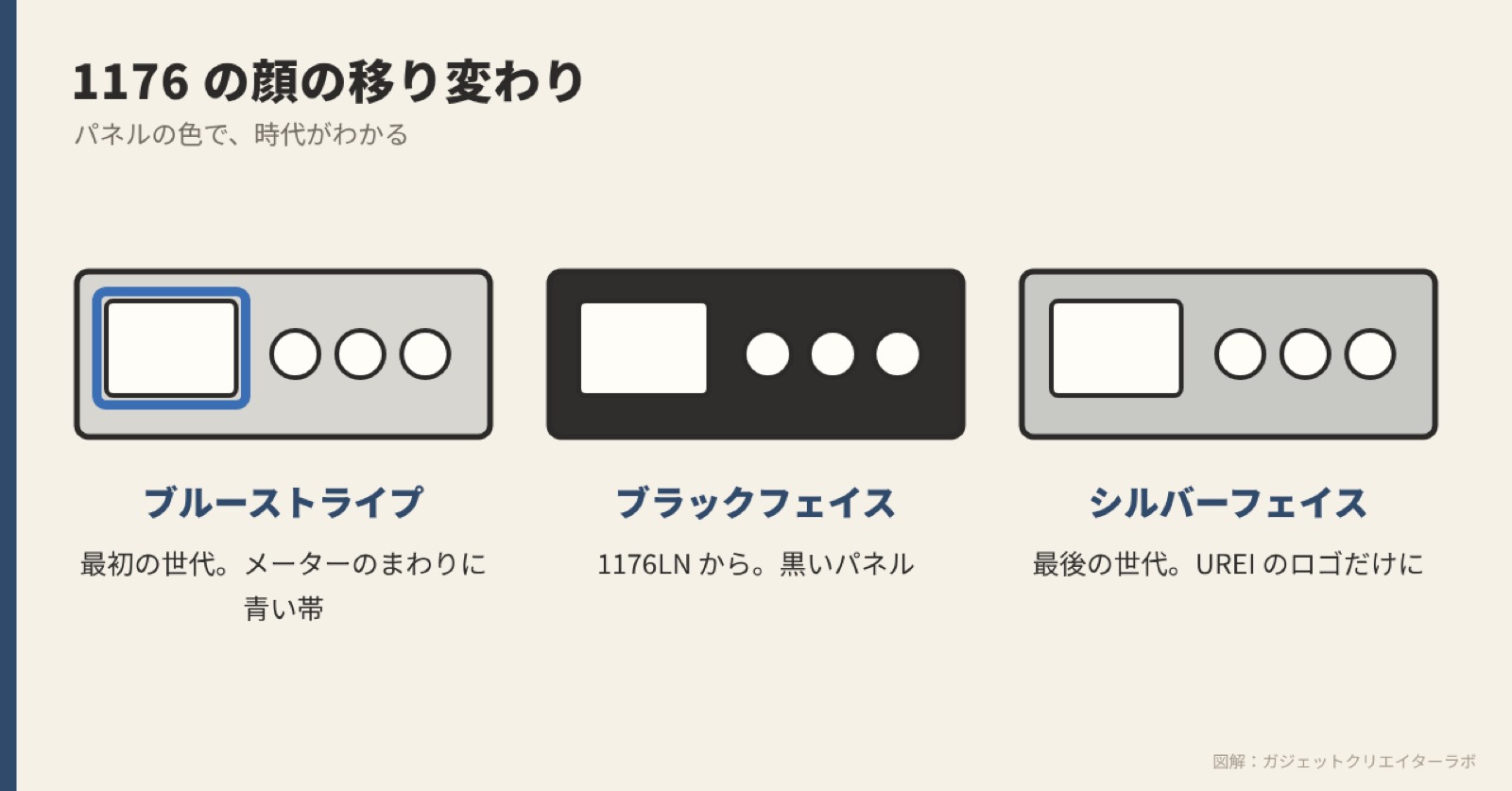
The 1176’s panel color is the most visible sign of the UREI era. Looking at the different generations, you can follow that change at a glance, from the blue marking of the earliest models, through black, and finally to silver.
- The earliest generation had a blue stripe around the meter and became known as the “Blue Stripe.”
- Starting with the quieter 1176LN, the panel turned black. These units are called “Blackface.”
- The final generation had a silver panel and became known as “Silverface.”
The silver era
On the Silverface 1176, the words Universal Audio disappeared from the panel, leaving only the UREI logo. The power switch changed to a red “off” button, and the meter became lit from inside by two bulbs.
The UREI name had replaced the name of Putnam’s first company. The silver panel also represented this change of era.
Engineers still often discuss whether they prefer the sound of the Blackface or Silverface. The 1176 article covers the differences between the generations in more detail.
Chapter 4 — The 813: a speaker that aligned time
Dissatisfaction with speakers
UREI was not only a compressor company. In the late 1970s, it also made a major impression with studio speakers (monitors).
The catalyst is said to have been Putnam’s own dissatisfaction. He was not happy with the sound of the speakers in his studio.
Time alignment
The engineer Ed Long helped with the work.
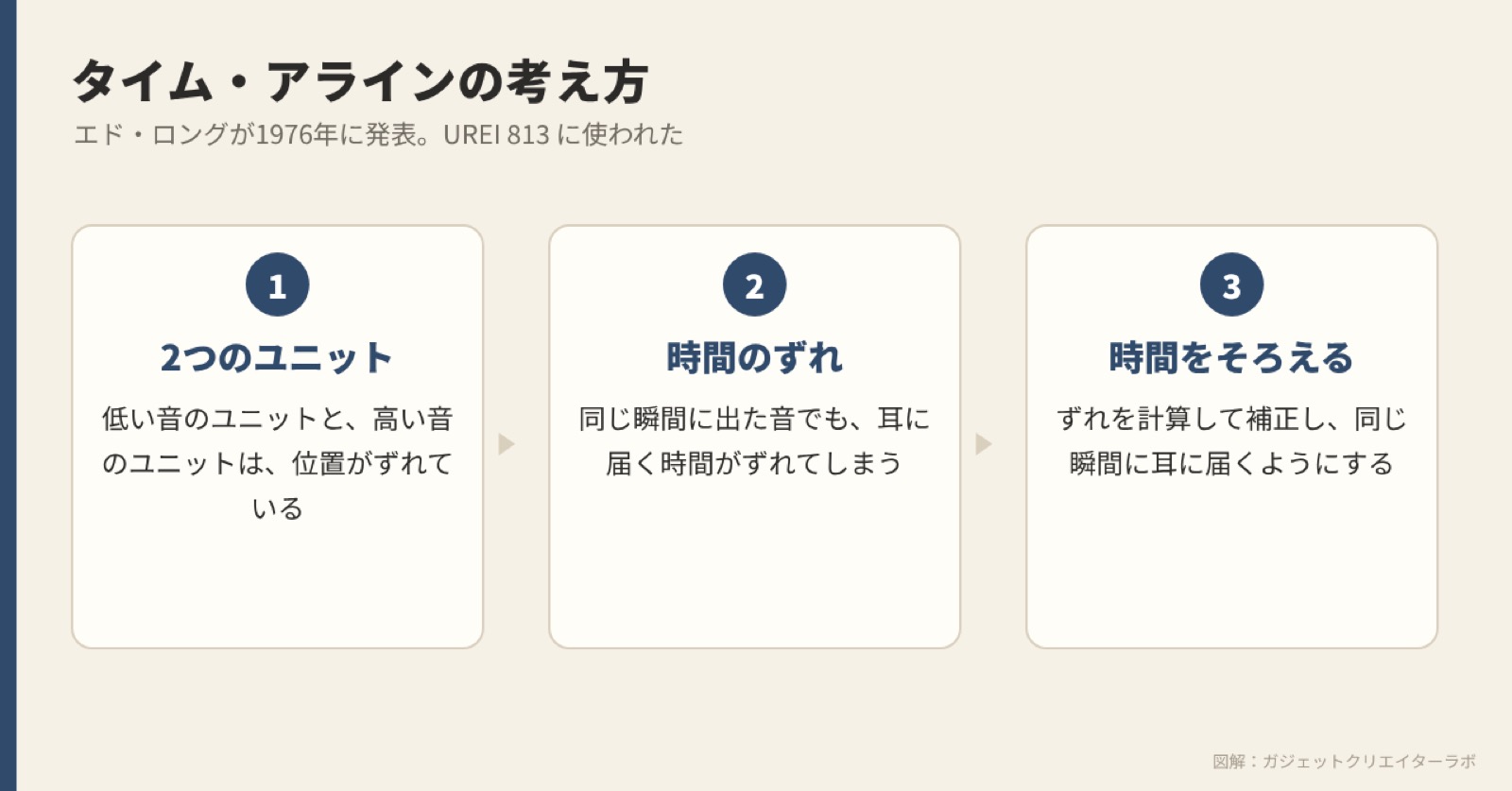
In 1976, Long had presented the idea of speaker time alignment at an audio engineering conference.
A speaker has drivers that produce low and high sounds: one unit handles the lower range and another handles the higher range. If the drivers are positioned at different distances, sounds that began at the same moment can reach the listener at different times.
Long’s idea was to calculate this difference and align the times so that the sounds reached the listener together.
The 813 arrives in 1977
The UREI 813 was created using this time-alignment technology. The first 813 appeared in 1977.
It was followed by several revisions:
- 813A (1979)
- 813B (1983, using JBL drivers)
- 813C (1984)
The large cabinet had a coaxial driver, with the low and high sounds coming from the same point. The 813 became one of the large monitors built into the walls of many studios during the 1980s.
Chapter 5 — The end of the UREI era
Under Harman
In the 1980s, UREI reached a major turning point.
Putnam sold UREI to Harman, a major audio equipment company. UREI was sold to Harman around 1983–85.
UREI became part of the professional division of JBL, a leading speaker company. Products named “JBL-UREI” also began appearing around 1986.
Even after the name disappeared
Over time, the UREI name gradually disappeared from the spotlight.
But machines created during the UREI era continued to be used in studios. When Putnam’s sons revived the name “Universal Audio,” the 1176, LA-2A, and LA-3A spread through studios around the world once again, as reissues and plug-ins.
Chapter 6 — Using an optical compressor like the LA-3A
To finish, here are a few tips for using a simple optical compressor like the LA-3A.
1. Set only the amount first
Turn the amount control until the meter shows about 3–6 dB of reduction. Optical compressors change volume gradually, so they can often sound natural even when used firmly.
2. Match the output level to the input
Compression reduces the level, so use the Gain knob to bring it back to the same level as before you applied compression. Once the levels are matched, switch the compressor on and off and compare what you hear. Matching the loudness lets you focus on the change in sound rather than simply hearing that one version is louder.
3. Combine it with a fast compressor
An optical compressor is not especially good at controlling a very brief loud sound. A common approach, both in the past and today, is to use a fast compressor like the 1176 to reduce peaks a little, then use an optical compressor to even out the overall sound.
4. For guitar and vocals, too
Compressors in the LA-3A lineage work with many kinds of sound, including electric and acoustic guitar, vocals, and bass. “If in doubt, try an optical compressor first” is one benefit of a machine with few knobs.
Epilogue — Four letters in a rack
The story of a four-letter company began with a single purchase.
The fast FET 1176 and the gentle optical LA-2A. The LA-3A, descended from both. The 813, which sought to align the time sounds took to reach the listener.
Every machine born in the UREI era valued being dependable enough for everyday studio use. That is why black and silver panels still inspire engineers.
The next time you listen to a well-balanced recording from the 1970s or 1980s, think for a moment: perhaps a rack bearing that four-letter logo was part of the path the sound took.
UREI timeline
- 1958: Bill Putnam founds Universal Audio.
- 1967: The FET compressor 1176 appears; around the same time, Teletronix and the LA-2A patent are acquired, leading to UREI.
- 1969: The LA-3A appears (some early units are sold under the Teletronix brand).
- 1970s: The 1176LN (Blackface) era; the optical LA-4 also appears.
- 1976: Ed Long presents the idea of time alignment at an audio conference. By around this time, the factory has moved to Sun Valley.
- 1977: The time-aligned UREI 813 monitor appears.
- 1979–84: The 813A, 813B (with JBL drivers), and 813C follow.
- Around 1983–85: UREI is sold to Harman.
- Around 1986: Products bearing the “JBL-UREI” name appear.
Photo credits
- Header, “The control room at Omnivox featuring the UREI 813 monitors.jpg” (cropped): Photo: Omnivox.studio / Wikimedia Commons / CC BY-SA 4.0
- Studio rack with LA-3A and 1176LN units: Photo: The Blackbird Academy / Wikimedia Commons / CC BY-SA 2.0
- Diagrams: made by Gadget Creators Lab
Licenses: CC BY-SA 4.0, CC BY-SA 2.0.