The Sparkle Behind the Beatles — Vox
Prologue — The Boxes Behind the Stage in the 1960s
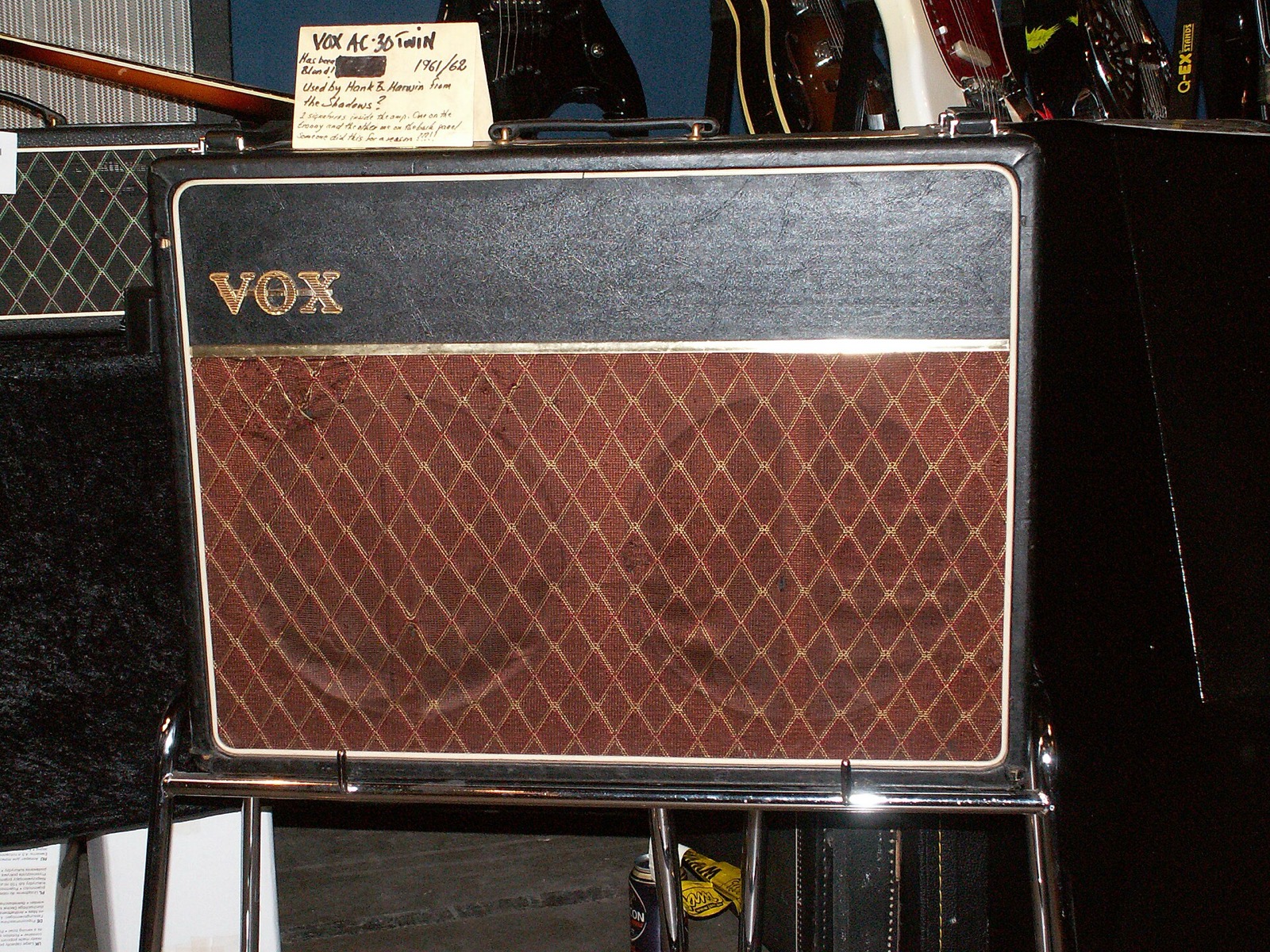
The 1960s. Take a close look at photographs of the Beatles performing live.
Behind the four musicians, lined up onstage, are long, beige cloth-covered boxes.
The front has a gold diamond pattern.
And three letters shine across the top.
VOX.
The sparkling, slightly gritty guitar sound of John Lennon and George Harrison—and much of the sound of the “British beat”—came from these amps.
The best known is the AC30, a British classic still loved by guitarists around the world.
But the company did not begin with guitar amps. In postwar Britain, one man was making electronic organs.
📝 About this story
This story draws on books, interviews, and manufacturer materials I have read over many years. I have tried to stick to the facts, but I was not there at the time, so some popular names and commonly repeated accounts may have found their way in. I separate disputed stories into “Legend & Lore” sections and list sources at the end.
Chapter 1 — The Organ Builder of Dartford
Tom Jennings
The story of Vox begins with Tom Jennings (Thomas Walter Jennings).
Our setting is Dartford, a town in Kent, southeast of London. It is also known as the place where Mick Jagger and Keith Richards of the Rolling Stones first met.
An Organ Company
After World War II, Jennings founded a company to build electronic organs. It would become Jennings Musical Industries (JMI), the parent company behind the Vox brand.
Jennings’s company made small electronic keyboards, including the “Univox.” The name Vox is Latin for “voice.”
Rock ’n’ Roll Arrives
In the late 1950s, the wave of rock ’n’ roll from America reached Britain.
Young people picked up electric guitars and started forming bands. They needed guitar amps that could fill larger rooms.
Jennings, whose company had made organs, spotted this new demand. Alongside one engineer, he set out to build guitar amps.
Now let’s follow the story of how an organ company helped create the sound of British rock.
Chapter 2 — First the AC15, Then the AC30
Dick Denney
The engineer who designed amps with Jennings was Dick Denney.
Denney was a guitarist himself. He thought not only about making guitars louder, but also about how to make the guitar itself sound beautiful.
1958: The AC15
In 1958, Vox introduced its first serious guitar amp, the AC15.
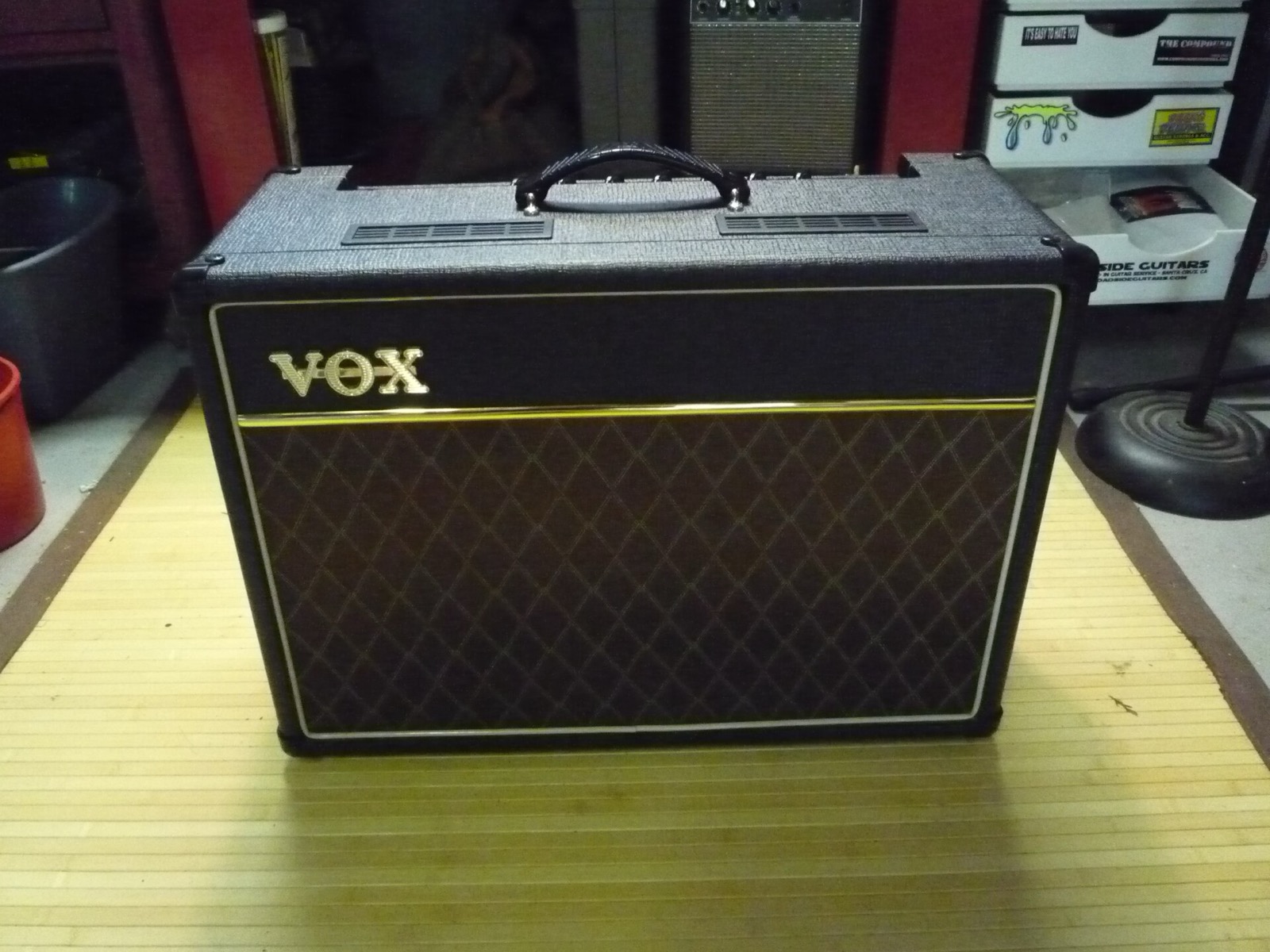
“15” refers to an output of about 15 watts.
For British bands at the time, the AC15 was powerful enough. But the times soon began to demand more volume.
A Request from the Shadows
The Shadows, an instrumental band, were hugely popular in Britain. As their concert venues grew, they felt the AC15 could not deliver enough volume.
In America, Fender had a powerful amp called the Twin. “We want an amp that can keep up with that.”
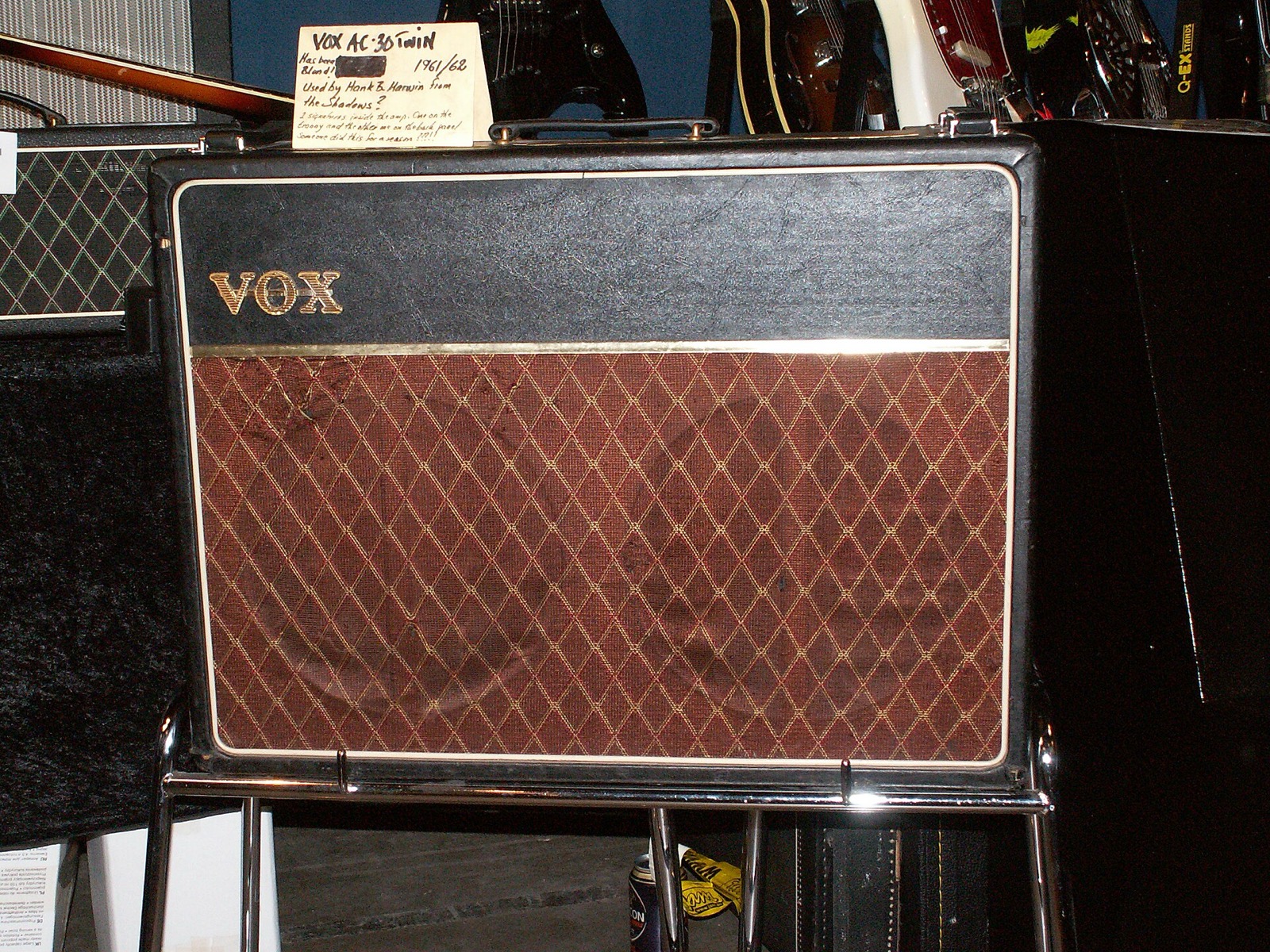
The answer was an amp with twice the AC15’s output: the AC30.
The AC30 Sound
The AC30 is a roughly 30-watt tube amp. It has two 12-inch speakers and a beige cloth-covered cabinet with a diamond-pattern grille.
Its sound has sparkling highs and a soft, gritty distortion when you turn it up. It had a distinct Vox “sparkle,” different from Fender’s clean, full sound and from the rougher sound Marshall would later become known for.
Top Boost
In the early 1960s, Vox added a circuit called Top Boost to the AC30. It added tone controls that let players fine-tune the highs and lows.
Top Boost made the AC30’s “sparkle” stand out even more.
Chapter 3 — The Beatles and the British Invasion
The Beatles and Vox
In the early 1960s, a band from Liverpool would change Vox’s fortunes: the Beatles.
The Beatles began using Vox amps, and Vox amps soon lined their stages. As the band became global stars, the Vox name spread around the world.
Turning It Up
But when Beatlemania exploded, a new problem emerged.
The fans were screaming so loudly that no one could hear the amps.
In stadium-sized venues, with tens of thousands of fans shouting, a 30-watt amp could not compete. Vox is said to have built even more powerful amps for the Beatles.
The British Invasion
By the mid-1960s, bands from Britain were following the Beatles into America. The phenomenon came to be called the British Invasion.
Many bands, including the Rolling Stones, used Vox amps. Vox became the sound of British rock itself.
Chapter 4 — Organs, Guitars, and the Wah
Continental — An Organ Company in Its Element
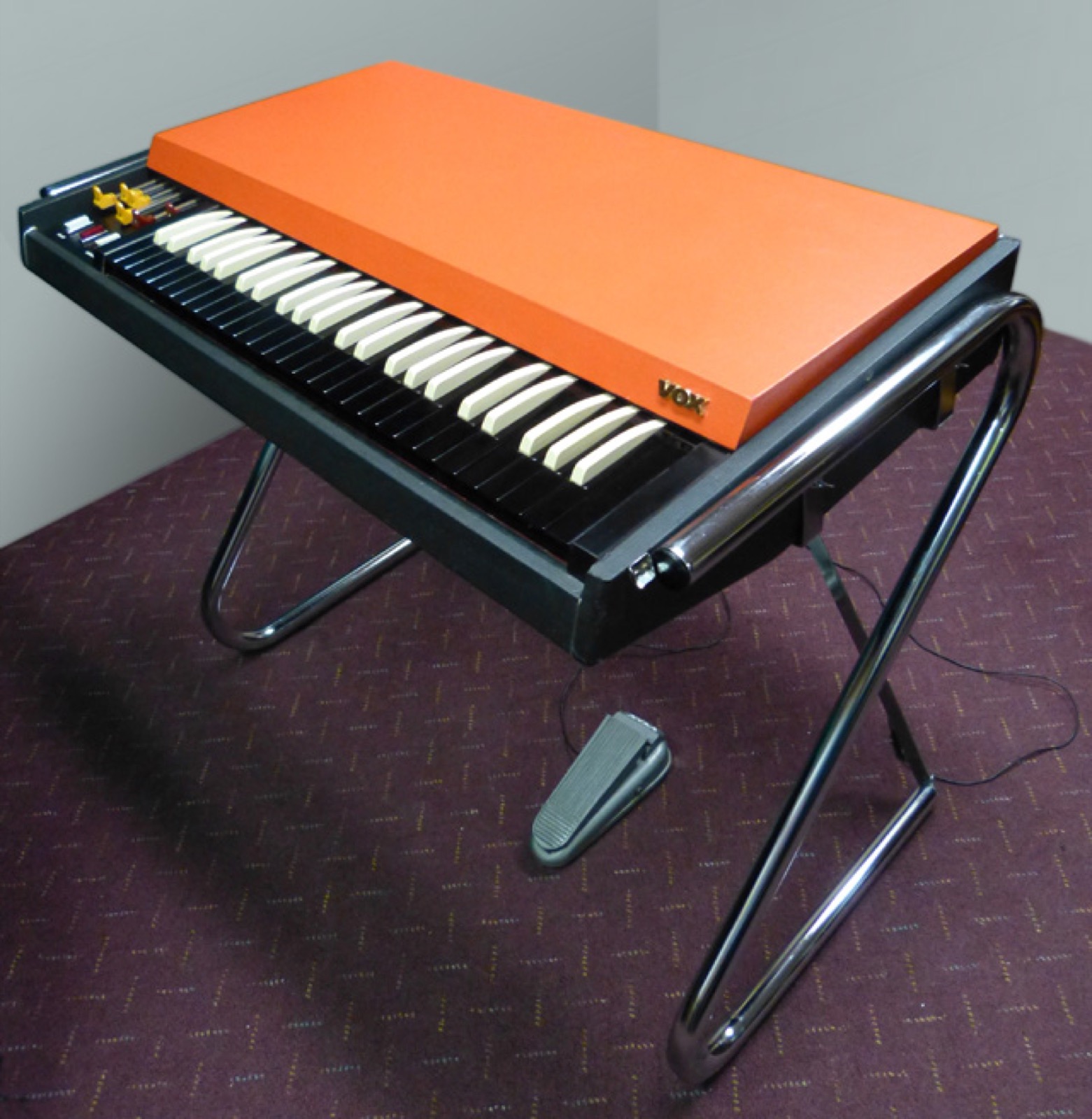
Vox began as an organ company. It showed what it could do with the Vox Continental, introduced in 1962.
A red-and-black portable organ with a flashy look, its sharp, slightly cheesy but unforgettable sound became a staple of 1960s rock and garage rock.
Guitars, Too
Vox also made guitars: the Phantom, with its pentagonal body, and the Teardrop, shaped like a falling teardrop. They were strikingly unconventional designs for their time.
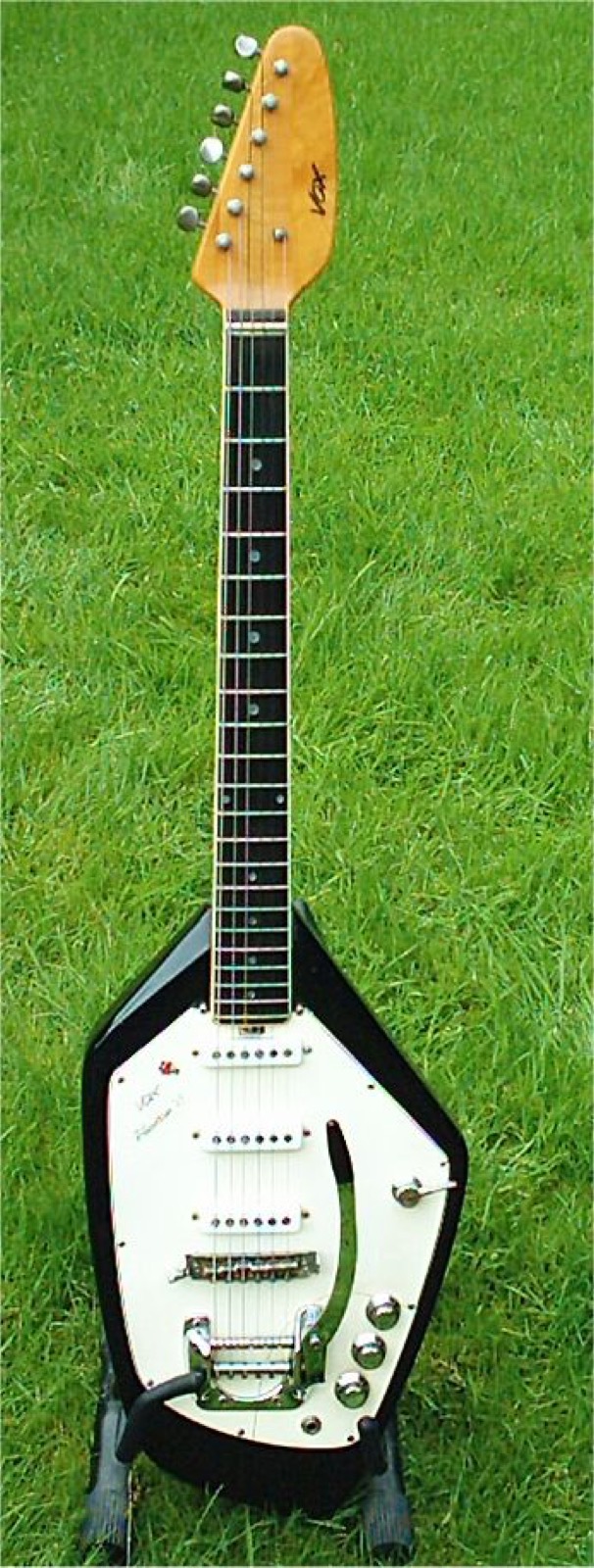
Vox even made a curious instrument called the Guitar Organ, which could use a guitar to produce organ sounds.
The Birth of the Wah Pedal
Vox’s name is also written into the history of effects.
In the mid-1960s, an unusual device emerged at the Thomas Organ Company, which handled Vox products in the United States. Pressing a foot pedal made the guitar sound change like a person saying “wah, wah.”
The wah pedal.
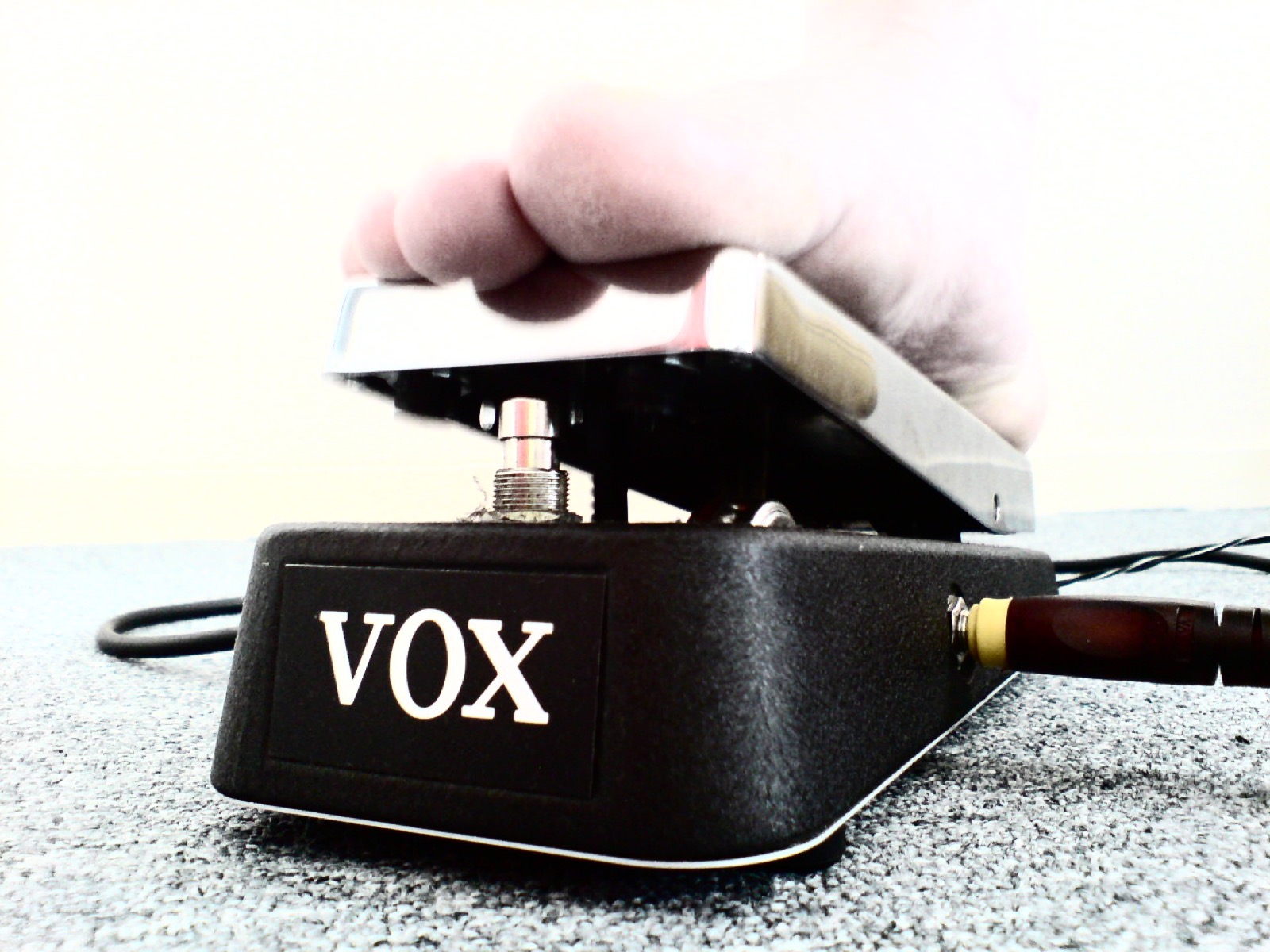
Many guitarists, including Jimi Hendrix, used the pedal. Wah became an essential effect in rock and funk.
🎙 Legend & Lore 1: Was the Wah Born by Accident?
This story is often told about the wah pedal’s creation.
Engineers were originally modifying a circuit to make an amp component cheaper. Along the way, they noticed that moving a control in one circuit made the sound go “wah.”
What if they made it possible to move that control with a foot instead of a hand? That, the story goes, is how the wah pedal was born.
Sources differ on the finer details. Still, it may be a happy coincidence that this pedal, which makes an instrument sound like a human voice, was released under the Vox name—which means “voice.”
Chapter 5 — A String of Owners, Then Korg
Financial Trouble
Vox was a huge success in the 1960s. Behind that rapid growth, however, the business began to struggle.
Jennings sold control of the company to the Royston Group, which went bankrupt in 1968.
Vox changed hands several times after that. In 1978, the British instrument company Rose Morris acquired Vox.
1992: Korg Takes Over
In 1992, the Japanese musical instrument maker Korg acquired control of Vox. Vox has been a Korg brand ever since.
Alongside reviving classics such as the AC30, Korg has brought new technology into the lineup.
- Valvetronix: amps that combine tube and digital technology
- Nutube: a new type of vacuum tube jointly developed by Korg and Noritake Ise Electronics, used in compact amps such as the MV50 series
Under a Japanese company, this legendary British brand continues to shape the sound of a new era.
🎙 Legend & Lore 2: The Mystery of “Class A”
The AC30 is often called a “Class A amp.”
“Class A” is one way of operating a tube amp, often said to produce smooth sound and natural distortion. People often say the secret behind the AC30’s sparkling, soft distortion is that it is “Class A.”
But some technically minded people argue that the AC30’s circuit cannot strictly be called Class A.
Whichever way you look at it, one thing is certain: the AC30 has a distinctive voice unlike other amps. “Class A” may have become a shorthand for that special sound.
Chapter 6 — A Practical Guide to AC30-Style Amps
Let’s step away from the story for a moment and go over a few tips for using the AC30 and amps in its tradition.
Two Channels
Many AC30s have two inputs, or channels: Normal and Top Boost.
- Normal: simple, full, and a little rounded
- Top Boost: adjustable highs and lows for a bright, cutting sound
Top Boost is a good place to start.
Find the Point Where It “Breaks Up”
The AC30’s appeal lies in its soft distortion as you turn up the volume.
- Raise the volume gradually until you find a point where playing softly stays clean and playing hard adds a little grit.
- Roll back your guitar’s volume to clean up the sound.
Once you find that sweet spot, you can move from clean to distorted just by changing how hard you play.
TREBLE and CUT
The Top Boost channel has a TREBLE control for the highs and, on many models, a CUT control.
- TREBLE: turn it up for more sparkle
- CUT: turn it up to shave off harsh highs
Use TREBLE to add brilliance, then CUT to tame only the part that hurts your ears. Balancing the two is key to getting an AC30-style sound.

(CUT reduces the highs as you turn it clockwise, which can feel counterintuitive at first.)
Recording
The AC30 is a very loud amp. For home recording, a smaller AC15, a compact amp with Nutube, or a plugin that models the AC30 may be a more practical choice.
When recording with a microphone, aim it slightly away from the center of the speaker. That softens the harsh highs and makes it easier to capture the AC30’s sparkle.
Epilogue — A Name Meaning “Voice”
A man in Dartford built electronic organs after the war. When his company took the name Vox, meaning “voice,” he could not have known that the brand would become one of the voices of rock around the world.
The sparkling guitar sound behind the Beatles. The slightly cheesy, unforgettable organ sound of garage bands. And a guitar that sings “wah” like a human voice.
Even now, beige cloth-covered boxes keep bringing that sparkle to stages and studios around the world.
Vox Timeline
- After World War II: Tom Jennings starts an electronic organ company in Dartford, Kent (later JMI)
- 1958: The AC15 guitar amp
- Around 1958–59: The AC30 appears in response to a request from the Shadows
- Early 1960s: Top Boost is added to the AC30
- 1962: The Vox Continental organ
- 1960s: The Beatles, the Rolling Stones, and others use Vox; Phantom and Teardrop guitars are introduced
- 1964: The Thomas Organ Company begins importing Vox products into the United States
- Mid-1960s: The wah pedal is born
- 1968: The Royston Group, which controlled Vox, goes bankrupt
- 1978: Rose Morris acquires Vox
- 1992: Korg acquires control of Vox
- 2000s onward: Products such as Valvetronix and the Nutube-powered MV50 series
References
- Wikipedia: “Vox (musical equipment),” “Vox AC30,” “Vox Continental,” and “Wah-wah pedal” (English editions)
- Official Vox website (History)
- Official Korg website
Photo credits
- Header image, “VOX AC30 Twin” — Karl Jonsson / Wikimedia Commons / CC BY 2.0
- “VOX AC15 CC1 (Custom Classic)” — Roadside Guitars / Wikimedia Commons / CC BY-SA 2.0
- “Beige cloth covering and diamond-pattern grille on a Vox AC30” — Karl Jonsson / Wikimedia Commons / CC BY 2.0
- “Vox Continental Combo Organ 1965” — Docrobbie / Wikimedia Commons / CC BY-SA 4.0
- “1966 Vox Phantom VI” — LittleRoughRhinestone / Wikimedia Commons / Public domain
- “Vox Wah-Wah front” — Marco Raaphorst / Wikimedia Commons / CC BY 2.0
- “VOX AC30 CC2 — panel controls” — massygo / Wikimedia Commons / CC BY 2.0