The Little Box That Took Music Outside: The Sony Walkman and Akio Morita
☕ A coffee-length story — about a 15-minute read. "Who would buy a tape recorder that can't record?" That was what people inside the company said. This is the story of how that little box changed the way the whole world walks.
Prologue — A Launch Where Nobody Spoke
Tokyo, early summer 1979. Journalists invited to a new product launch were not shown into a conference room. Instead, they were put on a bus and taken to a park.
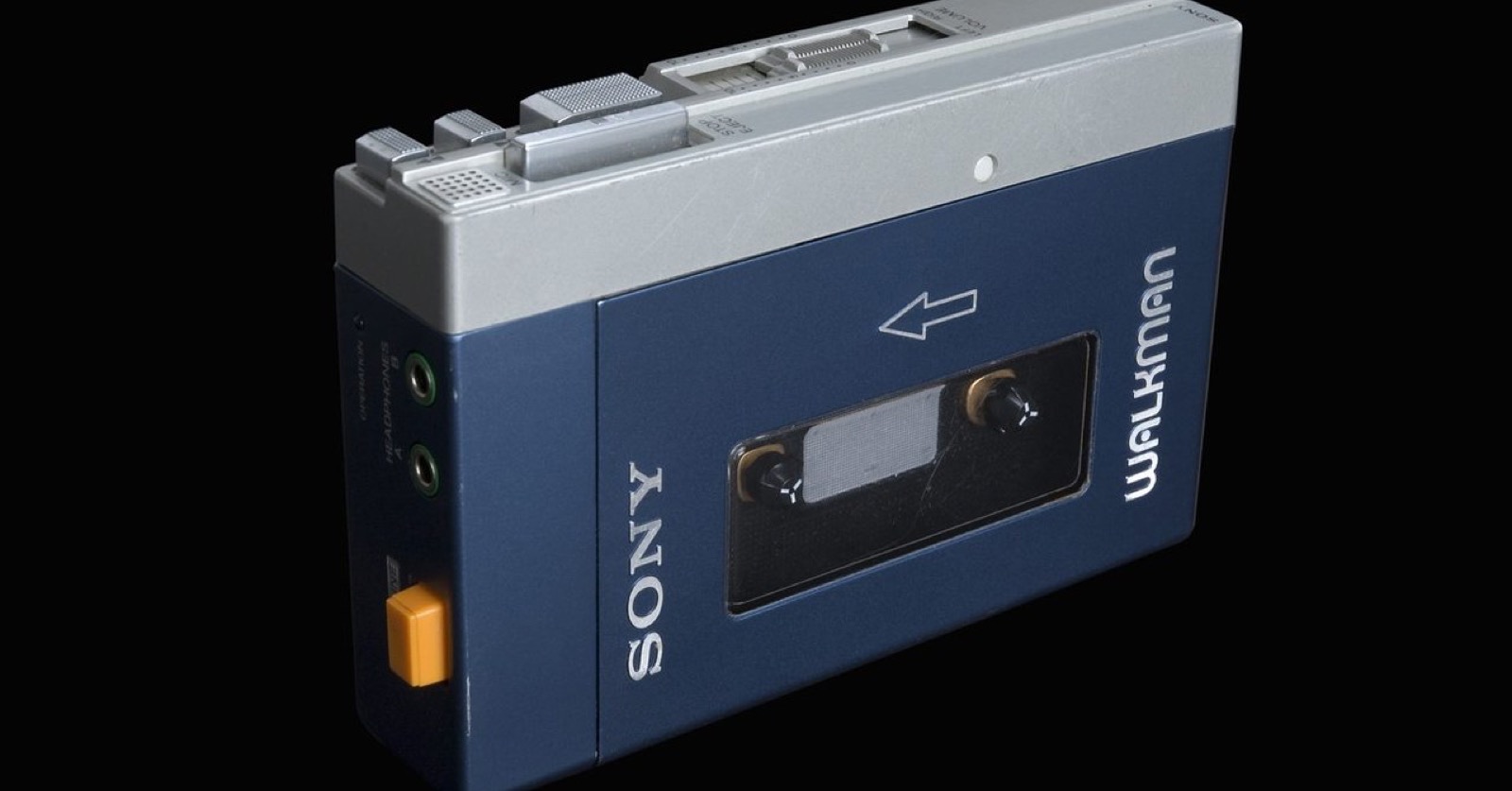
Each was handed a box a little bigger than the palm of a hand, made of blue and silver metal, along with a pair of headphones with little foam pads, astonishingly light.
"Please, put them on."
With the headphones on, music and a narrator's voice flowed into their ears. In front of them, young staff rode tandem bicycles and skateboards. Nobody explained anything out loud. All the explaining was done by the box in their ears.
Until then, stereo music was something you listened to "indoors, on a big machine." Now that music was coming from a little box clipped to a belt, while you walked, while you rode a bike.
The journalists' reaction, it is said, was frankly cool. "Who on earth is going to pay for this?"
The little box was called the Walkman. This is the story of how Sony's two founders and a group of young engineers carried music out of the room.
Chapter 1 — A Man Who Wanted Opera on the Plane
Masaru Ibuka's indulgence
The story begins with one of Sony's founders, Masaru Ibuka.
In 1979 Ibuka was 71. He had stepped back from the front line and, as honorary chairman, was flying all over the world. On those long business flights he had one pleasure: listening to music, especially the opera he loved.
But in those days, even a "portable" stereo recorder was big and heavy. Sony had a high-quality portable cassette deck released in 1978, the TC-D5. It sounded good. Slung over your shoulder for a trip, though, it was quite a load.
Ibuka went to Norio Ohga, then deputy president, with a request: "I want a small machine that lets me listen to stereo music on a plane."
The model: the Pressman
The request went to the tape recorder division. What caught their eye was a small recorder Sony was already selling: the Pressman.
As the name suggests, the Pressman was a palm-sized cassette recorder for newspaper and magazine reporters to use on assignment. Because it was built to record interviews, it could record, but its sound was mono.
Engineers including Kozo Ohsone and Shizuo Takashino rebuilt the Pressman's insides. Rather than designing a new machine from scratch, they would build on a small recorder already in production. With so little time, that was the surest path.
They took out the recording mechanism. They took out the speaker. In their place they put a circuit that could play back in stereo. The result made no sound into the room; you heard it only through headphones. It was a playback-only stereo machine.
Ibuka was delighted with the prototype and took it with him on his trips, the story goes.
Another "beginning"
There is, however, a second story about how the Walkman began.
Yasuo Kuroki, who coordinated the development and was later nicknamed "Mr. Walkman," wrote that the Walkman was never originally conceived as a product. It came, he said, from the playfulness of young engineers. They modified a Pressman to play in stereo, it sounded far better than expected, and that caught management's eye.
Did it start with a word from Ibuka, or with the engineers' tinkering? Most likely the two overlapped. Only one thing is certain: someone looked at that prototype and said, "Let's sell this."