[YAMAHA Motorcycle History] Riding the Mountains at a Walking Pace — The Serow and 35 Years of “Two Wheels, Two Feet”
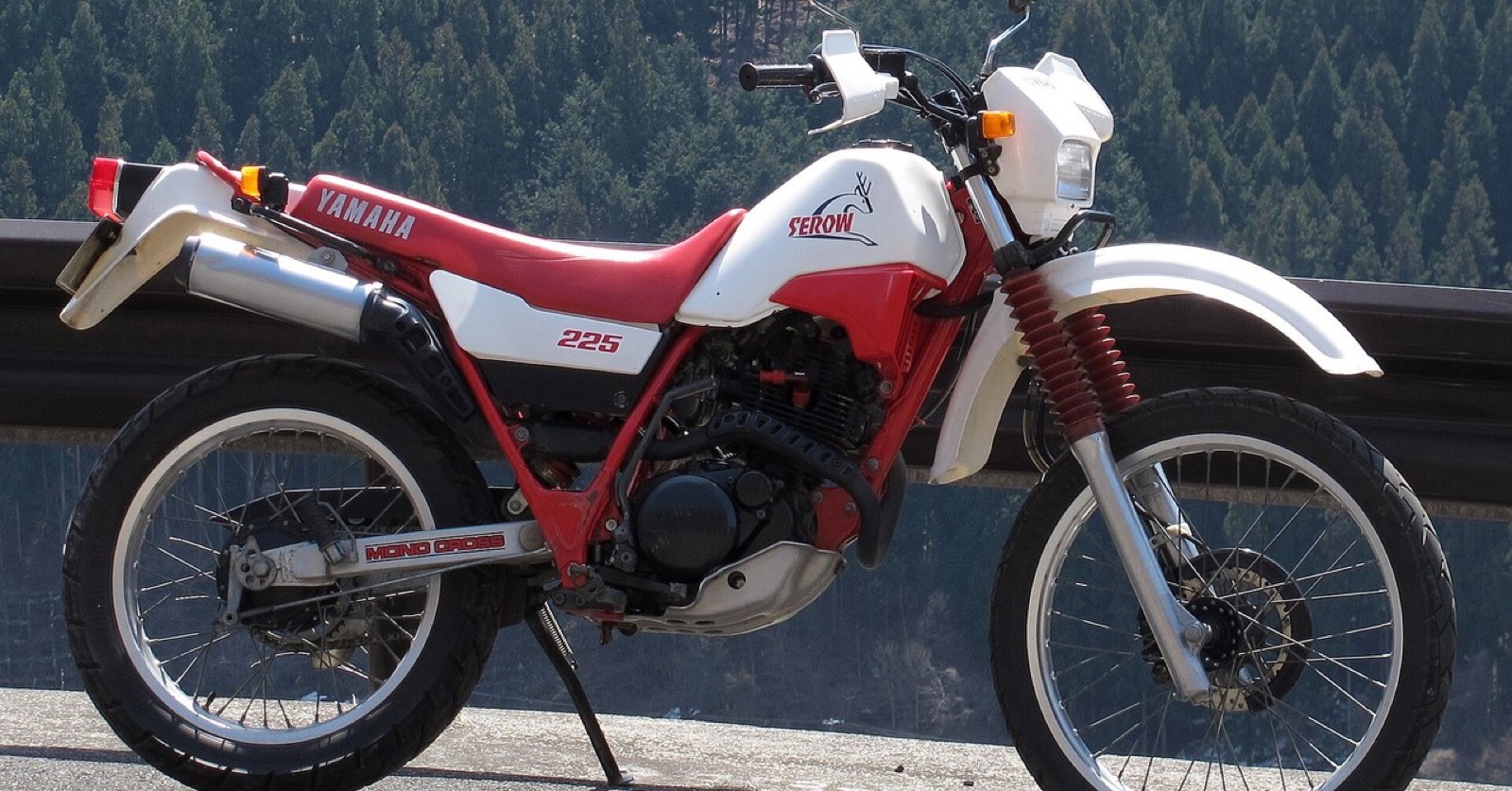
☕ A coffee-length story from GC Lab's "Motorcycle History" series, where we follow machines through the people and events behind them. This time: Yamaha's Serow, an off-road bike built in an age of speed by people who decided it was fine to put your feet down, and fine to fall over.
💡 What you'll learn
- Why a bike made for slowly climbing mountains was born in the middle of a horsepower race
- How the engineers found their design answers by riding, falling, and helping each other up in the hills
- Why the Serow, loved for 35 years, came to an end in 2020
Prologue
In the hills of California there is an off-road riding area called Hungry Valley. Dry dirt slopes, valleys strewn with rocks, narrow trails that look like animal tracks. On weekends, local riders gather there on all kinds of bikes.
In the early 1980s, a young Yamaha engineer was there. His name was Mitsuru Kondo. He had crossed the Pacific to field-test a new trail bike, the DT125.
The local riders' reaction was not quite what Kondo expected. "The handlebars don't turn far enough." "It scrapes its belly on the rocks." The bike a Japanese engineer had brought with pride got blunt feedback. And Kondo himself could not ride that course well.
Japan had plenty of bikes built to go fast. But a bike for climbing over rocks one by one, creeping up narrow trails, sometimes putting a foot on the ground to keep your balance as you push deeper into the mountains: that kind of bike did not yet exist anywhere.
The frustration and surprise Kondo felt that day would eventually become a motorcycle. Born in 1985 and built for 35 years until 2020, it was Yamaha's Serow. This is the story of how a bike that "walks" through the mountains came to be, and why it was loved for so long.
Chapter 1 — A small worry at the company that invented the "trail" bike
Before the Serow, a word about Yamaha and the word "trail."
In 1968 Yamaha released the DT-1, a 250 cc two-stroke single. It could ride on pavement and then head straight onto forest roads and open country. As a bike that didn't choose its roads, it became a big hit in America. After the DT-1, bikes that could handle both on-road and off-road came to be called "trail" bikes, and the term took root as a category in Japan too.
More than a decade later, in the 1980s, Yamaha's trail bikes followed two lines. One was the two-stroke DT series, descended from the DT-1. The other was the four-stroke XT series.
In 1982 the four-stroke XT200 arrived. It was easy to ride and well made, and it is said to have been highly regarded inside the company. Yet it did not sell.
The timing was bad. The mid-1980s were the hottest years in Japanese motorcycling. "Racer replicas" that looked just like circuit machines appeared one after another, and catalog numbers, horsepower and top speed, were what people compared. Off-road, too, buyers wanted bikes like motocross racers that could jump and go fast.
The two-stroke DT200R, released in 1984, fit that era perfectly: light, strong, and fast. That year it sold far more units than the XT200.
The interesting part is that the very team who built the DT200R regretted the XT200's fate. It would be a waste to let such a well-bred bike be buried. That feeling became the starting point for a new machine.
Development began in 1983. Yamaha's engineers were then split into a two-stroke group and a four-stroke group. The chassis design chief was Kiyoshi Ishii, who had worked on the DT200. Running tests were led by Mitsuru Kondo from our prologue. And the engine design chief was Sadahide Suzuki, who had been working on the large four-stroke XV750/1100 Virago cruisers. It was Suzuki's first off-road model, and his first time leading engine design for a project.
Two-stroke people and four-stroke people. People who knew off-road riding and people who didn't. Engineers with very different backgrounds became a single team.