The Man Who Fixed a Broken Organ and Built Yamaha: Torakusu Yamaha
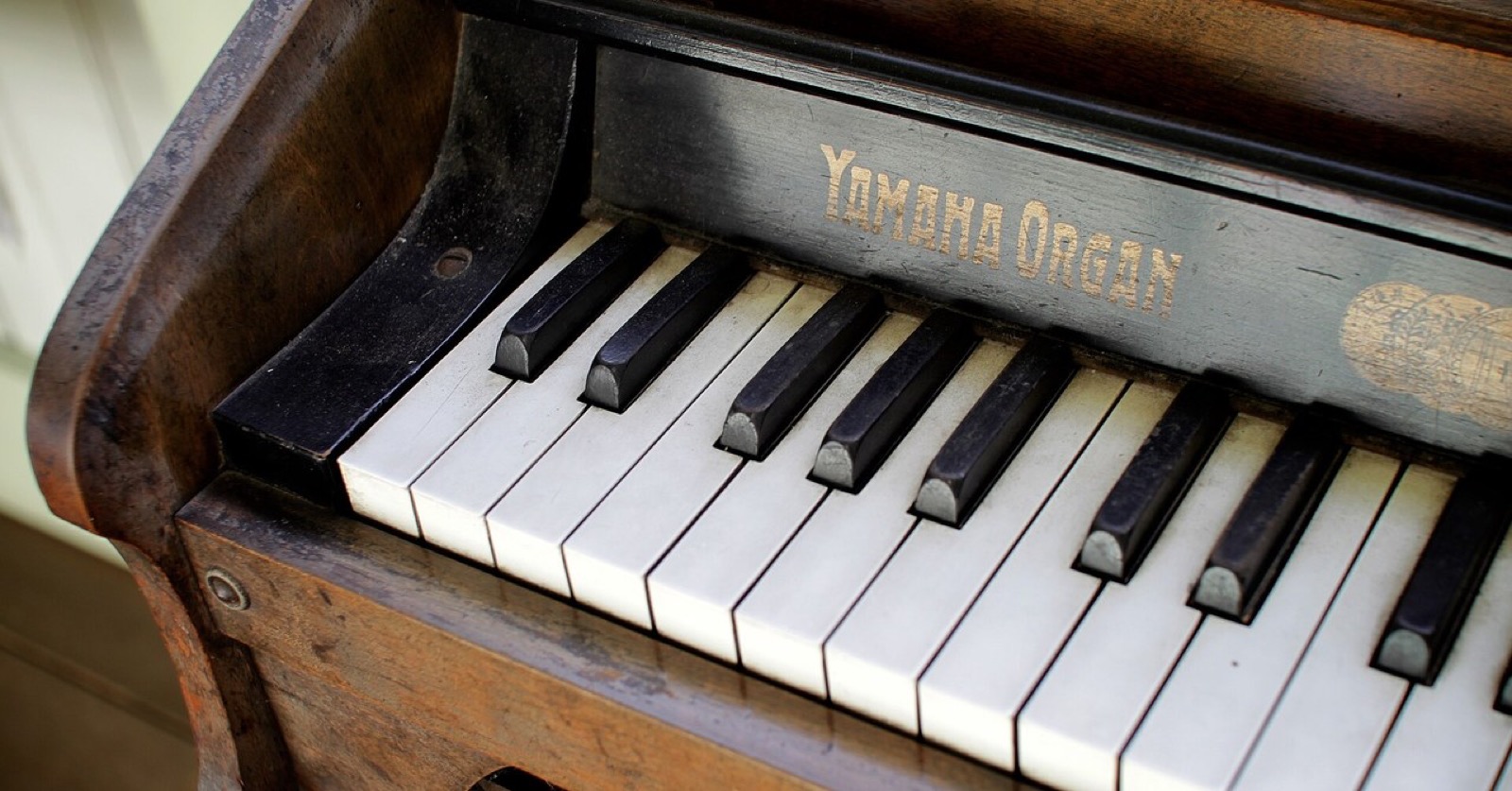
☕ A coffee-length story — about a 15-minute read. This is the tale of a former samurai's son who repaired clocks and medical instruments, and how one broken organ led him to start piano making in Japan.
Prologue — The Organ That Fell Silent
Hamamatsu, 1887 — the twentieth year of the Meiji era.
The town's elementary school had an organ. It had come all the way from America: a reed organ, played by pumping pedals with your feet to send air through it. In those days it was a precious thing. Japanese schools had only recently begun teaching Western songs, and the organ was almost the only tool for bringing children this new music.
One day, that organ stopped making a sound.
Who could fix it? There were no organ makers in Hamamatsu. There were hardly any in the whole of Japan. The school turned to a man in town who repaired medical instruments.
His name was Torakusu Yamaha. He was 36 and knew nothing about musical instruments.
But the day he opened the lid of that organ would, in time, give birth to the largest musical instrument maker in the world.
Chapter 1 — The Son of a Domain Astronomer
Born into a house that measured the stars
Torakusu Yamaha was born in 1851 in the castle town of the Kishu domain — today's Wakayama City. His father, Konosuke Yamaha, was a low-ranking samurai with an unusual job: he was the domain's astronomer, measuring the movements of the sun and stars for the calendar and for surveying.
Torakusu was the third son. Perhaps the house held instruments for observing the heavens, tools marked with fine scales. Looking at the rest of his life, being born into a "house that measured" does not seem like a coincidence.
At around 16, he is said to have gone off to train in swordsmanship — an ordinary youth for a samurai's son.
When the age of the sword ended
When Torakusu was 17, the Meiji Restoration came. The samurai world ended almost overnight. The domains were abolished, and the income samurai families had relied on dried up.
Sword skills would no longer put food on the table. He needed a trade for the new era.
In 1871, aged 20, Torakusu went to Nagasaki, a port that had been open to the West even in the Edo period. There, he learned to repair clocks and watches under an Englishman.
To Japanese people of the time, a clock was Western technology itself. Tiny gears meshing, a spring unwinding, time kept precisely. If one part goes wrong, the whole thing stops. Here, Torakusu learned how to take apart precision machines and put them back together.
A repairer of medical instruments
After Nagasaki, Torakusu moved to Osaka and worked for a shop that dealt in medical instruments. Stethoscopes, measuring devices, surgical tools — machines that had arrived in Japan with Western medicine, and that hardly anyone could fix when they broke.
In the mid-1880s, his work for the shop took him to Hamamatsu in Shizuoka. He looked after the hospital's medical equipment and, on the side, repaired clocks and other machines around town.
Hamamatsu was a post town on the Tokaido highway, busy with people and goods, but few there knew much about Western machinery. "If it's a machine, ask him." The town must have come to think of him that way. That is why the teachers, facing their broken organ, remembered his name.
The age of school songs
When Torakusu came to Hamamatsu, Japanese schools were changing fast.
A national school system was set up in 1872, and elementary schools spread across the country. Among the subjects was shoka — singing songs together on the Western scale. At first, though, there were no teachers who could teach it, no songbooks, and no instruments to accompany it.
In 1879, the government created the Music Investigation Committee, an office to study Western music, collect songs Japanese schools could sing, and work out how to teach them. At its centre was Shuji Izawa, who had studied music education in America. In the 1880s, the office published the Elementary School Songbook, and Western songs began to be sung in schools.
To teach singing, you need an instrument that shows the correct pitch. Pianos were too expensive, so the foot-pumped reed organ became the school instrument of choice. But almost all had to be imported. They were expensive, and if they broke, no one could fix them.
The organ at the Hamamatsu school was one of those irreplaceable instruments.